
Can a cheap plug-in energy monitor actually help you lower your electricity bill? We tested the most popular options in the UK to find out.
Why Budget Power Meters Are Worth a Look
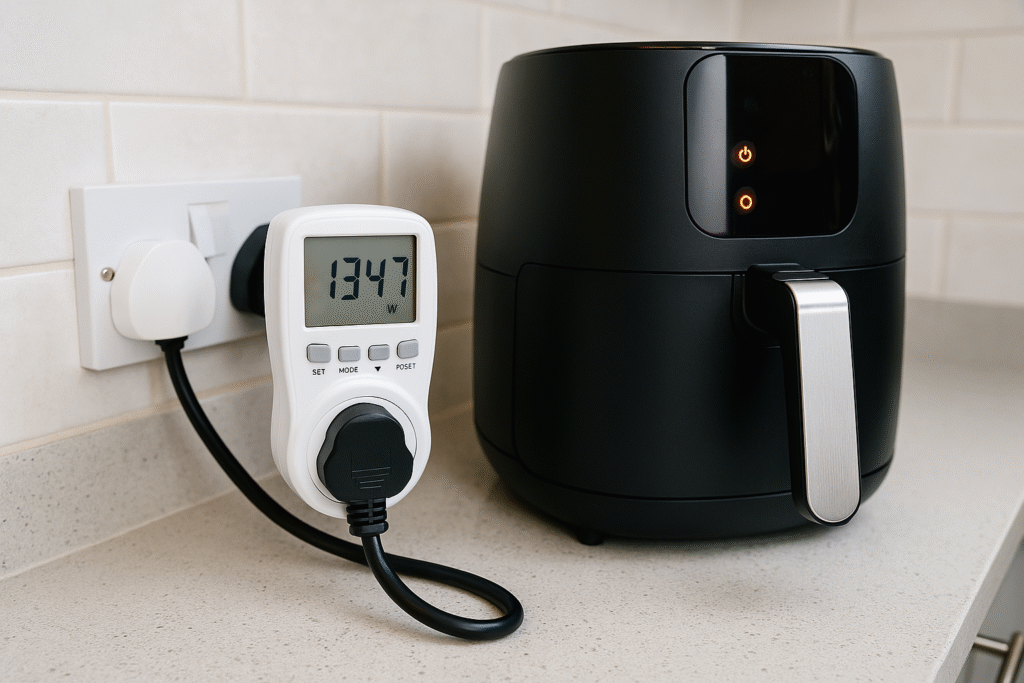
With energy prices still high and smart meters not always telling the full story, more UK households are turning to plug-in power meters to track electricity use per device. These small, affordable gadgets plug into your wall socket and show you exactly how much energy an appliance is using—usually in watts, amps, and kilowatt-hours (kWh).
But do the budget models under £20 actually work? Are they accurate enough to trust? And which ones are easiest to use?
We bought and tested several of the most popular low-cost power meters available in the UK to find out. Whether you’re trying to monitor your electric heater, fridge, or gaming setup, this guide will help you choose the right tool for the job.
What Is a Power Meter (and Why Use One)?
A plug-in power meter is a simple device that sits between your appliance and the wall socket. It measures:
- Watts (W): how much power the device is using right now
- kWh: how much energy it has used over time (this is what your electricity bill is based on)
- Amps and volts: useful for technical checks
- Cost: some models let you input your tariff to estimate running costs
They’re ideal for:
- Spotting energy-hungry appliances
- Tracking standby power
- Estimating monthly costs for heaters, towel rails, or fridges
- Comparing old vs new appliances
- Making smarter decisions about when and how long to run devices
And unlike smart meters, they give you device-level data—no guesswork required.
Who Should Use One?
These meters are perfect for:
- Renters who don’t have access to smart meter data
- Families trying to reduce their electricity bill
- Anyone using high-draw appliances like oil-filled radiators, heated blankets, or tumble dryers
- DIY energy nerds who want to optimise their home setup
If you’ve ever said:
“I think my heater is costing me a fortune.” “Is my fridge running too much?” “I want to know what’s using power overnight.”
…then a budget power meter is a smart, low-risk investment.
How We Tested
We bought a selection of plug-in power meters under £20 from Amazon UK and tested them with:
- A 3kW kettle
- A 2kW oil-filled radiator
- A 100W lamp
- A Wi-Fi router (10W)
- A slow cooker (200W)
We compared readings against known wattage and a smart plug with energy monitoring (TP-Link Tapo P110) as a control. We also looked at:
- Ease of setup
- Display clarity
- Button layout
- Build quality
- Extra features (e.g. cost calculator, memory, backlight)
Top Budget Power Meters Under £20 (UK Picks)
🔌 1. Kuman Plug-in Power Meter (Model: Kuman KW47-EU)
Price: ~£14 Accuracy: ✅✅✅ Features: kWh, cost calculator, memory, volts, amps Ease of Use: Clear screen, intuitive buttons Best For: General household use
This is one of the most popular budget meters on Amazon UK—and for good reason. It’s accurate, easy to read, and includes a cost calculator so you can input your tariff and see real-time cost estimates. It handled everything from the kettle to the router with consistent readings.
Verdict: Best all-rounder under £15.
👉 Browse Budget Power Meters on Amazon UK
🔌 2. Maxcio Energy Monitor Plug (Backlit Display)
Price: ~£17 Accuracy: ✅✅✅ Features: kWh, cost, backlight, overload warning Ease of Use: Excellent screen, especially in low light Best For: High-draw appliances like heaters or tumble dryers
This model stood out for its large, backlit display—ideal for darker corners or under-counter sockets. It was slightly more accurate than others when measuring low-wattage devices like routers and chargers. The overload warning is a nice touch for safety-conscious users.
Verdict: Best for visibility and high-draw tracking.
👉 Browse Budget Power Meters on Amazon UK
🔌 3. Generic LCD Power Meter (No-Frills Option)
Price: ~£12 Accuracy: ✅✅ Features: Basic kWh and wattage only Ease of Use: Simple but limited Best For: One-off checks or ultra-budget setups
If you just want to check how much your heater or fridge is using—and don’t need cost estimates or memory—this no-brand model does the job. It’s not as polished or feature-rich, but it’s surprisingly accurate for the price.
Verdict: Good for quick tests, not long-term tracking.
👉 Browse Budget Power Meters on Amazon UK
Comparison Table: At-a-Glance Overview
| Model Name | Price | Accuracy | Features | Best For |
|---|---|---|---|---|
| Kuman KW47-EU | £14 | ✅✅✅ | kWh, cost, memory | General household use |
| Maxcio Monitor Plug | £17 | ✅✅✅ | Backlight, cost, safety | High-draw appliances |
| Generic LCD Meter | £12 | ✅✅ | Basic kWh only | One-off checks, low budget |
For accurate UK energy information straight from the regulator, Ofgem provides clear explanations on tariffs, prices, and consumer rights. https://www.ofgem.gov.uk/
What to Expect From a Sub-£20 Power Meter
Pros:
- Affordable and widely available
- Easy to use—no app or Wi-Fi needed
- Accurate enough for household tracking
- Great for renters or non-smart homes
Cons:
- No remote access or app integration
- Some models lack memory or cost tracking
- Build quality can vary—avoid ultra-cheap knockoffs
For most households, a £15–£20 meter is more than enough to start understanding energy use and making smarter choices.
Tips for Getting the Most Accurate Readings
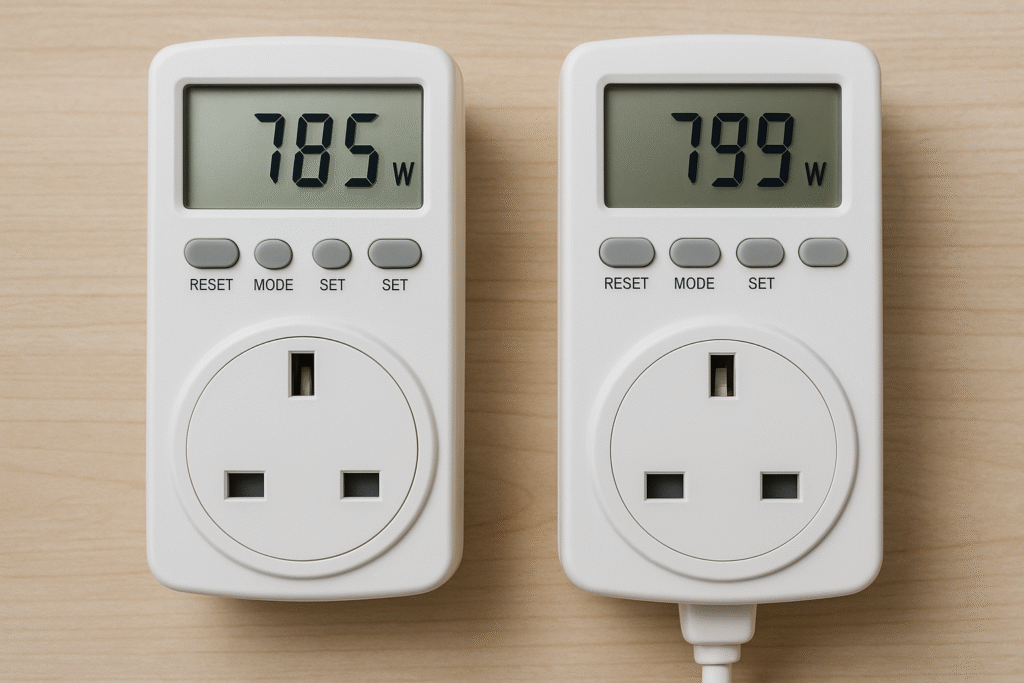
- Reset before each test: Clear previous data to avoid confusion
- Leave it running: For daily usage, plug in for 24 hours or more
- Use with high-draw devices: Heaters, kettles, and dryers show clearer patterns
- Compare with your bill: Multiply kWh by your tariff (e.g. 28p) to estimate cost
- Test standby power: Plug in your TV, console, or router overnight
FAQs
Are budget power meters accurate? Yes—most are within 5–10% of actual usage, which is fine for household tracking.
Can I use them with heaters or kettles? Yes, as long as the meter is rated for 13A (most UK models are). Always check the specs.
Do they work with extension leads? Yes, but for best accuracy, plug directly into the wall when testing.
Will this help me reduce my bill? Absolutely. Even spotting one high-usage device can save £5–£20/month.
🔗 Track Smarter, Then Go Deeper 🔍
Once you’ve tested a budget power meter and seen how much your devices really cost to run, the next step is building a smarter system around that insight. These guides will help you track more efficiently and automate your routines for real savings.
→ Read next: The Beginner’s Guide to Tracking Device-by-Device Energy Use (No Smart Meter Needed)
→ Explore: The Best Smart Home Energy Dashboards & Apps (UK Round-Up)
Final Thoughts: Are Budget Power Meters Worth It?
If you’re trying to reduce your electricity bill, a plug-in power meter is one of the simplest, cheapest tools you can buy. For under £20, you can start tracking your usage, spotting waste, and making smarter decisions—without needing a smart meter or expensive kit.
Whether you go for the feature-rich Kuman KW47-EU, the backlit Maxcio Monitor, or a basic no-frills model, you’ll gain insights that pay for themselves in just a few weeks.
👉 Browse Budget Power Meters on Amazon UK
Start with one device—your heater, fridge, or router—and see what it’s really costing you. The results might surprise you. And once you know, you can act. That’s the power of data—even on a budget.
Learn how to monitor and control electricity use in every room with the Smart Energy Monitors & Plugs Hub from smart plugs to power meters and automation tips that lower your bills.

About The Author – Andrew Marshall
Andrew Marshall is a Scottish homeowner and the creator of Save Wise Living. He shares practical ways to reduce energy bills, improve home efficiency, and make everyday household routines cheaper and simpler.