
Cutting Bills Starts With Smarter Control
UK households are paying more than ever for electricity, and standby power remains one of the most overlooked sources of waste. Devices left plugged in but idle can quietly add £100–£150 a year to typical energy bills.
Smart plugs and smart extension cables are two common ways UK homes try to tackle this problem, but they work in different ways and suit different setups. This guide explains how each option works in real UK households, where they’re most effective, and how to decide which makes more sense for your home and daily routines.
What Is a Smart Plug?
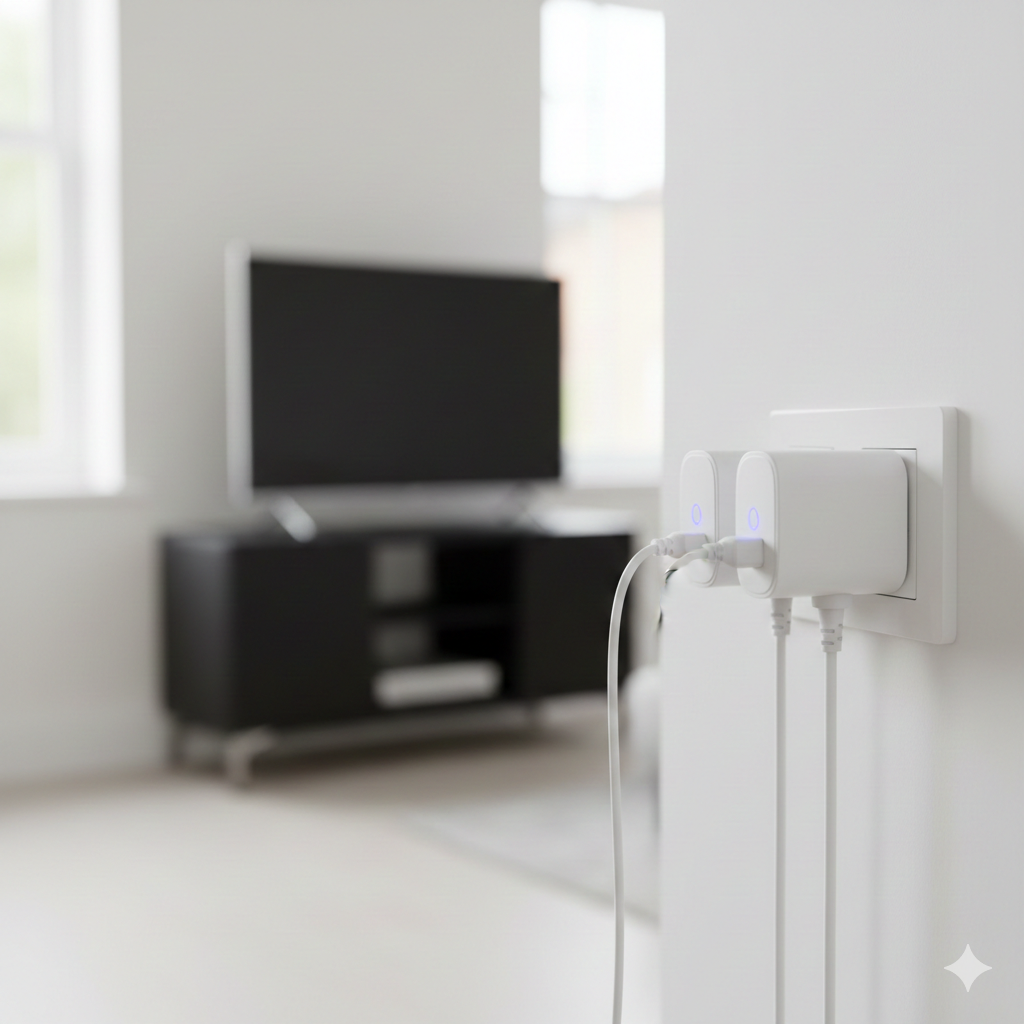
A smart plug is a single-socket adapter that connects to Wi-Fi and gives you control over one device.
Key features:
- Remote on/off control via app or voice assistant.
- Scheduling to cut power at set times.
- Energy monitoring on select models.
- Compact design that fits UK sockets easily.
Smart plugs are ideal for appliances like heated airers, routers, lamps, and chargers. They’re affordable, portable, and perfect for tackling individual standby drains.
What Is a Smart Extension Cable?
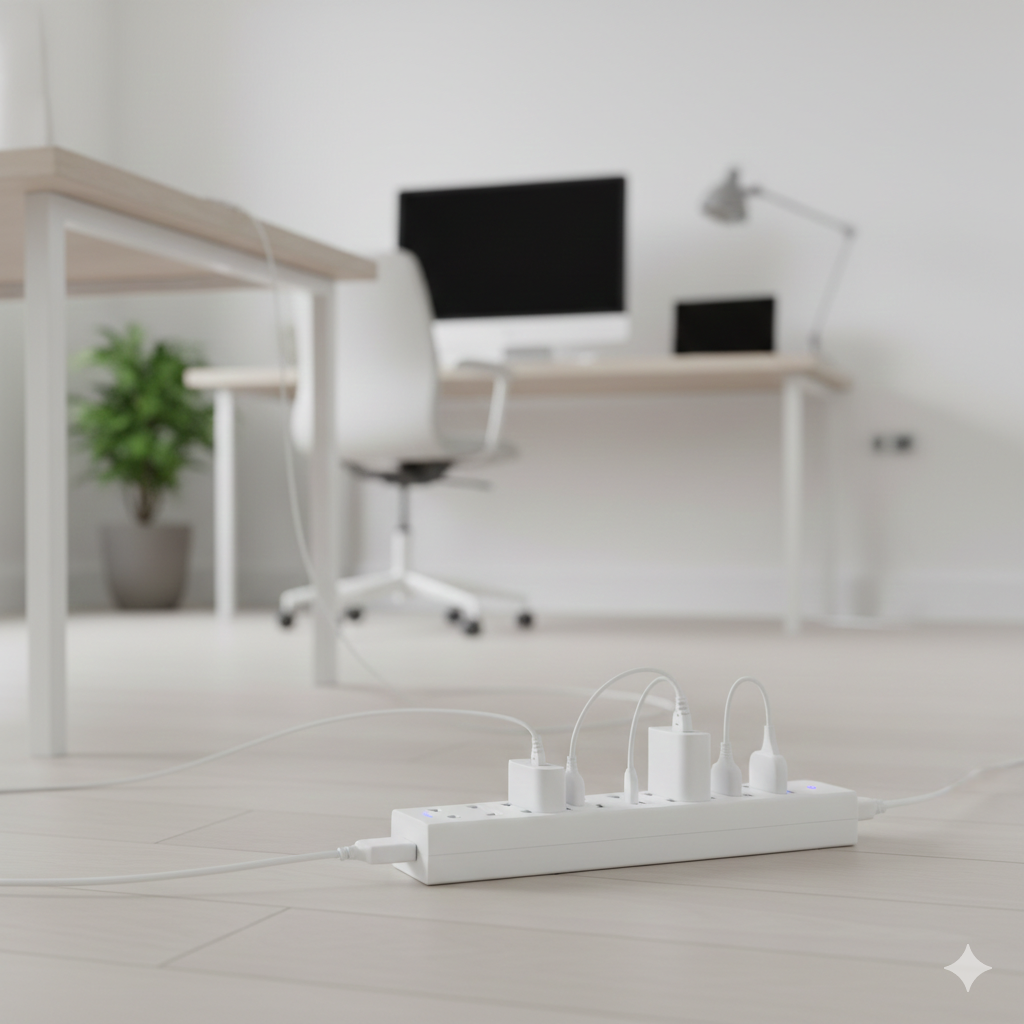
A smart extension cable is a multi-socket extension lead with smart features.
Key features:
- Control multiple devices at once.
- Individual socket control on some models.
- Surge protection for added safety.
- USB ports for charging.
- Energy monitoring on select models.
Smart extension cables are best for entertainment systems, gaming setups, or home offices where several devices are clustered together.
Smart Plug vs Smart Extension Cable: Key Differences
In a typical UK living room, a TV, set-top box, soundbar, and games console are often all powered from the same area, making a smart extension cable a simple way to cut standby power in one go. By contrast, in bedrooms or kitchens where devices are spread out — such as chargers, lamps, or heated airers — individual smart plugs usually offer more flexibility without rewiring or rearranging sockets.
| Feature | Smart Plug | Smart Extension Cable |
|---|---|---|
| Control | Single device | Multiple devices (often individually) |
| Cost | £12–£20 per plug | £25–£40 per cable |
| Energy Monitoring | Available on select models | Available on select models |
| Best Use Case | Heated airers, routers, lamps | TVs, consoles, PCs, office setups |
| Portability | Compact, easy to move | Larger, fixed in one area |
| Extra Features | Scheduling, app/voice control | Surge protection, USB ports |
UK Testing: Which Saves More?
- Smart Plugs: Best for single high-drain devices. A heated airer left plugged in can waste £12–£15 annually. A smart plug with scheduling eliminates that waste instantly.
- Smart Extension Cables: Best for clusters of devices. A TV, set-top box, soundbar, and console together can waste £40–£50 annually. A smart extension cable cuts them all at once or individually.
Result: Smart plugs are more cost-effective for scattered devices, while smart extension cables shine in multi-device zones.
If you want straightforward, non-commercial advice on cutting bills and understanding UK energy costs, Citizens Advice has excellent resources.
https://www.citizensadvice.org.uk/energy/
Pros and Cons
Smart Plugs
Pros: Affordable, compact, easy to install, energy monitoring available. Cons: Controls only one device, multiple plugs needed for larger setups.
Smart Extension Cables
Pros: Controls multiple devices, surge protection, USB ports, great for entertainment or office setups. Cons: Higher upfront cost, bulkier design, less portable.
Practical Scenarios
- Heated Airer in Winter: Smart plug scheduling saves £15–£20 per season.
- Home Office Setup: Smart extension cable controls PC, monitor, printer, and speakers, saving £40+ annually.
- Living Room Entertainment: Smart extension cable manages TV, console, and sound system, preventing phantom loads.
- Everyday Chargers: Smart plugs stop chargers from sipping power when idle.
Best Smart Plugs and Smart Extension Cables (Amazon UK)
Smart Plugs:
- TP-Link Tapo P110 Smart Plug with Energy Monitoring
- Eightree Smart Plug WiFi 5GHz, Alexa/Google compatible
- Energy Monitoring Smart Plug, Wireless Control, Sharable option
Smart Extension Cables:
- Meross Smart Extension Cable, 6 Outlets + 4 USB Ports
- HBN Smart Wi-Fi Extension Cable with 4 AC Outlets + 4 USB Ports
- ANTELA Smart Extension Cable, multiple outlets + Alexa/Google control
⚡ Smarter Energy Choices
If you’re weighing up smart plugs and extension cables, you’ll get even more value by exploring how to measure and eliminate hidden energy drains. A budget power meter under £20 can show you exactly what each device is costing, while our deep dive into standby power in UK homes explains why phantom energy is such a silent wallet killer.
Check out these guides next:
- Best Budget Power Meters Under £20 (UK Review & Accuracy Test)
- Standby Power Is Draining Your Wallet — Here’s How to Stop It Dead (UK)
Together, these articles give you the tools and knowledge to cut bills with confidence and make smarter energy decisions.
The Real Winner for UK Homes
So, which is better — smart plugs or smart extension cables? The answer depends on your household setup.
- Smart plugs are unbeatable for single appliances. They’re affordable, compact, and perfect for heated airers, routers, or chargers.
- Smart extension cables are the smarter choice for clusters of devices. They add surge protection, USB ports, and multi-device control — ideal for entertainment systems or home offices.
For most UK households, the best approach is a combination of both. Smart plugs handle scattered devices, while smart extension cables tackle multi-device zones. Together, they can eliminate £100–£150 of wasted standby power every year.
If you’re starting out, the TP-Link Tapo P110 Smart Plug with Energy Monitoring is the most practical first purchase. It’s affordable, reliable, and shows you exactly how much energy you’re saving. Once you see the numbers, you’ll be motivated to expand with smart extension cables for bigger setups.
Optional author insight (add near the end)
Author Insight – Andrew
Many households focus on cutting usage during peak times but overlook how much electricity is lost when devices are simply left powered but unused. In practice, the biggest savings often come from reducing background consumption rather than changing how you actively use appliances.
Final Thought From Us at SWL
Cutting bills isn’t about one big change — it’s about stacking small wins. Smart plugs and smart extension cables give you control, visibility, and peace of mind. Start with one, build up gradually, and watch your energy waste disappear. Over time, these devices pay for themselves many times over, making them one of the smartest investments UK households can make.
Learn how to monitor and control electricity use in every room with the Smart Energy Monitors & Plugs Hub from smart plugs to power meters and automation tips that lower your bills.

About The Author – Andrew Marshall
Andrew Marshall is a Scottish homeowner and the creator of Save Wise Living. He shares practical ways to reduce energy bills, improve home efficiency, and make everyday household routines cheaper and simpler.