
Energy bills remain one of the biggest household expenses in the UK, and with costs rising, families are desperate to save. Yet many homeowners still follow outdated advice or persistent myths that don’t actually reduce energy use — and in some cases, they make bills worse.
This guide debunks the most common UK energy myths, explains the real facts behind them, and provides practical steps to cut costs. By the end, you’ll know which habits to drop, which changes to make, and how to build a smarter, more efficient home.
✍️ Author Insight – Andrew M
I used to believe a lot of the old energy tips, like keeping the heating ticking over all day or thinking standby mode didn’t matter. The real eye‑opener for me was when I started using a smart plug to run my washing machine during off‑peak hours. I thought the savings would be pennies, but over a few months the difference on my bill was obvious. If you only do one thing, make it this: schedule your big‑energy appliances for the cheaper times. It’s such a simple habit, and most people don’t realise how quickly it adds up.
Why Energy Myths Persist
Energy myths often come from older technologies, word‑of‑mouth advice, or half‑remembered tips that no longer apply. For example, what was true for fluorescent bulbs decades ago doesn’t apply to modern LEDs. Heating systems have evolved, but many households still follow outdated routines.
The problem is that these myths feel intuitive — they sound like they should save money. But when tested against modern appliances, tariffs, and smart home technology, the facts tell a different story.
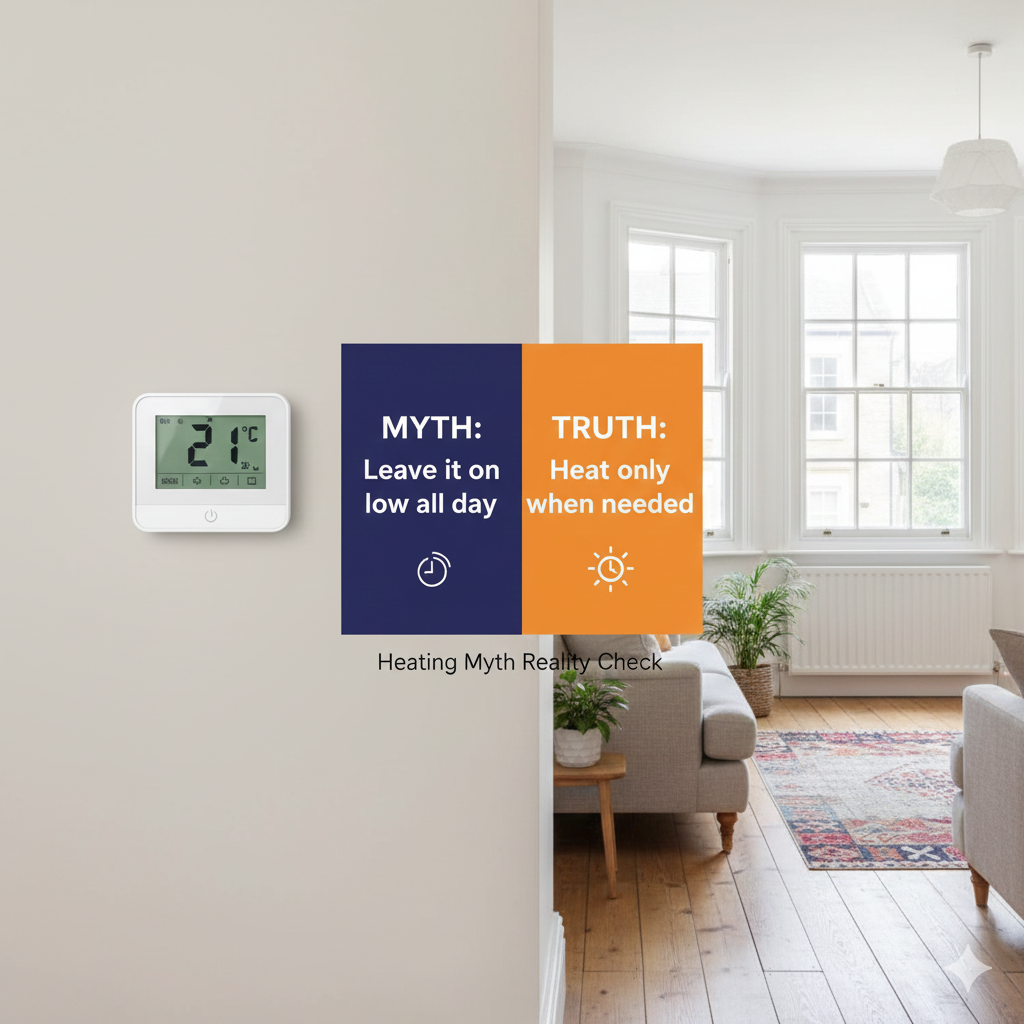
Myth 1: Leaving Heating on Low All Day Saves Money
The Myth: Many UK homeowners believe it’s cheaper to keep the heating on low all day rather than turning it on when needed.
The Truth: Modern boilers are designed to heat efficiently when required. Keeping heating on constantly wastes energy, especially in homes with poor insulation.
Actionable Tip: Use programmable thermostats or smart heating schedules. Heat only when you need it, and insulate your home to retain warmth.
Myth 2: Turning Lights On and Off Wastes More Energy
The Myth: Switching lights off uses more power than leaving them on.
The Truth: This was true for old fluorescent bulbs, which used a surge of energy when switched on. Modern LED bulbs consume very little power and save energy every time they’re off.
Actionable Tip: Replace all bulbs with LEDs. Always switch lights off when leaving a room.
Myth 3: Devices on Standby Don’t Use Power
The Myth: Standby mode means zero consumption.
The Truth: TVs, consoles, routers, and chargers still draw “phantom load” power when on standby. This can add up to £50–£80 per year in wasted electricity.
Actionable Tip: Use smart plugs or extension leads to cut standby power completely.
Myth 4: Setting the Thermostat Higher Heats Faster
The Myth: Cranking up the thermostat warms rooms quicker.
The Truth: Heating systems deliver heat at the same rate regardless of the thermostat setting. Setting it higher only makes the boiler run longer, overshooting the desired temperature.
Actionable Tip: Set the thermostat to the temperature you want and let the system do its job.
Myth 5: Closing Vents in Unused Rooms Saves Energy
The Myth: Blocking airflow reduces heating costs.
The Truth: Closing vents or radiators can strain the system, increase pressure, and reduce efficiency. It may even cause uneven heating and higher bills.
Actionable Tip: Keep vents open. If you want room‑by‑room control, use smart radiator valves or zoning systems.
Myth 6: Hand‑Washing Dishes Uses Less Energy Than a Dishwasher
The Myth: Washing dishes by hand is cheaper.
The Truth: Modern dishwashers use less water and energy than hand‑washing, especially when run on eco‑mode. Hand‑washing often uses hot water from the boiler, which is more expensive.
Actionable Tip: Run full loads on eco‑mode. Avoid pre‑rinsing dishes under hot water.
Myth 7: Electric Heaters Are More Efficient Than Gas Boilers
The Myth: Plug‑in electric heaters are cheaper to run than central heating.
The Truth: While electric heaters convert electricity directly into heat, gas is generally cheaper per kWh in the UK. Using electric heaters for long periods is more expensive than running a gas boiler.
Actionable Tip: Use electric heaters only for short bursts or small rooms. For whole‑home heating, gas remains more cost‑effective.
Myth 8: Solar Panels Don’t Cut Bills Significantly
The Myth: Solar panels barely reduce household costs.
The Truth: With smart export tariffs, solar panels can save hundreds of pounds annually. Pairing panels with battery storage maximises savings by storing excess energy for evening use.
Actionable Tip: Consider solar panels if your roof is suitable. Combine them with smart plugs to run appliances during daylight hours.
Myth 9: Smart Meters Automatically Save Money
The Myth: Installing a smart meter reduces bills.
The Truth: Smart meters don’t save money by themselves. They simply show real‑time usage. Savings come from changing habits after seeing the data.
Actionable Tip: Use smart meter insights to identify high‑consumption appliances and adjust usage patterns.
Myth 10: Bigger Appliances Always Use More Energy
The Myth: Larger appliances automatically consume more power.
The Truth: Efficiency depends on design, not size. A modern large fridge can use less energy than an older small one.
Actionable Tip: Check energy ratings before buying. Look for A‑rated appliances, regardless of size.
Myth 11: Washing Clothes at High Temperatures Cleans Better
The Myth: Hot washes are necessary for hygiene.
The Truth: Modern detergents are designed to work at 30°C. Higher temperatures waste energy and can damage fabrics.
Actionable Tip: Wash at 30°C for everyday loads. Reserve hot washes for bedding or heavily soiled items.
Myth 12: Charging Devices Overnight Wastes Energy
The Myth: Leaving phones or laptops charging overnight wastes electricity.
The Truth: Modern chargers stop drawing power once the battery is full. The wasted energy is minimal compared to other appliances.
Actionable Tip: While not a major cost issue, unplugging chargers when not in use is still good practice.
Summary Table — Myths vs Facts
| Myth | Reality | Best Practice |
|---|---|---|
| Heating on low all day saves money | Heating only when needed is cheaper | Use smart schedules |
| Lights waste energy when switched off | LEDs save energy every time | Switch off when not in use |
| Standby mode uses no power | Devices still draw phantom load | Use smart plugs |
| Higher thermostat heats faster | It only runs longer | Set desired temp |
| Closing vents saves energy | Strains system, increases bills | Use zoning |
| Hand‑washing dishes is cheaper | Dishwashers are more efficient | Run eco‑mode |
| Electric heaters beat gas | Gas is cheaper per kWh | Use heaters sparingly |
| Solar panels don’t save | Panels + tariffs cut bills | Add battery storage |
| Smart meters save money automatically | Only show usage | Change habits based on data |
| Bigger appliances always use more | Efficiency depends on design | Check energy ratings |
| Hot washes clean better | Detergents work at 30°C | Wash at lower temps |
| Charging overnight wastes energy | Modern chargers stop drawing | Unplug when not in use |
🔗 Next Reads — ⚡ Smarter Scheduling & 🔌 Plug Fixes
If you’ve uncovered the truth behind UK energy myths, the next step is putting those facts into practice. Our Smart Plug Scheduling Secrets: The Peak vs Off‑Peak Energy Battle in UK Homes shows how timing appliance use can slash bills, while Smart Plug Troubleshooting (Connection, Load Errors, Offline Issues — Fixed Fast) helps you keep devices reliable and stress‑free. Together, these guides move you from myth‑busting knowledge to hands‑on savings in everyday life.
Conclusion: Facts Beat Myths Every Time
UK households lose money every year by following outdated energy myths. The truth is that modern technology — from smart plugs and LEDs to efficient boilers and solar panels — makes saving energy easier than ever.
The key takeaway is simple: don’t rely on old advice. Instead, focus on proven strategies like smart scheduling, insulation, and efficient appliances. Even small changes, like switching to LEDs or cutting standby loads, can deliver noticeable savings.
For homeowners who want a reliable starting point, investing in a TP‑Link Tapo P110 Smart Plug is a practical choice. It offers energy monitoring, scheduling, and remote control, helping you spot phantom loads and automate appliances during off‑peak hours. Pairing smart plugs with updated habits ensures you’re not just debunking myths — you’re actively cutting bills and building a smarter, more efficient home.
Learn how to monitor and control electricity use in every room with the Smart Energy Monitors & Plugs Hub from smart plugs to power meters and automation tips that lower your bills.
For accurate UK energy information straight from the regulator, Ofgem provides clear explanations on tariffs, prices, and consumer rights.
https://www.ofgem.gov.uk/

About The Author – Andrew Marshall
Andrew Marshall is a Scottish homeowner and the creator of Save Wise Living. He shares practical ways to reduce energy bills, improve home efficiency, and make everyday household routines cheaper and simpler.