
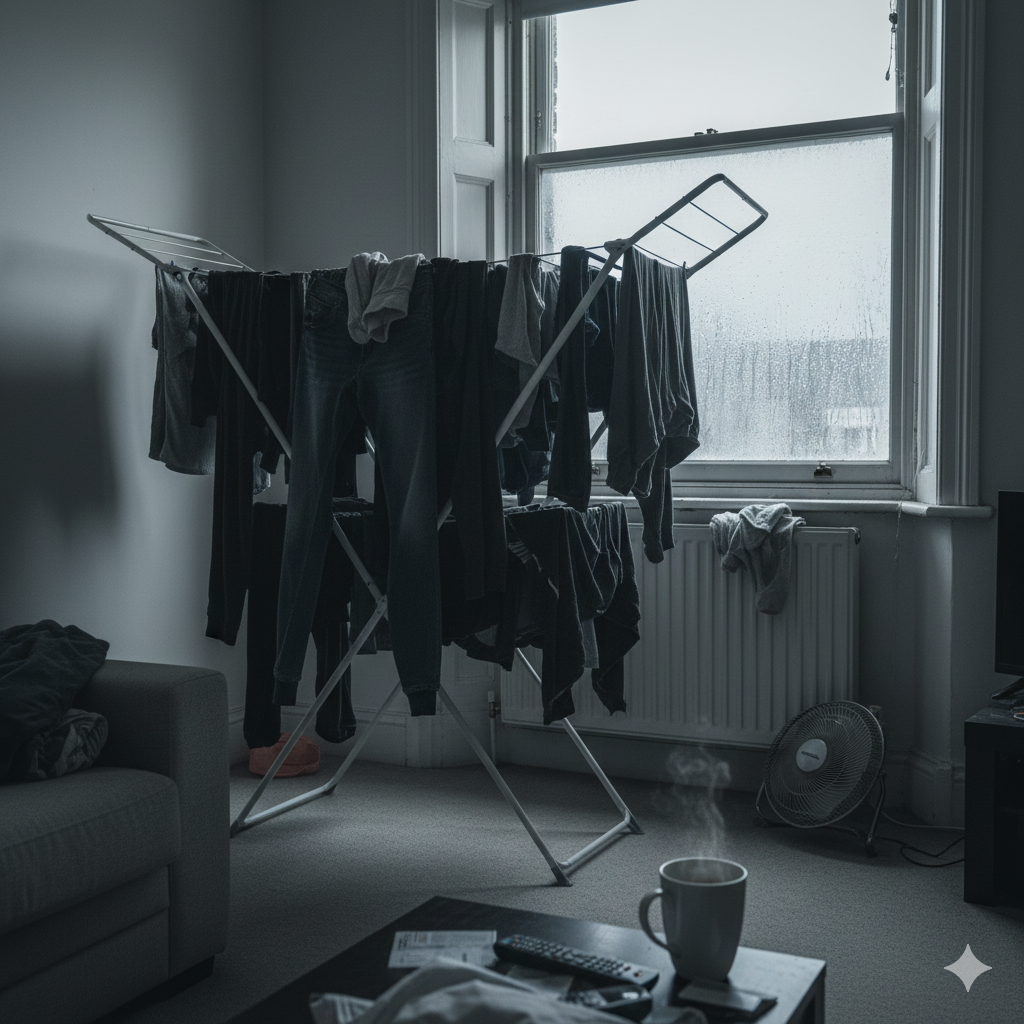
I noticed it for the first time in my first winter in my house — clothes coming off the airer smelling fine, then pulling them out of the wardrobe two days later and getting that unmistakable damp, musty edge. The house is old, the rooms aren’t huge, and in a Scottish winter the windows are shut solid for months. Moisture had nowhere to go.
It took me a while to work out that the wash itself wasn’t the problem. The problem was everything that happened after the wash — specifically, how slowly moisture was leaving the fabric and the room at the same time. Once I understood that, the fix was actually straightforward.
Once you understand what’s actually happening to moisture in your clothes and in the room around them, the fix becomes simple, repeatable, and reliable — even during a British winter.
This article is part of our Laundry & Drying Efficiency hub, focused on practical UK advice for drying clothes indoors faster, avoiding damp, and keeping energy use low.
Quick Answer: Why Clothes Smell Damp After Drying
Clothes usually smell damp after drying because moisture remains trapped in the fabric for too long. This happens when laundry dries slowly in cool rooms, when air circulation is poor, or when the washing machine leaves too much water in the load.
The most reliable way to stop the smell is to remove moisture at every stage:
- Use a high spin speed to remove as much water as possible.
- Dry clothes in a well-ventilated room or with a dehumidifier, which is why understanding how long to run a dehumidifier when drying clothes indoors can make a big difference to humidity levels.
- Make sure clothes fully finish drying before folding or storing them.
Once moisture is removed quickly and completely, the bacteria that cause damp smells simply don’t have time to develop.
Why Clothes End Up Smelling Damp
That familiar damp smell isn’t caused by dirty clothes — it’s caused by moisture staying in the fabric for too long. When clothes dry slowly, especially indoors, bacteria and mildew naturally develop in tiny amounts. The smell you notice is simply the by-product.
This is particularly common in UK homes during autumn and winter, when laundry is dried on racks, airers, or radiators in rooms with limited ventilation. Clothes may feel dry to the touch, but still hold residual moisture deep in the fibres — especially thicker items like towels, jeans, and bedding.
In most cases, damp smells come down to a combination of:
- Clothes not fully drying all the way through
- Moist air building up in the room
- Residue left behind from detergent or fabric conditioner
- A washing machine that’s overdue a proper clean
It isn’t random, and it isn’t inevitable. Moisture plus time creates the smell — remove one of those, and the problem stops.
Habits That Make It Worse
Certain laundry habits dramatically increase the chances of damp smells developing, especially in UK homes where clothes often dry indoors during colder months.
- Leaving clothes in the machine after the cycle finishes.
- Overloading the washer so items don’t rinse or spin properly.
- Drying laundry in cold, unventilated rooms during winter.
- Using too much detergent (more soap doesn’t mean cleaner).
- Skipping maintenance washes, so grime builds up inside the machine.
The good news? These are easy to change once you spot them.
The Fix That Actually Works
Damp smells develop when moisture stays trapped in clothes for too long. The key to fixing the problem is breaking what many households unknowingly create — a moisture loop.
Wet clothes release water into the room, the air becomes humid, and that moisture settles back into the fabric before drying fully. Interrupting that cycle is what stops the smell permanently.
Step 1: Remove as much moisture from the clothes as possible
Before drying even starts, moisture needs to leave the fabric. Use the highest spin speed suitable for the load, and don’t overload the machine — crowded clothes trap water. This one step alone can shave hours off drying time and dramatically reduce smells.
Step 2: Remove moisture from the room, not just add heat
This is where most people go wrong. Warm air helps, but airflow and humidity matter more. Many UK homes trap moisture during winter, which is why understanding laundry ventilation without heat loss can make such a difference when drying clothes indoors.
Space clothes out, avoid piling heavy items together, and ventilate the room if you can. In winter, when windows stay closed, moisture has nowhere to go — which is why indoor drying often causes condensation and lingering smells. This is the same moisture problem that leads to damp patches and mould in many homes, especially flats (explained in more detail in our guide to managing indoor damp and condensation).
Step 3: Stop moisture settling back into the fabric
Once clothes feel dry, they still need a short period in moving, dry air. Folding or storing laundry too quickly can trap invisible moisture, allowing odours to develop later in wardrobes or drawers. Giving clothes time to cool and fully equalise with the room air makes a noticeable difference.
From personal experience, this routine is what finally stopped the “washed-but-still-smells” cycle in my own home. Once moisture was dealt with properly — both in the clothes and in the room — the problem disappeared, even in the middle of winter.
✍️ From my own experience
This was actually the problem that pushed me to start Save Wise Living. My house on the River Clyde is old, the walls are solid, and in winter the moisture from drying laundry had nowhere to go. I was wiping down the windows every morning and rewashing clothes that had gone musty on the airer.
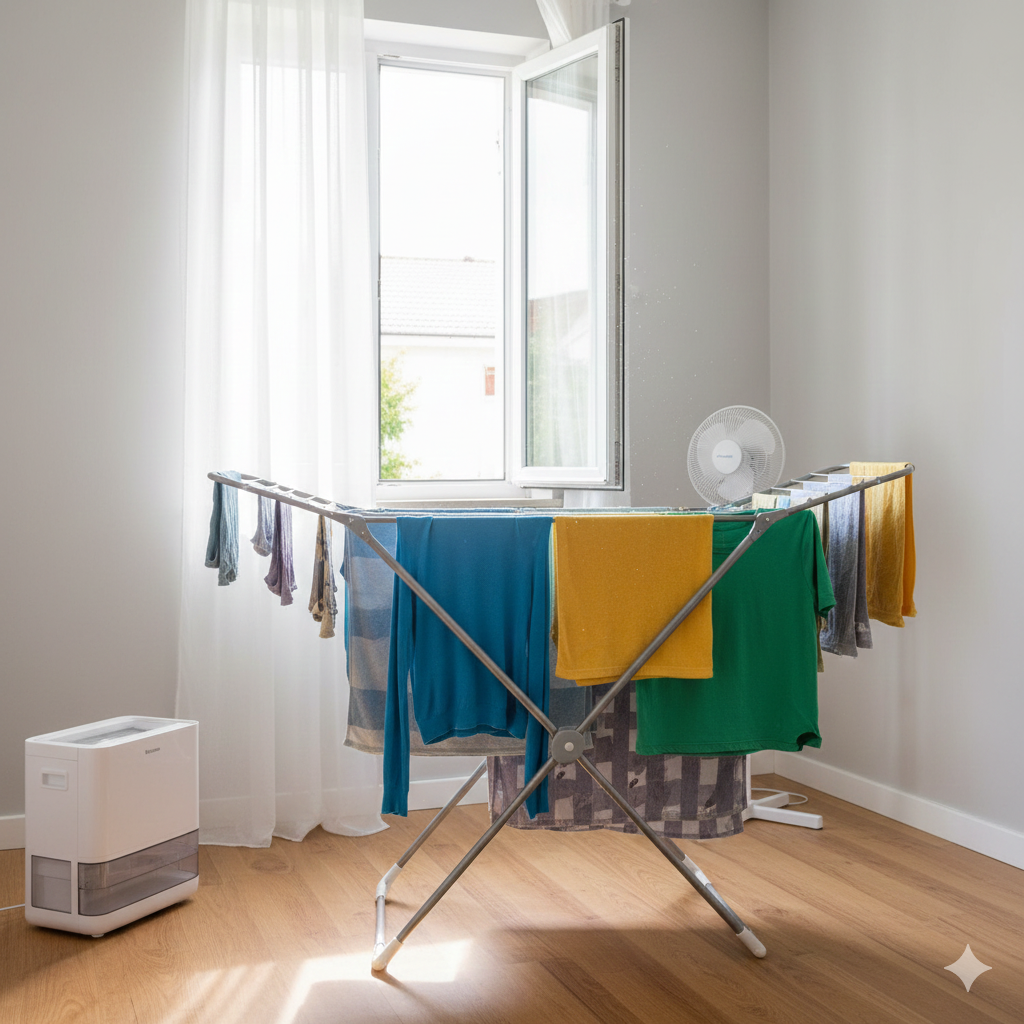
What fixed it was pairing a heated airer with a compact dehumidifier running in the same room. The airer speeds up drying, but the dehumidifier is what actually pulls the moisture out of the air so it can’t settle back into the fabric. First winter I ran that setup properly — no more musty smell, no more condensation on the sills, no more rewashing. It’s one of the cheapest and most effective changes I made to the whole house.
How to Stop It Coming Back
Once you’ve tackled the smell, prevention is key:
- Empty the washer as soon as the cycle finishes.
- Use heated airers or dehumidifiers when drying indoors — many households find the most reliable setup is combining a heated airer and dehumidifier for faster indoor drying.
- Line‑dry outdoors whenever the weather allows.
- Mix loads strategically — synthetics dry faster than cotton.
- Treat your washing machine like any other appliance: regular cleaning keeps it fresh.
How to Remove Damp Smell From Clothes That Already Smell
If clothes already smell musty, simply drying them again usually won’t fix the problem because the bacteria causing the odour are still present.
Instead, try one of these quick fixes:
• Wash again with white vinegar – adding half a cup to the drum helps neutralise odours.
• Run an extra rinse cycle – this removes detergent residue that can trap smells.
• Use dryer balls in a tumble dryer – the airflow helps release trapped moisture and odours.
• Dry clothes in moving air – airflow removes lingering humidity from the fabric.
Once the smell is gone, the key is preventing the moisture from building up again during future drying.
Questions People Often Ask
Why do clothes smell damp even after tumble drying? Usually because the dryer’s overloaded or the lint filter isn’t clean, so airflow is restricted.
Can fabric conditioner fix it? Not really. It masks the smell for a while, but the bacteria are still there.
Do I have to re‑wash everything? Not always. A quick tumble with dryer balls or a spritz of vinegar can neutralise odours without a full wash.
Which fabrics are worst for damp smells? Cotton and wool absorb more water and take longer to dry, so they’re more prone to odours than polyester or microfibre.
Why This Matters for Energy and Money
Fresh laundry isn’t just about smell — it’s about efficiency. Clothes that dry properly:
- Don’t need re‑washing, saving water and detergent.
- Dry faster, cutting electricity use from dryers or dehumidifiers.
- Last longer, because fibres aren’t repeatedly stressed by dampness and bacteria.
For UK households keeping an eye on energy bills, this routine is practical and cost‑effective.
Recommended Products
If you want to make the fix easier, these are simple, affordable tools that help prevent damp smells:
- Soda Crystals for Maintenance Washes
- White Vinegar for Laundry Cleaning
- Heated Clothes Airer
- Compact Dehumidifier for Drying Rooms
- Wool Dryer Balls
Each one tackles a specific part of the problem — whether it’s speeding up drying, keeping humidity under control, or keeping your machine fresh.
Keep Your Laundry Game Strong
If you’re dealing with damp-smelling clothes, it often helps to understand why some loads dry cleanly while others struggle — even in the same home and the same room.
Spin speed plays a bigger role than most people realise. Clothes that leave the washing machine holding excess water will always dry more slowly indoors, especially in winter, and are far more likely to develop odours later. That’s why we explain it in detail in How Spin Speed Really Affects Drying Time & Energy Bills (UK Washing Machine Truth), showing how one simple setting change can reduce drying time and wasted energy.
Fabric choice matters too. Thick cottons, towels, and bedding naturally hold onto moisture longer, while some everyday fabrics release water and dry much faster indoors. If certain items always seem to smell worse than others, Fast-Drying Fabrics Revealed: Which Clothes Dry Quickest Indoors in a UK Winter? explains why — and how to plan loads more effectively to avoid damp smells returning.
Final Word
The fix isn’t complicated. High spin speed, space for air to move, and something pulling moisture out of the room — that’s it. In an older or smaller UK home in winter, a dehumidifier running while clothes dry makes more difference than almost anything else I’ve tried. Get those three things right and the smell stops.
Want to dry clothes faster, cheaper, and smarter? Explore our Laundry & Drying Efficiency Hub a curated resource packed with expert tips, energy-saving gadgets, and clever solutions for indoor drying. From heated airers and compact dehumidifiers to smart laundry routines that actually work, this hub helps you cut costs, save space, and stay ahead of the damp.
Related Guides
For official, trusted UK advice on reducing energy use, the Energy Saving Trust has clear, practical guidance on saving electricity at home.

About The Author – Andrew Marshall
Andrew Marshall is a Scottish homeowner and the creator of Save Wise Living. He shares practical ways to reduce energy bills, improve home efficiency, and make everyday household routines cheaper and simpler.