
If you’re choosing a new oven — whether for a kitchen upgrade, a renovation, or replacing an old unit — one question nearly always comes up:
Is a built-in oven cheaper to run than a freestanding oven?
At first glance, both do the same job. They heat food, cook meals, and use electricity (or gas). But the way they’re designed, installed, and typically used can make a real difference to long-term running costs — especially in UK homes where energy prices matter.
The short, honest answer is this:
There’s no automatic winner — but in most UK households, built-in ovens are slightly cheaper to run when used correctly, while freestanding ovens can cost more depending on size, features, and habits.
Let’s break this down properly, without marketing fluff or tech jargon, so you can understand what actually affects your bills.
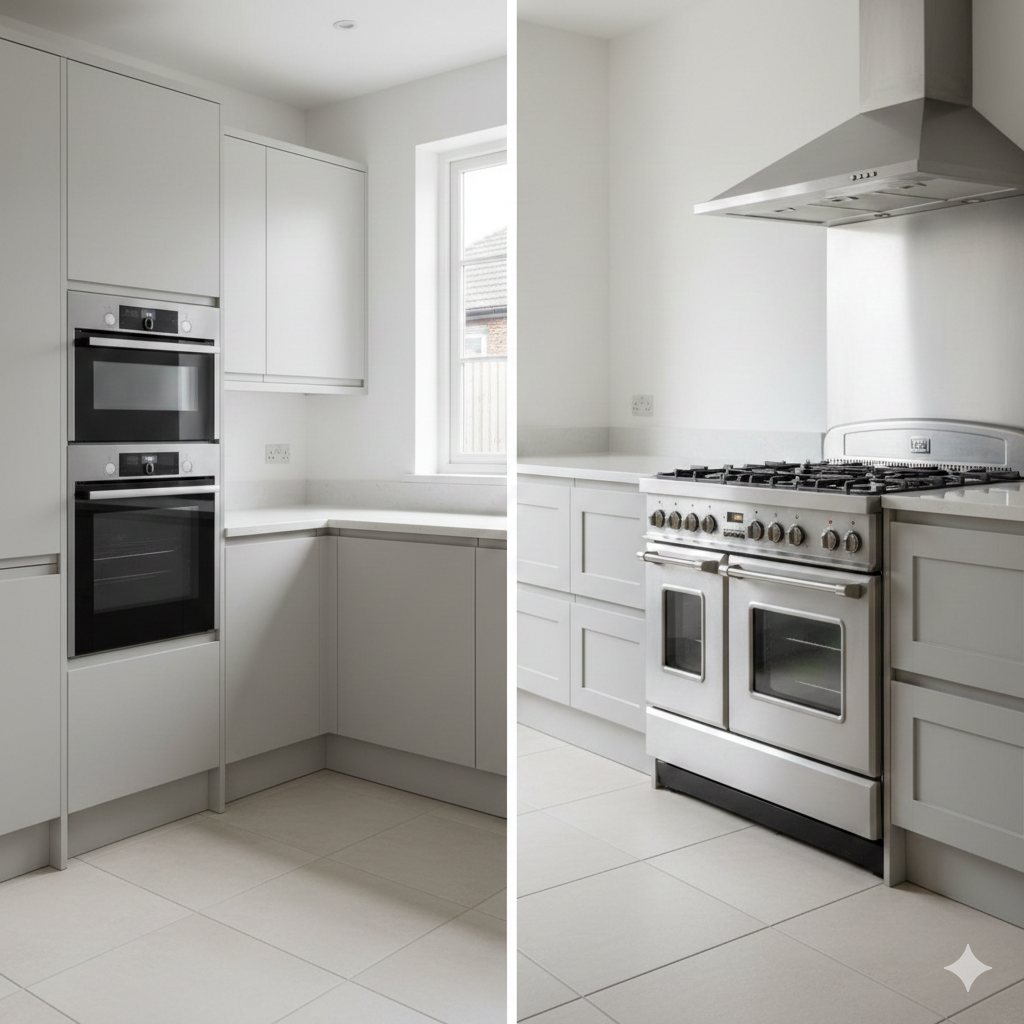
What’s the difference between built-in and freestanding ovens?
Built-in ovens
Built-in ovens are installed into a kitchen unit at eye level or under the counter. They are:
- Usually electric
- Designed to fit standard kitchen housing
- Often paired with a separate hob
They’re popular in modern UK kitchens because they look sleek, free up layout options, and tend to focus purely on oven performance.
Freestanding ovens
Freestanding ovens are all-in-one units that include:
- An oven
- A hob on top (gas, electric, or induction)
- Sometimes a grill and storage drawer
They’re common in older kitchens, rentals, and homes where flexibility matters.
Do built-in ovens use less electricity?
Not automatically — but often, yes.
Here’s why built-in ovens can be cheaper to run:
1. Better insulation
Built-in ovens are designed to be surrounded by kitchen units. Manufacturers account for this by:
- Improving insulation
- Reducing heat loss through the casing
- Keeping heat inside the cavity more efficiently
Less heat escaping = less electricity needed to maintain temperature.
2. More accurate temperature control
Built-in ovens tend to have:
- Better thermostats
- More stable temperature regulation
- Less fluctuation once preheated
That means:
- Less overcooking
- Fewer “just leave it a bit longer” moments
- Less wasted electricity over time
3. They’re usually electric only
Most built-in ovens in the UK are electric, which:
- Encourages fan-assisted cooking
- Supports lower cooking temperatures
- Works well with modern energy-efficient designs
Freestanding cookers, by contrast, often mix gas hobs with electric ovens — and those ovens can vary wildly in efficiency.
Why freestanding ovens can cost more to run
Freestanding ovens aren’t automatically inefficient — but several factors can push their running costs up.
1. Larger oven cavities
Many freestanding cookers have:
- Bigger oven compartments
- Double ovens or tall cavities
- More internal air to heat
Heating a larger space takes more energy, especially if you’re only cooking a small meal.
2. Older or budget models
Freestanding ovens are more common in:
- Rental properties
- Older homes
- Budget kitchen setups
These models often have:
- Weaker insulation
- Less accurate temperature control
- Higher heat loss through sides and doors
That means longer cooking times and higher electricity use.
3. Combined usage habits
Because freestanding ovens include the hob, people often:
- Leave the oven on while using the hob
- Preheat unnecessarily
- Cook smaller portions in a large oven cavity
These habits quietly increase energy use without people realising.
Built-in vs freestanding: electricity use in real life
Here’s the key point most comparison articles miss:
Running cost differences usually come from how the oven is used, not just how it’s built.
That said, patterns do emerge.
Built-in ovens tend to be cheaper when:
- You cook regularly
- You use fan-assisted modes
- You batch cook or cook full meals
- The oven is well-sealed and modern
Freestanding ovens tend to cost more when:
- The cavity is large
- You cook small meals frequently
- The oven is older or poorly insulated
- Temperature control isn’t precise
What about gas freestanding ovens?
Gas ovens deserve a quick mention.
In the UK:
- Gas is usually cheaper per unit than electricity
- But gas ovens are often less precise
- They can cook less evenly than electric fan ovens
In practice:
- A gas freestanding oven can be cheaper per hour
- But longer cook times and uneven heat often cancel out the savings
That’s why many energy-conscious households still prefer electric built-in fan ovens despite higher unit electricity prices.
The biggest hidden cost: heating space you don’t need
One of the most overlooked factors in oven running costs is unused space.
If you regularly:
- Cook for one or two people
- Heat a large freestanding oven for a small tray
- Use only one shelf
You’re paying to heat air you don’t need.
Built-in ovens often:
- Feel more compact
- Encourage more intentional cooking
- Pair better with batch cooking habits
That alone can reduce weekly electricity usage.
Installation position also matters
Built-in ovens are:
- Usually installed at ergonomic height
- Less likely to have the door opened repeatedly
- Easier to monitor visually
Freestanding ovens:
- Sit lower
- Are more likely to be checked by opening the door
- Lose heat more often during cooking
Each door opening causes heat loss — and the oven pulls extra electricity to recover.
Energy ratings: don’t assume freestanding is worse
It’s important to be fair here.
Modern freestanding ovens can be energy efficient, especially:
- New A-rated or A+ electric models
- Smaller single-oven designs
- Fan-assisted freestanding cookers
Likewise, not all built-in ovens are efficient — especially very cheap or outdated models.
Always check:
- Energy rating
- Cavity size
- Fan cooking availability
Built-in vs freestanding: cost summary table
| Factor | Built-In Oven | Freestanding Oven |
|---|---|---|
| Typical insulation | Better | Varies |
| Temperature accuracy | More stable | Often less precise |
| Cavity size | Usually smaller | Often larger |
| Fan cooking | Common | Depends on model |
| Best for small meals | ✓ | ✗ |
| Best for batch cooking | ✓ | ✓ |
| Higher risk of wasted heat | Low | Higher |
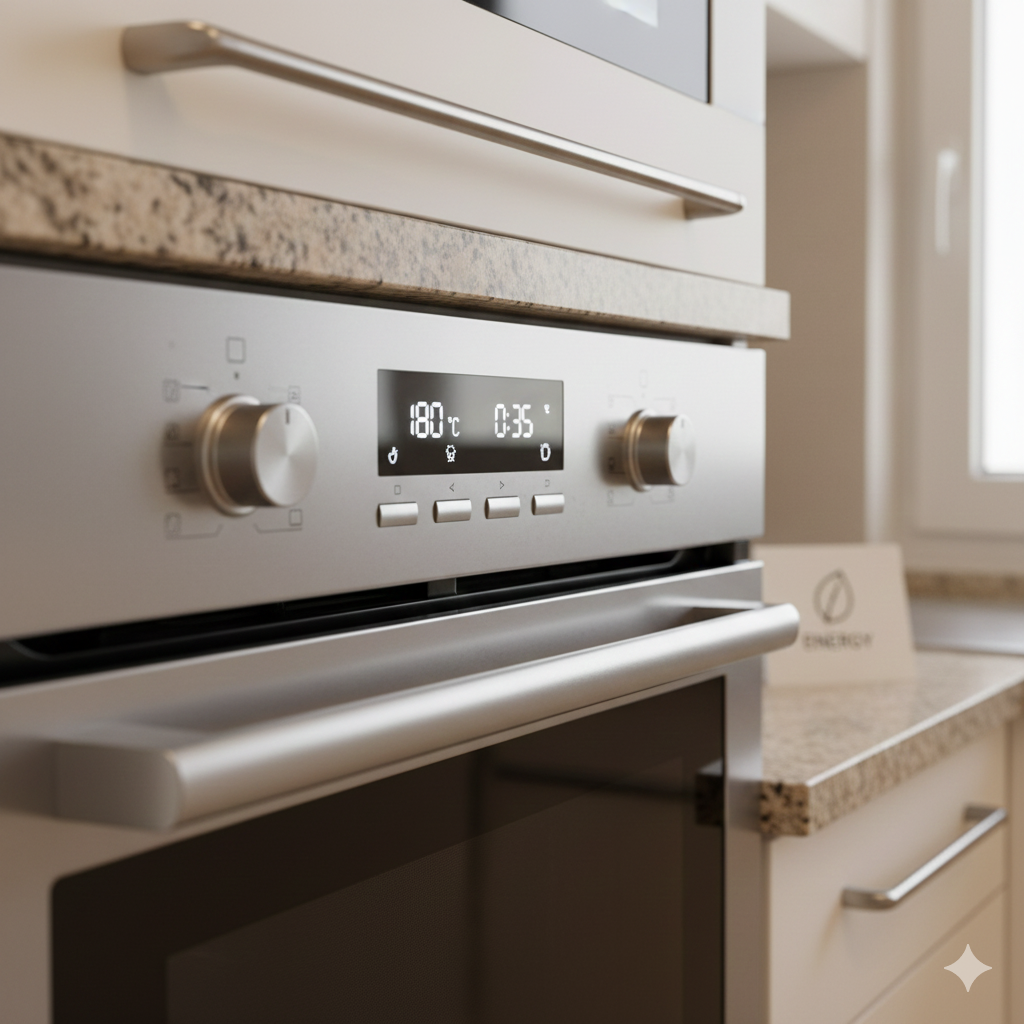
🛒 Our Recommended Energy-Efficient Picks (UK Homes)
After comparing built-in ovens and freestanding ovens, the next obvious question is: so which ones actually make sense to buy?
If you’re considering upgrading your kitchen or replacing an older appliance, the goal isn’t just to get something new — it’s to choose a modern, energy-efficient setup that won’t quietly push your electricity bills up every time you cook.
The products below are ones we’d genuinely feel comfortable recommending to UK households. They’re all A-rated, sensibly designed, and realistic choices for people who care about running costs without overcomplicating their kitchen.
🛒 Product Review: Built-In Option
Hisense HDE3211BBUK Electric Ceramic Hob (A-Rated)
This Hisense ceramic hob is a strong choice for households moving toward a built-in kitchen setup, where the oven and hob are separate rather than combined in a freestanding cooker.
From a running-cost perspective, ceramic hobs like this one are far more controllable than older solid-plate electric hobs and pair well with modern built-in ovens. Heat responds quickly, zones are clearly defined, and there’s less wasted energy once the pan is removed.
Why it fits this article
- A-rated efficiency supports lower day-to-day electricity use
- Encourages a built-in layout, which often pairs with smaller, better-insulated ovens
- Easy to clean, meaning fewer “burnt-on” heat losses over time
Best for
- Households upgrading to a built-in oven setup
- Flats and modern kitchens where space efficiency matters
- Anyone replacing an older, inefficient freestanding cooker
This is the kind of practical, sensible upgrade that reduces energy waste without requiring a full kitchen overhaul.
🛒 Product Review: Freestanding-Style Option
Indesit A-Rated Electric Cooker (Freestanding Setup)
This Indesit electric cooker is a good example of how freestanding ovens don’t have to be expensive to run — provided they’re modern, sensibly sized, and energy rated.
Unlike older freestanding cookers, this model benefits from improved insulation and more accurate temperature control, which helps reduce unnecessary oven runtime. For households that want a single, all-in-one appliance, it’s a realistic and energy-conscious option.
Why it fits this article
- A-rated efficiency puts it on par with many built-in ovens
- Combines oven and hob without forcing a kitchen redesign
- Modern design avoids the heat-loss issues seen in older freestanding units
Best for
- Rental properties
- Family homes
- Kitchens where flexibility matters more than layout aesthetics
It’s a good reminder that freestanding doesn’t automatically mean expensive to run — age, insulation, and efficiency rating matter far more.
Which is cheaper to run overall?
For most UK households:
A modern built-in electric fan oven is usually cheaper to run than a freestanding oven over time — especially for everyday cooking.
However, a new, efficient freestanding oven used sensibly can still be economical — particularly if:
- You cook large meals
- You regularly use the full cavity
- The model has good insulation and fan cooking
The biggest savings don’t come from the oven type alone — they come from:
- Cooking at lower temperatures
- Avoiding unnecessary preheating
- Cooking multiple items at once
- Choosing the right oven size for your household
✍️ Real-Life Author Insight (Human, Natural)
When I started paying attention to energy bills, I realised it wasn’t the oven type that was costing the most — it was how much unused space I was heating and how long I was leaving it on “just in case”. Seeing the difference between older freestanding cookers and newer A-rated built-in setups made it obvious that modern insulation and better temperature control matter far more than people think. This article came from trying to answer a simple question at home: am I paying to cook food, or paying to heat empty air?
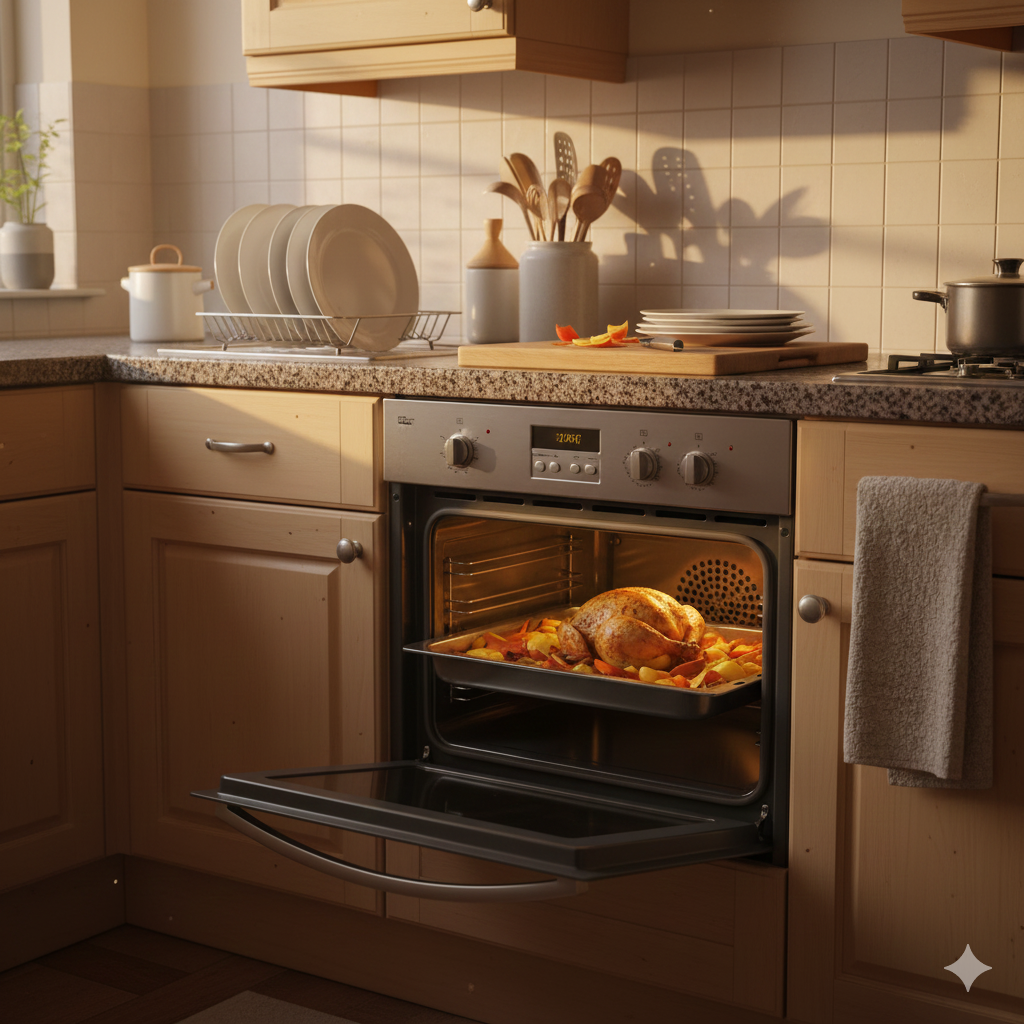
Should running costs influence your decision?
Yes — but not in isolation.
Choose a built-in oven if:
- You want better energy efficiency long-term
- You cook frequently
- You prefer fan cooking and even results
- You’re upgrading a modern kitchen
Choose a freestanding oven if:
- You want flexibility
- You need a combined hob + oven unit
- You regularly cook large family meals
- You choose a modern, energy-rated model
For independent, UK-specific advice on reducing household energy use, you can reference guidance from the Energy Saving Trust, which explains how efficient appliances and smarter cooking habits help cut electricity consumption at home.
🔗 Related Guides You’ll Find Useful 👇
If you’re digging into oven running costs, these articles naturally build on what you’ve learned here:
- How Much Does an Electric Oven Cost to Run Per Hour in the UK?
A practical breakdown of real electricity costs, with examples based on typical UK oven usage. - Fan Oven vs Conventional Oven: Which Uses Less Electricity in the UK?
A deeper look at how cooking modes affect energy use — and why fan ovens are usually cheaper to run day to day.
Together, these guides help you understand where oven costs come from and how to reduce them in real life.
Final thoughts
When it comes to running costs, built-in ovens usually have the edge thanks to better insulation, more accurate temperature control, and more efficient use of heat. Freestanding ovens can still be economical — but they’re more sensitive to size, age, and cooking habits.
If energy bills are a concern, focus less on the label and more on:
- Oven size
- Fan cooking availability
- How often and how you cook
That’s where the real savings live.
Cook smarter and cut everyday kitchen costs with our Smart Kitchen & Appliances Hub your guide to energy-efficient gadgets, smarter cooking habits, and affordable ways to upgrade your home. Explore simple tips, low-energy tools, and practical UK advice that actually saves money.

About The Author – Andrew Marshall
Andrew Marshall is a Scottish homeowner and the creator of Save Wise Living. He shares practical ways to reduce energy bills, improve home efficiency, and make everyday household routines cheaper and simpler.