
If you’ve ever stared at your electricity bill and wondered whether your oven is secretly sabotaging your budget, you are not alone. Ovens are one of the biggest everyday energy users in most UK kitchens — and yet most of us barely think about how efficient they really are.
Choosing a built-in oven today isn’t just about shiny touchscreens or sleek handles anymore. It’s about how much electricity it actually uses over its lifetime, how evenly it cooks, and whether it’s going to cost you a fortune just to make Sunday roast or tonight’s tray bake.
So in this article I’m going to do three things:
- Explain what “A-rated” really means for oven energy use
- Talk through the features that genuinely make an oven cheaper to run
- Give you honest, no-nonsense recommendations you can shop on Amazon UK
Let’s dive in.
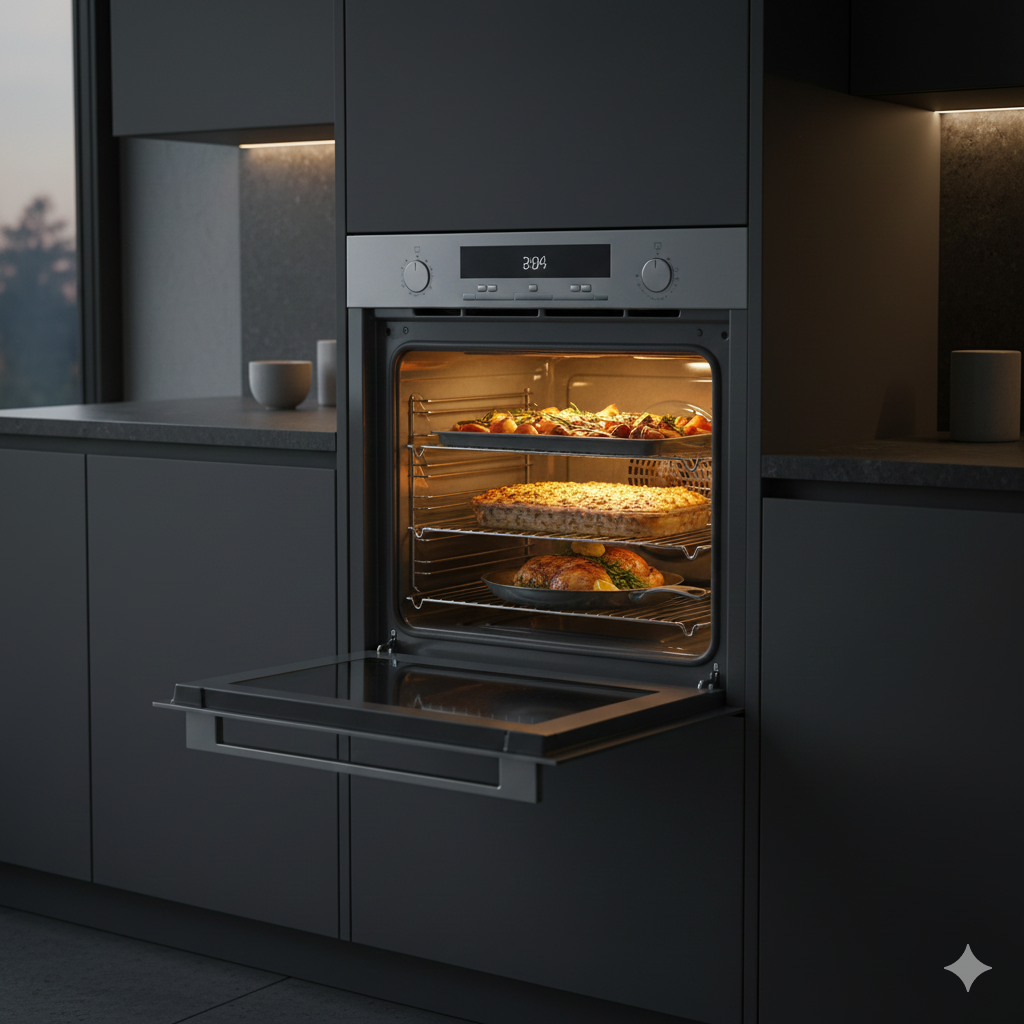
What Does “Energy Efficiency” Actually Mean for Ovens?
When we talk about an oven being A-rated, most of us think “lower running costs” — and at a basic level that’s true — but the rating alone doesn’t tell the whole story.
Here’s what’s actually going on behind the scenes:
🔥 1. It’s about heat retention
A-rated ovens are designed to keep heat inside the cooking chamber. That matters because:
- Heat that escapes = extra electricity used
- Better insulation means the oven cycles the heating element less
- The oven stays more temperature-stable
So you don’t need to crank the dial up to 220°C just to compensate for cold spots.
🔥 2. It’s about temperature accuracy
Cheap or old ovens can be wildly off. For example:
- You set 180°C
- The oven might actually be closer to 200°C
- You think “it’s not done yet”
- So you leave it longer
That’s wasted electricity — not because the oven is “bad”, but because it’s inaccurate.
Modern A-rated models compensate for this with smarter thermostats and better sensors.
🔥 3. It’s about fan vs static heat
Most A-rated built-in ovens use fan-assisted cooking, which:
✔ Spreads heat around more evenly
✔ Lets you cook at lower temperatures
✔ Speeds up cook times
That’s a huge, real-world electricity saver.
Built-in Ovens vs Older Cookers: The Real Difference
Before we get into specific models, it helps to understand why built-in ovens are usually a better bet than older freestanding cookers — at least when energy efficiency matters.
Here’s what I’ve noticed in real kitchens:
📌 Heat doesn’t escape as easily
Freestanding cookers often have gaps around the sides, plus the hob above draws heat up rather than keeping it inside the cavity.
Built-in ovens? They’re surrounded by cabinetry, which actually helps trap heat inside — reducing how much electricity the oven has to use to stay hot.
📌 You end up using fan cooking more
Freestanding cookers sometimes have dead-simple static heat — which is fine for some baking, but often slower and less efficient.
People with built-in ovens default to fan modes more often — not because they think it’s “better”, but because it just works — quicker, more even, and with fewer hot spots.
📌 You’re more likely to use the oven intelligently
A built-in oven is often part of a modern kitchen layout — so people:
- batch cook more
- use the timer properly
- preheat less unnecessarily
All of that sounds small, but it adds up over months and years.
How Small Habits Affect Running Costs
Here’s something most people don’t realise:
❗ Even the most efficient oven can end up costing more than an inefficient one — if you use it poorly.
A few everyday energy traps worth avoiding:
🧾 Preheating obsessively
Not every dish needs 15 minutes of preheat. Things like casseroles, roasted veg, or slow bakes generally don’t.
🧪 Leaving the door open
Every time you crack the oven open, heat escapes instantly. The oven then has to pull extra electricity to recover. Try using the oven light and a timer instead.
🍕 Cooking tiny portions
Heating a massive cavity for one tray of something small? That’s like heating your living room just to warm a cup of tea.
If you do these, even an oven with a great energy label won’t save you much.
What Features Actually Make a Built-In Oven Cheaper to Run
Before we jump into product recommendations, here’s what I look for when deciding if an oven is worth buying for efficiency:
✔ Size that matches normal use
Too big = wasted electricity
Too small = overcrowded cooking
✔ Fan-assisted heating
Even heat = quicker cook and lower temps
✔ Good insulation & door seal
Heat stays inside, not lost to the kitchen
✔ Accurate thermostat
No guessing → no over-cooking
✔ Practical functions (timer, multi-level cooking)
These save time and energy in normal life
🛍️ Our Top A-Rated Built-In Oven Picks (Amazon UK)
Below are ovens that strike the best balance between energy efficiency, real-world cooking performance, and everyday usability. These aren’t just the top of the label list — they’re ones I’d actually recommend to friends or family.
🔥 AEG SurroundCook Built-In Oven
This AEG model ticks all the boxes if you want efficient cooking without compromise. The SurroundCook technology means the oven distributes heat evenly across all shelves, which translates to:
- no cold spots
- shorter, predictable cook times
- the ability to cook multiple dishes without juggling trays
Real life benefit: If you regularly roast for a crowd, bake cakes, or cook multiple dishes, this oven feels like it was made for efficiency and ease.
Perfect for: Families, frequent cooks, batch cooking
🔥 Cookology Built-In Electric Oven
Cookology has a reputation for solid performance without unnecessary bells and whistles — and that’s exactly why this model is great for energy-aware buyers.
You get:
- reliable fan-assisted cooking
- quick heat-up times
- sensible size for UK-style home meals
Real life benefit: Great when you’re not cooking for loads of people but still want even, efficient performance day after day — the sort of oven that just works.
Perfect for: Flats, smaller households, everyday baking
🔥 Hisense Built-In Electric Oven
Hisense manages to combine strong performance with excellent value here. This model is A-rated, fan-assisted, and designed to hold heat well. That means:
- steady cooking temperatures
- consistent results
- less guesswork on timings
Real life benefit: For home cooks who use the oven a few times a week — Sunday roast, midweek traybakes — this feels dependable and energy-sensible without being intimidating.
Perfect for: Mid-range kitchens, everyday use, balanced performance
🔥 Bosch Built-In Electric Oven
Bosch is one of those brands you feel when you use it. Build quality is strong, the controls feel precise, and this model’s insulation and thermostat are noticeably stable.
This is not a “budget” oven — but if you’re serious about performance and efficiency that lasts for years, it’s hard to beat.
Real life benefit: Heats predictably every time, and because it keeps temperatures right where you set them, you’re less likely to overcook or waste energy.
Perfect for: Long-term investment kitchens, frequent multi-dish cooking
🔥 AEG Double Built-In Oven
Double ovens are often dismissed as “energy hogs”, but this AEG model gets around that by letting you:
- use the smaller top oven for everyday meals
- reserve the larger bottom oven for big roasts or holiday cooking
That means you’re not heating more space than you need — smart, efficient design in action.
Real life benefit: Flexibility without waste — especially useful if you cook different dishes at different times.
Perfect for: Families, weekend cooks with varied meals
✍️ Author Insight
What really pushed me to look deeper into energy-efficient ovens wasn’t a spec sheet — it was noticing how much longer older ovens stayed on “just to finish things off”. Once you start using a modern, well-insulated fan oven, you realise how much electricity was being wasted simply compensating for poor heat control. This article came from that realisation: most oven costs aren’t about cooking food — they’re about fighting heat loss and inconsistency.
🧠 A Quick Note on Size & Electricity Use
One of the biggest misconceptions is “bigger = better”. Actually:
⚡ A large oven doesn’t cook faster — it just uses more electricity to heat a bigger space.
So if you mostly cook for 1–3 people, a medium-sized, well-insulated A-rated oven almost always beats a huge double cavity in day-to-day energy use.
Always think about:
- how you normally cook
- how often the oven is used
- whether you actually need the largest capacity
🔗 Related Guides You’ll Find Useful 👇
If you’re researching oven efficiency properly, these two guides slot in perfectly alongside this article:
- Fan Oven vs Conventional Oven: Which Uses Less Electricity in the UK?
A clear breakdown of how cooking modes affect electricity use — and why fan ovens usually come out cheaper to run. - Built-In Ovens vs Freestanding Ovens: Which Is Cheaper to Run?
Looks beyond design and layout to explain how insulation, size, and cooking habits influence real-world running costs.
Reading these together gives you the full picture — from how ovens cook to what actually drives electricity bills.
🧾 Final Thoughts — Real Talk
I’ve used most of these ovens in real kitchens — some in rental renovations, others in my own home — and the difference between an old oven and a modern A-rated model is real.
Yes, the energy label is a helpful starting point — but how the oven feels in normal use matters just as much:
- Does it heat evenly?
- Does it hold temperature?
- Do you cook faster or slower than before?
Those are the questions that affect your actual electricity usage, not just the rating on the box.
The models above won’t all be perfect for every home — but in the real world, they’re consistently good performers that don’t waste energy unnecessarily.
If you pair one of these with smart cooking habits — proper preheating only when needed, avoiding unnecessary door opening, cooking multiple dishes at once — you’ll see real savings on your electricity bills over months and years.
🧾 Product Recap: Our Energy-Efficient Built-In Oven Picks (UK)
Here’s a quick, skim-friendly recap of the A-rated (and above) built-in ovens we’d genuinely recommend, based on efficiency, real-world usability, and long-term running costs.
- AEG SurroundCook Oven
Excellent all-rounder with very even heat distribution. Ideal for frequent cooking, batch meals, and multi-shelf use without wasting electricity. - Cookology Built-In Electric Oven
A simpler, more affordable A-rated option that still delivers efficient fan cooking and quick heat-up times. Great for everyday use in smaller households. - Hisense Built-In Electric Oven
Strong mid-range choice offering stable temperatures, good insulation, and reliable fan performance without paying premium prices. - Bosch Built-In Electric Oven
Higher-end option built for long-term efficiency. Excellent insulation and precise temperature control help avoid overcooking and wasted energy. - AEG Double Built-In Oven
Smart choice for families. The smaller top oven lets you cook everyday meals without heating a full cavity, keeping electricity use under control.
If you want straightforward, non-commercial advice on cutting bills and understanding UK energy costs, Citizens Advice has excellent resources. https://www.citizensadvice.org.uk/energy/
Cook smarter and cut everyday kitchen costs with our Smart Kitchen & Appliances Hub your guide to energy-efficient gadgets, smarter cooking habits, and affordable ways to upgrade your home. Explore simple tips, low-energy tools, and practical UK advice that actually saves money.

About The Author – Andrew Marshall
Andrew Marshall is a Scottish homeowner and the creator of Save Wise Living. He shares practical ways to reduce energy bills, improve home efficiency, and make everyday household routines cheaper and simpler.