
Drying laundry indoors is normal in the UK — especially in winter, in flats, and in homes without a tumble dryer or outdoor space. The problem is that people often “make do” with whatever heat source is nearby, and that’s where the risk creeps in.
Most laundry dried indoors is not a fire risk by itself. The real danger comes from how it’s dried: clothes draped over heaters, portable heaters used as “drying boosters”, overloaded extension leads powering heated airers/dehumidifiers, and tumble dryers that aren’t maintained or are affected by safety alerts.
This guide is written to help everyday UK households dry clothes indoors without turning your home into a fire risk. It’s detailed on purpose — because the safest approach is boring, repeatable habits.
This article is part of our Laundry & Drying Efficiency hub, focused on practical UK advice for drying clothes indoors faster, avoiding damp, and keeping energy use low.
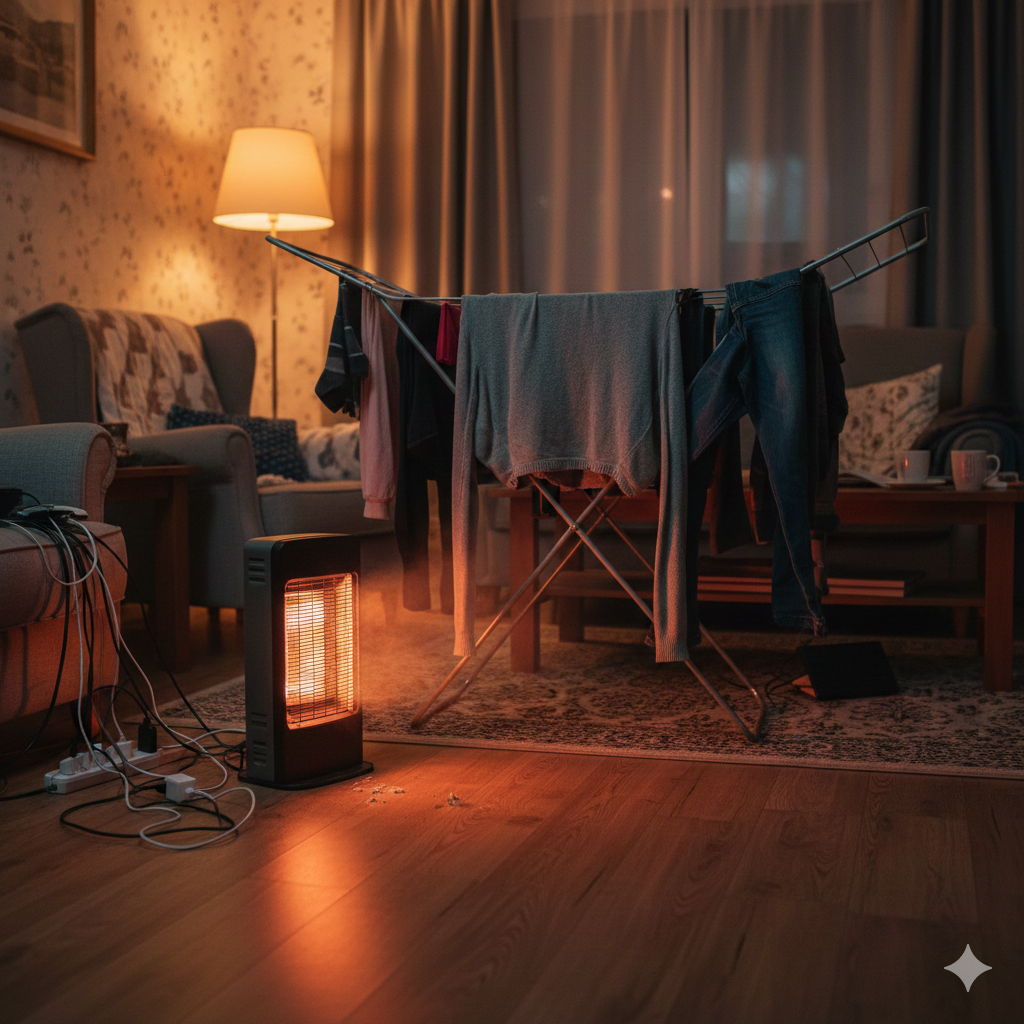
The core risk, in plain English
Indoor drying becomes dangerous when three things overlap:
- A heat source (portable heater, electric fire, radiator, tumble dryer, halogen heater)
- Something that can ignite or melt (fabric, dust/lint, bedding, curtains)
- Time and/or lack of supervision (left overnight, while you’re out, or when you fall asleep)
UK fire services repeatedly advise keeping heaters away from flammables and never using heaters to dry clothes.
The highest-risk indoor drying habits (avoid these)
1) Drying clothes on or right next to portable heaters
This is one of the most direct routes to a fire: fabric is placed close enough to a heater that it dries fast… but can also overheat, scorch, or ignite.
London Fire Brigade’s guidance is explicit: keep heaters away from items like bedding/curtains/furniture and never use them for drying clothes.
Electrical Safety First also advises: never dry clothes directly on or in close proximity to your heater. Electrical Safety First
Extra-dangerous types: fan heaters, halogen heaters, and any heater with an exposed or very hot element (things can catch quickly if they fall onto/near the heat source).
2) Using extension leads/adaptors for “power-hungry” drying setups
The temptation is understandable: heated airer + dehumidifier + maybe a small heater — all plugged into one extension lead.
But overloading sockets and extension leads is a known cause of fires. Electrical Safety First warns that just because an extension lead has multiple outlets, it doesn’t mean it’s safe to plug multiple high-power appliances into it, and they provide specific advice on checking ratings.
London Fire Brigade also warns about overloading extension leads, especially with “power-hungry” appliances like tumble dryers and heaters. London Fire Brigade
Rule that keeps you safe:
If it creates heat or moves heat, treat it like a high-power appliance. Plug it into a proper wall socket where possible. Don’t “daisy chain” extensions.
3) Leaving tumble dryers running unattended or overnight
Tumble dryers are convenient, but they involve heat, moving parts, and (crucially) lint. Fire services warn that lint/fluff build-up can ignite if maintenance is poor, and they also warn against running these appliances unattended or overnight.
And importantly: the UK has ongoing product safety alerts affecting certain tumble dryer models from multiple brands. The Office for Product Safety and Standards (OPSS) has issued recent guidance telling owners of affected dryers to check models and stop using affected units until repaired. GOV.UK
4) Drying clothes on radiators (not always “safe enough”)
A radiator is generally lower risk than a portable heater with exposed heat — but it still creates problems:
- Clothes can slip and end up against something hotter (or drape onto a nearby lamp/heater)
- People combine radiator-drying with portable heaters to “speed it up”
- It increases humidity (leading people to add more heat/appliances, compounding electrical risk)
Some housing and council fire-safety materials explicitly say don’t dry clothes on electric wall heaters. Westminster City Council
If you do use radiators occasionally, the safer approach is: never cover the whole radiator, don’t let fabric hang onto plugs/power strips, and never do it when you’re asleep/out.
The “quiet risks” people miss
Lint, dust, and “hidden fuel”
Lint isn’t just in dryers. It collects behind appliances, around vents, and on heater intakes. A warm motor + blocked airflow + fluff = overheating risk. Fire services repeatedly highlight maintenance and warning signs (burning smells, longer drying times, hotter finishes). Dorset & Wiltshire Fire Service
Knock-over risk
Portable heaters can be tipped by kids, pets, or an accidental foot catch on a cable. Fire services advise stable placement and keeping distance from combustibles. Electrical Safety First
Escape routes get blocked by airers
In flats especially, airers often end up in hallways near the front door. Some UK fire-safety guidance stresses keeping communal areas/escape routes clear. Westminster City Council
The safest ways to dry clothes indoors (ranked)
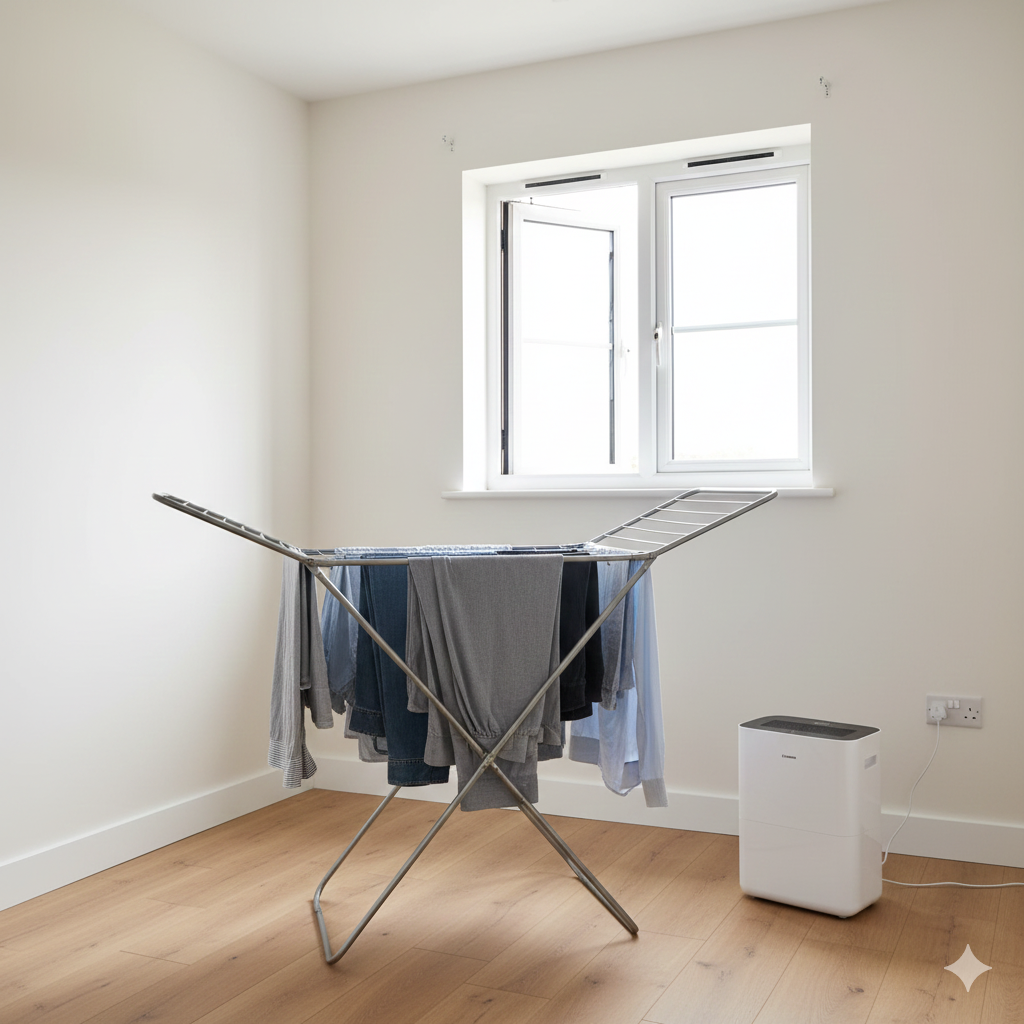
Safest overall: Airer + ventilation + time
- Use a sturdy airer (not balanced on doors or banisters)
- Keep it away from heaters, cookers, candles, fireplaces
- Create airflow: cracked window, trickle vents, or a short “burst” of ventilation
This method is boring — which is why it’s safe.
Very safe and effective: Airer + dehumidifier
A dehumidifier reduces moisture without you needing to add risky heat sources. The key fire-safety angle is electrical:
- Plug the dehumidifier directly into a wall socket if possible
- Keep it clear of clothing (don’t drape laundry over it)
- Don’t run the cable under rugs where heat can build
(You’ll also reduce damp and condensation, which stops people reaching for extra heaters.)
Safe if used correctly: Heated airer
Heated airers can be a good middle ground if you treat them like an electrical appliance:
- Put it on a flat surface
- Keep the fabric within the design of the airer (not hanging onto the control box/plug area)
- Don’t cover it with extra blankets/duvets to “trap heat” (overheating risk)
- Avoid running it while asleep or out, if you can
And again: don’t plug it into an overloaded extension lead.
Higher risk (manage carefully): Tumble dryer Humberside Fire Bridgade
If you use a tumble dryer, make these habits non-negotiable:
- Clean the lint filter after every load
- Keep vents/airflow clear; don’t crush or block venting
- Don’t overload the drum
- Don’t dry items contaminated with flammable liquids
- Don’t run it overnight/unattended
- Check for safety alerts/recalls for your model (OPSS / NFCC) GOV.UK+1
A practical “safe indoor drying setup” you can copy
If you want something you can do every time:
The safer default setup
- Airer in the bathroom or spare room, away from the kitchen
- At least 1 metre away from any heater or heat source (bigger gap is better) London Fire Brigade
- Door mostly closed (keeps moisture contained)
- Dehumidifier running or a short ventilation window routine
- Nothing drying in hallways that narrows your exit path Westminster City Council
The “don’t do this” checklist
- No clothes on portable heaters / electric fires London Fire Brigade
- No overloaded extensions for drying gear Electrical Safety First
- No tumble dryer running while you sleep Humberside Fire
Warning signs that mean “stop and check now”
If you notice any of these with a tumble dryer or dehumidifier:
- Burning smell
- Clothes taking longer to dry than usual
- Appliance feels unusually hot
- Strange noises, sparking, damaged plug/cable
Fire services list warning signs like burning smells and longer drying times as reasons to take action. Royal Berkshire Fire and Rescue Service
If you suspect a fault, stop using it and get it checked/repaired by a qualified professional (and check whether your model is under a safety alert). GOV.UK
Extra protection that actually matters
Smoke alarms
If a fire starts, early warning is what saves lives. Test alarms regularly (many UK fire-safety leaflets emphasise this). Westminster City Council
Don’t dry laundry where it blocks your way out
It sounds obvious, but in real homes, airers end up wherever they fit. Keep exits and routes clear — especially in flats. Westminster City Council
Heaters: treat “distance” like a rule, not a suggestion
Multiple UK fire services advise keeping heaters away from flammables and not using them to dry clothes, and London Fire Brigade specifically mentions sitting at least a metre away because clothing can ignite. London Fire Brigade
Quick FAQ
“Is drying clothes indoors itself a fire risk?”
Not usually. The risk comes from adding heat unsafely (heaters + fabric) or overloading electrics to speed drying.
“Is a radiator safer than a portable heater?”
Generally, yes — but it can still become risky if clothes slip, cover electrical areas, or if you pair it with a portable heater to “boost heat”. The safest approach is an airer placed away from heat sources.
“Should I run a tumble dryer overnight to save money on off-peak?”
From a fire-safety perspective, UK fire services advise against leaving these appliances running unattended/overnight. Humberside Fire
If cost is the reason, a safer compromise is running it earlier in the evening while you’re awake, with lint filter cleaned and airflow clear.
“How do I know if my tumble dryer has a safety warning?”
Check the UK government (OPSS) product safety updates and follow instructions for your brand/model. There have been recent UK safety notices affecting specific heat pump tumble dryer models. GOV.UK
Author insight
I included this article because indoor laundry drying is something almost every UK household does — yet the fire risks around how we do it are rarely explained clearly, without panic or exaggeration. My aim isn’t to scare anyone; it’s to help people dry clothes safely without being pushed into unsafe shortcuts by damp homes, cold weather, or rising energy costs.
If this article sparks a question, highlights a situation I haven’t covered, or makes you think “I wish someone would explain this properly”, let me know. Save Wise Living is built around real, everyday problems — and if it’s something people genuinely struggle with, I’ll happily turn it into a clear, practical guide that helps others stay safe too.
🔗 Related Guides to Keep Drying Safe & Sensible 🔥
If you’re drying clothes indoors regularly, fire safety is only one part of the picture — airflow and noise matter too.
🌀 Laundry Ventilation Without Heat Loss: How to Air Your Home Without Freezing It
Learn how to remove moisture safely without opening windows wide or relying on risky heat sources. These ventilation tricks reduce damp and lower the temptation to use heaters unsafely.
🌙 Quiet Laundry Drying for Flats: Low-Noise Solutions for Night-Time Drying
If you live in a flat or dry clothes overnight, this guide covers low-noise, low-risk setups that won’t disturb neighbours — or push you toward unsafe shortcuts.
Together, these guides help you dry laundry safely, quietly, and without creating new risks in your home.
Final thoughts (the simple rule that prevents most laundry-related fires)
If you remember one thing, make it this:
Never use a heater as a clothes dryer.
Most laundry-related fires don’t happen because people dry clothes indoors — they happen because heat is added in the wrong way, in the wrong place, or for too long. Clothes placed too close to heaters, overloaded sockets trying to “speed things up”, and appliances left running while people sleep are the common threads that turn a normal routine into a serious risk.
Drying clothes indoors doesn’t need to be risky or complicated. A simple, repeatable setup — an airer kept well away from heat sources, sensible use of electrics, and appliances only running when you’re awake and at home — removes the majority of danger straight away. When safety becomes your default, you don’t need to rely on last-minute judgement calls or shortcuts that quietly increase risk.
Safe drying isn’t about fear — it’s about habits that protect your home, your family, and your peace of mind.
UK fire services consistently warn against drying clothes on or near heaters, highlighting it as a leading cause of preventable house fires — advice reinforced by London Fire Brigade, who recommend keeping heaters well clear of flammable items at all times.
💨 Want to dry clothes faster, cheaper, and smarter—especially in small UK homes?
Explore our Laundry & Drying Efficiency Hub a curated resource packed with expert tips, energy-saving gadgets, and clever solutions for indoor drying. From heated airers and compact dehumidifiers to smart laundry routines that actually work, this hub helps you cut costs, save space, and stay ahead of the damp.

About The Author – Andrew Marshall
Andrew Marshall is a Scottish homeowner and the creator of Save Wise Living. He shares practical ways to reduce energy bills, improve home efficiency, and make everyday household routines cheaper and simpler.