
Washer-dryer combos are one of the most misunderstood appliances in UK homes.
They’re often sold as space-saving, energy-saving, and convenient — but in reality, many people buy one expecting lower bills and end up confused when drying costs feel higher than expected.
The truth is more nuanced.
In a small UK home, a washer-dryer combo can either:
- quietly reduce overall energy waste, or
- become an expensive habit that replaces cheaper drying methods without you realising.
This article is about helping you work out which side you’d fall on, before spending hundreds of pounds on a machine that doesn’t suit how you actually live.
This article is part of our Laundry & Drying Efficiency hub, focused on practical UK advice for drying clothes indoors faster, avoiding damp, and keeping energy use low.
First: what a washer-dryer combo really is (and isn’t)
A washer-dryer combo is not:
- a washing machine plus a tumble dryer merged together
- a cheaper way to dry clothes
- a direct replacement for a high-efficiency standalone dryer
It is:
- a washing machine with an integrated, ventless drying system
- designed for occasional or partial drying
- optimised for space-restricted homes, not maximum efficiency per kilo
This distinction matters, because most disappointment comes from expecting combo machines to behave like full dryers — when they’re built for a different job.
The real energy question most articles ignore
Most guides ask:
“Is a washer-dryer combo energy efficient?”
The better question for small UK homes is:
“Does a washer-dryer combo reduce wasted energy elsewhere in my home?”
Because energy savings don’t only come from the appliance itself — they come from what it replaces.
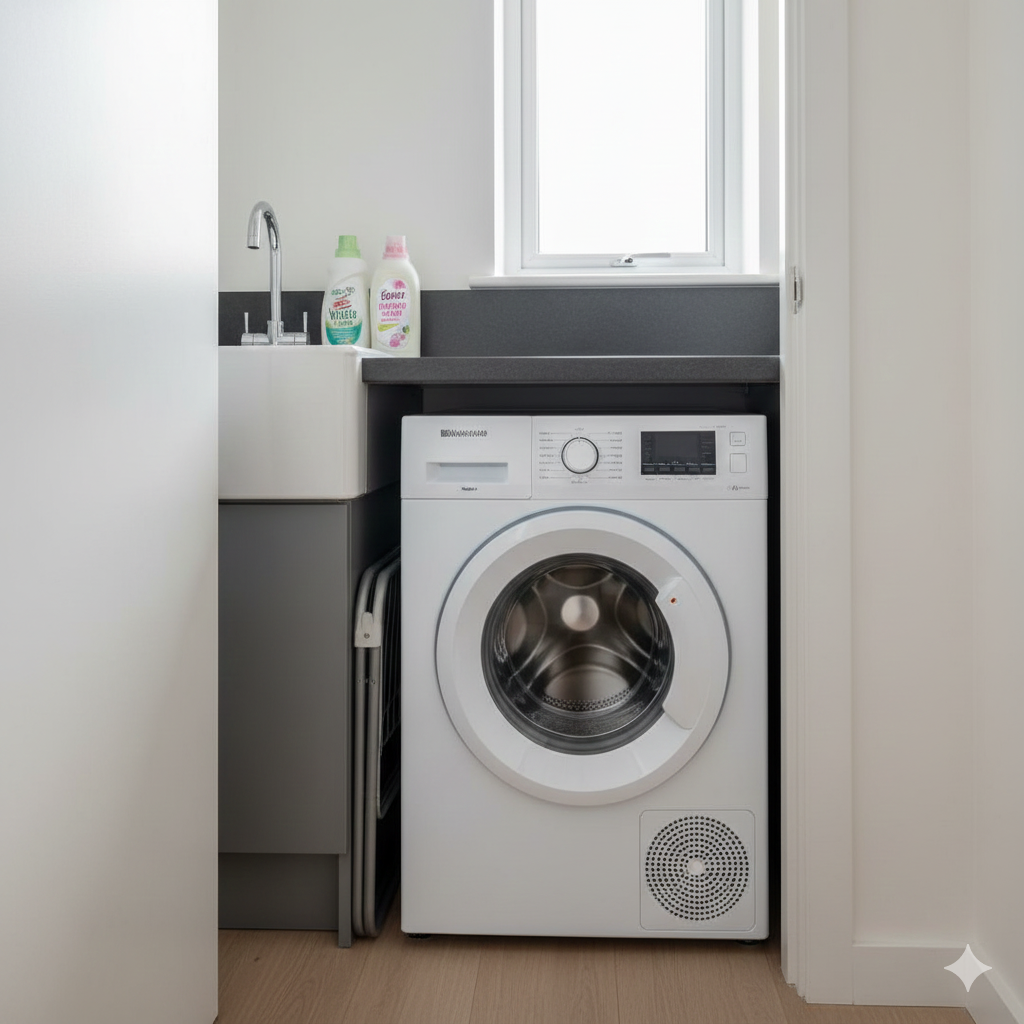
How small homes actually waste energy when drying laundry
If you live in a flat or compact house, chances are at least one of these is true:
- You dry clothes in living spaces where moisture lingers
- You use heaters or boosted heating to speed drying
- You run a dehumidifier for long periods
- You re-wash clothes because they smell musty
- You dry overnight because there’s nowhere to put an airer during the day
None of these show up on an appliance energy label — but they absolutely affect your bills.
A washer-dryer combo can sometimes reduce these costs, even if the drying cycle itself isn’t the cheapest per unit.
When a washer-dryer combo can make sense for energy use
1) You use the dryer function selectively — not by default
Combos work best when drying is:
- occasional
- targeted
- intentional
For example:
- work clothes that need to be ready quickly
- children’s uniforms midweek
- small loads in winter evenings
- items that struggle to air-dry indoors
If you still air-dry most laundry, but use the dryer to remove moisture from your home when it matters, energy use can balance out.
2) You live in a moisture-prone flat
In small homes, drying laundry releases litres of water into the air.
That moisture:
- condenses on windows
- seeps into wardrobes
- increases heating demand
- contributes to mould and damp smells
If a washer-dryer combo:
- reduces how much moisture you release indoors, and
- cuts how often you run dehumidifiers or extra heating
…it can lower indirect energy use over time.
3) You value containment over speed
Air-drying is cheap, but it spreads laundry across your home.
Combos keep drying:
- contained
- predictable
- off furniture and radiators
This often leads to better routines, fewer re-washes, and less “panic drying” — all of which quietly reduce wasted energy.
Washer-dryer combos promise convenience, but they’re not always the cheapest option. This comparison of the cheapest way to dry clothes in the UK shows how combo machines stack up against other drying methods.
Where washer-dryer combos fall down (and why people regret them)
The drying capacity mismatch
This is the biggest issue, and it’s rarely explained properly.
A typical combo might advertise:
- 9–10kg wash
- 5–6kg dry
This means:
- you cannot wash a full load and dry it all at once
- you must split loads or wash smaller amounts
If you ignore this and try to force full loads through drying cycles:
- energy use spikes
- cycles run longer
- clothes come out unevenly dry
- people re-run drying “just to finish it”
That’s where costs creep up.
Long combined cycles
Wash-and-dry programmes can run for several hours.
In small homes, this leads to:
- machines running late into the night
- temptation to over-dry
- less flexibility if you need the machine again
This isn’t necessarily inefficient — but it can encourage lazy energy habits.
They are not designed for heavy drying
Towels, bedding, and thick fabrics:
- take longer to dry
- use more energy
- perform worse in combo machines than in dedicated dryers
If most of your drying is bulky household laundry, a combo is unlikely to be the most efficient solution.
How to use a washer-dryer combo properly (this is where savings happen)
If you treat a combo like a dryer replacement, you’ll likely be disappointed.
If you treat it like a moisture-management tool, it becomes far more useful.
High-spin washes are non-negotiable
Always spin as fast as fabric allows. Every extra litre of water removed mechanically is energy you don’t pay for later.
Dry smaller loads than feels logical
Drying works by air circulation. Overfilled drums waste energy.
Use sensor drying, not timed drying
Timed drying almost always over-dries — wasting electricity and shortening fabric life.
Stop chasing “bone dry”
Slightly damp clothes can finish drying on hangers in 30–60 minutes — with no added energy.
This hybrid approach is where combos quietly shine.
What to look for in a washer-dryer combo for a small UK home
Ignore marketing fluff. Focus on this:
- Realistic dry capacity (5–6kg minimum)
- Sensor drying
- 1400–1600rpm spin
- Quiet operation (important in flats)
- Short wash+dry programmes for small loads
- Easy filter access (poor airflow increases energy use)
- Good reviews for drying consistency, not just washing
Recommended washer-dryer combos (Amazon UK)
Below are reliable, widely used models that suit small UK homes when used sensibly.
Bosch Series 6 Washer Dryer
A strong choice if you want predictable drying for small loads and a reliable auto-dry system. Best suited to couples or small households who dry selectively rather than constantly.
Haier I-Pro Series 10kg/6kg Washer Dryer
A strong option for small UK homes that want larger wash capacity without committing to constant tumble drying.
Samsung 9kg/6kg Washer Dryer
Often chosen for convenience features and smart controls. Useful if you want predictable scheduling and shorter drying bursts rather than marathon cycles.
AEG 7000 Series Washer Dryer
A more premium option with good load sensing and fabric care. Best for people who value consistency and are happy to use drying strategically rather than by default.
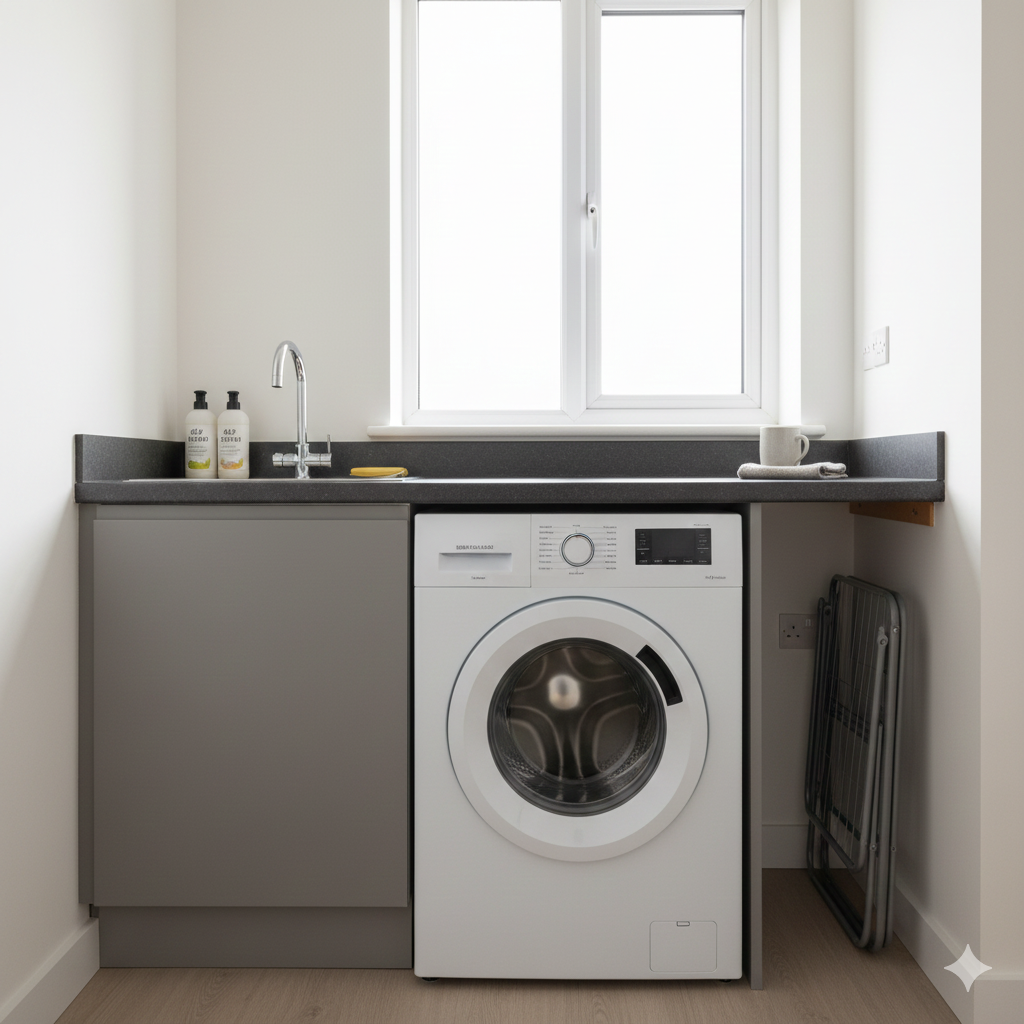
Related Guides to Read Next 🧺🔥
If you’re considering a washer-dryer combo, it’s important to look beyond the appliance itself and understand the wider impact on safety and storage in a small home.
🔥 Fire Safety When Drying Clothes Indoors: The Overlooked UK Risks That Cause House Fires
Drying convenience shouldn’t come at the cost of safety. This guide explains why certain indoor drying shortcuts increase fire risk — and how to avoid dangerous habits when using any drying appliance.
🏠 How to Store Laundry in Small Flats Without Trapping Moisture, Mould or Smells
Even efficient drying can cause problems if clothes are stored too soon. This article shows how to manage moisture properly once laundry comes out of the machine, especially in compact flats.
Together, these guides help you manage energy use, safety, and moisture as one system — not separate problems.
So… are washer-dryer combos worth it for energy savings?
If you’re expecting:
- lower drying costs per load
- faster drying than air-drying
- a direct replacement for a tumble dryer
Then no — a washer-dryer combo probably isn’t worth it.
But if you want:
- to reduce moisture in a small home
- fewer drying workarounds
- a contained, predictable laundry routine
- energy savings that come from better habits, not brute force
Then yes, a washer-dryer combo can absolutely make sense — as long as you use the drying function deliberately, not automatically.
The real energy win isn’t the machine.
It’s using the machine in a way that stops waste elsewhere.
💨 Want to dry clothes faster, cheaper, and smarter—especially in smaller UK homes?
Explore our Laundry & Drying Efficiency Hub, a curated resource packed with expert tips, energy-saving gadgets, and clever solutions for indoor drying. From heated airers and compact dehumidifiers to smart laundry routines that actually work, this hub helps you cut costs, save space, and stay ahead of the damp.
If you want straightforward, non-commercial advice on cutting bills and understanding UK energy costs, Citizens Advice has excellent resources.

About The Author – Andrew Marshall
Andrew Marshall is a Scottish homeowner and the creator of Save Wise Living. He shares practical ways to reduce energy bills, improve home efficiency, and make everyday household routines cheaper and simpler.