
You wash your clothes.
You dry them properly.
They smell fine.
Then a few days later, you open the wardrobe or drawer — and that stale, musty smell hits you.
If this keeps happening, the problem usually isn’t washing or drying. In UK homes, especially flats and smaller houses, the issue almost always starts after clothes are put away.
This guide explains why wardrobes and drawers cause smells, how moisture gets trapped without you noticing, and the simple fixes that actually work — including a few low-effort products that help stabilise storage spaces long-term.
This article is part of our Laundry & Drying Efficiency hub, focused on practical UK advice for drying clothes indoors faster, avoiding damp, and keeping energy use low.
✍️ Author insight
I wanted to write this because wardrobe smells are one of those problems people often blame on washing — when in reality, it’s the storage environment doing the damage. I’ve seen plenty of homes where laundry is cleaned and dried properly, yet still ends up smelling stale simply because moisture has nowhere to escape once clothes are put away.
My goal with this article was to help people fix the cause, not just the symptom. If you’ve got a wardrobe layout, room type, or flat setup that seems particularly prone to this issue, let me know — those real-life quirks are often where the most useful guides begin.
First: this is not a drying problem
If clothes smell immediately after drying, that’s usually down to:
- washing machine residue
- low-temperature washing
- incomplete drying
That’s a separate issue.
This article is about when clothes:
- smell fine when dry
- go into storage fresh
- develop odour only after being put away
That points to wardrobe moisture, not laundry technique.
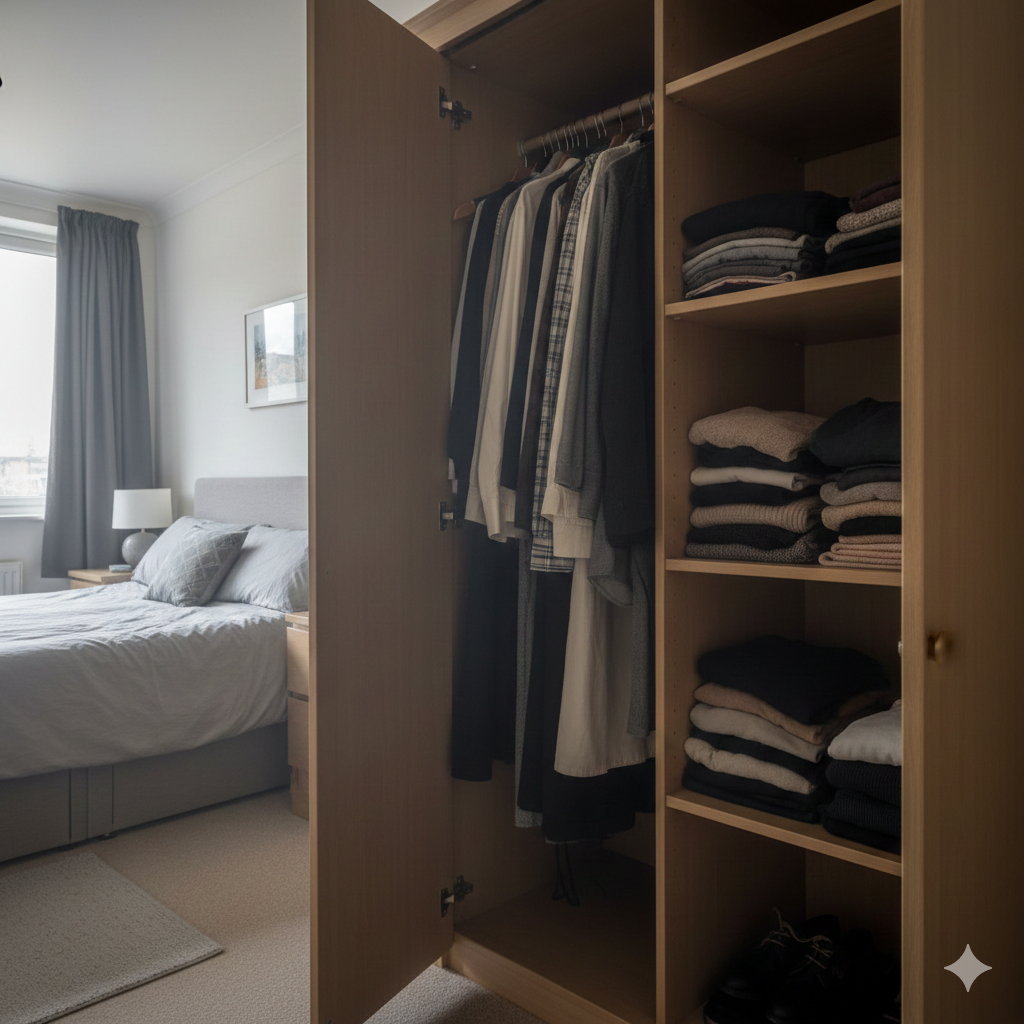
Why wardrobes make clothes smell in UK homes
Wardrobes and drawers are essentially sealed boxes. In many UK homes they also sit:
- against cold external walls
- in rooms with limited ventilation
- packed tightly with clothes
When even a small amount of moisture gets trapped inside, it has nowhere to escape. Over time, that moisture feeds bacteria and mould spores already present in the air — causing the familiar musty smell.
You rarely see damp. You just smell it later.
Indoor damp and mould are recognised issues in UK housing, with guidance from UK Health Security Agency highlighting the importance of ventilation and moisture control to reduce mould growth and associated odours in enclosed spaces.
Common reasons clothes pick up smells after storage
1. Clothes are put away slightly too early
In small homes, airers get in the way — so laundry often gets stored when it’s:
- dry on the surface
- still holding moisture in seams, waistbands, or thicker fabric
That tiny bit of dampness is enough to cause smells days later.
2. Wardrobes sit on cold walls
Cold walls create temperature differences inside wardrobes, which encourages condensation inside fabric layers, not on visible surfaces.
This is one of the most common causes in flats.
3. Storage is packed too tightly
When clothes are pressed together:
- airflow stops
- moisture stays trapped
- stale air never refreshes
Overfilled drawers and rails are a big contributor.
4. Plastic storage traps humidity
Plastic boxes, vacuum bags, and sealed containers lock moisture in, even when clothes seem dry.
They’re fine for short-term use — but poor for everyday clothing.
How to stop clothes smelling after being put away
1. Add a short “cool-down” period
After drying, let clothes:
- hang or sit on an airer for 30–60 minutes
- reach room temperature
- release hidden moisture
Warm clothes stored immediately are far more likely to smell later.
2. Check dryness properly
Before storing, test the thickest part of a garment:
- bunch it in your hand for 10 seconds
- release it
If it feels cool or heavy, it’s not ready.
3. Improve airflow inside storage
You don’t need constant ventilation — just regular refreshes.
Simple habits:
- open wardrobe doors daily for 10–15 minutes
- leave space between hanging items
- don’t push clothes tight against the back wall
Products that actually help (without overdoing it)
You don’t need lots of gadgets. These three categories work because they support airflow and moisture control, rather than masking smells.
1. Moisture absorbers (wardrobes & drawers)
Moisture absorbers don’t dry clothes — but they stabilise humidity inside enclosed storage, which prevents smells from developing.
Best used:
- in wardrobes on external walls
- under beds
- in drawers or cupboards that smell stale
Recommended type:
Calcium chloride moisture absorbers (wardrobe-sized)
Example (Amazon UK):
UniBond Aero 360 Moisture Absorber – Compact / Wardrobe Size – View on Amazon
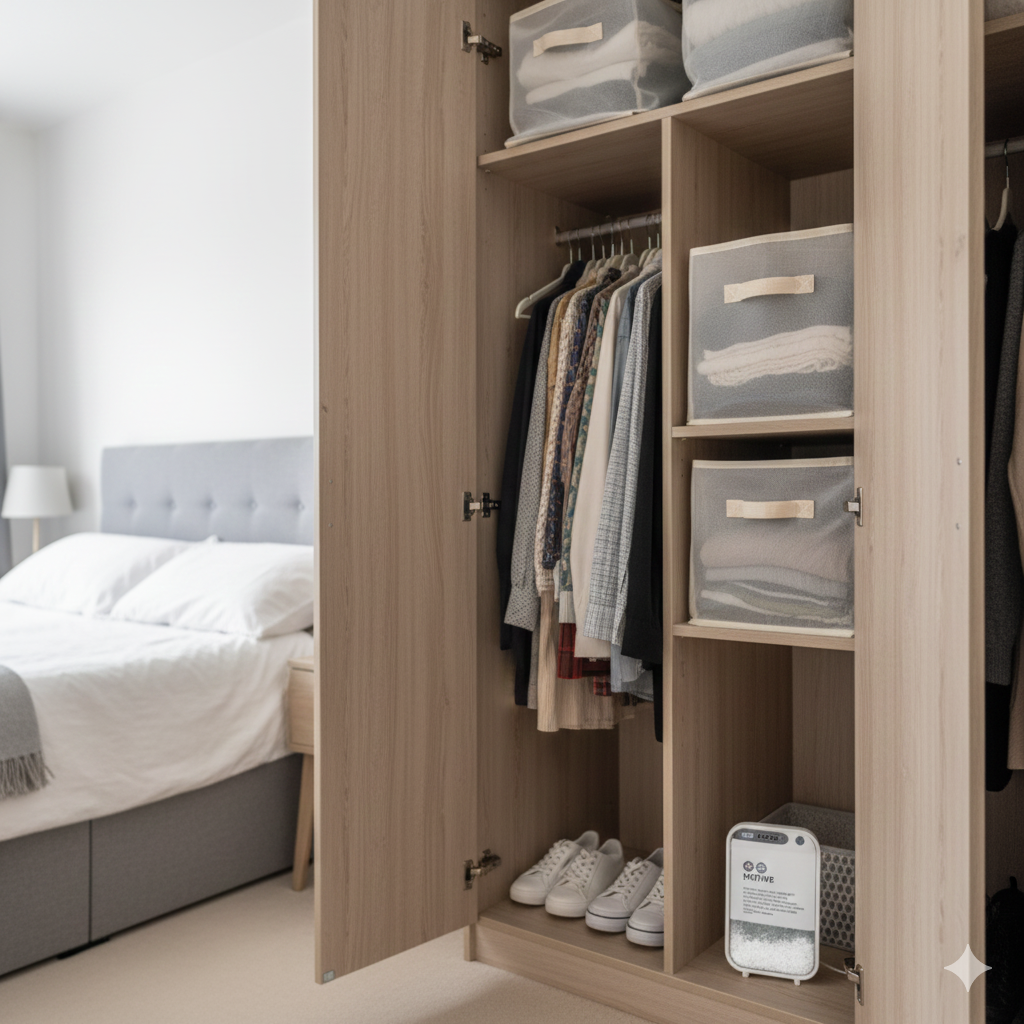
2. Breathable fabric storage bags (seasonal clothes)
For clothes you don’t wear daily, breathable fabric bags allow air movement while keeping dust off.
Best for:
- jumpers
- spare bedding
- out-of-season clothing
Avoid vacuum bags for everyday use — they trap moisture.
Example (Amazon UK):
Lifewit Fabric Clothes Storage Bags (Breathable) – View on Amazon
3. Breathable garment covers (hanging clothes)
If hanging clothes pick up smells, replace plastic covers with breathable ones.
They:
- reduce trapped humidity
- allow airflow
- prevent stale odours forming around collars and shoulders
Example (Amazon UK):
Breathable Cotton Garment Covers (Wardrobe Use) View on Amazon
Why rewashing doesn’t solve this
Many people respond to wardrobe smells by:
- rewashing clothes
- adding more detergent
- using fragrance boosters
This only masks the issue.
If moisture remains in storage, smells will return — sometimes worse, because detergent residue holds onto damp.
The fix isn’t more washing. It’s changing the storage environment.
A simple routine that works long-term
This setup suits most small UK homes:
After drying
- extra 30–60 minutes before storage
- thickness check on heavy areas
Storage
- clothes not packed tightly
- wardrobe doors opened daily
- moisture absorber in problem spots
Weekly
- short airing session for wardrobes and drawers
It’s simple — but consistent.
🔗 Keep Moisture Under Control 🧺💨
If wardrobe smells are a recurring problem, it helps to look at the whole laundry system — not just storage alone.
🏠 How to Store Laundry in Small Flats Without Trapping Moisture, Mould or Smells
This guide goes deeper into breathable storage, airflow, and layout tips for compact homes — ideal if your wardrobe sits on an external wall or space is tight.
⚡ Are Washer-Dryer Combos Worth It for Energy Savings in Small UK Homes?
If you’re relying on indoor drying year-round, this article explains when washer-dryer combos reduce moisture in the home — and when they quietly increase energy use instead.
Together, these guides help you manage drying, storage, and indoor humidity as one joined-up routine.
Final thoughts
If clothes smell after being put away, the issue isn’t cleanliness — it’s trapped moisture.
Wardrobes and drawers don’t forgive even small amounts of damp, especially in UK homes where airflow is limited for much of the year. Once you treat storage spaces as moisture-sensitive areas — not just places to hide clothes — the problem usually disappears.
You don’t need to rewash everything.
You don’t need strong fragrances.
You just need to stop moisture getting locked in.
If you’ve got a specific wardrobe or storage setup that keeps causing problems, flag it — real layouts often reveal issues worth turning into proper guides.
💨 Want to dry clothes faster, cheaper, and smarter—especially in small UK homes?
Explore our Laundry & Drying Efficiency Hub, a curated resource packed with expert tips, energy-saving gadgets, and clever solutions for indoor drying. From heated airers and compact dehumidifiers to smart laundry routines that actually work, this hub helps you cut costs, save space, and stay ahead of the damp.
For official, trusted UK advice on reducing energy use, the Energy Saving Trust has clear, practical guidance on saving electricity at home.

About The Author – Andrew Marshall
Andrew Marshall is a Scottish homeowner and the creator of Save Wise Living. He shares practical ways to reduce energy bills, improve home efficiency, and make everyday household routines cheaper and simpler.