
Which One Should You Actually Buy?
If your TV feels slow, clunky, or missing apps, a streaming stick is one of the cheapest upgrades you can make — and often a better experience than built-in smart TV software.
For under £50 (and often much less on sale), a good streaming stick can:
- Add all the UK catch-up apps in one place
- Make an older TV feel brand new
- Load apps faster than most smart TVs
- Use very little electricity compared to full TV systems
But the big question most people have is simple:
Fire Stick, Roku, or Chromecast — which one is actually best for UK homes?
This guide answers that clearly, with UK-specific advice, honest trade-offs, and simple recommendations based on how you actually watch TV.
Ofcom’s UK research shows that streaming devices are now one of the main ways people watch TV at home, which is why ease of use, app availability and long-term reliability matter more than headline specs.
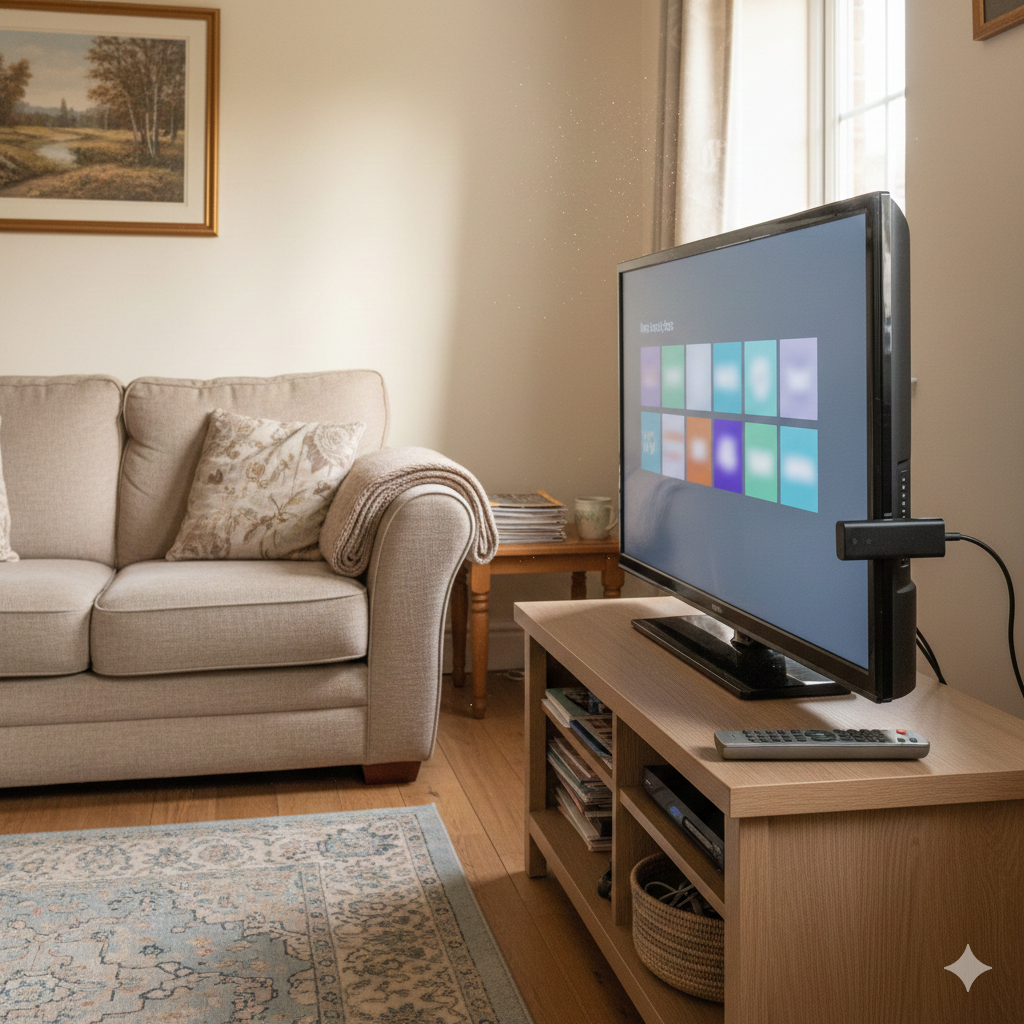
The 10-Second Decision Guide
If you just want the answer, start here:
- You already use Amazon Prime or Alexa → Fire TV Stick
- You want the cleanest, simplest interface → Roku Streaming Stick
- You use Android phones or Google Home → Chromecast
If you want to avoid the wrong buy (or understand why), read on.
What Actually Matters When Choosing a Streaming Stick
Ignore most spec sheets — for everyday use, these are the things that really make a difference.
1. UK App Support (Non-Negotiable)
A good streaming stick in the UK must support:
- BBC iPlayer
- ITVX
- Channel 4
- My5
- Netflix
- Prime Video
- Disney+
- YouTube
All three platforms support the major UK apps, but how they present and prioritise them differs.
2. Ease of Use
This matters more than people expect — especially for:
- family members
- guests
- anyone who “just wants it to work”
Menus, remotes, and app switching can feel very different between platforms.
3. Speed & Responsiveness
Streaming sticks are often faster than built-in smart TV software, even on newer TVs. You’ll notice it when:
- opening apps
- switching between services
- navigating menus
4. Ads & Interface Clutter
Some platforms push their own content more heavily. That doesn’t make them bad — but it does affect daily experience.
5. Power Use
Streaming sticks use very little electricity compared to TVs or consoles, but standby behaviour still matters if left plugged in all year.
Amazon Fire TV Stick
Best for: Prime households & Alexa users
The Fire TV Stick is the most common choice in the UK, largely because it integrates tightly with Amazon Prime Video and Alexa.
What It’s Like to Use
The home screen is content-driven. You’ll see lots of recommendations, rows of shows, and Amazon promotions. Some people like this; others find it busy.
The remote is responsive and includes Alexa voice search, which works well for finding shows quickly.
Pros
- Excellent Prime Video integration
- Very good UK app support
- Fast performance for the price
- Alexa voice control built in
- Often heavily discounted
Cons
- Interface can feel cluttered
- Amazon content is heavily promoted
- Less customisable than Roku
Best Fire Stick for Most People
- Fire TV Stick (HD) → non-4K TVs
- Fire TV Stick 4K / 4K Max → if your TV supports 4K
Choose Fire TV Stick if: you already pay for Amazon Prime or use Alexa regularly.
Roku Streaming Stick
Best for: Simplicity & no-nonsense streaming
Roku is often overlooked in the UK, but it’s arguably the easiest streaming platform to live with.
What It’s Like to Use
The interface is clean and app-focused. You get a simple grid of apps — no heavy recommendations, no clutter.
This makes Roku especially good for:
- shared family TVs
- older users
- anyone who hates complicated menus
Pros
- Clean, simple interface
- Excellent UK app support
- Very easy to use
- Stable and reliable
- Minimal ads
Cons
- Less voice-assistant focus
- Fewer smart-home integrations
- Not as flashy
Best Roku Option
- Roku Streaming Stick 4K (often discounted into budget range)
Choose Roku if: you want streaming that’s simple, calm, and distraction-free.
Chromecast (with Google TV)
Best for: Android users & Google homes
Chromecast has changed a lot over the years. The modern Chromecast with Google TV is no longer just a casting dongle — it’s a full streaming platform.
What It’s Like to Use
The interface is recommendation-heavy, similar to Fire TV, but more focused on Google services. It works particularly well if you:
- use Android phones
- use Google Home
- like voice search via Google Assistant
Casting from your phone is seamless and still one of Chromecast’s biggest strengths.
Pros
- Excellent casting from phones
- Google Assistant built in
- Strong UK app support
- Works well with Android ecosystems
Cons
- Interface can feel busy
- Less ideal for non-Google users
- Slight learning curve for some
Best Chromecast Option
- Chromecast with Google TV (HD or 4K)
Choose Chromecast if: you use Android phones or Google Home devices.
Comparison Summary (Real-World Use)
| Feature | Fire TV Stick | Roku | Chromecast |
|---|---|---|---|
| UK catch-up apps | Excellent | Excellent | Excellent |
| Interface | Content-heavy | Clean & simple | Recommendation-heavy |
| Ease of use | Good | Excellent | Good |
| Voice control | Alexa | Basic | Google Assistant |
| Casting from phone | Limited | Limited | Excellent |
| Ads | More noticeable | Minimal | Moderate |
| Power use | Very low | Very low | Very low |
How Much Power Do Streaming Sticks Use?
Very little.
In real-world use:
- Streaming sticks typically use a few watts while streaming
- Standby power is minimal
- Running costs are pennies per year, not pounds
They’re far cheaper to run than:
- games consoles
- media PCs
- turning TV volume up excessively
If you’re energy-conscious, enable sleep/standby features or switch off at the wall overnight.
🔗 You Might Also Find This Helpful
📺 Everyday Tech Upgrades That Actually Make a Difference
If you’re improving your TV setup or shared family tech, these guides work well alongside choosing a streaming stick:
- Best Tablets for Families UK (Sturdy, Fast & Budget-Friendly)
Family-friendly tablets designed for shared use, good performance and long-term value. - Top 5 Soundbars Under £100 UK (Small, Powerful, Low Power Use)
Compact soundbars that dramatically improve TV audio without using much electricity.
Common Mistakes to Avoid
- ❌ Buying 4K models for non-4K TVs
- ❌ Assuming newer TVs don’t need a stick (many built-in systems are slow)
- ❌ Buying no-name “Android sticks” with poor support
- ❌ Ignoring Wi-Fi quality (router placement matters more than stick choice)
🧠 Author Insight
I personally use a Fire TV Stick on one of our main TVs, mainly because it’s quick, reliable, and works seamlessly with Prime Video. What surprised me most is how much smoother it feels compared to built-in smart TV systems — apps load faster, streaming is more stable, and it uses very little power even when left plugged in. After using it day to day, it became clear why streaming sticks are one of the smartest low-cost upgrades for UK homes, which is what prompted me to put this comparison together.
Final Recommendation
If you want the best all-round choice for UK homes, the Fire TV Stick is the safest buy — especially if you already use Amazon Prime.
If you want the simplest and cleanest experience, Roku is the easiest platform to live with day to day.
If you’re deep into the Google / Android ecosystem, Chromecast with Google TV makes the most sense.
All three use very little power, support UK apps well, and offer far better performance than most built-in TV systems. The best choice depends on how you already use your tech, not which one claims the most features.
Explore more energy-efficient devices and budget-friendly upgrades in our Everyday Tech Savings Hub from smart gadgets to larger home tech that cuts costs without compromise.
For official, trusted UK advice on reducing energy use, the Energy Saving Trust has clear, practical guidance on saving electricity at home. https://energysavingtrust.org.uk

About The Author – Andrew Marshall
Andrew Marshall is a Scottish homeowner and the creator of Save Wise Living. He shares practical ways to reduce energy bills, improve home efficiency, and make everyday household routines cheaper and simpler.