
When drying clothes indoors, most people fall into one of two camps.
Some stack everything into one room — usually the spare room or box room — and shut the door.
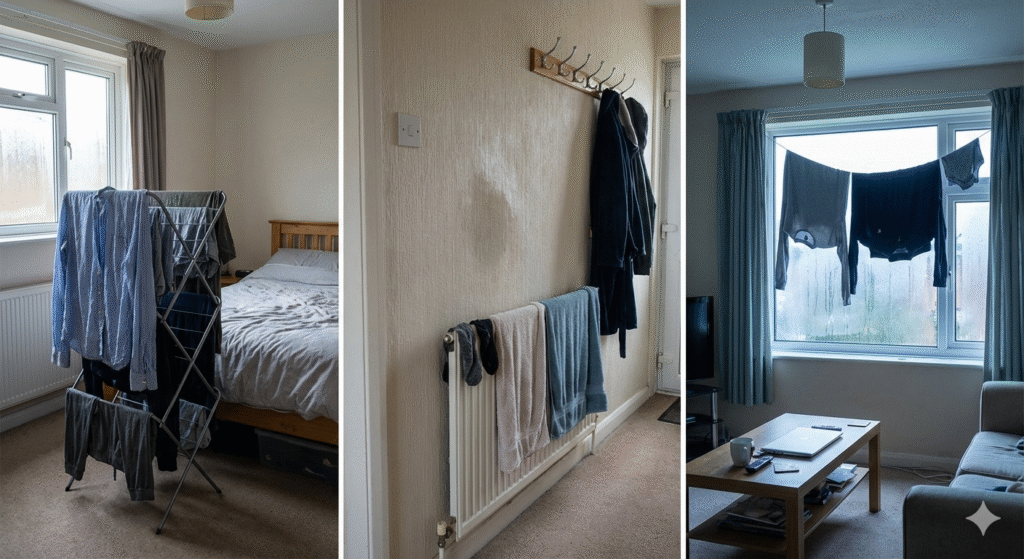
Others spread clothes around the house: a few items in the bedroom, some on the landing, towels near a radiator, maybe a rack in the living room.
Both approaches feel logical.
But one is usually far better for drying speed, moisture control, and preventing damp — especially in UK homes.
So what’s actually best?
Should you dry clothes in one room, or spread them around the house?
Let’s break it down properly, without myths or guesswork.
This article is part of our Laundry & Drying Efficiency hub, focused on practical UK advice for drying clothes indoors faster, avoiding damp, and keeping energy use low.
In This Guide
Why This Question Matters More Than You Think
Drying clothes indoors isn’t just about getting them dry.
It affects:
- indoor humidity levels
- condensation on windows and walls
- mould risk
- how fresh clothes smell once stored
- how much heating or electricity you use
Where you dry clothes determines where moisture ends up — and whether it leaves the house at all.
How Much Moisture Does Laundry Release?
A single washing load can release 1.5–2.5 litres of water into the air.
That moisture doesn’t vanish. It either:
- escapes through ventilation, or
- settles on cold surfaces around the home
How you position laundry decides which of those happens.
Drying Clothes in One Room: The Pros & Cons
✅ The Benefits
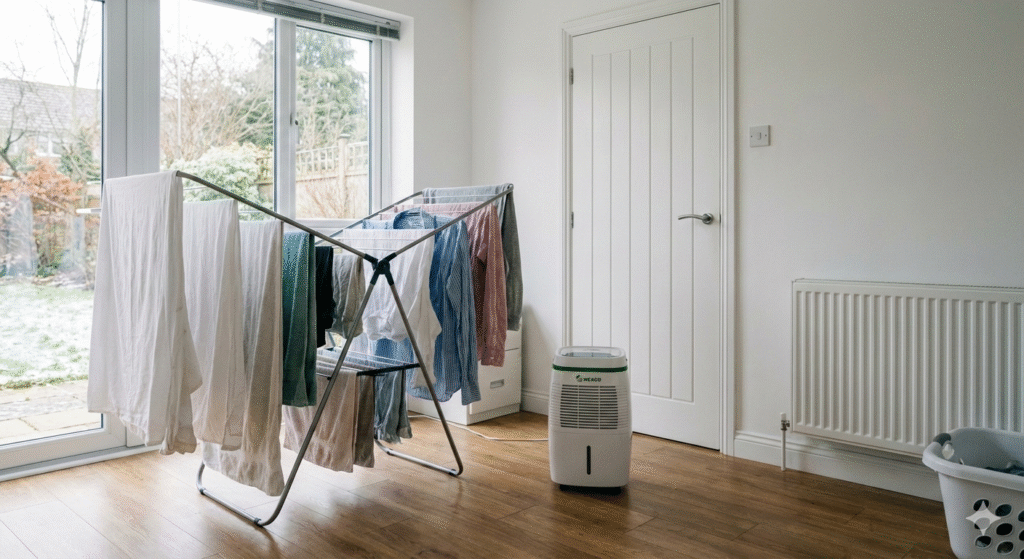
Drying clothes in one dedicated room has major advantages:
1. Moisture Is Contained
All the moisture released stays in one space instead of spreading through the house.
That means:
- less condensation elsewhere
- drier bedrooms and living areas
- less risk of musty smells in wardrobes
This is especially important in winter when ventilation is limited.
2. Dehumidifiers Work Properly
If you use a dehumidifier, one-room drying is far more efficient.
In a closed room:
- humidity rises quickly
- the dehumidifier detects moisture easily
- drying speeds up
- electricity use drops
Trying to dehumidify an entire house while drying laundry is slow and wasteful.
3. Better Airflow Control
In one room, you can:
- space clothes evenly
- position them away from walls
- control door and window opening
That control is almost impossible when clothes are scattered.
❌ The Downsides
There are a few — but they’re manageable.
- The room may feel damp if not ventilated properly
- Poor airflow can slow drying
- Small rooms can feel cluttered
These issues come from setup problems, not the one-room approach itself.
Spreading Clothes Around the House: The Pros & Cons
❌ The Big Problem: Moisture Everywhere
Spreading clothes around feels like it should help — more space, more air — but in reality it often causes problems.
Moisture ends up:
- drifting into bedrooms
- condensing on colder windows
- settling into soft furnishings
- lingering in hallways and stairwells
You don’t see it immediately — but you smell it later.
❌ Harder to Control & Remove Moisture
When clothes are spread:
- humidity rises slowly across the whole house
- no single area feels “humid enough”
- dehumidifiers work less efficiently
- ventilation becomes inconsistent
You may avoid visible condensation — but moisture still builds up over time.
❌ Clothes Often Smell “Dry but Not Fresh”
This is one of the biggest complaints.
Clothes dry eventually — but:
- drying takes longer
- moisture leaves fabric unevenly
- odours linger
That’s why clothes dried around the house often smell stale after being put away.
Are There Any Benefits?
There are a few limited situations where spreading clothes can work:
- very small loads
- warm weather with windows open
- homes with strong mechanical ventilation
But for most UK homes in autumn and winter, it’s not the best approach.
The UK Winter Reality
UK homes in winter are:
- colder
- more sealed
- more humid
Cold air holds less moisture, so water vapour quickly condenses on:
- windows
- external walls
- corners of rooms
Spreading laundry increases the number of cold surfaces exposed to moisture — which raises condensation risk.
This is why one-room drying works better specifically in UK winters.
The Best Setup: One Room, Done Properly
Drying in one room only works if it’s done right.
Here’s what makes the difference.
✔ Choose the Right Room
Ideal options:
- spare bedroom
- box room
- bathroom with extractor fan
Avoid:
- main living areas
- bedrooms where people sleep
- hallways and stairwells
✔ Space Clothes Correctly
- Leave gaps between items
- Don’t double-layer towels or jeans
- Avoid pushing airers against walls
Crowded clothes trap moisture no matter where they’re placed.
✔ Control Airflow (Don’t Guess)
You have three good options:
- Dehumidifier (best option)
- Extractor fan (bathroom/kitchen)
- Short ventilation bursts (5–10 minutes)
Leaving a window open all day is rarely ideal in winter.
✔ Use Heat Sensibly
You don’t need high heat — just consistency.
- Low, steady heat helps evaporation
- Sudden cold slows drying
- Turning heating off entirely often backfires
What If You Have No Spare Room?
Not everyone has the luxury of a spare space.
If you live in a flat or small house:
- choose one main drying area
- keep other rooms door-closed
- use vertical or wall-mounted airers
- focus moisture control in that zone
It’s still better than spreading clothes everywhere.
Common Myths (That Cause Damp)
❌ “Spreading clothes dries them faster”
❌ “Moisture disappears once clothes feel dry”
❌ “Condensation only matters if windows are wet”
❌ “Dehumidifiers work the same anywhere”
These myths lead directly to:
- lingering damp
- musty smells
- wasted energy
What About Combining Methods?
Many UK homes get the best results by combining:
- one-room drying
- heated airer or standard rack
- dehumidifier or controlled ventilation
This keeps moisture contained and removes it efficiently.
Signs Your Current Setup Isn’t Working
Watch out for:
- clothes smelling damp after storage
- condensation appearing in other rooms
- slow drying despite warm air
- a “heavy” or clammy feeling indoors
These usually mean moisture is spreading instead of being removed.
Independent guidance from the Energy Saving Trust explains that controlling where moisture builds up inside the home is key to reducing condensation, damp, and mould — especially when drying clothes indoors during winter.
🔗 Related Guides That Solve the Next Problems 🧺
Where you dry clothes is only part of the equation — how long moisture hangs around and how it escapes matters just as much.
These guides build directly on what you’ve learned here:
- How Long Should You Run a Dehumidifier When Drying Clothes Indoors? — explains exact runtimes so moisture is removed efficiently without wasting electricity.
- Should You Open a Window When Drying Clothes Indoors? (UK Winter Advice) — clear guidance on when ventilation helps drying and when it actually causes heat loss or condensation.
Together, these articles help you fine-tune your indoor drying setup so moisture stays contained and leaves the house properly.
✍️ Author Insight
One of the biggest mistakes people make with indoor drying isn’t the equipment they use it’s where they put the clothes. In real UK homes, spreading laundry around often feels sensible but quietly creates moisture problems elsewhere. Concentrating drying in one controlled space consistently leads to fresher clothes, faster drying, and fewer damp issues overall
The Bottom Line
So — should you dry clothes in one room or spread them around the house?
For most UK homes, especially in winter: drying clothes in one room is clearly better.
It:
- contains moisture
- protects the rest of your home
- improves drying speed
- reduces smells and damp
- works properly with dehumidifiers and ventilation
Spreading clothes around might feel helpful — but in reality, it often spreads moisture problems instead.
Get the setup right, and indoor laundry becomes far easier to manage — even in the coldest months.
If you want to optimise your entire indoor drying setup — from moisture control to energy savings — our Laundry & Drying Efficiency Hub pulls everything together. It covers the smartest ways to dry clothes indoors, prevent damp, and reduce running costs across UK homes, especially during winter.

About The Author – Andrew Marshall
Andrew Marshall is a Scottish homeowner and the creator of Save Wise Living. He shares practical ways to reduce energy bills, improve home efficiency, and make everyday household routines cheaper and simpler.