
Drying clothes indoors is normal in UK homes — especially during autumn and winter. But most people massively underestimate one thing:
how much moisture wet laundry actually releases into the air.
It’s easy to assume it’s just “a bit of damp air”.
In reality, a single load of washing can release litres of water into your home — often more than a full kettle.
That moisture doesn’t disappear. It has to go somewhere.
This guide explains:
- exactly how much moisture clothes release when drying indoors
- what happens to that moisture in UK homes
- why condensation and musty smells appear
- and how to manage it properly without over-ventilating or wasting heat
This article is part of our Laundry & Drying Efficiency hub, focused on practical UK advice for drying clothes indoors faster, avoiding damp, and keeping energy use low.
In This Guide
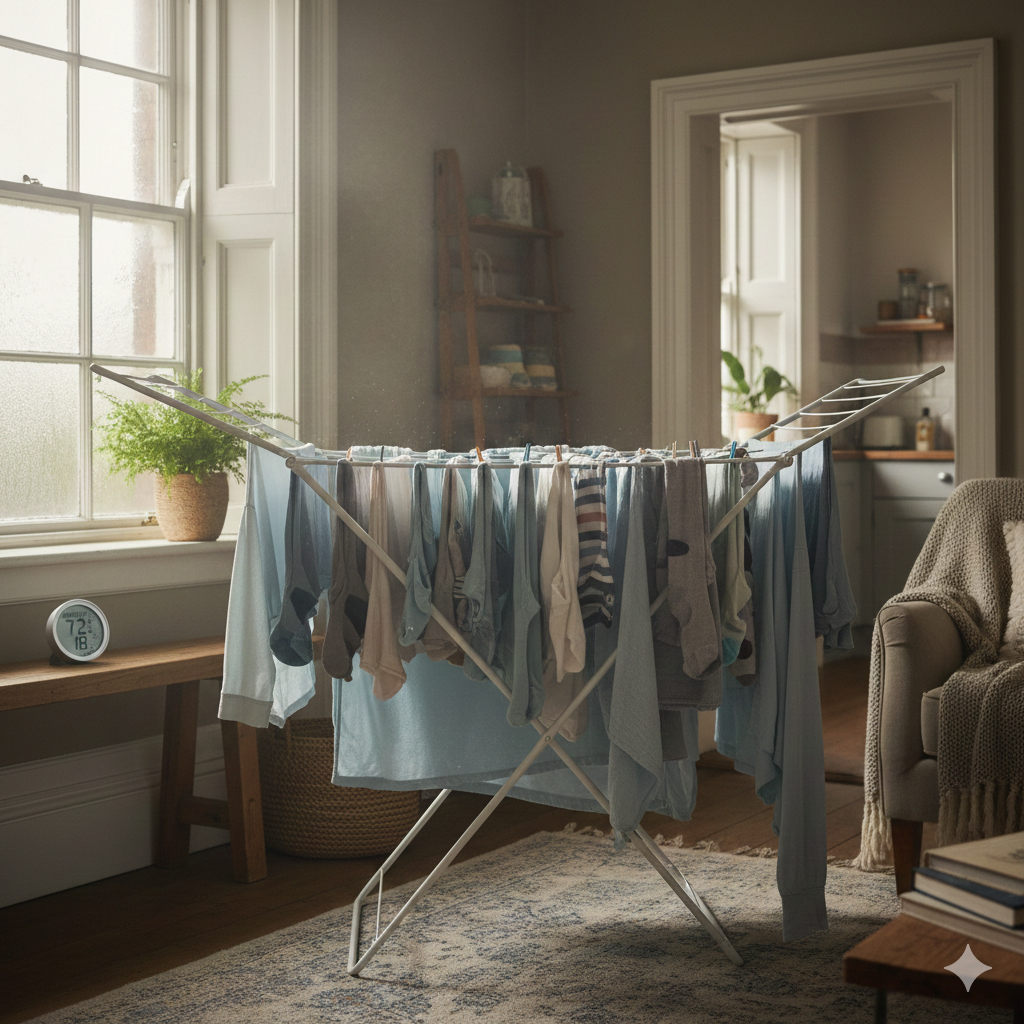
The Short Answer (So You Know What We’re Talking About)
On average:
A full load of laundry releases 1.5 to 2.5 litres of moisture into the air when dried indoors.
That’s:
- 6–10 mugs of water
- More moisture than a long shower
- Enough to raise indoor humidity by 10–20% in a single room
And that’s for one load.
Why Clothes Hold So Much Water After Washing
Even after a high spin cycle, clothes are still holding a surprising amount of water.
Typical figures:
- Washing machine spin at 1,400 rpm still leaves 40–50% of the fabric’s weight as water
- Towels, jeans, and hoodies hold the most
- Synthetic fabrics release moisture faster, but still contribute
When clothes dry, every gram of that water becomes water vapour in your home.
Where Does That Moisture Actually Go?
Once released, moisture has only three options:
- Ventilation – it escapes through windows, vents, or fans
- Extraction – it’s removed by a dehumidifier
- Condensation – it settles on cold surfaces
If options 1 or 2 don’t happen fast enough, option 3 always wins.
That’s why moisture from laundry often shows up as:
- wet windows
- damp corners
- musty wardrobes
- towels that smell “off” after drying
How Indoor Drying Affects Humidity Levels
Most UK homes sit at:
- 40–55% relative humidity (healthy range)
Drying clothes indoors can push that to:
- 65–75%+ within hours
At those levels:
- condensation forms easily
- mould spores activate
- fabrics dry slower
- smells linger
This is why homes can feel clammy even when the heating is on.
Does It Matter Where You Dry Clothes?
Yes — hugely.
Drying in:
- one closed room → moisture is concentrated
- multiple rooms → moisture spreads across the home
Spreading laundry doesn’t reduce moisture — it distributes it.
That’s why people often say:
“I don’t get condensation where the clothes are — it appears somewhere else.”
The moisture is travelling.
Why Winter Makes the Problem Worse in the UK
Cold air holds less moisture than warm air.
In winter:
- warm indoor air absorbs moisture from clothes
- that air hits cold windows or walls
- moisture condenses instantly
That’s why laundry-related damp is far more common in UK winters than summer — even if you dry clothes the same way year-round.
How Long Does Laundry Release Moisture?
Moisture release isn’t instant.
- First 2–3 hours: most intense release
- Next 4–6 hours: slower evaporation
- Thick fabrics can continue releasing moisture for 8–12 hours
This is why:
- clothes feel dry but rooms still feel damp
- smells appear after clothes are put away
The air hasn’t recovered yet.
Why Opening a Window Isn’t Always Enough
Ventilation helps — but it has limits.
Opening a window:
- removes moisture
- but also removes heat
- and often pulls in cold, damp outdoor air
In winter, this can:
- slow drying
- increase heating costs
- move moisture to other rooms
Short, controlled ventilation works better than leaving windows open all day.
How a Dehumidifier Changes the Equation
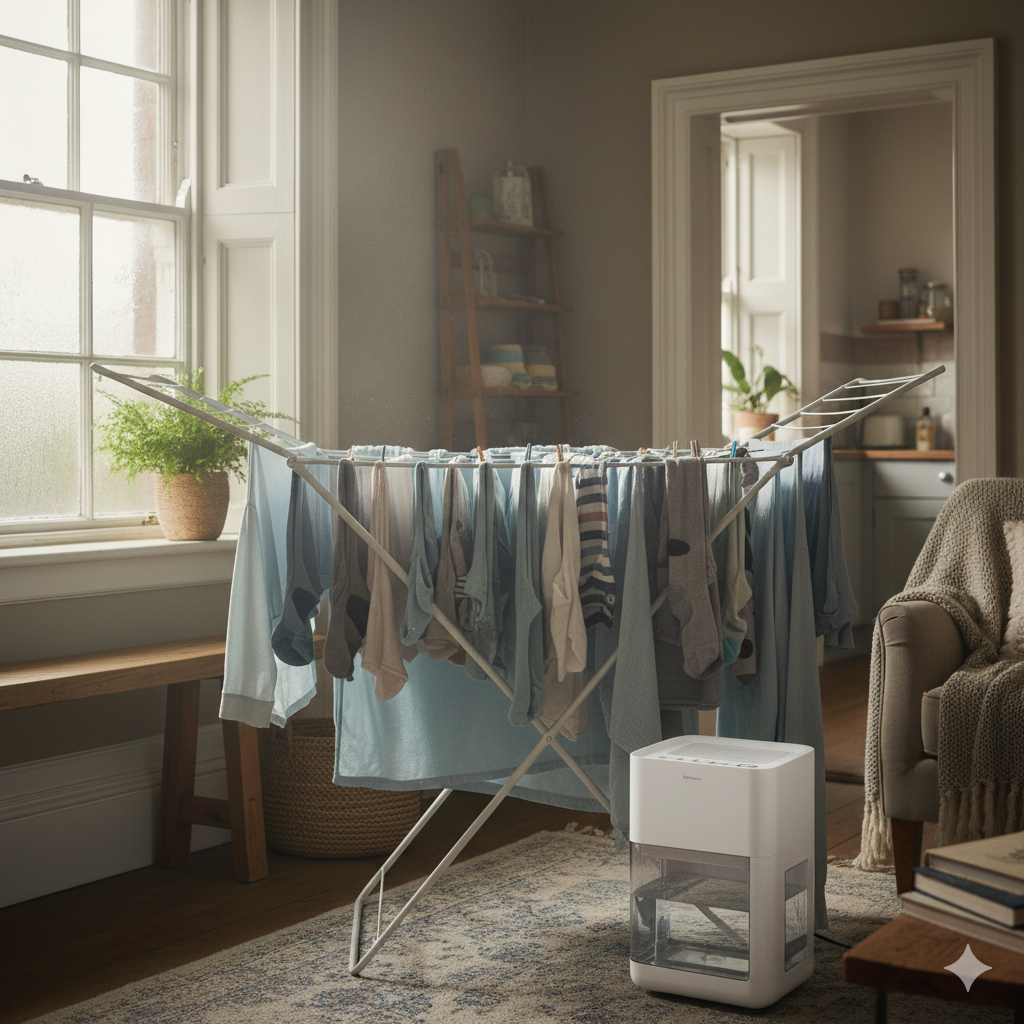
A dehumidifier doesn’t move moisture — it removes it.
Instead of:
- moisture floating around the house
- settling on windows and walls
It’s collected as water in a tank.
For laundry drying, this is a game-changer.
A Dehumidifier That’s Proven in UK Homes
If you regularly dry clothes indoors, many UK households rely on models designed specifically for this job.
For example, the Meaco Arete dehumidifier range (widely available on Amazon UK) is popular because:
- it’s sized for real UK room conditions
- removes moisture quickly without over-drying air
- runs efficiently for long periods
- is designed for laundry drying, not just damp control
Used in a closed room with an airer, it can remove most of the 1.5–2.5 litres of moisture released by a full wash before it ever reaches walls or windows.
Why This Matters Even If You Don’t See Condensation
The biggest mistake people make is assuming:
“If I don’t see wet windows, I’m fine.”
Moisture can still:
- soak into soft furnishings
- linger in wardrobes
- stay trapped in thick fabrics
That’s when:
- clothes smell after storage
- towels never feel fresh
- rooms feel heavy despite heating
Moisture problems are often invisible first, obvious later.
How to Reduce Laundry Moisture Without Overcomplicating Things
You don’t need to change everything.
Small improvements help:
- use the highest spin speed your clothes allow
- dry laundry in one room, not all over the house
- space clothes properly on the airer
- remove moisture instead of chasing it with airflow
The goal isn’t zero moisture — it’s control.
🔗 What to Do With All That Moisture 🧺💧
Knowing how much moisture laundry releases is only half the story — where that moisture goes is what determines whether you get condensation, damp smells, or slow drying.
If you want to handle indoor drying properly in real UK conditions, these guides show what to do next:
- Should You Open a Window When Drying Clothes Indoors? (UK Winter Advice) — explains when ventilation actually helps remove moisture, and when it just wastes heat.
- Should You Dry Clothes in One Room or Spread Them Around the House? (UK Advice) — shows why containing moisture in one space is usually far more effective than spreading laundry around your home.
Together, they help you move from understanding the problem to fixing it — without freezing your house or chasing damp from room to room.
✍️ Author Insight
Most people I speak to are shocked when they realise just how much water a single load of laundry releases into the air. Once you see it in real terms — litres, not just “humidity” — a lot of everyday UK damp problems suddenly make sense. The good news is that you don’t need drastic changes to manage it properly; a few small adjustments to how and where you dry clothes usually make the biggest difference.
The Bottom Line
So, how much moisture do clothes release when drying indoors?
Enough to cause real problems if it isn’t managed properly.
In UK homes:
- 1.5–2.5 litres per load is normal
- winter makes moisture harder to escape
- spreading laundry spreads damp
- ventilation alone often isn’t enough
Once you understand how much water laundry releases, condensation and musty smells suddenly make sense — and so does why moisture control matters more than people realise.
Manage the moisture, and indoor drying stops being a problem — even in the depths of a UK winter.
For official, trusted UK advice on reducing energy use, the Energy Saving Trust has clear, practical guidance on saving electricity at home.
💨 Want to dry clothes faster, cheaper, and smarter—especially in small UK homes? Explore our Laundry & Drying Efficiency Hub, a curated resource packed with expert tips, energy-saving gadgets, and clever solutions for indoor drying. From heated airers and compact dehumidifiers to smart laundry routines that actually work, this hub helps you cut costs, save space, and stay ahead of the damp.

About The Author – Andrew Marshall
Andrew Marshall is a Scottish homeowner and the creator of Save Wise Living. He shares practical ways to reduce energy bills, improve home efficiency, and make everyday household routines cheaper and simpler.