
It’s that time of year again. The clocks have gone back, the afternoons disappear quicker than your phone battery, and suddenly you’re relying on artificial lighting from the moment you get home. And if your electricity bill is creeping up too, you’re definitely not alone.
Lighting might feel like a small part of your energy use, but in winter it becomes a quiet background cost — especially if you’ve got kids who leave every light blazing like you’re hosting a stadium concert.
The good news? You don’t need to buy expensive smart tech or overhaul your whole house. A few clever lighting tweaks can make your home feel warmer, brighter, and far cheaper to run.
Here are five lighting tricks that genuinely work — with simple product swaps you can make today.
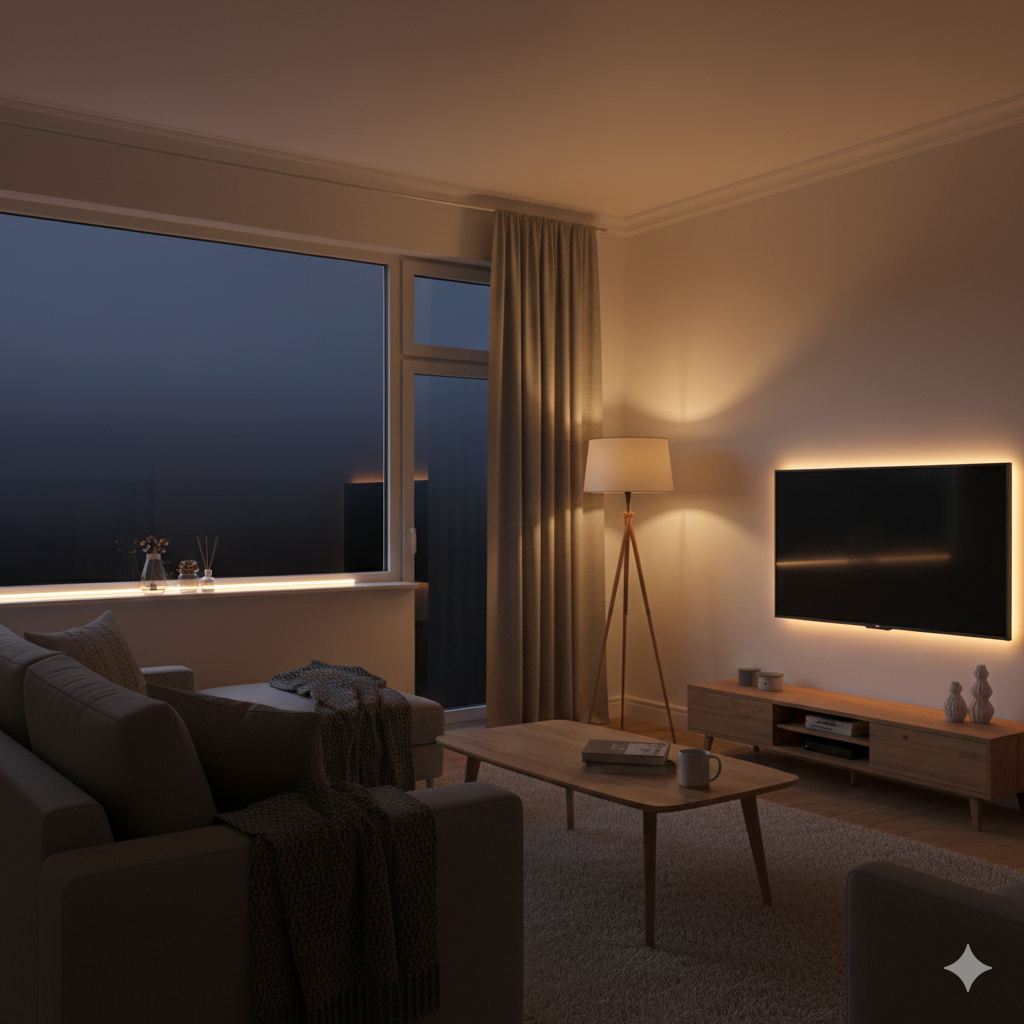
Why Your Lighting Costs Jump in Winter (Most People Don’t Realise This)
A lot of people assume lighting is too “small” to matter, but winter changes the equation completely:
- You use lights for double the hours
- Rooms stay darker for longer
- Kids come home earlier and switch everything on
- Your main ceiling lights are often high wattage
- You rely on lighting for ambience, not just visibility
In summer you might only use lights for 1–2 hours a day.
In winter, that can easily jump to 6–8 hours, especially in busy households.
Even efficient LED bulbs add up when they’re used all evening.
That’s why automations, dimming, and targeted lighting make a big difference — not just a small one.
Trick One: Let Your Lights Think for You
If you’re still manually switching lights on and off, you’re missing out. One of the easiest ways to save energy is to automate your lighting schedule. Think: lights that turn on gently in the morning, dim in the evening, and shut off completely when you head to bed.
The Lepro AI Smart Bulb E27 is a brilliant starting point. It’s not just a smart bulb — it’s a bit of a lighting designer. You can set timers, adjust brightness, and even sync it to music if you’re feeling fancy. It works with Alexa and Google Assistant, so you can say things like “dim the lounge lights” without lifting a finger. And yes, it saves energy too — over 85% compared to traditional bulbs.
What’s nice is that once you’ve set your routine, you forget about it. Your lights just do their thing, and your electricity bill quietly thanks you.
Trick Two: Motion Is Your Friend
We’ve all got those spots in the house where lights get left on for hours — hallways, bathrooms, utility rooms. You pop in for a minute, forget to switch off, and suddenly it’s been glowing for half the day.
This is where motion sensors come in. They’re the unsung heroes of smart lighting. Install one in your hallway and your lights will only come on when someone’s actually there. No more chasing the kids around to turn things off.
The Philips Hue Smart Motion Sensor is a solid pick. It’s small, reliable, and works beautifully with Hue bulbs. You can even set it to adjust brightness based on the time of day — brighter in the morning, softer at night. It’s one of those upgrades you’ll wonder how you lived without.
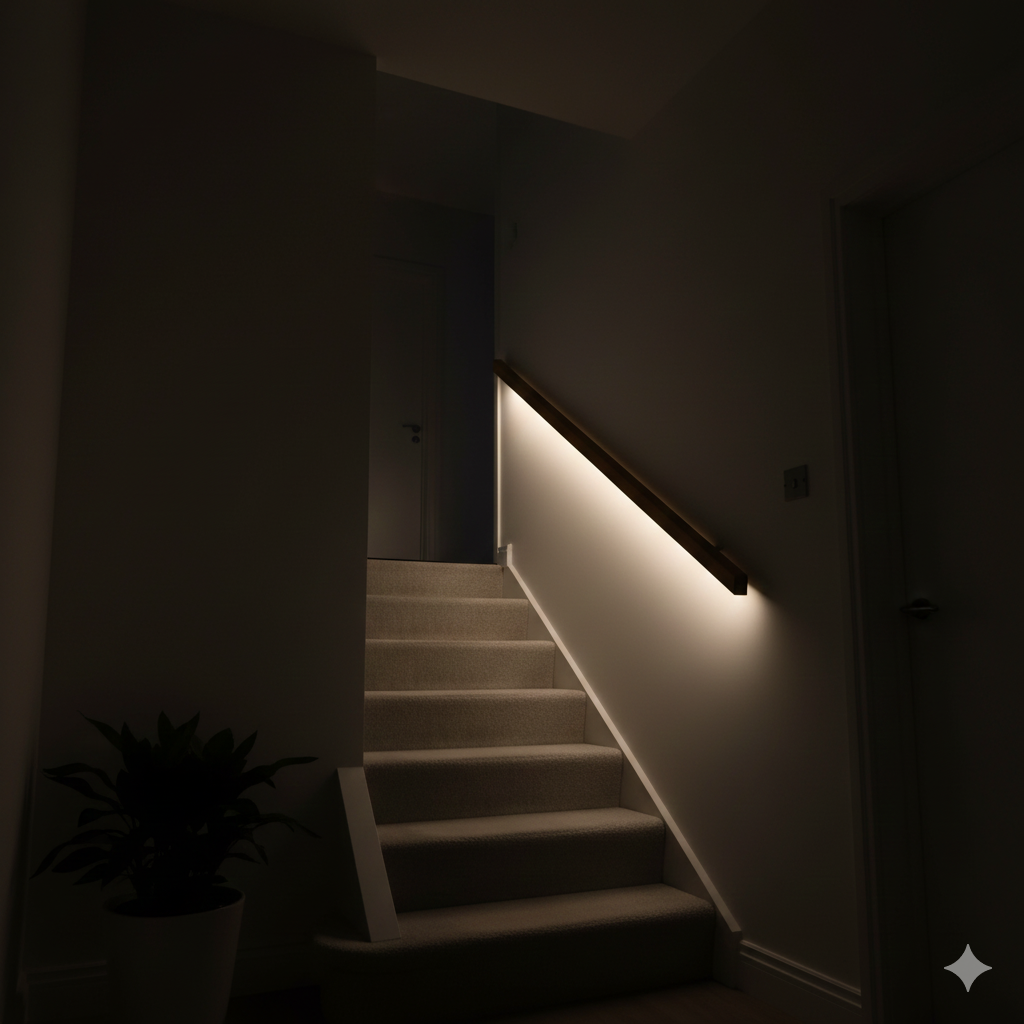
Trick Three: Dim the Drama
Full brightness isn’t always necessary. In fact, it’s often overkill. Whether you’re watching telly, reading in bed, or just relaxing, dimmed lighting feels better — and uses less power.
Smart dimmable bulbs let you dial things down without sacrificing comfort. You can go from bright and energising to soft and cosy with a tap on your phone or a voice command.
The Crompton Lamps Smart WiFi GLS Bulb is a great budget-friendly option. It replaces a 60W bulb with just 8.5W, and it’s fully dimmable via app or voice. You can even group it with other bulbs to create scenes — like “Movie Night” or “Wind Down” — that adjust multiple lights at once.
It’s not just about saving money. It’s about making your home feel better, more intentional. And if it cuts your bill at the same time? Even better.
Trick Four: Think in Zones, Not Rooms
Here’s a trick most people miss: instead of thinking about lighting room by room, think in zones. Your kitchen might have task lighting over the hob, ambient lighting for dinner, and a brighter setup for cleaning. Grouping these lights together lets you control them as a unit — and avoid lighting areas you’re not using.
Most smart lighting apps let you create zones or scenes. Once you’ve set them up, it’s one tap to switch from “Cooking Mode” to “Dinner Mood.” It’s faster, smarter, and helps you avoid over-lighting.
This works especially well in open-plan homes, where one space serves multiple functions. It’s also great for families — you can set up a “Homework Zone” in the evening and switch to “Relax” once the books are away.
Trick Five: Warm Light, Lower Wattage
Lighting isn’t just about brightness — it’s about tone. Cool white light feels sharper and more energising, while warm white is softer and more relaxing. By adjusting colour temperature, you can create the right atmosphere without cranking up the brightness.
Smart bulbs like the Lepro AI model mentioned earlier let you shift from daylight to candlelight with a swipe. You can even simulate sunrise and sunset to support your sleep cycle — brighter in the morning, dimmer at night.
It’s a subtle change, but it makes a big difference. Your home feels more comfortable, and you’re not blasting unnecessary wattage just to feel awake.
If you want straightforward, non-commercial advice on cutting bills and understanding UK energy costs, Citizens Advice has excellent resources. https://www.citizensadvice.org.uk/energy/
Common Lighting Mistakes That Waste Electricity
Even with LEDs, many people accidentally waste energy on lighting. Here are the big culprits:
❌ Using main ceiling lights for everything
Ceiling fixtures often use multiple bulbs. Switching to targeted lighting — a lamp, under-cabinet strip, or smart bulb — can reduce wattage dramatically.
❌ Forgetting to dim
Full brightness is rarely needed, especially in the evenings. Dimming saves energy instantly.
❌ Leaving hallway/bathroom lights on
These areas are perfect for motion sensors because usage is unpredictable.
❌ Using cool white light at night
Cool light feels “too bright,” so people over-light rooms. Warm tones feel cosy at lower wattage.
Fix these four mistakes and you’ll reduce lighting costs without even noticing the difference.
✍️ AUTHOR INSIGHT — Why I Wanted to Write This Article
I wrote this article because every winter I notice the same thing — the days get shorter, the lights go on earlier, and suddenly the energy bill creeps up without anyone realising why. Lighting feels small, almost too small to matter, but the truth is that these little habits make a quiet difference month after month. Once I switched to automations, dimming, and smarter bulbs in my own home, the cost dropped and my spaces felt more comfortable too. I wanted to share the simple tweaks that actually worked for me — the kind you can start using tonight, without spending a fortune.
🔗 More Smart Lighting Tips You’ll Love
If you’re ready to take your lighting setup even further, our Step-by-Step UK Guide to Automating Lighting With Motion Sensors & Smart Plugs shows you exactly how to cut energy waste in hallways, bathrooms, and bedrooms.
You can also build smarter daily routines with How to Set Up Smart Lighting Schedules to Save Energy, covering timed dimming, morning wake-up lighting, and full-house automation.
And if you want affordable upgrades, our Best Smart Lighting Kits Under £50 UK roundup highlights budget-friendly picks that make your home brighter, smarter, and cheaper to run.
Final Thought: Light Smarter, Not Harder
Lighting is one of the easiest places to start when it comes to energy savings. It’s low-cost, low-effort, and the results are immediate. Whether you’re automating schedules, installing motion sensors, or just dimming things down, every tweak helps.
If you’re starting with one upgrade, go for the Lepro AI Smart Bulb. It’s versatile, easy to use, and genuinely smart — not just flashy. From scheduling to colour control, it gives you everything you need to light your home better and cheaper.
Because in 2025, saving energy isn’t about switching things off. It’s about switching things up.
Interested in These Lighting Upgrades?
If any of the products mentioned caught your eye, here’s a quick link list to explore them directly on Amazon UK:
- Lepro AI Smart Bulb E27 – RGB + White, Alexa Compatible 💡 Why it saves money:
This bulb lets you automate everything — wake-up routines, evening dimming, and full shut-off at bedtime. Because it uses only a fraction of the power of traditional bulbs, its savings compound daily. Once you set a schedule, it quietly cuts your energy use without you ever thinking about it. - Philips Hue Smart Motion Sensor – Indoor Use 💡 Why it saves money:
Hallways, bathrooms, and utility rooms are “forgotten zones.” Lights stay on for hours because nobody notices them. A motion sensor eliminates this entirely — if the room’s empty, the light simply turns off. Zero effort. Zero waste. - Crompton Lamps Smart WiFi GLS Bulb – Dimmable E27 💡 Why it saves money:
Dimming uses significantly less electricity than full brightness. Even dropping brightness to 70% cuts power use while still keeping the room perfectly comfortable. Scenes like “Movie Night” or “Wind Down” let you reduce energy use without sacrificing atmosphere.
Want to browse more smart lighting options? You can explore similar products here:
🔗 Browse Smart Lighting on Amazon UK
Brighten your home and lower your bills with the Smart Home Tech & Lighting Hub — explore smart bulbs, motion sensors, and rechargeable gadgets that make efficiency easy.

About The Author – Andrew Marshall
Andrew Marshall is a Scottish homeowner and the creator of Save Wise Living. He shares practical ways to reduce energy bills, improve home efficiency, and make everyday household routines cheaper and simpler.