
Drying clothes indoors is a reality for most UK homes — particularly in winter, in flats, or where outdoor drying isn’t practical. With electricity costs still a concern, many households want to understand how much different drying methods actually cost per hour, and whether some options are using more power than expected.
This guide explains the real-world electricity usage of heated airers, dehumidifiers, and tumble dryers using typical UK wattages and average tariffs. The aim is to help you compare running costs clearly, understand how usage adds up over time, and choose a drying method that fits your home, space, and laundry habits.
This article is part of our Laundry & Drying Efficiency hub, focused on practical UK advice for drying clothes indoors faster, avoiding damp, and keeping energy use low.
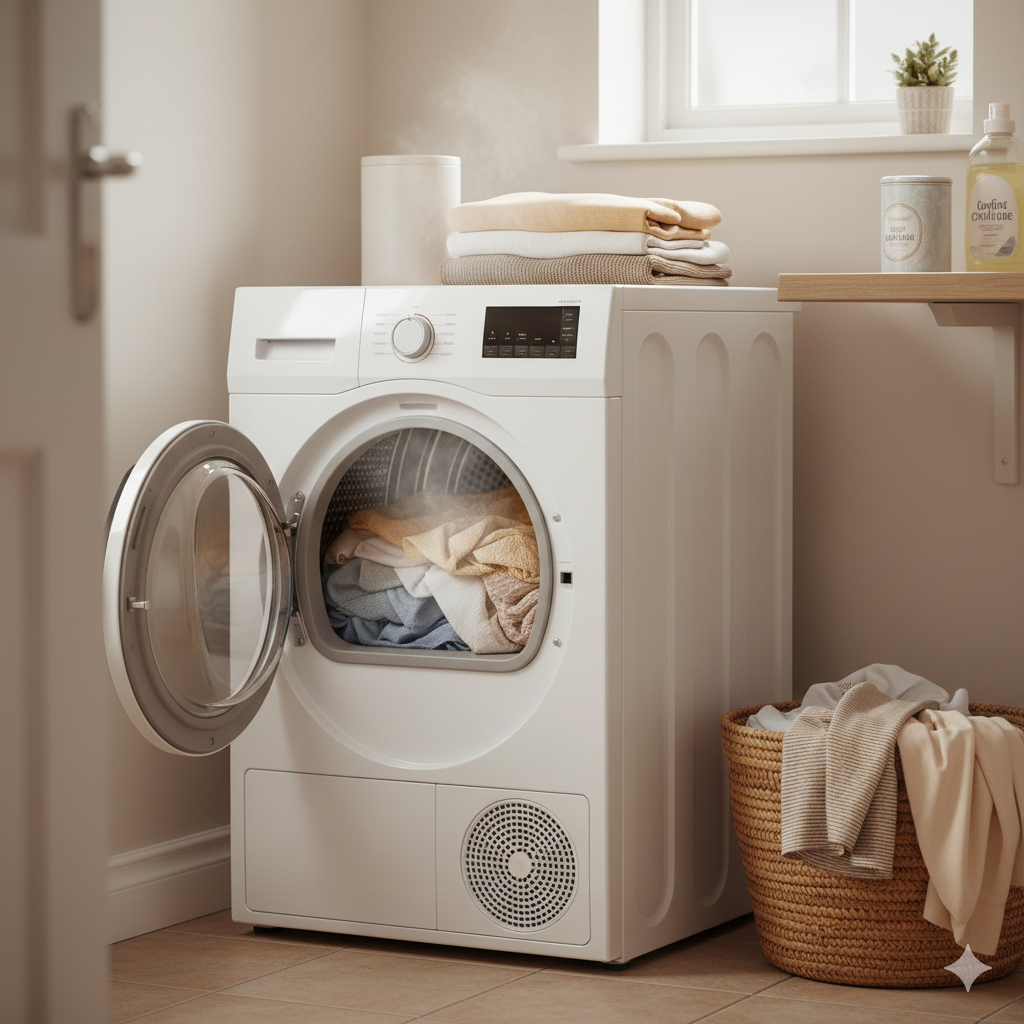
✅ Quick Comparison: Electricity Use & Cost per Hour (UK Average)
| Appliance Type | Typical Wattage | Cost per Hour (at £0.26/kWh) | Notes |
|---|---|---|---|
| Heated Airer | 200–300W | £0.05–£0.08 | Low cost, slow drying |
| Dehumidifier | 200–500W | £0.05–£0.13 | Speeds up passive drying |
| Vented Tumble Dryer | 2500–3000W | £0.65–£0.78 | Fast but energy-intensive |
| Condenser Tumble Dryer | 3000–3500W | £0.78–£0.91 | No venting needed, less efficient |
| Heat Pump Tumble Dryer | 1000–1500W | £0.26–£0.39 | Most efficient dryer type |
These figures are based on the UK average electricity rate of £0.26 per kWh (as of late 2025). Your actual cost may vary slightly depending on your energy tariff and appliance efficiency.
Hourly electricity figures are useful, but they don’t always tell the full story. This comparison of the cheapest way to dry clothes in the UK, ranked by real running cost, shows how runtime and efficiency change the picture.
🔥 Heated Clothes Airers – Low Wattage, Gentle Drying
Heated airers are essentially drying racks with built-in heating elements. They’re designed to warm clothes gently over several hours, making them ideal for overnight drying or small loads.
- Typical wattage: 200–300W
- Cost per hour: £0.05–£0.08
- Average drying time: 4–6 hours
- Total cost per load: ~£0.30–£0.50
- Best for: Small households, low budgets, overnight drying
Heated airers are popular in the UK because they’re affordable to run and don’t require installation. However, they work best in warm, ventilated rooms. In colder or damp spaces, drying can take longer and clothes may feel musty.
Tips to improve performance:
- Use a heated airer cover to trap heat and reduce drying time
- Space clothes out evenly for better airflow
- Combine with a dehumidifier to speed up drying and reduce condensation
💧 Dehumidifiers – Moisture Control That Boosts Drying
Dehumidifiers aren’t drying racks, but they can significantly speed up indoor drying by removing moisture from the air. This reduces condensation, mould risk, and drying time—especially in winter.
- Typical wattage: 200–500W
- Cost per hour: £0.05–£0.13
- Average usage time: 2–4 hours per drying session
- Total cost per load (support use): ~£0.20–£0.50
- Best for: Damp homes, winter drying, pairing with airers
Modern dehumidifiers are energy-efficient and often include a “laundry mode” that boosts extraction for faster drying. They’re especially useful in flats or homes without good ventilation.
Tips for drying clothes with a dehumidifier:
- Place it near your drying rack, ideally in a small room with the door closed
- Use the laundry mode if available
- Empty the water tank regularly or use a continuous drain hose
- Avoid running it longer than necessary—2–4 hours is usually enough
🌀 Tumble Dryers – Fastest, But Most Expensive to Run
Tumble dryers are the quickest way to dry clothes, but they’re also the most energy-intensive. There are three main types: vented, condenser, and heat pump. Each has different energy demands and drying speeds.
🔹 Vented Tumble Dryers
These dryers expel moist air through a hose, usually out a window or vent.
- Wattage: 2500–3000W
- Cost per hour: £0.65–£0.78
- Drying time: 1–1.5 hours
- Total cost per load: ~£0.80–£1.20
- Pros: Fast drying, lower upfront cost
- Cons: Requires venting, high energy use
🔹 Condenser Tumble Dryers
These collect moisture in a tank or drain it away, so no external venting is needed.
- Wattage: 3000–3500W
- Cost per hour: £0.78–£0.91
- Drying time: 1–1.5 hours
- Total cost per load: ~£1.00–£1.40
- Pros: Easy to install anywhere
- Cons: Less efficient, generates heat
🔹 Heat Pump Tumble Dryers
These use a heat exchange system to recycle warm air, making them far more efficient.
- Wattage: 1000–1500W
- Cost per hour: £0.26–£0.39
- Drying time: 1.5–2 hours
- Total cost per load: ~£0.50–£0.80
- Pros: Energy-efficient, gentle on clothes
- Cons: Slower drying, higher upfront cost
If you use a tumble dryer regularly, a heat pump model can cut your running costs by more than half compared to a vented or condenser dryer.
🧺 Real-World Example: Drying a 6kg Load of Laundry
| Method | Time | Wattage | Cost per Hour | Total Cost |
|---|---|---|---|---|
| Heated Airer | 5 hrs | 250W | £0.065 | £0.33 |
| Dehumidifier (support use) | 3 hrs | 400W | £0.104 | £0.31 |
| Vented Dryer | 1.2 hrs | 2800W | £0.728 | £0.87 |
| Condenser Dryer | 1.2 hrs | 3200W | £0.832 | £1.00 |
| Heat Pump Dryer | 1.8 hrs | 1300W | £0.338 | £0.61 |
According to the Energy Saving Trust, appliances with lower wattage and longer run times can often cost less overall than high-powered appliances used for short bursts — particularly when drying clothes indoors. Understanding how electricity usage builds up per hour makes it easier to choose a drying method that balances cost, convenience, and efficiency.
Over a month of 12 loads, that’s a difference of £12–£15 between the cheapest and most expensive options.
In a typical UK household doing two to three loads of laundry per week, the choice of drying method can quietly add £10–£20 a month to electricity bills without being noticed. Homes relying on tumble dryers for most loads tend to see higher, more consistent costs, while households using heated airers or dehumidifiers often experience lower but longer-running energy use spread across the week.
🏠 UK Flat vs House: Why Costs Can Feel So Different
In a small UK flat or spare room with the door closed, clothes often dry faster because the air volume is smaller and moisture builds up more quickly. In these cases, a heated airer paired with a dehumidifier can be surprisingly efficient, even if both are running together.
In larger houses or open-plan spaces, moisture disperses more easily, which can increase drying times when using passive methods. This is why some households find tumble dryers more convenient despite higher per-load costs — especially for bulky items like towels or bedding.
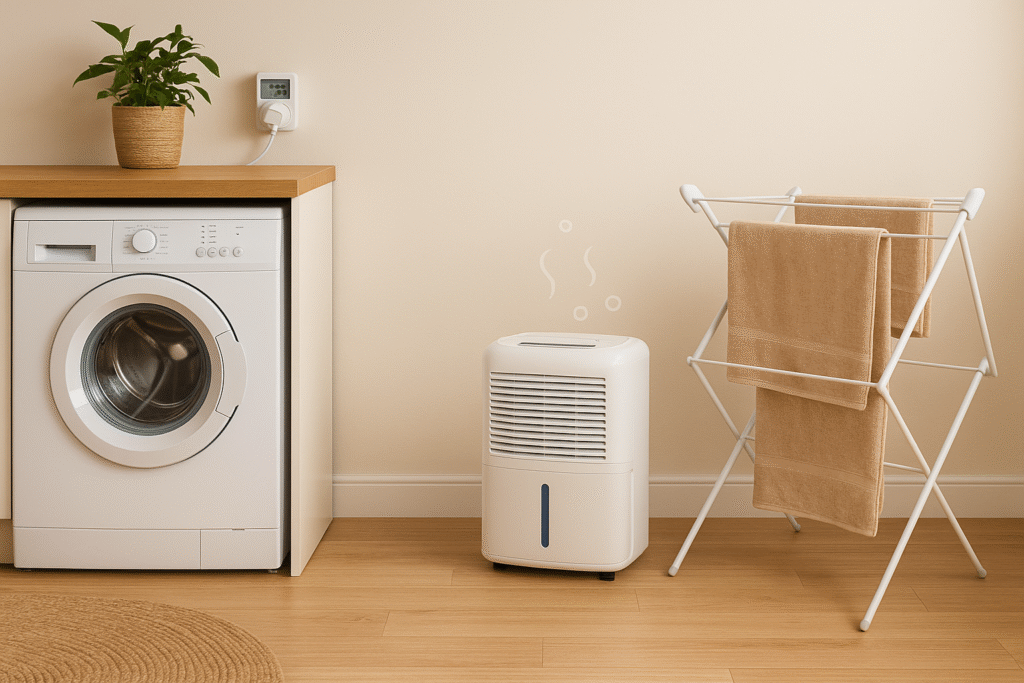
🧠 Which Drying Method Is Best for You?
💸 Want the lowest running cost?
Use a heated airer with a cover, ideally in a warm room. Add a dehumidifier to reduce drying time and prevent damp.
🧺 Need to dry large loads quickly?
A heat pump tumble dryer offers the best balance of speed and efficiency.
🏠 Live in a damp or poorly ventilated home?
A dehumidifier is a smart investment—both for drying and for preventing mould and condensation.
👨👩👧👦 Have a family and do laundry daily?
A heat pump dryer will save you the most money long-term, despite the higher upfront cost.
🧼 Tips to Reduce Drying Costs Indoors
- Spin clothes well before drying – a faster spin cycle removes more water
- Dry in warm, ventilated rooms – heat and airflow speed up drying
- Use drying racks with airflow – avoid overcrowding
- Avoid overloading dryers – it slows drying and uses more energy
- Clean filters and vents regularly – especially for tumble dryers
- Use smart plugs or timers – avoid leaving appliances on too long
🧭 Explore More Drying Solutions
If you’re weighing up your options for drying clothes efficiently, these guides offer deeper insights:
- 👉 Condenser vs Vented vs Heat-Pump Tumble Dryers — What’s the Difference (UK Guide) breaks down the pros, cons, and energy impact of each dryer type.
- 🧱 Best Wall-Mounted & Ceiling Airers UK (Space-Saving Designs) showcases clever vertical drying solutions for compact homes.
- 🌿 Best Non-Electric Clothes Drying Racks for Indoors UK (Eco Drying Options) highlights low-cost, energy-free alternatives for sustainable drying year-round.
These articles complement your decision-making and help you build the most efficient laundry setup for your space and budget.
Author insight – Andrew M
When comparing drying methods, the biggest surprise for many households isn’t the cost per hour, but how quickly higher-powered appliances add up when used frequently. In real homes, small changes — such as better spin speeds, spacing clothes properly, or shortening run times — often make just as much difference as switching appliances entirely.
✅ Final Takeaway: Choosing the Most Efficient Drying Method
The most energy-efficient way to dry clothes indoors depends on your home, your space, and how often you do laundry. Heated airers and dehumidifiers offer very low hourly running costs but require more time, while tumble dryers trade speed for higher electricity use.
For many UK households, the cheapest long-term approach is combining slower, low-wattage drying with good ventilation and moisture control — reserving tumble dryers for heavier loads or time-critical days. Understanding the per-hour cost makes it easier to balance convenience with energy savings.
If you’re unsure how long to run a dehumidifier alongside your drying setup, this guide explains typical run times and when it’s safe to switch it off.
For official, trusted UK advice on reducing energy use, the Energy Saving Trust has clear, practical guidance on saving electricity at home.
💨 Want to dry clothes faster, cheaper, and smarter—especially in small UK homes?
Explore our Laundry & Drying Efficiency Hub, a curated resource packed with expert tips, energy-saving gadgets, and clever solutions for indoor drying. From heated airers and compact dehumidifiers to smart laundry routines that actually work, this hub helps you cut costs, save space, and stay ahead of the damp.

About The Author – Andrew Marshall
Andrew Marshall is a Scottish homeowner and the creator of Save Wise Living. He shares practical ways to reduce energy bills, improve home efficiency, and make everyday household routines cheaper and simpler.