
My first winter in the house, I tried drying clothes on a rack in the living room with the heating on. The clothes took forever, the windows ran with condensation, and my energy bill was miserable. It took me a while to work out that heating the whole room was doing almost nothing useful — the moisture had nowhere to go, so it just sat in the air and settled back into the fabric.
Once I started dealing with the moisture directly rather than just adding heat, drying got faster and the house stopped feeling damp. This is what actually works in a cold, older UK home in winter.
This article is part of our Laundry & Drying Efficiency hub, focused on practical UK advice for drying clothes indoors faster, avoiding damp, and keeping energy use low.
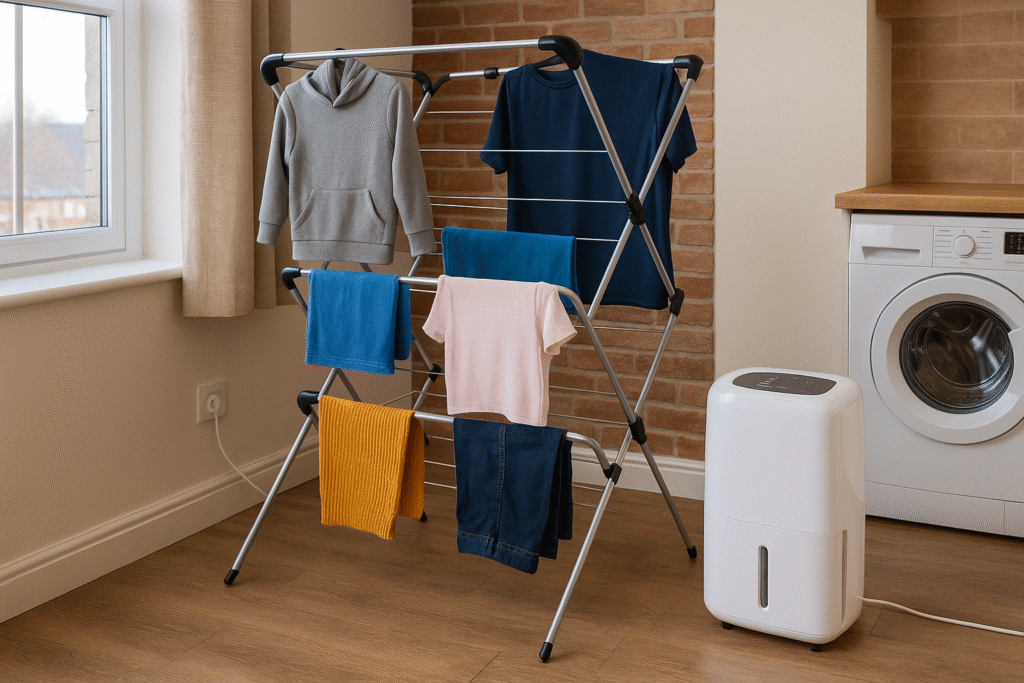
Quick Answer: How to Dry Clothes Faster in Winter Without Heating
The fastest way to dry clothes indoors during winter without turning on the heating is to remove moisture from both the clothes and the room.
The most effective setup for UK homes is:
• Use a high spin speed before drying
• Dry clothes on a heated airer with a cover
• Run a dehumidifier nearby to remove moisture
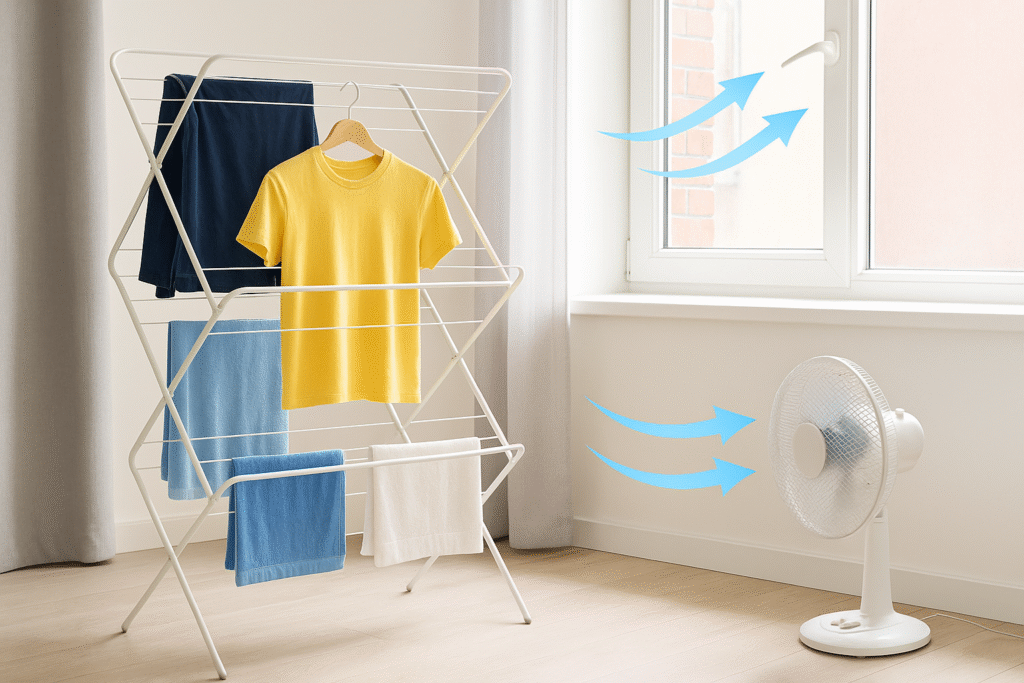
• Allow some airflow in the room
This combination speeds up evaporation, reduces humidity, and prevents condensation — allowing laundry to dry significantly faster even during cold winter weather.
Why Drying Clothes Indoors Is Harder in Winter
Winter drying challenges include:
- Cold air slows evaporation
- Closed windows reduce airflow
- Indoor humidity rises, causing condensation
- Damp conditions increase mould risk
Without heat or ventilation, clothes can take days to dry—especially in small flats or homes with limited space.
How Much Moisture Clothes Release When Drying Indoors
A single washing machine load can release 1.5 to 2.5 litres of water into the air while drying indoors.
During winter this moisture has nowhere to escape because:
• windows stay closed
• outdoor air is colder
• indoor humidity rises quickly
Once humidity rises above 60–70%, drying slows dramatically because the air is already saturated with moisture. Laundry loads release more moisture than most people realise, which is why understanding how much moisture clothes release when drying indoors helps explain why winter drying becomes so slow.
That’s why tools like dehumidifiers or controlled airflow can dramatically speed up drying — they remove moisture from the room so evaporation can continue.
Why Avoid Using Central Heating to Dry Laundry
Using central heating to dry clothes might help short-term, but it’s not ideal:
- High energy cost—heating a whole room for laundry is inefficient
- Increases condensation on windows and walls
- Doesn’t target the clothes directly
- Can over-dry the air, causing discomfort
Instead, targeted drying tools like heated airers and dehumidifiers offer better results at a fraction of the cost.
How to Dry Clothes Faster Without Heating
Here are proven strategies to dry clothes indoors in winter—without turning on the radiators.
1. Use a Heated Clothes Airer with a Cover
Heated airers use low-wattage elements (200–300W) to gently warm clothes. When paired with a fitted cover, they trap heat and moisture, speeding up drying time.
Benefits:
- Costs ~6–9p per hour to run
- Safe for all fabrics
- Ideal for overnight drying
- Foldable and space-saving
Tips:
- Always use the fitted cover
- Space clothes evenly for airflow
- Place in a warm room with ventilation
- Rotate thicker items halfway through
Drying time: 4–6 hours for a full load
2. Pair with an Energy-Efficient Dehumidifier
Dehumidifiers remove moisture from the air, helping clothes dry faster and preventing damp. Many models include a laundry mode for boosted performance.
Benefits:
- Speeds up drying by 30–50%
- Prevents condensation and mould
- Low running cost (~5–13p/hour)
- Improves indoor air quality
Tips:
- Place near the drying rack in a closed room
- Run for 2–4 hours during drying
- Use laundry mode if available
- Empty the tank regularly or use a drain hose
3. Maximise Airflow (Even in Winter)
Airflow is essential for drying. Many homes trap moisture during winter, which is why improving laundry ventilation without losing heat from your home can make a noticeable difference when drying clothes indoors. Moisture needs somewhere to go, and stagnant air slows evaporation.
Tips:
- Open windows for 10–15 minutes during drying
- Use extractor fans in bathrooms or kitchens
- Position racks near natural airflow paths
- Use a small desk fan to circulate air
4. Use a Foldable Indoor Drying Rack
If you’re not using a heated airer, a well-designed drying rack is key. Choose one with wide spacing and multiple tiers to allow airflow.
Benefits:
- No electricity required
- Lightweight and portable
- Ideal for layering drying strategies
Tips:
- Hang shirts on hangers to save rail space
- Flip or rotate clothes halfway through drying
- Combine with a dehumidifier for faster results
5. Pre-Dry Clothes with a High Spin Cycle
A high-speed spin cycle removes more water, reducing drying time significantly.
Tips:
- Use the highest spin speed your fabrics allow
- Shake out clothes before hanging
- Avoid overloading the washer
Drying time improvement: Up to 30% faster
6. Bonus Tips for Smarter Drying
- Dry in batches—don’t overload racks
- Use hangers for shirts and dresses
- Dry towels and heavy items separately
- Avoid drying in cold corners
- Use smart plugs or timers to control appliance use
Where to Dry Clothes Indoors in Winter
Choosing the right room can make a big difference to drying speed.
The best rooms for indoor drying usually have:
• good airflow
• stable temperatures
• space for racks or airers
Many UK households use:
- spare bedrooms
- utility rooms
- bathrooms with extractor fans
- kitchens with ventilation
Avoid drying clothes in cold corners, wardrobes, or completely sealed rooms, as moisture will build up quickly and slow drying.
Even small changes in room choice can reduce drying time significantly.
Cost Comparison: Heated Airer vs Dehumidifier vs Heating
To understand why targeted drying tools are more efficient than heating an entire room, it helps to compare the typical electricity use of different drying methods.
The table below shows approximate wattage, running costs, and drying times for common indoor drying setups in UK homes.
| Method | Typical Wattage | Cost per Hour | Avg Drying Time | Total Cost per Load |
|---|---|---|---|---|
| Unheated rack (no extras) | 0W | 0p | 8–24 hours | 0p (but often doesn’t fully dry) |
| Heated airer (standard) | 200–300W | 6–9p | 4–6 hours | 25–50p |
| Dehumidifier (laundry mode) | 300–500W | 8–14p | 3–4 hours | 25–55p |
| Heated airer + dehumidifier | 500–800W | 14–22p | 3–4 hours | 45–85p |
| Central heating (whole room) | 1,500–2,000W | 42–56p | 4–6 hours | £1.70–£3.30 |
Costs based on 28p/kWh. Actual figures vary by model and load size. Central heating cost reflects a single radiator — whole-house heating costs significantly more.
From my own experience
The heated airer and dehumidifier combination is exactly what I use in my house on the River Clyde. I run the airer overnight in the spare room with the dehumidifier on laundry mode — door closed, small gap at the bottom for airflow. By morning a full load is dry and the room doesn’t feel damp. Before I did this I was either running the heating for hours or rewashing things that had gone musty. The running cost for the whole overnight session works out around 50–60p, which is significantly less than what the heating was costing me for worse results.
Final Recommendation: Best Low-Energy Drying Setup
To dry clothes faster in winter without turning on the heating, the most effective setup is a heated clothes airer with a fitted cover, paired with an energy-efficient dehumidifier — many households find the most reliable results when combining a heated airer with a dehumidifier for indoor drying.
This combo delivers quick drying, low running costs, and minimal condensation—perfect for UK homes of all sizes.
Heated Airer — What to Look For
The most useful feature on a heated airer isn’t the wattage — it’s the cover. A fitted cover traps the warm air around your clothes and can cut drying time almost in half compared to running the airer uncovered. For a typical UK home, a mid-range airer with a cover will handle a full washing machine load overnight on a low setting.
Look for: a fitted cover included, at least 200W output, foldable design, and a timer or smart plug compatibility so you’re not leaving it running longer than needed.
Dehumidifier — What to Look For
For drying clothes specifically, you want a dehumidifier with a dedicated laundry mode. This runs the fan at a higher speed to pull moisture out of the air faster than the standard setting. A 12–20 litre capacity is plenty for most UK rooms — you don’t need a large commercial unit.
Running costs are low: most models cost 8–14p per hour on laundry mode, and you typically only need 2–4 hours per drying session. In my house the dehumidifier is the thing that made the biggest difference — the airer warms the clothes, but it’s the dehumidifier that actually gets the moisture out of the room.
Drying Rack — What to Look For
If you’re not using a heated airer, a good unheated rack is still worth having for lighter loads or items that don’t need heat. The main thing to look for is wide bar spacing — tightly packed rails trap moisture between fabrics and slow everything down. A three-tier foldable rack gives you enough space for a mixed load without taking over the room.
Pair it with a dehumidifier running nearby and you’ll get decent results even without heat for lighter items like t-shirts and synthetics. For towels and heavier cotton, the heated airer is worth it.
The combination that works for me — and that I’d recommend for most older or smaller UK homes — is a heated airer with a cover running overnight, with a dehumidifier in the same closed room. It’s not complicated and it’s not expensive to run. The main thing is dealing with the moisture in the air, not just adding heat. Once I understood that, winter drying stopped being a problem.
If you want to go deeper on any part of this, the Laundry and Drying Efficiency Hub has guides on specific setups, running costs, and what works in different types of UK home.
Explore More Drying Solutions

About The Author – Andrew Marshall
Andrew Marshall is a Scottish homeowner and the creator of Save Wise Living. He shares practical ways to reduce energy bills, improve home efficiency, and make everyday household routines cheaper and simpler.