
Smart plugs are one of the simplest ways to cut electricity bills in UK homes. They let you turn devices on and off remotely, set schedules, and monitor energy use — often for less than £15.
But a very common question comes up once people start using them daily:
Are smart plugs actually safe to leave on 24/7?
If they’re plugged in all the time…
If they’re connected to Wi-Fi…
If they’re controlling heaters, TVs, or chargers…
Is there a fire risk?
Does it break UK electrical rules?
And is it safer to unplug them when not in use?
Let’s answer this properly — using UK standards, not internet myths.
The Short Answer (For Reassurance)
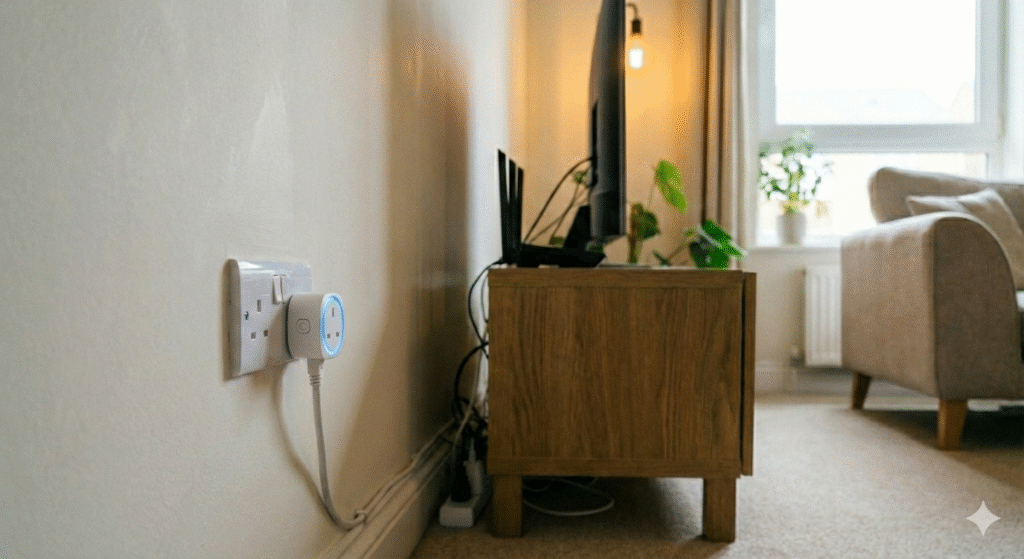
Yes — smart plugs are safe to leave on 24/7 in UK homes, as long as:
- They are UKCA / CE certified
- They are used within their rated load
- They are plugged directly into a wall socket
- They are not used with unsafe appliances (like heaters not designed for plugs)
The risks don’t come from the smart plug itself — they come from how people misuse them.
Why Smart Plugs Are Designed to Stay On
A smart plug isn’t like a cheap extension lead or adaptor. Good models are designed to be:
- Permanently powered
- Continuously connected to Wi-Fi
- Running low-power electronics 24/7
In fact, turning them off at the wall defeats the point — they need power to:
- Maintain schedules
- Receive commands
- Monitor energy use
- Cut standby power to other devices
Most smart plugs draw less than 1 watt when idle — far less than leaving a TV or set-top box on standby.
What UK Electrical Rules Say (In Plain English)
In the UK, plug-in electrical devices must comply with safety regulations covering:
- Overheating
- Short-circuit protection
- Fire resistance
- Electrical isolation
A compliant smart plug must meet standards such as:
- UKCA (UK Conformity Assessed)
- CE marking (still recognised in many cases)
- BS 1363 plug standards
If a smart plug is legally sold in the UK by a reputable brand, it must be safe for continuous use when used correctly.
There is no UK rule that says smart plugs must be turned off or unplugged overnight.
If you’re unsure which models meet UK safety standards and are designed for long-term use, we’ve also reviewed the Best Smart Plugs UK, covering reliable options that are safe to leave on 24/7.
The Real Safety Question: What Are You Plugging Into It?
This is where problems can occur.
Smart plugs are safe — overloading them isn’t.
Most UK smart plugs are rated at:
- 10A to 13A
- Around 2,300–3,000 watts
That’s plenty for:
- TVs
- Routers
- Lamps
- Dehumidifiers
- Air fryers (used sensibly)
- Washing machines (on schedules)
But they should not be used with:
- Portable electric heaters not designed for smart control
- High-draw appliances running for long periods
- Appliances with damaged plugs or cables
If something gets hot when plugged directly into the wall, a smart plug won’t magically make it safer.
Are Smart Plugs a Fire Risk?
When used properly, no — and in many cases they actually reduce risk.
Why?
Because they:
- Cut standby power to devices that overheat
- Automatically turn off forgotten appliances
- Prevent chargers being left live all night
- Allow timed shut-offs for risky devices
Fire risk usually comes from:
- Cheap, non-certified imports
- Overloaded extension blocks
- Poor ventilation
- Old or damaged wiring
A properly rated smart plug used in a wall socket is safer than a cheap multi-plug adaptor.
What About Leaving Them On Overnight?
This is one of the biggest worries — and one of the least justified.
Leaving a smart plug powered overnight is no different to:
- Leaving your Wi-Fi router on
- Leaving a boiler controller on
- Leaving a fridge plugged in
The internal electronics are low power and designed for constant operation.
What matters is what the smart plug is controlling, not the plug itself.
Can Smart Plugs Overheat?
Only in specific misuse cases:
❌ Plugging them into extension leads
❌ Running near their maximum wattage constantly
❌ Using them in poorly ventilated spaces
❌ Stacking adaptors on adaptors
Best practice:
- Plug directly into the wall
- Leave space around it
- Check it’s cool to the touch after long use
If it ever feels hot — stop using it.
Are Smart Plugs Safe With High-Power Appliances?
Some are, some aren’t.
Safe (when rated correctly):
- Washing machines
- Dishwashers
- Dehumidifiers
- Air fryers (short cycles)
Not recommended:
- Portable heaters
- Fan heaters
- Oil radiators unless manufacturer approves smart control
Always check:
- Appliance wattage
- Smart plug rating
- Manufacturer guidance
One Smart Plug That’s Designed for 24/7 Use
If you’re unsure which models are genuinely safe to leave on all the time, look for well-known UK-supported brands with clear ratings.
For example, TP-Link Tapo energy-monitoring smart plugs are:
- UKCA / CE certified
- Rated for continuous use
- Designed for always-on energy monitoring
- Widely used in UK homes for 24/7 control
They’re commonly used with fridges, routers, TVs, and dehumidifiers without issue — as long as the appliance load is sensible.
(Always check the exact model rating before use.)
Do Smart Plugs Use Electricity Themselves?
Yes — but very little.
Typical smart plug standby use:
- 0.5–1 watt
- Around £1–£2 per year on UK tariffs
That’s far less than:
- Leaving a TV on standby
- Leaving chargers plugged in
- Leaving a games console idle
So leaving a smart plug on 24/7 does not cancel out the savings it creates.
In fact, once people start measuring device-by-device usage, it becomes clear that standby power from everyday electronics is a much bigger drain than the smart plug itself — something we break down in our guide on Smart Plug Energy Usage.
When You Shouldn’t Leave a Smart Plug On
There are a few cases where switching it off or unplugging makes sense:
- If it’s controlling a high-risk appliance
- If it’s overheating
- If it’s damaged or loose in the socket
- If you’re using a cheap, uncertified model
- If it’s outdoors and not weather-rated
In those cases, the issue isn’t “smart plugs” — it’s unsafe usage.
🔗 Smart Plug Setups for Everyday & Constant-Use Devices 🔌
Knowing that smart plugs are safe to leave on 24/7 is only part of the picture — how you use them matters just as much.
If you’re running devices that need constant power or rely on schedules, these guides show how to automate safely without risking outages or overheating:
- Smart Plugs for Aquariums, Reptile Tanks & Pet Heaters: Safe Automation for Constant-Use Devices — essential reading if you’re controlling heaters, lights, or life-support equipment that must stay reliable around the clock.
- Smart Plug Setups for Home Offices: Cut Work-From-Home Energy Waste Without Losing Productivity — practical ways to automate monitors, routers, and office gear without accidental shut-offs during the workday.
Together, they show how to use smart plugs confidently, safely, and intelligently across different parts of a UK home.
✍️ Author Insight
One thing that stands out when looking at smart plug safety is how often the plug itself gets blamed for problems caused by poor setup. In real UK homes, issues almost always come down to overloading sockets, stacking adaptors, or using the wrong appliance — not the smart plug. Used correctly, smart plugs are one of the safest ways to reduce risk rather than increase it.
The Bottom Line
So, are smart plugs safe to leave on 24/7 in UK homes?
Yes — absolutely, when:
- They’re UK-certified
- Used within their rating
- Plugged directly into the wall
- Paired with suitable appliances
In fact, they often increase safety by reducing standby power, overheating risks, and forgotten appliances.
If you’re trying to cut energy waste without compromising safety, a good smart plug is one of the safest always-on devices you can add to a UK home.
Used properly, it’s far safer than leaving appliances permanently plugged in without control — and far cheaper in the long run.
Learn how to monitor and control electricity use in every room with the Smart Energy Monitors & Plugs Hub from smart plugs to power meters and automation tips that lower your bills.
If you want straightforward, non-commercial advice on cutting bills and understanding UK energy costs, Citizens Advice has excellent resources.

About The Author – Andrew Marshall
Andrew Marshall is a Scottish homeowner and the creator of Save Wise Living. He shares practical ways to reduce energy bills, improve home efficiency, and make everyday household routines cheaper and simpler.