
If you live in the UK, you already know how winter damp creeps in fast — cold air, condensation on windows, slow-drying laundry, and that musty smell that never quite shifts.
This guide covers the best dehumidifiers for cold and damp UK homes, focusing on models that actually work in low temperatures and won’t send your energy bills through the roof.
Whether you’re dealing with condensation, mould, or laundry taking days to dry, the right dehumidifier can make your home feel warmer, drier, and far more comfortable — even in winter.
You shut the windows because it’s freezing. You hang one load of laundry. Someone takes a shower. Suddenly the whole house feels like a cold greenhouse — condensation running down the windows, the air feeling heavy, and your clothes taking 24 hours to dry and still smelling suspiciously like a Labrador.
Welcome to winter in a British home.
A good dehumidifier can change the entire vibe — your house feels warmer, laundry dries faster, and that damp, musty smell disappears almost overnight. But choosing the right one is trickier than it should be, because most cheap models simply don’t work well in colder rooms, which is exactly where we need them to perform.
This guide is written for real UK homes — older houses, draughty semis, cold bedrooms, steamy bathrooms, and flats where laundry takes over the living room. No fluff, no technical nonsense. Just what works.
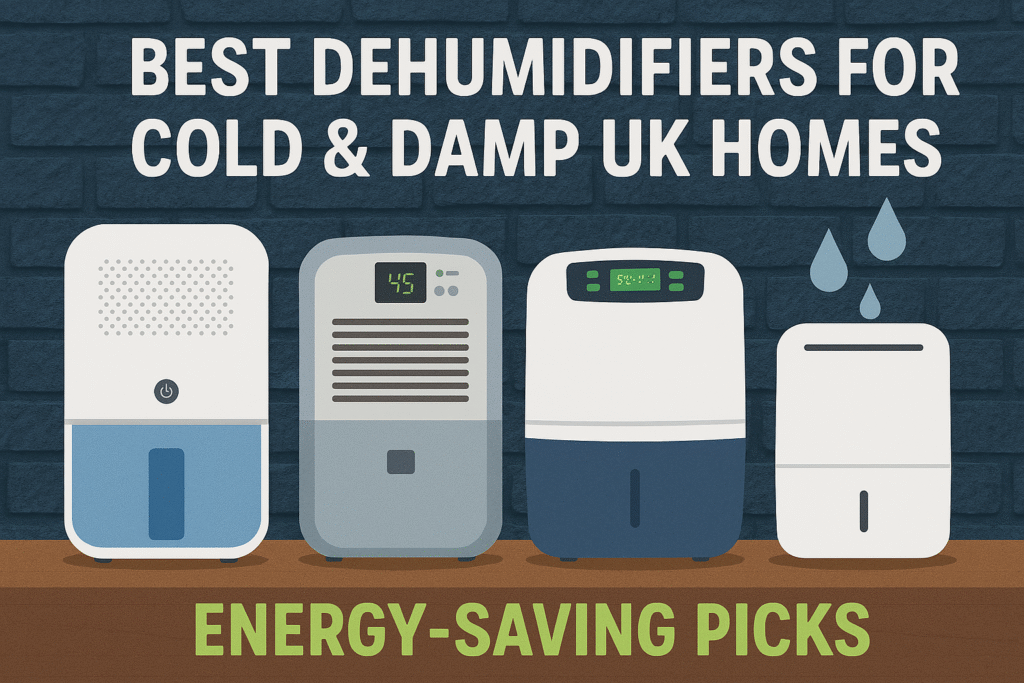
🌡️ Why Cold UK Homes Need a Specific Type of Dehumidifier
Most dehumidifiers are designed for warm climates. Great for Spain. Useless for Scotland.
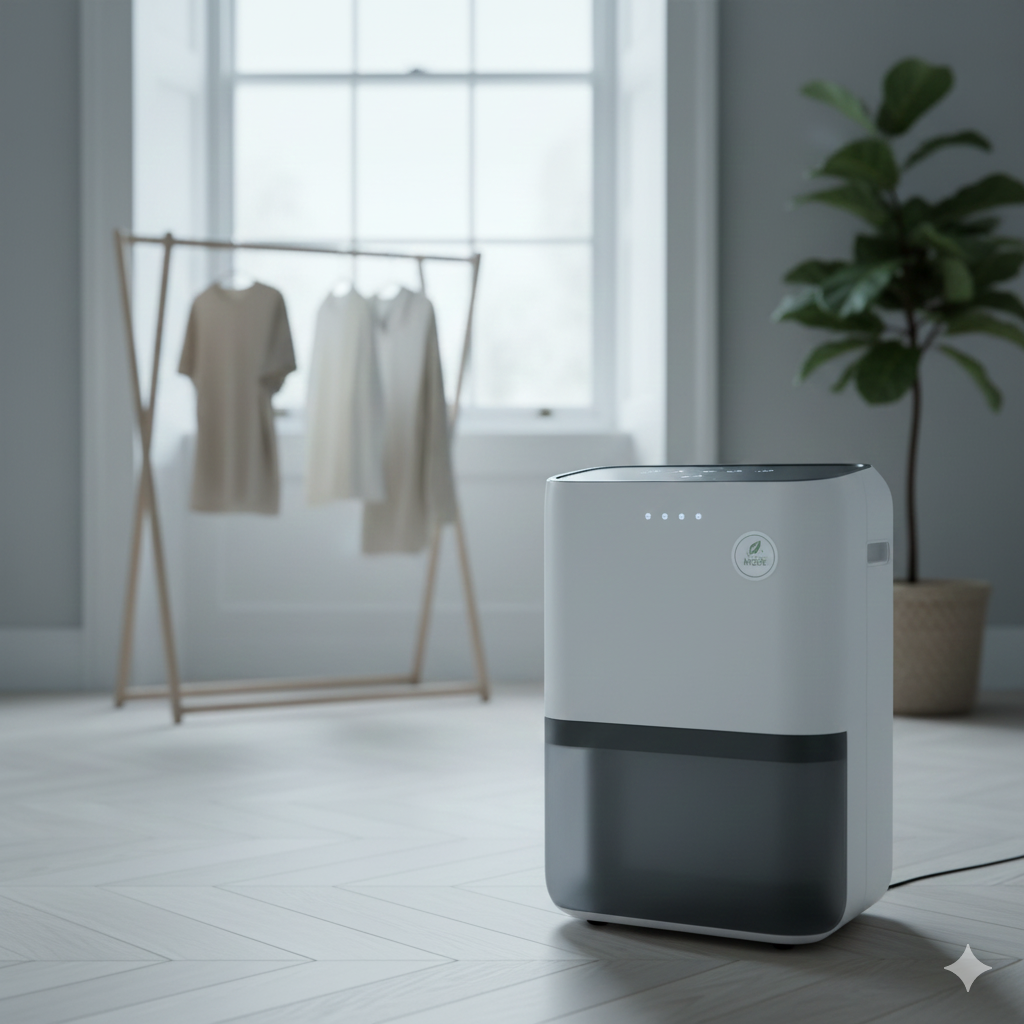
This is especially noticeable when drying laundry indoors in winter, where excess moisture builds up quickly and makes already cold rooms feel even damper and harder to heat — a common issue in many UK homes.
Cheap compressor units lose power in cold rooms because the air isn’t warm enough to condense moisture properly. That’s why you get:
- A loud hum
- Barely any water in the tank
- A room that somehow feels colder
For the UK, especially in winter, you generally want either:
✔️ A compressor designed for low temperatures
or
✔️ A desiccant dehumidifier
Desiccant models are brilliant in cold rooms because they don’t rely on warm air — in fact, they blow out a gentle warmth, which actually helps the room heat up. Great for conservatories, garages, or older houses that are basically “characterful” ice boxes from November to March.
According to the UK Energy Saving Trust, drier indoor air warms more effectively than damp air, meaning proper humidity control can reduce overall heating demand.
💧 What Size Do You Actually Need?
Most people buy one that’s way too small.
Here’s the simple version:
- Flats / 1–2 beds: 8–12L/day
- Semis / 2–3 beds: 12–16L/day
- Bigger homes: 16–20L/day
- Cold rooms: Desiccant or low-temp compressor
- Laundry: Always 12L+ with a Laundry Mode
If you dry clothes indoors, prioritise airflow and warm air output. A good dehumidifier can cut drying times by 40–60%, which means no more damp smell or wet socks draped across radiators.
❄️ Compressor vs Desiccant: Which Is Better for UK Winters?
In UK homes, the biggest mistake is choosing the wrong technology. Compressor dehumidifiers are energy-efficient in warmer rooms but lose effectiveness as temperatures drop.
Desiccant dehumidifiers, on the other hand, perform consistently in cold spaces and even release gentle warm air, making them ideal for winter bedrooms, conservatories, and older homes.
If your home regularly drops below 15°C, desiccant models are usually the better long-term solution despite slightly higher running costs.
⭐ Best Energy-Saving Dehumidifiers for Cold, Damp UK Homes
Here are the models that consistently perform well in real UK households — efficient, quiet, affordable to run, and actually effective in cold weather.
1️⃣ MeacoDry ABC One 12L — The UK’s Best All-Rounder
Perfect for: everyday damp, flats, small family homes, laundry drying.
This is the closest thing the UK has to a “default” dehumidifier. It’s genuinely designed for British homes quiet, efficient, doesn’t look ugly in a hallway, and it actually pulls water even on colder days. Laundry mode is excellent, and it doubles as a basic air purifier.
Why people love it:
- Low running cost
- One of the quietest compressors in the UK
- Excellent allergy/damp relief
- Perfect balance of power vs price
- Easy to empty and maintain
If you want something you can put anywhere and just trust, this is the safest buy.
2️⃣ MeacoDry Arete 12L — Best Budget Compressor for Mild Damp
Perfect for: bedrooms, smaller living rooms, general household humidity.
If you like the idea of the Arete One but don’t want to spend top-end money, this is the next best thing. It’s very quiet, lightweight, and ideal if your home suffers more from everyday humidity rather than serious damp.
Why it works well:
- One of the quietest units available
- Cheap to run
- Compact and easy to move
- Well-priced for the features
A solid choice for typical winter stuffiness and condensation.
3️⃣ EcoAir DD1 Classic MK6 — Best for Cold Homes & Conservatories
Perfect for: old houses, cold bedrooms, garages, conservatories, winter laundry.
This is a desiccant dehumidifier — which means it thrives in cold rooms where compressor units struggle. It also blows out slightly warm air, which is weirdly comforting in a freezing conservatory.
Standout features:
- Performs brilliantly below 15°C
- Warm air output helps heat the room
- Great for drying clothes fast
- Lightweight and portable
If your house stays cold even with the heating on, this will feel like magic.
4️⃣ Pro Breeze 20L — Best High-Power Option for Big Homes
Perfect for: 3–4 bed homes, heavy condensation, damp patches, mould control.
If you’ve got a bigger household — lots of showers, lots of laundry, windows that drip every morning — this 20L unit gives you the punch you need. It’s powerful, reliable, and great value for the extraction rate.
Why it’s strong:
- Large tank and fast extraction
- Ideal for busy family homes
- Laundry mode works extremely well
- Option for continuous drainage
If you want to make a serious dent in moisture levels, this is the muscle model.
5️⃣ Inventor Fresh 12L — Best Value Choice
Perfect for: people wanting solid performance without paying for premium brands.
It’s one of those Amazon favourites that quietly competes with bigger names. Good extraction, decent noise levels, reliable build, and usually a good bit cheaper.
Why people buy it:
- Great balance of power and price
- Very simple to use
- Lower energy use
- Surprisingly good for laundry
If you want a dependable “does the job” pick without overthinking, this is it.
🧺 Why Dehumidifiers Help Laundry Dry Faster
Indoor drying turns your home into a cloud.
When humidity rises, clothes stop drying properly — heat can’t evaporate the water. A dehumidifier fixes that by removing moisture from the air and circulating dry, warm air around the room.
The result?
- Clothes dry far quicker
- No damp smell
- Less condensation on windows
- Rooms feel warmer
If you dry indoors regularly, a Laundry Mode is a non-negotiable feature.
Will It Fix Condensation on Windows?
Short answer: Yes.
Condensation happens when warm, moist air meets a cold surface. Reduce the moisture and the problem practically disappears. Most people notice a difference within 24–48 hours, and mould patches start to dry out because the surface finally stays dry.
⚡ How Much Do They Cost to Run?
Approximate running costs:
- Smaller compressors (8–12L): 11–15p/hour
- Mid-size compressors (12–16L): 16–20p/hour
- Larger units (16–20L): 18–25p/hour
- Desiccant: 20–30p/hour, but far more effective in cold homes
Most units don’t run constantly — once the room hits your target humidity, they drop into low-power mode. A good dehumidifier can actually reduce heating costs, because dry air warms up faster than damp air.
For accurate UK energy information straight from the regulator, Ofgem provides clear explanations on tariffs, prices, and consumer rights.
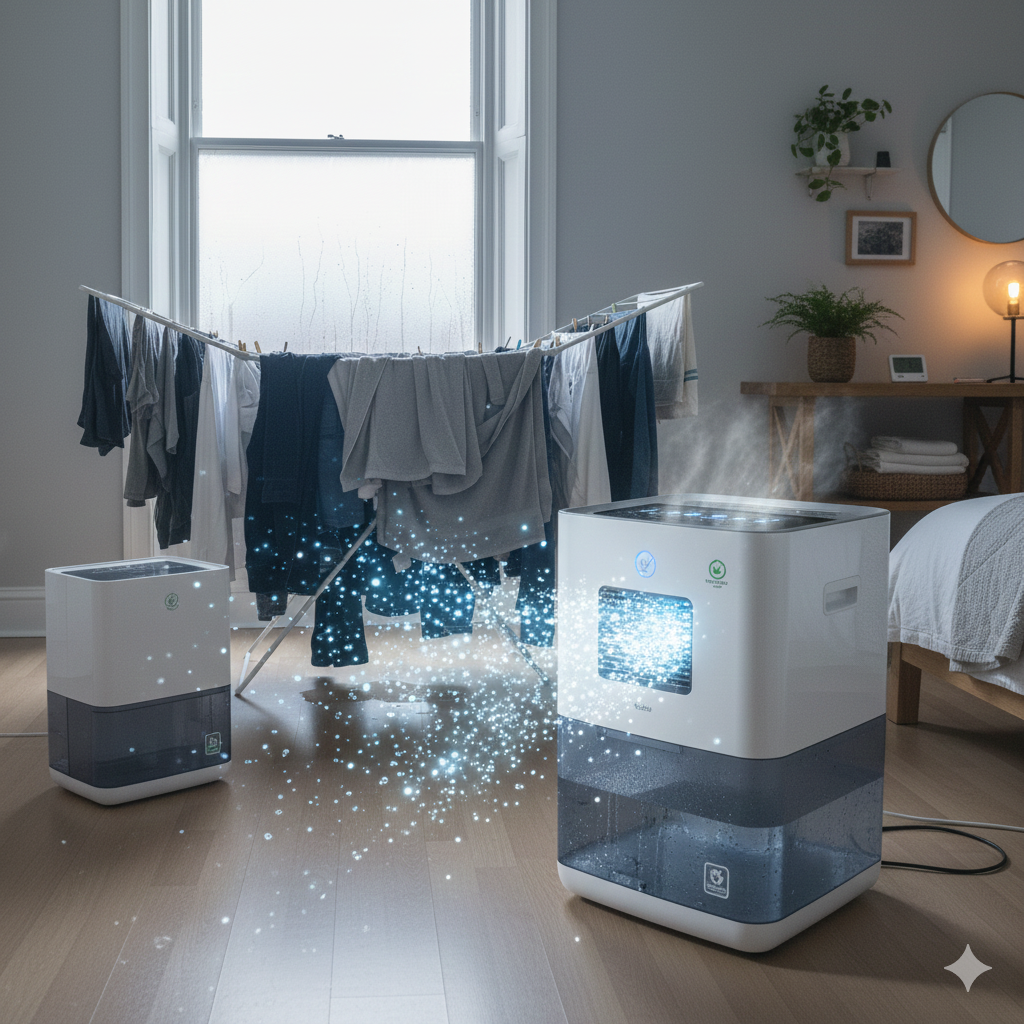
❄️ Keep Your Home Warmer & Cheaper This Winter
If you’re tackling damp, condensation or slow drying laundry, the next smart step is tightening up the rest of your home’s energy use. Two guides worth checking out are Is Your Home Ready for Winter? The Ultimate UK Energy-Saving Checklist You’ll Wish You Used Sooner and Best Solar PV + Heating Combos You Can Actually Buy on Amazon (UK Guide) — both show you simple upgrades that make your home cheaper to run and far more comfortable in winter.
🧠 Quick Buyer Tips
- Big house? → 16–20L compressor
- Cold rooms? → Desiccant, always
- Laundry issues? → Laundry Mode
- Bedrooms? → Quiet models like Meaco ABC
- Mould? → Run it longer at first to stabilise humidity
- Hate emptying tanks? → Get one with a drain hose option
✍️ Author Insight
“Winter in the UK always turns my house into some sort of budget rainforest. The windows sweat, the air feels thick, and my laundry has the drying enthusiasm of a damp sponge. I wrote this guide because I got sick of guessing which dehumidifier would actually work — and after testing far too many of them, these are the ones I’d happily recommend to family without feeling guilty. If a gadget can make my home warmer, drier, and smell less like soggy laundry, it’s an easy win.”
⭐ Conclusion: Which One Should You Actually Buy?
If you want a quick, no-nonsense recommendation that works for most UK homes, go for the Meaco Arete One 12L. It’s efficient, quiet, reliable and handles our unpredictable climate better than most.
If your home is properly cold in winter — or you’re dealing with a conservatory or older build — choose the EcoAir DD1 Classic MK5. Desiccant tech just works better in the cold, and the warm air output feels like a bonus heater.
For bigger homes or heavier damp, the Pro Breeze 20L gives you the power you need without going into the £300+ bracket.
All three will make a noticeable difference to warmth, comfort and condensation within a couple of days. If your windows drip every morning, your laundry smells damp, or your house just feels “wet”… a good dehumidifier is one of the most impactful upgrades you can make.
If damp problems keep returning, it’s often worth looking beyond just moisture removal and tackling damp and mould long-term through better ventilation, cleaning routines, and whole-home moisture control.
Stay warm for less this winter with the full Smart Heating & Home Warmth Hub explore smart thermostats, radiator valves, and insulation tricks that help cut UK energy bills fast.
For government-backed guidance on home energy efficiency, heating, and insulation, the GOV.UK energy section shares reliable, up-to-date information.
Written by Andy M. — a UK home-efficiency writer sharing practical ways to cut bills and boost comfort.
Related fixes if damp and heat loss go hand in hand:
Damp, condensation and cold rooms are often linked — these guides focus on keeping homes both warmer and drier without wasting energy:
- Smart fixes for winter window condensation in UK homes
- DIY window fixes that stop heat escaping
- What actually helps when rooms never seem to warm up
- Hidden ways to turn any room into a warmer, cosier space

About The Author – Andrew Marshall
Andrew Marshall is a Scottish homeowner and the creator of Save Wise Living. He shares practical ways to reduce energy bills, improve home efficiency, and make everyday household routines cheaper and simpler.