

Written by Andrew Marshall
Scottish homeowner sharing practical ways to reduce energy bills and improve everyday home efficiency.
If you’re like most UK households, the dishwasher routine is simple: load it after dinner, press start, forget about it. The problem is that “after dinner” often lands right in the most expensive part of the day on many tariffs — especially if you’re on a time-of-use plan or a smart tariff where prices change.
This guide isn’t here to sell you a fantasy that you’ll “slash bills overnight” by shifting one appliance. It’s here to help you do the sensible, real-world thing: run your dishwasher at the cheapest time your tariff allows, without turning your life into a spreadsheet.
You’ll learn:
- The best dishwasher run times by UK tariff type
- How to find your actual off-peak window (because it varies)
- The settings that matter more than timing (yes, really)
- Two dishwashers worth considering if yours is old/inefficient
- Two extra products that genuinely help (without pretending a smart plug magically starts a dishwasher)
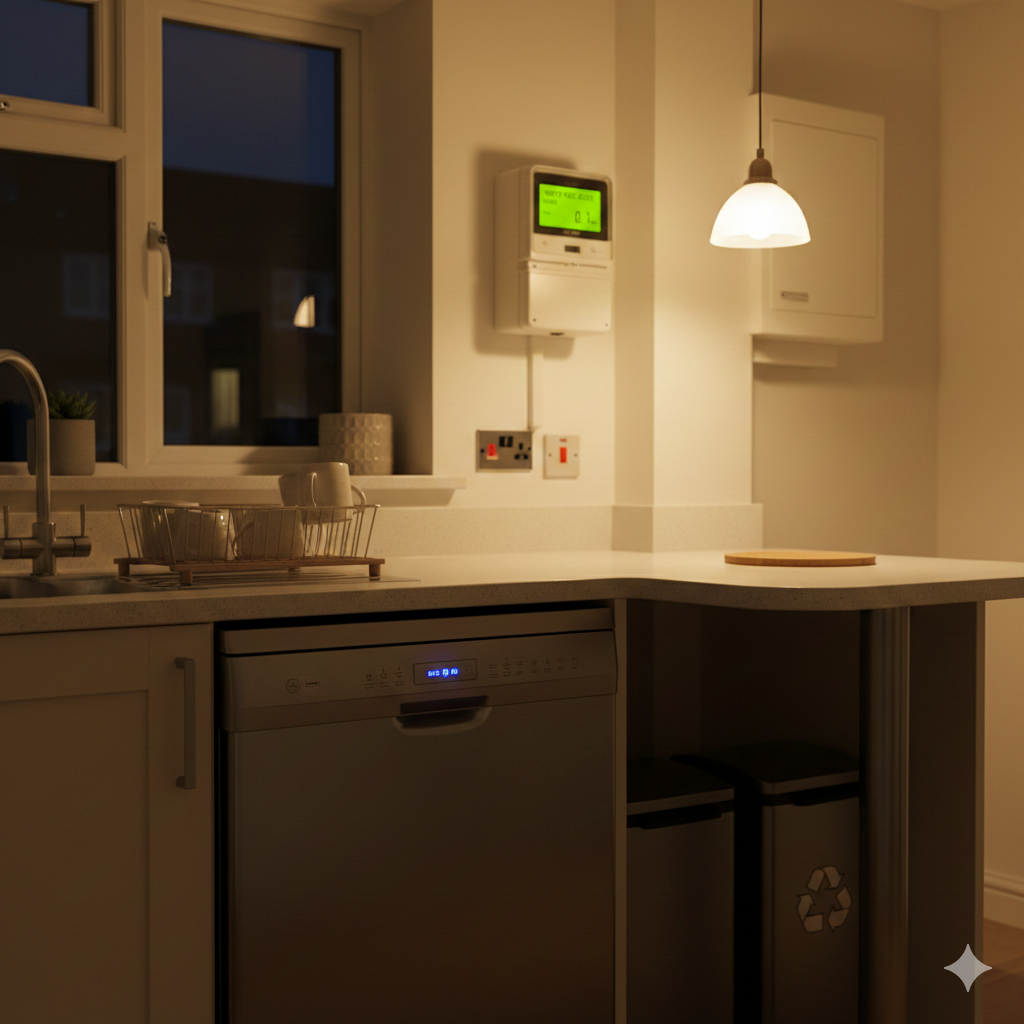
The quick answer most people need
If you’re on a standard flat-rate tariff:
Run it whenever it suits you — timing barely changes cost. Your biggest savings come from Eco mode and running full loads.
If you’re on Economy 7 / Economy 10:
Aim to run it during your off-peak window, often overnight (commonly around midnight–7am, but it can vary by supplier, region and even season). OVO Energy+3MoneySavingExpert.com+3British Gas+3
If you’re on a smart/dynamic tariff (e.g., Agile-style):
The cheapest time can change daily, but evening (around 4pm–7pm) is commonly the worst value — and many pricing structures explicitly penalise that window. Octopus Energy+1
Now let’s make that “quick answer” actually usable in a normal home.
Why timing matters (and why it sometimes doesn’t)
A dishwasher’s electricity use is mostly about heating water. If electricity is expensive at the moment the machine is heating, your cycle costs more. If your tariff is flat-rate, the unit price is the same all day, so timing is basically irrelevant.
But on time-of-use or dynamic tariffs, the unit price moves — and that’s where timing can become the difference between a “fair” cycle cost and an “annoyingly expensive” one.
Also worth saying plainly: the dishwasher is not usually your biggest electricity guzzler. If you’re trying to cut bills fast, heating and hot water generally dwarf it. Still, dishwashers are easy to shift because they don’t need you standing beside them.
Step 1: Know what tariff you’re actually on
Before you even think about “best time of day,” figure out which bucket you’re in. Most UK households fall into one of these:
1) Flat-rate tariff (standard variable or fixed)
- Same unit rate 24/7.
- Best time to run dishwasher: whenever suits your routine.
- Focus on Eco mode + full loads.
2) Economy 7 / multi-rate (two rates: day and night)
- You get a cheaper “night rate” for roughly 7 hours.
- The exact off-peak window varies by supplier, region and meter setup, and may shift with daylight saving time. OVO Energy+2Centre for Sustainable Energy+2
- Best time: inside your off-peak window.
3) Smart / time-of-use tariffs (set peak/off-peak blocks)
Some tariffs have clear “cheap blocks” and “peak blocks”. For example, some plans define peak as 4pm–7pm and have off-peak stretches outside that. E.ON Next+1
4) Dynamic pricing (half-hourly changing rates)
Agile-style tariffs update every 30 minutes and reflect wholesale conditions. Octopus Energy+1
- Best time: whatever your app shows as cheapest that day.
- Worst time: often the early evening, and some pricing models add an extra charge in that window. Octopus Energy
If you only do one thing after reading this article, do this: find your tariff name and whether it’s flat-rate or time-based. That single detail changes the whole answer.
Step 2: The best time to run a dishwasher (by tariff type)
Flat-rate: run it when it’s convenient
If your unit rate is constant, it’s not worth trying to schedule your life around a dishwasher. You’ll get more savings from:
- Eco mode
- Not pre-rinsing
- Running full loads
- Air-drying (or turning off heated drying)
You can still choose to avoid the evening if you like the idea of “helping the grid,” but financially it won’t change much.
Economy 7: run it during off-peak (but don’t guess the hours)
Most people have heard “midnight to 7am”. Often that’s roughly true, but it’s not guaranteed.
- MoneySavingExpert notes Economy 7 off-peak periods can vary by supplier and region, with off-peak “usually” around midnight–7am, and advises checking your exact times. MoneySavingExpert.com
- British Gas similarly notes off-peak can vary (and describes a 7-hour window somewhere between midnight and 8am for their Economy 7/two-rate meters). British Gas
- Centre for Sustainable Energy notes typical windows can shift in summer/winter (example: 12–7 in winter; 1–8 in summer), but again: it varies. Centre for Sustainable Energy
- OVO also points out the 7 hours can land anywhere roughly between late evening and morning and can shift with British Summer Time. OVO Energy
Practical rule:
If you’re on Economy 7, the “best time” is:
✅ the cheapest 7-hour window your meter uses — not the one your neighbour swears by.
How to find your exact off-peak window:
- Check your online account/tariff info
- Look at your bill (it often shows “day rate” and “night rate” times)
- If you have a smart meter or in-home display, look for rate switching times
- If in doubt, ask your supplier and get it in writing
Once you know the window, the ideal schedule is easy:
- Load after dinner
- Use Delay Start to start inside off-peak
- Wake up to clean dishes
Time-of-use tariffs: avoid peak blocks (commonly 4pm–7pm)
Many UK energy discussions centre around the evening peak. National schemes and suppliers frequently reference weekday peak demand around 4pm–7pm. MoneySavingExpert.com+1
If your tariff has:
- “Peak rate” blocks
- “Super off-peak” blocks
- Cheaper overnight hours
…then the best time to run the dishwasher is simply outside the peak block, ideally inside the cheapest block.
Real-life approach that works:
- If your tariff punishes 4–7pm, don’t hit “start” at 6pm unless you truly need to.
- Run after 7pm, or schedule overnight.
Dynamic (half-hourly) tariffs: check the app, but still follow a pattern
With dynamic pricing, there isn’t one magic time. There are patterns, though:
- Early evening is frequently pricier because demand is higher.
- Some pricing models explicitly add extra cost in the 4–7pm window (even though the rate still changes every 30 minutes). Octopus Energy
- Rates change every 30 minutes and track wholesale conditions. Octopus Energy+1
The best “normal person” strategy:
- Decide your dishwashing rhythm (e.g., once per day after dinner).
- Use the app to pick the cheapest start time between, say, 9pm and 6am.
- If you’re happy to be flexible, sometimes you’ll see surprisingly cheap slots in the middle of the day — but only do that if it fits your household routine.
The goal isn’t perfection. It’s avoiding consistently expensive habits.
The part most people miss: settings often beat timing
If you want genuine savings, don’t just obsess over the clock. Look at how you run the machine.
Eco mode: slower, but typically cheaper
Eco mode is designed to reduce energy by using lower temperatures and longer wash times. Bosch explains that Eco cycles take longer so the water doesn’t need heating as much compared to shorter programmes. Bosch Home
Home Connect similarly explains Eco settings lower temperatures and use longer soaking time because most energy goes into heating water. Home Connect
This is why:
- Quick wash feels “efficient” (because it’s fast)
- But it can cost more because it often uses hotter water and more intense heating in a shorter time
Bottom line:
If you run Eco mode consistently, you’ll usually save more than you would by chasing the perfect hour on a flat-rate tariff.
What about running it overnight? Noise, safety, and common sense
Overnight dishwashing is brilliant for Economy 7 and time-of-use tariffs — but let’s be real: not every home is set up for it.
Noise (especially in flats)
If you’re in a flat or your kitchen backs onto bedrooms:
- Look for dishwashers with low dB ratings
- Use Eco mode (often quieter)
- Consider starting it earlier in the evening if you can’t tolerate overnight noise
Safety (water leaks are rare, but not impossible)
Most dishwashers are safe to run unattended — but leaks do happen, and an overnight leak can do more damage before you spot it.
If you regularly run it while sleeping, a simple water leak alarm under the sink/dishwasher area is a genuinely practical upgrade (I recommend one below).
How to actually schedule your dishwasher (without gimmicks)
Here’s the honest truth about “smart plugs and dishwashers”:
A smart plug usually cannot start a dishwasher on its own, because most dishwashers require you to choose a programme and press start. So don’t pretend a smart plug solves scheduling.
What does work?
Option A: Use the dishwasher’s Delay Start (best solution)
- Load dishes after dinner
- Choose programme + Eco
- Set delay so it begins in your off-peak window
- Go to bed
This is the cleanest, safest, most reliable method.
Option B: If you have a dynamic tariff, use your app to pick a cheap slot
- Check prices
- Pick a cheap slot you can live with
- Delay start to match it
Option C: Use monitoring to learn what your cycles cost
This is where a plug-in energy meter (or an energy-monitoring plug) is useful:
- It helps you see which cycles cost more
- It keeps your advice honest (you can say “Eco is cheaper in my tests” if you measure it)
✍️ Author Insight
When I first looked into dishwasher running costs, I assumed there would be a single “perfect” answer — a magic hour that everyone should use. The deeper I went, the clearer it became that UK energy tariffs don’t work that way.
What actually saves money isn’t precision — it’s alignment. Aligning your habits with your tariff. Aligning your expectations with what appliances realistically consume. And aligning your routines with something you’ll still be doing six months from now.
Most people don’t fail to save energy because they don’t know enough — they fail because the advice they’re given doesn’t fit real life. That’s why this guide focuses less on gimmicks and more on choices you can quietly repeat every day without thinking about them.
If you reach the point where running your dishwasher cheaply feels boring and automatic, you’ve done it right.
How much can you really save?
Let’s keep expectations realistic.
If you’re on a flat-rate tariff:
Timing savings are minimal. Your savings come from:
- Eco mode
- Full loads
- Avoiding heated drying
- Avoiding quick/hot cycles when you don’t need them
If you’re on Economy 7 or time-of-use:
Moving a dishwasher cycle into off-peak can save a noticeable amount over a year, especially if you run it daily — but it won’t turn into £50/month by itself. The wins are real, just modest.
If you’re on dynamic pricing:
Your savings depend on how often you avoid expensive half-hours. The benefit is bigger if your evening rates spike.
Your “big win” is consistency: pick a cheap window that fits your life and stick to it.
🔌 Recommended Dishwashers & Helpful Extras (UK)
Dishwasher #1: Bosch SMS4EMI06G Series 4 (B Energy Rated, Freestanding)
Why it’s worth considering:
- From Bosch, a well-established brand known for long lifespan and reliable Eco programmes
- B energy rating, making it a solid upgrade if you’re replacing an older, inefficient dishwasher
- Built-in Eco mode and delay start, ideal for Economy 7 and time-of-use tariffs
- Flexible interior layout, adjustable racking, and quiet operation suitable for evening or overnight runs
This is the kind of dishwasher that doesn’t chase flashy features — it focuses on doing the basics efficiently and consistently, which is exactly what matters when you’re trying to keep running costs predictable.
Best for:
Households replacing an older dishwasher who want a dependable, long-term upgrade and plan to use Eco mode with delayed off-peak starts.
Dishwasher #2: Hoover HF 4A4S3PSA-80 Freestanding Dishwasher – A RATED
Why it’s worth considering:
- From Hoover, offering good value in the mid-range dishwasher market
- Strong energy efficiency focus for its price point – This one is A-Rated
- Includes Eco programmes and delay start, allowing you to shift cycles into cheaper tariff windows
- Freestanding design makes it suitable for kitchens without integrated units
This model suits households that want a modern, energy-conscious dishwasher without paying premium-brand prices. It’s a practical option if timing your washes around off-peak electricity is part of your routine.
Best for:
Cost-conscious households looking for a newer, efficient dishwasher that still supports tariff-friendly scheduling.
⚡ Useful Extras That Actually Make Sense
These aren’t “magic savings devices” — they’re tools that help you understand costs and reduce risk when running appliances at cheaper times.
Extra #1: Plug-In Energy Monitor (Cost-Per-Cycle Tracking)
Why it’s useful:
- Shows exactly how much electricity your dishwasher uses per cycle
- Helps compare Eco vs Quick vs Intensive programmes using real data
- Useful for verifying whether off-peak running is genuinely cheaper on your tariff
This doesn’t start your dishwasher automatically — and that’s a good thing. Its real value is giving you clarity, not false promises.
Best for:
Anyone who wants real numbers instead of guesswork when managing appliance costs.
Extra #2: Mini Water Leak Alarm (Peace of Mind for Overnight Runs)
Why it’s useful:
- Sits discreetly under the sink or behind the dishwasher
- Emits a loud alarm if water is detected
- Adds reassurance if you regularly run the dishwasher overnight on off-peak tariffs
Leaks are rare — but when they happen at night, they can go unnoticed for hours. A simple battery-powered alarm is a low-cost safeguard, especially in flats or rented homes.
Best for:
Anyone who schedules dishwasher cycles overnight and wants extra peace of mind.
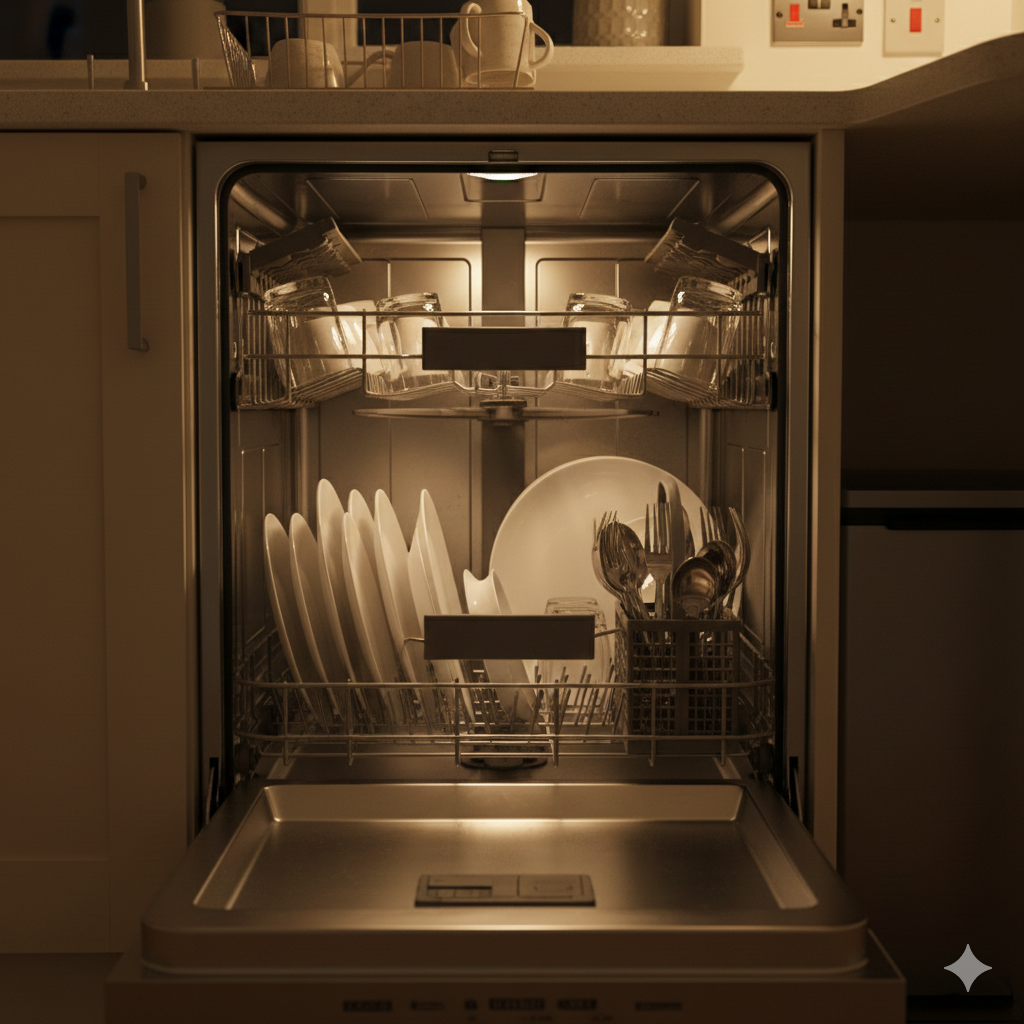
Important note about “smart plugs”
A standard smart plug (even with schedules) often won’t start a dishwasher because the dishwasher still needs a human to select a programme and press start. So I’ve deliberately avoided recommending smart plugs as a “dishwasher scheduler” here.
If you want to include one, the honest angle is: monitoring, not “automatic starting”.
🔄 Keep Cutting Dishwasher Costs
If you’re looking to reduce dishwashing costs even further, these guides build perfectly on what you’ve learned here:
- Dishwasher vs Hand Washing: Which Is Actually Cheaper in the UK?
Breaks down water, electricity, and real-world usage to see which method truly costs less in British homes. - Eco Mode vs Quick Wash: Which Dishwasher Setting Uses Less Electricity?
Explains why shorter cycles often cost more, and when Eco mode really delivers savings without sacrificing cleanliness.
Together, these guides help you understand not just when to run your dishwasher — but how to run it for the lowest possible cost.
Conclusion – Work with your tarriff
Running your dishwasher at the “best” time of day isn’t about chasing perfect timing or over-optimising every half hour — it’s about working with the tariff you already have.
If you’re on a standard flat-rate tariff, the truth is simple: timing barely changes the cost. Your biggest wins come from using Eco mode, running full loads, and avoiding unnecessarily hot or quick cycles. Pressing start at 9pm instead of 6pm won’t suddenly transform your bill — and that’s okay.
Where timing does matter is on Economy 7, time-of-use, and smart tariffs. In those cases, shifting your dishwasher into off-peak or lower-priced hours is one of the easiest habit changes you can make. You’re not sacrificing comfort, you’re not standing over the machine — you’re just letting it run when electricity is cheaper.
The key takeaway is this:
don’t fight your lifestyle for tiny gains. Find a routine that fits your home, your noise tolerance, and your tariff — then stick with it. Small, boring, repeatable habits beat perfect theory every time.
If your dishwasher is older or inefficient, upgrading to a modern model with Eco cycles and delay start will often deliver bigger long-term savings than obsessing over the clock. And if you want peace of mind when running overnight, simple safety additions can make the routine stress-free.
The best time to run a dishwasher is the time that:
- aligns with your tariff
- fits your daily routine
- and you’ll actually stick to
Get that right, and the savings take care of themselves.
Cook smarter and cut everyday kitchen costs with our Smart Kitchen & Appliances Hub your guide to energy-efficient gadgets, smarter cooking habits, and affordable ways to upgrade your home. Explore simple tips, low-energy tools, and practical UK advice that actually saves money.
For accurate UK energy information straight from the regulator, Ofgem provides clear explanations on tariffs, prices, and consumer rights. https://www.ofgem.gov.uk/
About The Author – Andrew Marshall
Andrew Marshall is a Scottish homeowner and the creator of Save Wise Living. He shares practical ways to reduce energy bills, improve home efficiency, and make everyday household routines cheaper and simpler.