
🍂 Winter Bills Don’t Have to Bite
Many UK homes lose heat in simple, avoidable ways — through gaps around doors, poorly sealed windows, cold floors, and radiators warming the outside wall instead of the room.
The good news is that you don’t need expensive upgrades or major renovations to fix these problems. A handful of low-cost DIY improvements can noticeably improve comfort and reduce how long your heating needs to run.
Most of these fixes are renter-friendly, require little or no tools, and can be installed in under an hour. While each one may only save a small amount on its own, combining several can make a meaningful difference over a full winter.
This guide is part of our Smart Heating & Home Warmth hub, where we share practical UK advice for keeping homes warmer, reducing heat loss, and lowering energy bills without costly upgrades.
Author Insight
In many UK homes, the biggest improvements come from tackling small sources of heat loss rather than turning the heating up. Simple draught-proofing and insulation fixes can make rooms feel noticeably warmer, especially in older properties where gaps and airflow are common.
🔧 7 Cheap DIY Fixes That Actually Work
1. Seal Gaps Under Doors
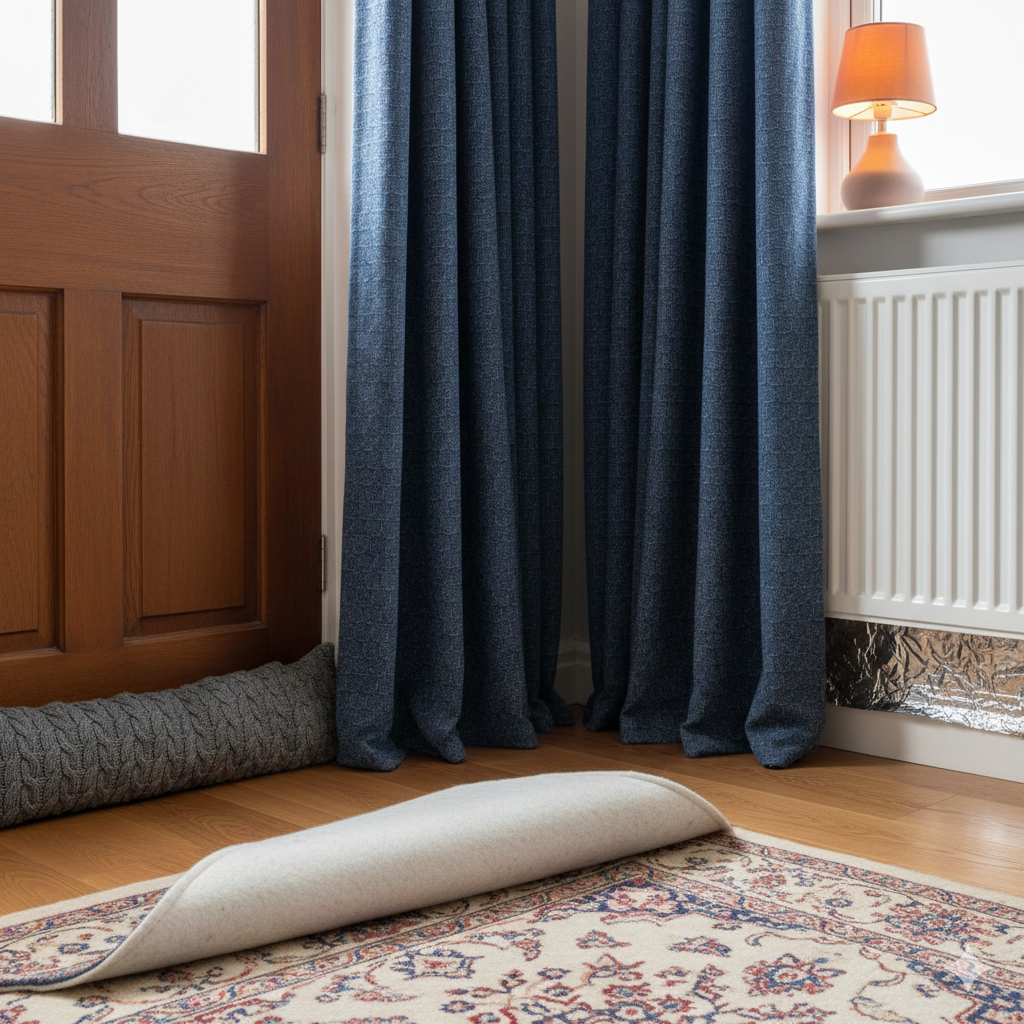
Cold air entering under doors is one of the most common sources of draughts in UK homes, particularly in properties with suspended timber floors or older door frames.
Fitting a draught excluder or door bottom seal blocks this airflow, helping rooms stay warmer for longer and reducing the need to keep turning the heating up.
Most options simply slide under the door or attach with adhesive strips, making them quick to install and easy to remove if needed.
💡 Best for: Front doors, back doors, and internal doors leading to colder areas like hallways or porches.
2. Add Radiator Reflector Foil
Radiators mounted on external walls often lose a significant portion of their heat through the wall behind them rather than into the room.
Installing radiator reflector foil behind the radiator reflects heat back into the living space, improving efficiency without increasing energy use.
This is especially effective in older homes with solid walls or limited insulation.
💡 Tip: Panels are usually hidden once installed and can be removed if you redecorate.
3. Install Window Insulation Film
Older or single-glazed windows allow heat to escape rapidly, even when closed. Applying window insulation film creates a thin secondary layer that traps air and reduces draughts.
The film is typically attached with double-sided tape and tightened using a hairdryer, forming a clear barrier that’s barely noticeable once fitted.
💡 Best for: Sash windows, rental properties, or rooms where replacing windows isn’t an option.
If your windows still feel cold after sealing them, our guide on Stop Losing Heat Through Your Windows – 5 DIY Fixes That Actually Work explains additional ways to reduce heat loss without replacing the glass.
4. Use a Thermal Door Curtain
Doorways leading to hallways, porches, or unused rooms can act like cold air channels throughout the home.
Hanging thermal curtains or insulated door curtains creates an additional barrier that slows heat loss and prevents cold air spreading between rooms.
This can make a noticeable difference in homes where the front door opens directly into living areas.
💡 Best for: Draughty hallways, open-plan layouts, or poorly insulated entrance areas.
5. Improve Radiator Airflow
Standard radiators heat the air immediately around them, but warm air can stagnate near the wall rather than circulating into the room.
Devices that boost airflow — such as small radiator fan units — help distribute heat more evenly, allowing rooms to warm faster without raising thermostat settings.
💡 Useful for: Large rooms, furniture blocking radiators, or spaces that take a long time to warm up.
6. Seal Gaps Around Windows and Door Frames
Even small gaps around frames can let in a surprising amount of cold air. Applying weather stripping tape or brush seals closes these openings and reduces draughts.
Self-adhesive options are simple to cut to size and can be installed in minutes, provided surfaces are clean and dry.
💡 Check for leaks by holding your hand near edges on a windy day — moving air indicates a gap.
7. Insulate Cold Floors
Bare floors — particularly over unheated spaces — can drain heat from a room and make it feel colder even when the air temperature is adequate.
Adding thick rugs with insulating underlay or using thermal underlay reduces heat loss through the floor and improves comfort underfoot.
This is especially effective in older homes with suspended wooden floors.
💡 Bonus: Warmer floors often allow you to lower the thermostat slightly without feeling colder.
Cold floors often mean heat is escaping through gaps as well as through the surface itself. For a deeper fix, see our guide – How to Seal Gaps Around Floors & Skirting Boards to Keep Heat In for more information.
🧠Who Should Buy What
| Household Type | Best Pick |
|---|---|
| Renters needing quick wins | FACULX Door Seal |
| Homes with external walls | Radflek Reflector Panels |
| Single‑glazed windows | SKYTE Window Film Kit |
| Draughty hallways | HLLING Thermal Door Curtain |
| Families wanting faster heat | EXTRWORY Radiator Booster |
| Older homes with cold floors | Rugs & Stuff Thermal Underlay |
💬 What Buyers Say
- “The window film kit made my old sash windows feel almost double‑glazed.”
- “The radiator booster fan is genius — warms the room quicker and saves gas.”
- “The wool underlay made my wooden floors feel much less chilly.”
🔍 Reader Questions Answered
Do these fixes really save money? Yes. Each may only save a few pounds a month, but combined they can cut annual heating bills by £100–£200.
Are they renter‑friendly? Most are removable — draught tape, door seals, and window film can be taken off without damage.
Do I need tools? Not really. A pair of scissors and a hairdryer will cover most installations.
For a broader look at running costs, room efficiency, and which heating methods are cheapest to run, see our detailed breakdown in The Cheapest Way to Heat Your Home in the UK (Room-by-Room Cost Breakdown).
✅ Final Thoughts
Cheap improvements that reduce heat loss are often the fastest way to lower heating costs in UK homes. Blocking draughts, improving insulation around windows and floors, and helping radiators distribute heat more effectively can all make rooms feel warmer without raising the thermostat.
You don’t need to implement everything at once. Start with the areas where you feel cold air most — typically doors, windows, and floors — then add further fixes over time.
Small changes may not seem dramatic individually, but together they can noticeably improve comfort and reduce winter energy use.
More simple upgrades that stop heat escaping:
If you’re tackling heat loss room by room, these guides focus on sealing gaps and stopping draughts without expensive renovations:

About The Author – Andrew Marshall
Andrew Marshall is a Scottish homeowner and the creator of Save Wise Living. He shares practical ways to reduce energy bills, improve home efficiency, and make everyday household routines cheaper and simpler.