
With energy prices still a concern for many households, small changes to everyday habits can make a noticeable difference to your bills. One of the easiest places to save energy is the washing machine.
Many people still default to 40°C or even 60°C washes, but modern detergents and washing machines mean this often isn’t necessary. In fact, choosing the right temperature can reduce electricity use significantly without affecting how clean your clothes come out.
In this guide, we’ll look at the real running costs of washing clothes at 30°C, 40°C and 60°C in the UK, explain when each temperature actually makes sense, and show how to build a cheaper laundry routine that still keeps clothes hygienic.
By the end, you’ll know which temperature is cheapest, when higher temperatures are worth using, and how to cut the cost of every wash. This guide is part of our wider Laundry and Drying Efficiency Hub, where we explore practical ways to wash, dry and manage laundry while keeping energy bills as low as possible.
In This Guide
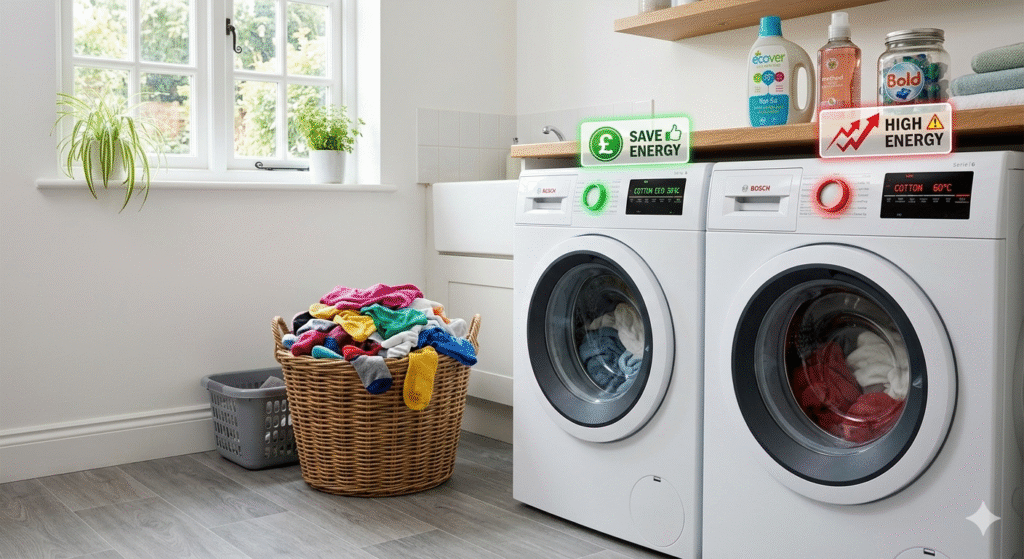
Quick Answer: The Cheapest Temperature to Wash Clothes
If you’re looking purely at energy cost, the cheapest temperature to wash clothes in the UK is:
30°C.
Lower temperature washes use significantly less electricity because washing machines spend most of their energy heating the water.
Typical costs per wash in the UK look roughly like this:
| Wash Temperature | Approx Energy Use | Typical Cost Per Wash |
|---|---|---|
| 30°C | ~0.45 kWh | ~13p |
| 40°C | ~0.65 kWh | ~18p |
| 60°C | ~1.0 kWh | ~28p |
For everyday clothing that isn’t heavily soiled, 30°C usually provides the best balance between cleanliness and energy savings.
However, hotter washes can still be useful for certain items such as towels, bedding, or clothing that needs deeper hygiene cleaning.
The rest of this guide explains why these costs differ, when higher temperatures are worth using, and how to build a cheaper laundry routine overall.
Why Washing Temperature Has Such a Big Impact on Energy Use
Most people assume washing machines use lots of electricity simply because they run for a long time. In reality, the biggest energy demand comes from heating the water.
In a typical wash cycle:
• 80–90% of the electricity used goes into heating water
• The motor turning the drum uses very little power
• Pumps and electronics use only small amounts of electricity
This means the temperature you choose has a direct impact on the energy used per wash.
For example, heating water to 60°C requires far more electricity than heating it to 30°C. The washing machine must raise the water temperature by twice as much, which significantly increases power consumption.
Because of this, simply lowering your wash temperature by 10–20 degrees can reduce energy use by 30–50%.
That’s why many modern machines now default to 30°C eco programmes, and why energy-saving advice from organisations like the Energy Saving Trust often recommends washing at lower temperatures whenever possible.
Typical Electricity Price Used for Cost Calculations
To estimate running costs, we need a typical electricity price.
For this guide we’ll use:
Average UK electricity price: £0.28 per kWh
(This is roughly in line with recent UK energy price caps. Your actual tariff may be slightly lower or higher.)
Washing machine energy use varies depending on the model and programme, but typical estimates are:
| Temperature | Energy Use per Wash | Approx Cost per Wash |
|---|---|---|
| 30°C | ~0.45 kWh | ~13p |
| 40°C | ~0.65 kWh | ~18p |
| 60°C | ~1.0 kWh | ~28p |
These numbers vary slightly between machines, but the trend is consistent: higher temperatures cost more.
30°C Washing Costs (The Cheapest Option)
For most everyday laundry, 30°C is the cheapest temperature to use.
Modern washing machines and detergents are designed to work effectively at lower temperatures, which means many clothes will come out perfectly clean even without hotter water.
Typical cost of a 30°C wash
• Energy used: ~0.45 kWh
• Cost per wash: ~13p
If a household runs five washes per week, the yearly cost would be roughly:
£33 per year
That’s very inexpensive compared to higher temperature cycles.
What you can wash at 30°C
30°C works well for most normal laundry, including:
• T-shirts
• Jeans
• Everyday clothing
• Gym wear
• Synthetic fabrics
• Lightly worn clothes
It’s particularly good for protecting colours and fabrics, because lower temperatures cause less fading and shrinkage.
Because of this, many manufacturers now recommend 30°C as the standard wash temperature.
40°C Washing Costs (The Traditional Standard)
For many years, 40°C was the default washing temperature in UK homes. It offers stronger cleaning than 30°C while still being relatively energy efficient.
However, it does use noticeably more electricity.
Typical cost of a 40°C wash
• Energy used: ~0.65 kWh
• Cost per wash: ~18p
For five washes per week, the yearly cost becomes roughly:
£47 per year
That’s about £14 more per year than using 30°C.
While that may not sound huge, many households run far more washes than this, especially families with children.
When 40°C makes sense
40°C is useful when clothes are:
• Slightly dirtier
• Oily or sweaty
• Worn multiple times
• Towels or bedding
It gives detergents a bit more power while still avoiding the high energy use of hotter cycles.
Many people use 30°C for everyday clothing and 40°C for towels or bedding.
60°C Washing Costs (The Hygiene Wash)
A 60°C wash uses the most electricity, but it also provides the strongest cleaning and hygiene.
This temperature is particularly useful for killing bacteria and removing stubborn stains.
Typical cost of a 60°C wash
• Energy used: ~1.0 kWh
• Cost per wash: ~28p
Five washes per week would cost roughly:
£73 per year
That’s more than double the cost of 30°C washing.
Because of this, 60°C is best used occasionally rather than daily.
When 60°C is useful
60°C is recommended for:
• Towels
• Bedding
• Underwear
• Baby clothes
• Illness in the household
• Very dirty items
Higher temperatures help remove bacteria, dust mites, and stubborn grime that cooler washes may leave behind.
Many households run a 60°C hygiene wash once per week or every few weeks rather than for every load.
The Real Cost Difference Over a Year
The difference between temperatures becomes clearer when looking at annual costs.
Assuming five washes per week:
| Temperature | Cost per Wash | Yearly Cost |
|---|---|---|
| 30°C | ~13p | ~£33 |
| 40°C | ~18p | ~£47 |
| 60°C | ~28p | ~£73 |
Compared to 30°C washing:
• 40°C costs around £14 more per year
• 60°C costs around £40 more per year
These numbers may increase if your household runs more frequent loads.
Families often run 8–10 washes per week, which can double the yearly cost difference.
Does Washing at 30°C Actually Clean Clothes Properly?
For most everyday laundry, yes — 30°C is usually perfectly effective.
Modern laundry detergents contain specialised enzymes that break down common stains such as sweat, food residue, and oils even at lower temperatures.
Because of this, many clothing manufacturers now recommend 30°C as the standard wash temperature.
Lower temperatures can actually have a few advantages:
• Colours fade less
• Fabrics last longer
• Shrinkage is reduced
• Energy use is lower
However, extremely low temperatures may struggle with:
• heavy grease
• ground-in dirt
• bacteria from towels or bedding
This is why many households use 30°C for daily clothing and occasional hotter washes for hygiene items.
How Much Could You Save by Washing at 30°C Instead of 40°C?
The difference between wash temperatures may only look like a few pence per cycle, but it adds up across the year.
For example:
A household running 5 washes per week would complete roughly:
260 washes per year
Using the estimated costs earlier:
• 30°C washing → about £33 per year
• 40°C washing → about £47 per year
That means switching from 40°C to 30°C could save around £14 per year.
For larger households running 8–10 washes per week, the yearly savings can reach £25–£40 depending on machine efficiency.
While it isn’t a huge amount on its own, lowering wash temperatures is one of the simplest energy-saving habits, and the savings happen automatically with every load.
When 60°C Washing Is Still Worth Using
Although lower temperatures are cheaper, there are situations where a 60°C wash is recommended for hygiene reasons.
These include:
• Towels used frequently
• Bed sheets and pillowcases
• Underwear
• Baby clothes
• Clothing worn during illness
Higher temperatures help remove bacteria, dust mites, and lingering odours that can sometimes survive cooler washes.
Most households don’t need to run 60°C washes every day, but doing a weekly or occasional hygiene wash can help keep laundry fresh.
Situations Where Low Temperatures May Not Work
Although 30°C is cheaper and often perfectly adequate, it isn’t always the best choice.
Certain situations benefit from hotter washes.
These include:
Greasy or oily stains
Oil and grease can be harder to remove at very low temperatures.
Heavily soiled work clothes
Mud, engine grease, or building dust may need stronger washing.
Towels and bedding
These items can harbour bacteria and dust mites, so occasional hotter washes are useful.
Illness in the household
Higher temperatures help remove germs from bedding and clothing.
In these situations, 40°C or 60°C may be worth the extra cost.
Hotter Washing Can Wear Clothes Out Faster
Another benefit of lower temperature washing is that it’s gentler on fabrics.
High heat can gradually:
• fade colours
• weaken fibres
• cause shrinkage
Over time this can make clothes wear out faster.
Lower temperature washing helps fabrics last longer, which means fewer replacements and less clothing waste.
What Temperature Should Most Laundry Be Washed At?
For most UK households, a simple washing routine works well:
30°C — Everyday clothing
T-shirts, jeans, gym clothes, and lightly worn items usually wash perfectly well at this temperature.
40°C — Slightly dirtier laundry
Good for towels, bedding, or clothes worn multiple times.
60°C — Occasional hygiene wash
| Temperature | Cleaning Power | Energy Cost | Best For |
|---|---|---|---|
| 30°C | Good | Cheapest | Everyday clothing |
| 40°C | Better | Medium | Towels, bedding |
| 60°C | Strongest | Highest | Hygiene washing |
Useful for underwear, bedding, or when illness is present in the household.
Using the right temperature for each type of laundry keeps clothes clean while avoiding unnecessary energy use.
Simple Ways to Reduce Laundry Energy Costs
Temperature is only one part of the equation. A few other habits can make washing clothes cheaper.
Wash full loads
Running half-empty washes wastes electricity and water.
Use eco programmes
Eco cycles often use less energy by heating water more gradually.
Spin clothes well
Higher spin speeds remove more water before clothes leave the washing machine, which can dramatically reduce drying time and electricity use later.
If you’re unsure which setting to use, it’s worth understanding how washing machine spin speed affects drying time and energy use.
Avoid unnecessary rewashing
Many clothes can be worn more than once before washing.
These small changes can significantly reduce the overall cost of laundry, especially when they’re part of a low-energy laundry routine that focuses on washing, drying and ventilation efficiently.
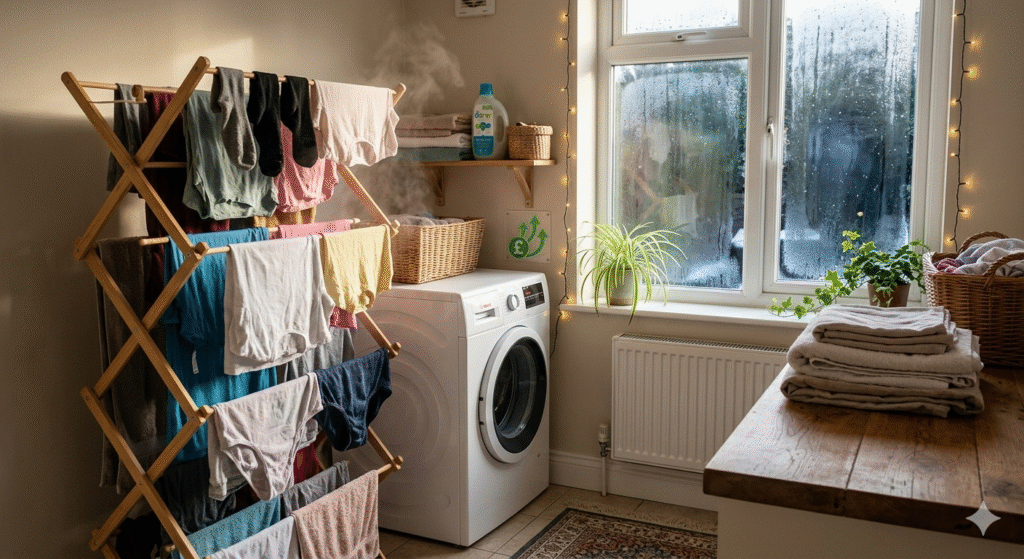
Pair Washing Efficiency With Cheaper Drying
Laundry costs don’t stop at the washing machine. In fact, drying can often use more electricity than washing, which is why understanding the cheapest ways to dry clothes at home can make a bigger difference to energy bills than most people expect.
Drying clothes often uses even more energy, especially if you rely on a tumble dryer.
Many UK households reduce drying costs by using:
• Heated clothes airers
• Dehumidifiers
• Well-ventilated drying areas
These approaches can dramatically reduce electricity use compared with tumble drying.
So What’s the Cheapest Temperature to Wash Clothes?
For most households, the cheapest and most practical approach is:
30°C for everyday clothing
This temperature:
• Uses the least electricity
• Cleans most laundry effectively
• Helps clothes last longer
• Keeps washing costs low
However, it’s still useful to run 40°C or 60°C washes occasionally for items that need deeper cleaning or better hygiene.
A balanced laundry routine might look like this:
• 30°C: everyday clothing
• 40°C: towels and bedding
• 60°C: occasional hygiene wash
Using this approach keeps laundry clean while avoiding unnecessary energy costs.
Final Thoughts
Washing temperature has a surprisingly large impact on energy use. Because most of the electricity used by a washing machine goes into heating water, even small reductions can save money over time.
For most everyday loads, 30°C washing is the cheapest option in the UK, costing only a few pence per wash while still delivering excellent cleaning performance with modern detergents.
By reserving hotter washes for situations where they’re genuinely needed, households can keep clothes hygienic while reducing both energy bills and clothing wear.
In the long run, building a smart laundry routine — using the right temperature for the right job — is one of the easiest ways to make everyday living a little more energy efficient.
Related Laundry & Drying Guides
If you’re trying to reduce laundry costs even further, these guides explain how to dry clothes faster, control moisture indoors, and choose the most efficient drying methods for UK homes.