

Written by Andrew Marshall
Scottish homeowner sharing practical ways to reduce energy bills and improve everyday home efficiency.
Drying clothes in the UK can feel like a constant battle — especially in winter, in flats, or when you’re trying to avoid damp and condensation without running your heating all day.
This guide ranks the cheapest ways to dry clothes in the UK by real running cost, then explains which options are actually practical (because “free” isn’t always realistic if your clothes take 24 hours and your flat starts sweating).
I’ll keep it grounded, UK-specific, and based on what typically matters in real homes:
- cost per hour / per load
- drying speed
- condensation risk
- space + noise
- safety
In This Guide
The quick ranking (cheapest → most expensive)
For most UK homes, the cheapest way to dry clothes is air drying where possible, followed by indoor drying with a dehumidifier in a closed room. Heated airers cost slightly more but are still far cheaper than most tumble dryers, especially in winter.
This is the “at a glance” order for energy cost in most UK homes:
- Outdoor line drying (sun/wind) – cheapest (often effectively £0)
- Indoor air drying (rack) with good ventilation – near-£0
- Indoor air drying + dehumidifier (smart use) – low cost, big practicality boost
- Heated airer (especially with a cover) – low to medium cost, good for flats
- Heat-pump tumble dryer – medium cost, fastest “set and forget” option
- Condenser tumble dryer – high cost
- Vented tumble dryer – often highest cost (plus heat loss through vent)
- Fan heater / electric heater blasting clothes – usually worst value (and risky)
The “best” choice depends on your priority:
- absolute cheapest energy → air dry (outside/inside)
- cheapest that’s also fast and avoids damp → rack + dehumidifier
- easiest lifestyle option without massive bills → heat-pump dryer
The big variable: your electricity price
To keep things consistent, I’ll use an example unit rate of:
£0.26 per kWh (typical ballpark for many UK households)
If your tariff is different, you can swap it into this simple formula:
Cost per hour = (Watts ÷ 1000) × unit rate (£/kWh)
Example: a 300W heated airer at £0.26/kWh
= (300 ÷ 1000) × 0.26
= £0.078/hour (~8p/hour)
What “cheapest” really means (and why people get this wrong)
There are two types of “cost”:
1) Energy cost (what you pay on the meter)
This is what we’re ranking.
2) Hidden cost (damp, heat loss, time, hassle)
This is what often ruins “cheap” options:
- a rack by a cold wall → condensation → mould risk
- open windows in winter → heat loss → higher heating bills
- slow drying → more laundry backlog → you panic and use the tumble dryer anyway
So after the ranking, I’ll show you the best cheap setups that actually work.
Cheapest drying methods — the real breakdown
1) Outdoor line drying (garden / balcony / washing line)
Typical energy cost: £0
If the weather allows, outdoor drying is the cheapest method by miles.
When it works best
- breezy days even if it’s cold
- low humidity days
- spin at 1200–1400 rpm before hanging
When it fails
- days with high humidity, drizzle, or still air
- flats with no outdoor space
- winter weeks where it never fully dries
Best practice: if it’s cold but breezy, clothes can still dry surprisingly well. Wind matters more than warmth.
2) Indoor air drying on a rack (no extra appliances)
Typical energy cost: near-£0
But: can increase condensation unless managed properly
This is the classic “free” option. But if you’re drying indoors in the UK, you must think about moisture.
The main risk
Wet laundry releases a lot of water into the air. If that moisture hits cold surfaces (windows, corners, external walls), it condenses.
That’s not just annoying — it’s the pathway to:
- musty smell in clothes
- damp patches
- mould
Make indoor air drying “cheap AND safe”
- Spin clothes hard first (1200–1400 rpm)
- Use a covered rack or place it in a smaller room
- Keep the rack away from external walls
- Create airflow: cracked window + door ajar or a trickle vent
- Dry during the day if possible (slightly warmer air holds more moisture)
This is cheapest when your home is already ventilated well and you’re not creating a damp problem.
Cheap drying methods can backfire if moisture isn’t managed properly. If you’ve ever noticed damp windows, musty smells, or slow drying times, these fixes in – How to Stop Condensation When Drying Clothes Indoor explain how to prevent condensation when drying clothes indoors.
3) Indoor rack + dehumidifier (the best cheap “system” for UK homes)
Typical power: 200W–500W
Typical cost per hour: ~5p–13p/hour (at £0.26/kWh)
This is the sweet spot for loads of UK homes because it does two jobs:
- pulls moisture out of the air (faster drying)
- prevents condensation and damp
Typical running costs (examples)
- 250W dehumidifier → (0.25 kW × £0.26) = 6.5p/hour
- 400W dehumidifier → 10.4p/hour
If you run one for 4–6 hours while drying laundry:
- 250W for 5 hours = 32.5p
- 400W for 5 hours = 52p
That’s often cheaper than a tumble dryer and it protects your home.
How to use it for maximum value
- Put laundry + dehumidifier in a small room (bedroom/spare room)
- Close the door
- Don’t crack the window wide open (you’ll keep pulling in damp air)
- Aim airflow across clothes (a small fan helps, but optional)
When it’s not the cheapest
If your home is already very dry and well-ventilated, the dehumidifier might be “extra”. But in most UK winters, it’s money well spent.
Using a dehumidifier while drying laundry is one of the cheapest and safest setups for UK homes, but results depend heavily on wattage, room size, and runtime. Our Best Dehumidifiers for Laundry Drying
guide explains exactly how to choose and run a dehumidifier specifically for drying clothes.
4) Heated airer (especially with a cover)
Typical power: 200W–300W (common)
Typical cost per hour: ~5p–8p/hour (at £0.26/kWh)
Heated airers are often far cheaper than people expect — especially compared to standard tumble dryers.
Example costs
- 230W heated airer → ~6p/hour
- Run for 6 hours → ~36p
- Run for 10 hours → ~60p
That’s genuinely reasonable.
If you’re deciding whether a heated airer makes sense for your home layout, space, and laundry volume, this detailed guide breaks down the best heated airers for small UK flats and how to run them efficiently without pushing up bills.
The trick that makes heated airers much cheaper
Use a cover.
A cover traps warm air around clothes, meaning:
- less heat escapes
- clothes dry faster
- you run it fewer hours
Without a cover, you often run it all day and the cost creeps up.
Best practice setup
- Don’t overload the rails (air gaps matter)
- Put thick items (hoodies/jeans) on the warmest rails
- Use a cover or even a breathable “tent” design
- If your home is damp, pair with a dehumidifier (gold-standard for flats)
5) Heat-pump tumble dryer (cheapest tumble dryer option)
Typical energy per load: often ~1.2–2.0 kWh (varies a lot)
Typical cost per load: ~31p–52p (at £0.26/kWh)
Heat-pump dryers are a different category from old-style dryers. They recycle heat rather than blasting it out.
Why they’re good value
- much lower electricity use than vented/condenser
- gentle on clothes
- no need to vent warm air outside
When it’s the best choice
If you want:
- speed
- convenience
- reliable drying every day
without the “oh my god the meter is spinning” feeling.
It may cost more upfront, but the running cost is usually the best of the tumble dryers.
6) Condenser tumble dryer (often expensive)
Typical energy per load: ~3–5 kWh
Typical cost per load: ~78p–£1.30 (at £0.26/kWh)
Condenser dryers don’t vent outside, but they’re still often high-energy because they use a lot of heat.
If you do multiple loads a week, this adds up fast.
7) Vented tumble dryer (often the most expensive AND wastes heat)
Typical energy per load: ~3–6 kWh
Typical cost per load: ~78p–£1.56 (at £0.26/kWh)
Vented dryers push warm, moist air outside — which means:
- you lose heat you paid to generate
- your home may feel colder (heating demand rises)
In winter, that “hidden cost” can be brutal.
If you’re comparing dryer types and want to understand why some models cost far less to run than others, our full breakdown article – Condenser vs Vented vs Heat-Pump Tumble Dryers — What’s the Difference? explains the real differences between vented, condenser, and heat-pump tumble dryers in UK homes.
8) Fan heater / electric heater blasting clothes (usually worst value + risky)
Typical power: 2000W
Typical cost per hour: (2.0 kW × £0.26) = 52p/hour
Run that for 3 hours and you’ve spent £1.56 — often to dry only part of a load.
Also: drying clothes directly on heaters is a safety risk. It’s not worth it.
So what’s the cheapest method that’s actually practical?
Here are the “winner setups” depending on your home.
🥇 Cheapest overall (if you can do it)
Outdoor line drying + good spin
- Best when weather allows
- £0 energy
- low damp risk
🥇 Cheapest realistic UK winter setup (most homes)
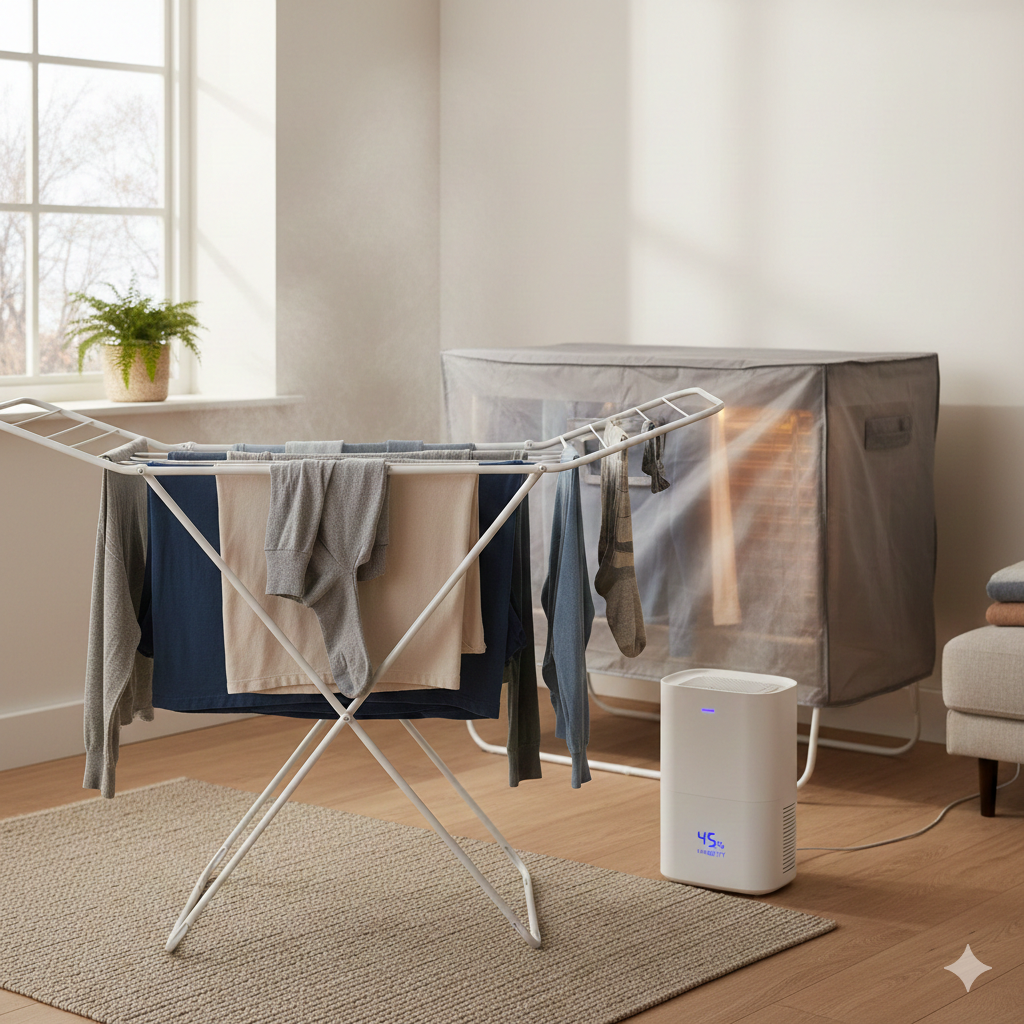
Indoor rack + dehumidifier in a closed room
- Very low running cost
- faster than passive air drying
- prevents condensation/mould
- works in flats
If you only take one thing from this article, take that.
If you want to put this into practice immediately, this step-by-step guide shows how to dry clothes faster in winter without turning on the heating.
🥇 Cheapest low-effort option (if you hate messing about)
Heat-pump tumble dryer
- medium running cost
- fastest reliable option
- easiest lifestyle method
🥇 Best for small flats with limited space
Heated airer + cover (optionally + dehumidifier)
- low to medium cost
- quiet
- doesn’t need outdoor space
- can be set up in spare room/bedroom
“Cost per load” comparisons (simple guide)
This is simplified (because loads vary), but useful:
At £0.26/kWh
- Rack air drying (no appliances): ~£0
- Dehumidifier drying session (4–6 hours at 250–400W): ~£0.26–£0.62
- Heated airer (6–10 hours at 200–300W): ~£0.31–£0.78
- Heat-pump dryer load (1.2–2.0 kWh): ~£0.31–£0.52
- Condenser dryer load (3–5 kWh): ~£0.78–£1.30
- Vented dryer load (3–6 kWh): ~£0.78–£1.56
- Fan heater (2kW × 2–3 hours): ~£1.04–£1.56+
Notice something important?
A heat-pump dryer can be in the same cost ballpark as a heated airer session — sometimes cheaper — because it finishes faster and uses energy more efficiently.
How to make ANY method cheaper (big wins)
1) Spin speed is your secret weapon
If your washer can handle it (and your clothes can), use a higher spin.
Less water in the fabric = less drying time = less energy.
2) Don’t overdry
A lot of tumble dryer cost comes from “just in case” extra time.
If your dryer has sensors or eco modes, use them.
3) Dry in a smaller space
Laundry drying is about moisture control.
A small room is easier to manage than the whole house.
4) Avoid “radiator drying” myths
Drying on radiators can feel free, but:
- it can block heat into the room
- it can create damp patches if the room isn’t ventilated
- it often dries slowly and unevenly
If you do it, keep airflow moving and don’t cover the entire radiator.
Safety notes (quick but important)
- Don’t dry clothes directly on electric heaters or gas fires
- Don’t overload extension leads with heated airers
- Keep heated airers away from flammable items
- Maintain dehumidifiers (empty tank, clean filter)
Cheap drying isn’t worth a fire risk.
FAQs
What’s cheaper: a heated airer or a dehumidifier?
It depends on wattage and how long you run it, but:
- a dehumidifier can dry a full rack efficiently and prevents damp
- a heated airer is predictable and cheap per hour but may take longer
For many UK homes, rack + dehumidifier is the best all-round value.
Is a heat-pump dryer cheaper than a condenser dryer?
Almost always, yes — per load.
The upfront cost is higher, but running costs are typically much lower, especially if you dry multiple loads weekly.
Should I open a window when drying clothes indoors?
If you’re passive air drying, some ventilation helps — but too much can cause heat loss in winter.
If you’re using a dehumidifier in a closed room, don’t leave the window wide open or you’ll keep pulling in damp outdoor air.
Does drying clothes indoors increase mould risk?
Yes, if moisture isn’t controlled. The risk rises when:
- rack is near cold walls/windows
- no ventilation
- lots of laundry in a small space
- home already has high humidity
If you’re a regular indoor dryer, a dehumidifier is often a smart move.
💡 Energy Tip (the “cheapest upgrade”)
If you dry indoors most of the year, the cheapest upgrade isn’t a fancy dryer — it’s controlling moisture.
Do this:
- put laundry in a small room
- shut the door
- run a dehumidifier for 4–6 hours
- let airflow do the rest
You get:
- faster drying
- less condensation
- less musty smell
- lower total energy than panic-tumble-drying later
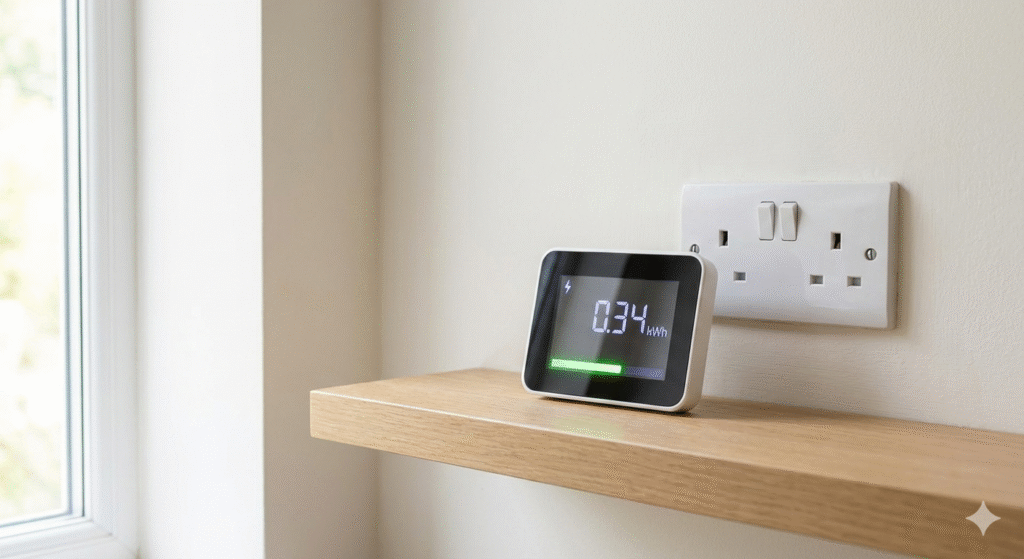
According to the Energy Saving Trust, drying clothes efficiently and reducing excess indoor moisture can help lower energy use while also reducing the risk of damp and mould in UK homes.
🔍 Want to optimise your entire laundry routine?
Drying costs are only one part of the equation. Washing temperature, spin speed, fabric choice, ventilation, and timing all affect how much energy your laundry routine really uses. These guides break each part down step by step.
- How to Build a Low-Energy Laundry Routine (UK Guide)
- How Spin Speed Really Affects Drying Time & Energy Bills
- Fast-Drying Fabrics Revealed: Which Clothes Dry Quickest Indoors
- Off-Peak Laundry Guide UK
- Why Your Clothes Smell Damp After Drying — And the Exact Fix
Author Insight:
This guide is based on real UK household energy costs and practical drying setups that work in everyday homes — including flats and smaller properties. After testing and comparing different methods over time, it’s clear that managing moisture and drying time matters just as much as appliance wattage when keeping laundry costs low.
Final recommendation (what I’d do in most UK homes)
If you want the cheapest method that’s still realistic and protects your home:
✅ Indoor rack + dehumidifier in a closed room is the best overall value.
If you want low hassle and you dry often:
✅ Heat-pump tumble dryer is the best long-term “set and forget” option.
If you’re in a flat and want a cheap appliance setup:
✅ Heated airer + cover (and dehumidifier if damp) is a strong combo.
💨 Want to dry clothes faster, cheaper, and smarter—especially in small UK homes? Explore our Laundry & Drying Efficiency Hub, a curated resource packed with expert tips, energy-saving gadgets, and clever solutions for indoor drying. From heated airers and compact dehumidifiers to smart laundry routines that actually work, this hub helps you cut costs, save space, and stay ahead of the damp.
About The Author – Andrew Marshall
Andrew Marshall is a Scottish homeowner and the creator of Save Wise Living. He shares practical ways to reduce energy bills, improve home efficiency, and make everyday household routines cheaper and simpler.