

Written by Andrew Marshall
Scottish homeowner sharing practical ways to reduce energy bills and improve everyday home efficiency.
This guide shows the cheapest way to heat a living room, bedroom, kitchen, bathroom and home office in a typical UK house.
If you’re trying to heat your home in the UK without getting rinsed by your energy bill, here’s the truth:
The cheapest heating “method” isn’t one device. It’s a system.
Most people do the exact opposite of cheap heating:
- They heat the whole house evenly.
- They chase comfort by turning the thermostat up.
- They ignore heat loss (windows, gaps, draughts).
- They run the boiler longer than necessary because the house can’t hold warmth.
This ultimate guide fixes that.
You’ll learn how to:
- Work out what each room really costs to heat
- Reduce heat loss so your boiler runs less
- Choose the cheapest heating method per room
- Use small targeted heat (where it makes sense) without wasting energy
- Fix “cold room” problems that make people overspend
You can apply this in one evening with cheap DIY improvements, then tighten it week-by-week.
In This Guide
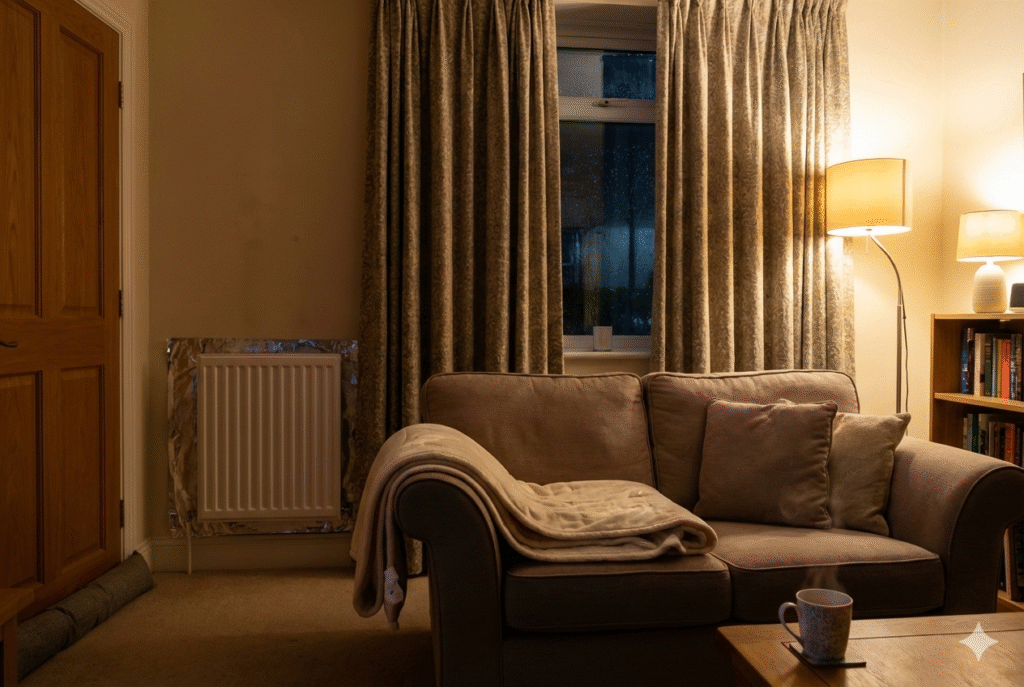
The golden rule of cheap heating
The cheapest heat is the heat you don’t have to generate.
So we do this in the right order:
- Keep heat in (stop loss)
- Make radiators efficient (get full output)
- Heat the room you’re in (control)
- Heat the person when appropriate (targeted comfort)
If you skip step 1, you’ll always feel like your heating is “weak” and expensive.
UK heating costs: the only calculator you need
Everything comes down to one formula:
Cost per hour = (Watts ÷ 1000) × your electricity unit rate (p/kWh)
Examples (use your tariff; these are just examples to show the scale):
- 100W heated blanket: 0.1 kW × tariff = cheap per hour
- 500W heater: 0.5 kW × tariff
- 2,000W fan heater: 2.0 kW × tariff = expensive per hour
Gas central heating is slightly different because you’re paying for gas input and boiler efficiency, but in real life the same logic applies:
The longer the boiler runs, the more you pay.
So the cheapest central heating strategy is always: get rooms up to temperature fast, then maintain with minimal run-time.
This is why draught proofing and window fixes can feel like magic — they shorten boiler run-time.
What actually makes a room expensive to heat?
A room costs more to heat when it has:
- Large window area (heat radiates out constantly)
- External walls (cold surfaces steal warmth)
- Air leaks (draughts replace warm air with cold air)
- High ceiling / open plan (warm air rises away from you)
- Poor radiator output (heat stays near the wall)
- Damp air (feels colder; takes more energy to warm)
So the “cheapest heater” isn’t always the cheapest per hour — it’s the one that achieves comfort fastest with the least waste.
Quick Room-by-Room Cheap Heating Summary
Before we go into each room in detail, here’s a simple overview of the cheapest way to create warmth in the spaces you use most.
| Room | Cheapest Method | Why It Works |
|---|---|---|
| Living Room | Thermal curtains, window film, radiator foil, heated throw | Stops major heat loss and heats the person, not the whole space |
| Bedroom | Heated mattress topper or heated blanket, curtains, draught blocking | Keeps you warm all night without heating the air for hours |
| Home Office | Sealed door, improved radiator output, low-watt heater if needed | Small space heats quickly and stays warm with minimal energy |
| Kitchen | Seal floor/skirting gaps, short heating bursts, radiator foil | Hard surfaces steal heat, so preventing loss is more effective than higher heat |
| Bathroom | Dehumidify first, timed heating when in use | Dry air heats faster and feels warmer at lower temperatures |
| Hallway & Stairs | Draught proofing only (not active heating) | Stops warm air escaping from other rooms instead of wasting heat here |
This is the logic behind the cheapest way to heat your home — stop heat loss first, make radiators work properly, and only heat the spaces you actually use.
The cheap-heating checklist before you go room-by-room
Do these once and every room becomes cheaper forever.
1) Fix the windows (biggest win for most UK homes)
Windows lose heat in two ways: draughts and cold glass radiating heat out.
Cheap upgrades that actually change the feel of a room:
- Window insulation film on the coldest windows
- Thick thermal curtains or properly-fitted thermal blinds
- Stop micro-draughts around frames
If you’ve never used window insulation film, it’s one of the most cost-effective DIY fixes in the UK because it reduces that constant “cold pull” you feel near glass. This guide on window insulation film that cuts draughts shows why it’s one of the cheapest upgrades for older UK homes. Properly fitted thermal curtains designed to keep heat in can change how warm a living room feels within minutes of closing them.
If you’re unsure whether curtains or blinds are better, this breakdown of thermal blinds vs curtains for keeping heat in explains the difference clearly.
2) Block draughts where warm air escapes
You don’t need to “insulate the whole house” to feel warmer. You need to stop obvious leaks:
- Doors
- Letterboxes
- Skirting/floor gaps
- Loft hatch
- Around pipes
A good door draught stopper (and decent sealing tape) can reduce that hallway wind that makes the whole house feel colder than it is.
Tiny air leaks matter more than people realise, especially around floors, which is why learning how to seal gaps around skirting boards to keep heat in is such a high-impact fix.
In older properties, simple solutions like weather stripping tape for draught proofing doors and windows often pay back faster than bigger upgrades.
3) Make radiators do their job
Radiators commonly waste heat by:
- Warming the wall behind them
- Not circulating warm air into the room
- Running poorly due to balance/air/TRV issues
Two simple upgrades punch above their weight:
- Reflective radiator foil behind external-wall rads
- Radiator fans to push warm air forward and speed up warm-up time
If one room is always cold, don’t buy a bigger heater first — fix radiator performance first.
4) Control heat room-by-room
This is where smart control pays off:
- Smart TRVs
- Zoning schedules
- Plug-in thermostats where relevant
But control only works well after you’ve reduced heat loss. Otherwise you’re “controlling” wasted heat.
Proper zoning often starts with understanding smart radiator valves vs standard thermostats and how they control individual rooms.
If one room is always cold, this guide on what actually causes cold rooms that never warm up usually pinpoints the issue.
Sometimes the issue is simply a radiator fault, and understanding why some radiators never get properly warm can save you from buying extra heaters.
Room-by-room: the cheapest way to heat each part of your home
Below is the UK practical version — not theory, not perfect-lab conditions.
Living room: cheapest comfort for the room you use most
The living room gets expensive because it’s usually:
- Bigger
- Used for longer
- Window-heavy
- Open-plan or leaky (doors/hallway)
Cheapest strategy (in the right order)
Step 1: Stop heat loss
- Close curtains early (before the room cools)
- Deal with the coldest window first (film + curtains)
- Block draughts at doors and skirting gaps
Step 2: Improve radiator output
- Add reflective backing behind the radiator (especially on external walls)
- Consider a small fan booster to circulate warmth
Step 3: Heat the “occupied zone”, not the entire volume
If you sit on the sofa every night, you don’t need the far corners of the room to be tropical.
The cheapest comfort often looks like:
- Central heating set to a reasonable baseline
- Then targeted warmth for the seating area (especially in the evening)
What targeted heat means in practice
A heated throw or blanket running at low wattage can give you a “toasty” feeling without raising the whole room temperature. If you’ve compared heated blankets vs electric throws, you’ll know wattage and control settings matter more than marketing.
When a portable heater can be cheaper
If your living room is only used for an hour or two, sometimes it’s cheaper to bring the temperature up locally rather than run the full heating cycle.
This is where an oil-filled radiator under £100 can make sense — not because it’s “free heat”, but because it maintains comfort smoothly and can be used intelligently in short bursts.
Bedroom: the cheapest room in the house to “heat” (if you do it right)
Most people waste money heating bedrooms overnight.
You don’t need a hot bedroom. You need a warm bed and stable comfort.
In bedrooms especially, comparing heated blankets vs electric throws for energy savings shows how cheap personal warmth can be.
For people who hate getting into a cold bed, heated mattress toppers that warm the bed before you get in are surprisingly cost-effective.
Cheapest strategy
Step 1: Keep the room from dropping too cold
- Curtains/thermal blinds closed
- Draughts blocked
- Radiator low or off (depending on your home)
Step 2: Heat the person
This is where you get the biggest cost reduction in the entire house:
- Heated blanket / throw
- Or a heated mattress topper (very effective for people who hate getting into a cold bed)
If you’ve looked at heated mattress toppers you’ll know they can deliver that “warm bed” feeling using a fraction of the power of heating the whole room for hours.
Bonus: Bedroom humidity
A slightly damp bedroom feels colder even if the thermostat says it’s warm. If your home is cold and damp, a properly sized dehumidifier for cold UK homes can improve comfort and reduce that clammy chill.
Home office: cheap heat without heating the entire house
The cheapest way to heat a home office is almost always zoning + targeted heat, because you’re in one room for hours.
Cheapest strategy
- Keep the door shut (you’re trying to heat a box)
- Reduce window loss (film/curtains)
- Make sure the radiator output is strong
- Use targeted heat for your body if needed
Best practical combo
- Central heating scheduled for that room during working hours
- Then a low-watt supplemental heater only if needed
In small rooms, energy-efficient portable electric heaters can sometimes be cheaper than running central heating for hours.
This is where understanding smart heaters for small rooms matters. Low-watt devices can keep a small insulated room comfortable without spiking your hourly costs like a 2kW blast heater.
If you’re comparing options, the question isn’t “which heater is best?”
It’s “which gets me comfortable fastest without overheating and cycling wastefully?”
Many people prefer oil-filled radiators under £100 for steady, controllable warmth without the harsh blast of fan heaters.
The difference in running costs becomes obvious when you compare a smart heater vs a standard fan heater side by side.
Kitchen: why it feels cold and how to heat it cheaply
Kitchens often feel colder because:
- Hard surfaces pull heat from your body
- Floors are colder
- Extraction/vents leak air
- You’re in and out a lot
Cheapest strategy
- Seal skirting gaps and obvious draught points
- Don’t overheat it — kitchens warm up quickly from cooking
- Use short timed boosts rather than long background heat
If you have a radiator in the kitchen, reflective backing behind it helps more than people expect, especially on an external wall.
Bathroom: cheap warmth without creating damp problems
Bathrooms are tricky because they feel colder for two reasons:
- You’re often wet (your body loses heat faster)
- Moist air feels chilly and takes more energy to warm
Cheapest strategy
Step 1: reduce damp
If your home struggles with condensation, getting humidity under control makes the bathroom feel warmer at the same temperature. That’s why winter condensation fixes and dehumidifying can indirectly reduce heating costs.
Step 2: timed warmth
Bathrooms don’t need to be heated all day.
They need to be warm when used:
- Morning routine
- Evening routine
A small timed boost is often cheaper than a permanently warm bathroom.
Hallways & stairs: the biggest money leak in many UK homes
Hallways and stairwells are often:
- Draughty
- Connected to doors
- Tall (warm air rises away)
- Heat-loss pathways between rooms
Cheapest strategy
Don’t try to make these spaces “warm”. Make them sealed.
- Draught exclusion at doors and letterbox
- Seal gaps
- Deal with cold stair windows
If your hallway feels like a wind tunnel, every heated room leaks warmth into it and then out of the house. Fixing this can reduce the “whole house feels cold” effect more than upgrading any heater.
Conservatory / cold extension: usually the most expensive room to heat
If you have a conservatory or very cold extension, the cheapest approach is often:
- Don’t heat it like the main house
- Use it when the sun gives you free heat
- If you must heat it, do it in short bursts with localized heat
You can waste a fortune trying to make a glass box behave like a brick room.
The cheapest heating “stack” for UK homes
This is the layered approach that tends to win in real life:
Layer 1: Stop heat loss
- Windows (film + curtains/blinds)
- Draught proofing (doors + skirting)
- Quick insulation upgrades (where possible)
If you want a deeper approach, look at how people layer insulation in older homes without major renovation — it’s almost always about small steps that stack.
Layer 2: Fix radiator performance
- Bleed and balance if rooms vary wildly
- Reflect heat back into the room
- Improve circulation
If some radiators never heat properly, you end up compensating by turning everything up. That’s expensive.
Even simple devices like plug-in thermostats that cut heating costs can prevent rooms being overheated unnecessarily.
Layer 3: Control by room and schedule
- Heat rooms when used
- Lower background temps elsewhere
- Stop heating empty spaces
This is where comparing smart radiator valves vs standard thermostats becomes relevant — not for gadget hype, but because room-by-room control prevents waste.
Layer 4: Use targeted heat for comfort
Heated blankets, throws, and mattress toppers are “cheat codes” for evening comfort. They’re not a full-house solution — they’re a comfort multiplier.
Cheap heating mistakes that keep UK bills high
Mistake 1: Turning the thermostat up to solve cold rooms
A cold room is usually:
- Heat loss
- Poor radiator output
- A balancing issue
Not “insufficient thermostat”.
Mistake 2: Blasting a 2kW fan heater daily
A blast heater can feel great for 10 minutes, then becomes an expensive habit.
If you’re comparing smart heater vs fan heater approaches, the real difference is control and how the heat is delivered. Blast heat is rarely the cheapest long-term comfort.
Mistake 3: Heating the whole house evenly
This is the biggest silent killer of cheap heating.
A cheap heating plan looks like:
- Comfortable “core zones” heated properly
- Cooler unused rooms
- Warm bed at night
Not “every room at 21°C”.
Mistake 4: Ignoring humidity and condensation
Damp rooms feel colder and push people to overheat.
If your windows are constantly wet, treat it as part of your heating strategy, not a separate issue.
Many people don’t realise how much condensation affects comfort, which is why these smart fixes for winter window condensation are worth applying.
In persistently damp homes, dehumidifiers designed for cold UK properties can make rooms feel warmer at lower temperatures.
Room-by-room cost breakdown (practical examples you can adapt)
Instead of pretending your home matches a spreadsheet, here’s the best way to think about cost:
What matters most is:
- How long you heat
- How leaky the room is
- How quickly you can reach comfort
So do a simple test for your own home:
- Pick your “main room” (living room/home office)
- Do the heat-loss fixes for that room only
- Track how often the boiler runs before vs after
- Then repeat for the next worst room
You’ll feel the improvement immediately.
A simple way to estimate relative costs
Even if you don’t know exact gas usage per room, you can compare electric devices easily:
- Heated throw (low watt) used for hours
- vs
- Portable heater (higher watt) used for shorter bursts
- vs
- Whole-house central heating run-time
That’s why “cheap heating” often becomes:
- background heat + targeted comfort
rather than trying to push the whole house higher.
The cheapest way to heat your home if you do nothing else
If you want the highest impact with minimal effort, do this:
- Fix your worst window (film + proper curtains/blinds)
- Seal the main external door (draught proofing)
- Seal skirting gaps in the coldest room
- Add reflective backing behind the coldest radiator
- Use heated bedding at night
- Stop heating rooms you don’t use
If you only apply these steps, most homes feel noticeably warmer within days — not because you “generated more heat”, but because you stopped wasting it.
The “cheap heating” plan for different UK household types
If you’re in a flat
- Heat loss is often windows + ventilation
- Targeted heat works very well
- You’ll benefit massively from window fixes and curtains
If you’re in an older draughty house
- Sealing gaps + layered insulation wins
- Radiators may need balancing and efficiency upgrades
- Your “cheapest heat” often starts with stopping air leaks
Older houses benefit massively from layering insulation improvements without major renovation work.
Guidance from Citizens Advice also highlights how simple draught-proofing and room control can make homes feel warmer while reducing energy use.
If your home is cold and damp
- Treat damp as a heating issue
- Dehumidifying and condensation control can reduce the urge to overheat
- Dry air feels warmer faster
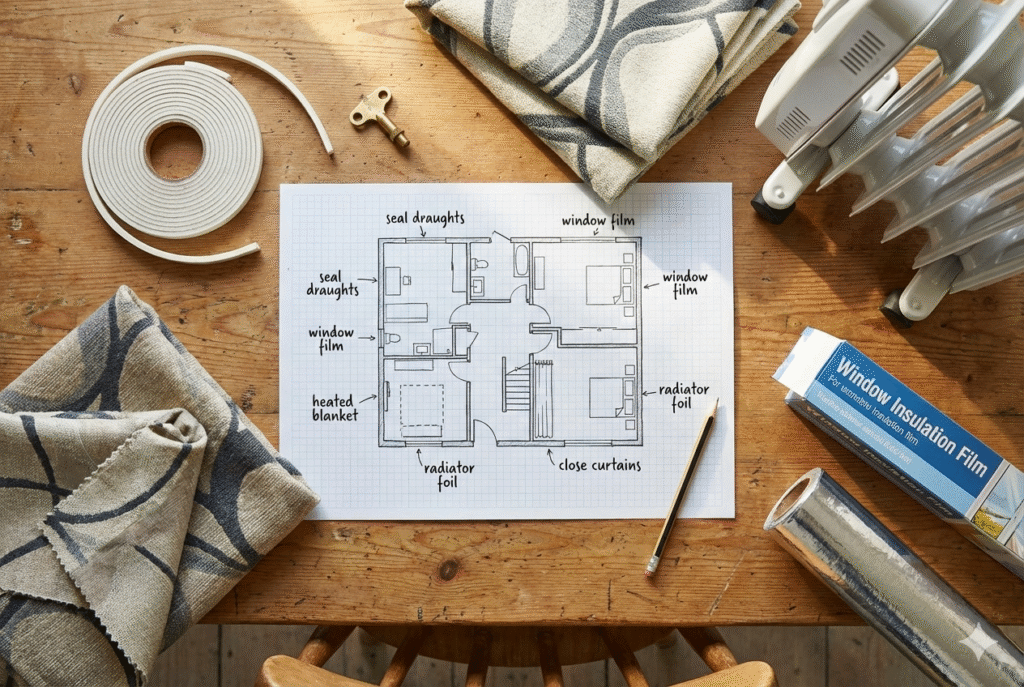
FAQs people search (and the real answers)
Is it cheaper to leave heating on low all day?
It depends on your home’s heat loss and occupancy.
In leaky homes, “low all day” often means paying to heat the outdoors. For many households, it’s cheaper to:
- heat rooms when used
- keep unused rooms cooler
- reduce heat loss so warm-up is faster
There are also plenty of affordable ways to keep warm without turning the thermostat up at all.
Are portable heaters cheaper than central heating?
Sometimes — if you’re heating one small room for a short time.
They’re rarely cheaper if you use them as a daily replacement for central heating across multiple rooms. Targeted heat is the win.
Why do some rooms never warm up?
Usually one of:
- air in the radiator
- stuck valve/TRV
- sludge
- poor balancing
- heat loss via windows/external walls
Fixing radiator performance and heat loss beats buying a bigger heater.
What’s the cheapest way to stay warm at night?
Heat the bed, not the air:
- heated blanket/throw
- heated mattress topper
- decent curtains and draught proofing
The takeaway: cheap heating is built, not bought
If you want the cheapest way to heat your home in the UK, stop searching for a miracle device.
Build the stack:
- Keep heat in (windows + draughts)
- Make radiators efficient (reflect + circulate + fix cold spots)
- Control the schedule (heat rooms when used)
- Use targeted comfort (bed and seating area)
Do that and you can usually run your heating less, set it lower, and still feel warmer — which is the only definition of cheap heating that actually matters.
If you want to see how these ideas fit together, this guide on smart heating hacks for UK homes pulls the full strategy into one place.
Stay warm for less this winter with the full Smart Heating & Home Warmth Hub explore smart thermostats, radiator valves, and insulation tricks that help cut UK energy bills fast.
About The Author – Andrew Marshall
Andrew Marshall is a Scottish homeowner and the creator of Save Wise Living. He shares practical ways to reduce energy bills, improve home efficiency, and make everyday household routines cheaper and simpler.