
Drying clothes indoors during the UK’s colder months can be slow, frustrating, and costly. Tumble dryers consume high energy, while traditional airers leave clothes damp and rooms humid. The solution? Combine a heated airer and dehumidifier to create the best indoor drying setup — one that’s energy-efficient, fast, and condensation-free.
This guide explains how to use both devices together for maximum drying efficiency, helping you save money, protect your home, and dry laundry faster all year round.
This article is part of our Laundry & Drying Efficiency hub, focused on practical UK advice for drying clothes indoors faster, avoiding damp, and keeping energy use low.
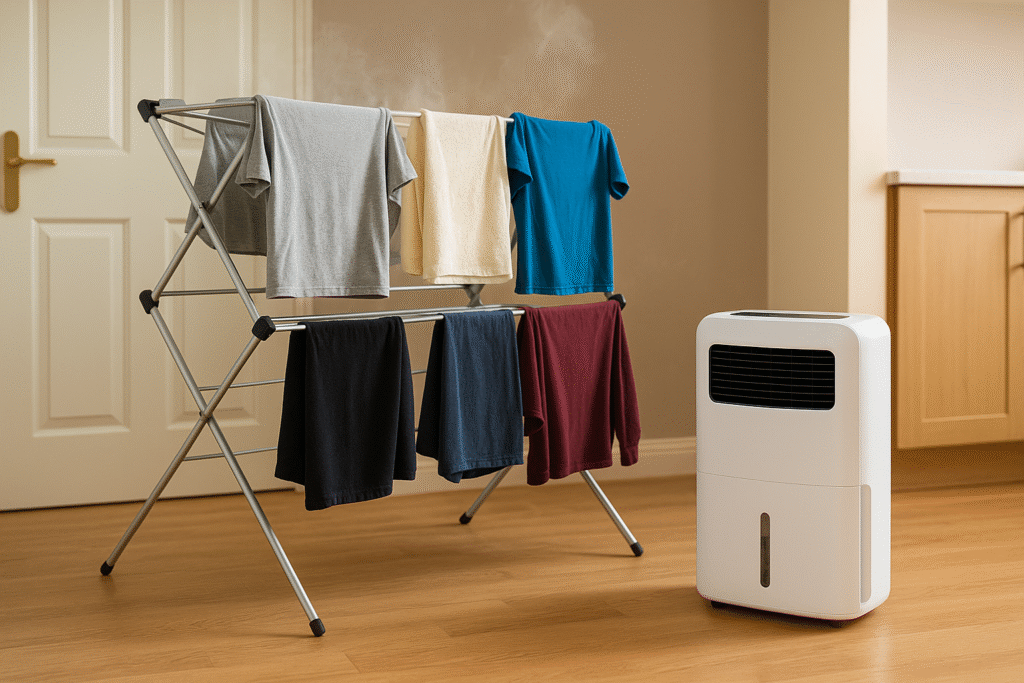
Why Use a Heated Airer and Dehumidifier Together?
Heated airers gently warm your clothes, speeding up evaporation. But that moisture doesn’t vanish — it lingers in the air, raising humidity and slowing drying. A dehumidifier extracts that moisture, keeping humidity low and helping clothes dry faster and more thoroughly.
Together, they create a controlled drying zone that mimics the performance of a tumble dryer — but at a fraction of the cost. This combo is ideal for UK homes looking to reduce condensation, save energy, and dry laundry efficiently.
Step 1: Choose the Best Heated Airer for Your Home
To get the most out of your setup, choose a heated clothes airer with:
- Multi-tier design: More space for airflow and faster drying.
- Foldable frame: Easy to store when not in use.
- Protective cover: Traps heat and prevents moisture from escaping.
- Low wattage: Typically 300W–800W, far cheaper than tumble dryers.
Top-rated options on Amazon UK include:
- Dry:Soon Heated Airer with Cover – 3-Tier: Spacious, foldable, and includes a fitted cover for heat retention.
- Minky Wing Heated Clothes Airer: Compact and budget-friendly, perfect for smaller households.
These models offer energy-efficient laundry drying without compromising on performance.
Step 2: Pick a Dehumidifier That Matches Your Space
Dehumidifiers come in two types:
- Desiccant dehumidifiers: Ideal for cold rooms, work well even in unheated spaces.
- Compressor dehumidifiers: More efficient in warm rooms, suitable for larger spaces.
Look for features like:
- Laundry mode: Boosts moisture extraction for faster drying.
- Auto shut-off: Saves energy and prevents over-drying.
- Large tank capacity: Reduces emptying frequency.
- Humidistat: Lets you set a target humidity level (40–50% is ideal).
Recommended models on Amazon UK:
- Meaco DD8L Zambezi Desiccant Dehumidifier: Excellent for colder rooms, includes laundry mode and ioniser.
- Pro Breeze 20L Compressor Dehumidifier: Powerful and efficient, great for larger homes.
These units help reduce condensation and improve indoor air quality while drying clothes.
Step 3: Set Up Your Indoor Drying Zone
Choose a small, enclosed room — such as a spare bedroom, utility room, or hallway with a door. The goal is to trap heat and moisture so the dehumidifier can work efficiently.
Setup tips:
- Place the heated airer centrally with space around it for airflow.
- Position the dehumidifier nearby, ideally facing the airer but not blowing directly onto clothes.
- Close doors and windows to retain heat and moisture.
- Avoid placing the airer too close to walls or furniture.
This setup creates the best indoor drying environment for UK homes.
Step 4: Use Both Devices Together for Maximum Efficiency
Timing matters when combining a heated airer and dehumidifier.
Suggested routine:
- Start with the heated airer: Turn it on to warm the clothes and begin evaporation.
- Wait 30–45 minutes: Allow moisture to build up in the room.
- Switch on the dehumidifier: Activate laundry mode or set humidity to 40–50%.
- Run both for 2–4 hours: Adjust based on load size, fabric type, and room conditions.
This method ensures the dehumidifier has moisture to extract and avoids unnecessary energy use.
Step 5: Monitor and Adjust for Best Results
Fine-tuning your setup can improve drying speed and energy efficiency.
Tips:
- Use a hygrometer: Track humidity levels to avoid under- or over-drying.
- Rotate clothes halfway through: Ensures even drying, especially for thicker items.
- Don’t overload the airer: Crowded clothes trap moisture and slow airflow.
- Empty the dehumidifier tank regularly: A full tank stops extraction and delays drying.
These adjustments help maintain an energy-efficient laundry drying routine.
Bonus Tips to Speed Up Drying and Save Energy
Want to boost performance even further? Try these proven tips:
- Use a heated airer cover: If your model doesn’t include one, use a breathable sheet to trap heat.
- Dry heavier items on lower tiers: Warm air rises, so lighter items dry faster on top.
- Run during off-peak hours: If you’re on Economy 7 or a smart tariff, drying overnight can save money.
- Keep the room warm: A small radiator or low central heating can improve drying speed.
These tips help create the best indoor drying setup for UK households.
Frequently Asked Questions
Is it safe to leave them running unattended? Yes — most heated airers and dehumidifiers are designed for safe, unattended use. Just ensure clothes aren’t touching heating elements and the dehumidifier has auto shut-off.
How much does it cost to run? A heated airer typically uses 300–800W, costing around 10–25p per hour. A dehumidifier adds 10–20p per hour depending on type. Combined, they’re still cheaper than a tumble dryer, which can cost 50–70p per cycle.
Can I use this setup in a cold room? Yes — just choose a desiccant dehumidifier, which works well in unheated spaces.
Will it reduce condensation in my home? Absolutely. Dehumidifiers remove moisture from the air, helping prevent mould, damp, and window condensation — especially in winter.
🔄 What to Read Next: Optimise Your Setup Even Further
Now that you know how to combine a heated airer and dehumidifier for maximum drying efficiency, it’s time to fine-tune your setup and keep it running smoothly. These next guides will help you get even better results:
- Where to Put a Heated Airer or Dehumidifier for Best Results (Room Layout Tips) – Learn how room size, airflow, and placement affect drying speed and moisture control.
- How to Clean and Maintain Your Dehumidifier & Heated Airer for Maximum Efficiency – Keep your devices performing at their best with simple maintenance routines that extend lifespan and save energy.
These articles build on everything you’ve just learned — helping you create the most effective, low-cost indoor drying system possible.
Final Recommendation: Best Heated Airer and Dehumidifier Combo
For a reliable, energy-efficient indoor drying setup that works in any UK home, here’s a proven pairing:
- Heated Airer: Dry:Soon Heated Airer with Cover – 3-Tier Spacious, foldable, and includes a fitted cover to trap heat — ideal for families and larger loads.
- Dehumidifier: Meaco DD8L Zambezi Desiccant Dehumidifier Performs brilliantly in cold rooms, includes laundry mode, and helps reduce allergens while drying.
This combination offers the best indoor drying solution for UK households — saving time, reducing condensation, and cutting energy costs all year round.
💨 Want to dry clothes faster, cheaper, and smarter—especially in small UK homes?
Explore our Laundry & Drying Efficiency Hub, a curated resource packed with expert tips, energy-saving gadgets, and clever solutions for indoor drying. From heated airers and compact dehumidifiers to smart laundry routines that actually work, this hub helps you cut costs, save space, and stay ahead of the damp.

About The Author – Andrew Marshall
Andrew Marshall is a Scottish homeowner and the creator of Save Wise Living. He shares practical ways to reduce energy bills, improve home efficiency, and make everyday household routines cheaper and simpler.