
Smart home gadgets are everywhere—promising to cut your energy bills, automate your routines, and make your home more efficient. But do they actually deliver savings, or are they just clever tech with inflated claims?
This guide breaks down how smart gadgets interact with your energy usage, which types offer measurable benefits, and how to evaluate whether a device is worth your money. If you’re trying to reduce costs without falling for hype, this is for you.
Understanding Energy Use: The Numbers That Matter
Before diving into gadgets, it helps to understand where your energy goes. In a typical UK household:
- Heating accounts for over 60% of energy use
- Lighting and appliances make up around 20–25%
- Standby power (devices left plugged in but unused) can cost £35–£50 per year
Smart gadgets aim to reduce these costs by automating usage, improving visibility, and helping you make better decisions. But not all devices are built equally—and not all savings are guaranteed.
So Do Smart Gadgets Save You Money ? Yes : Find Out More Below
🔌 Smart Plugs with Energy Monitoring
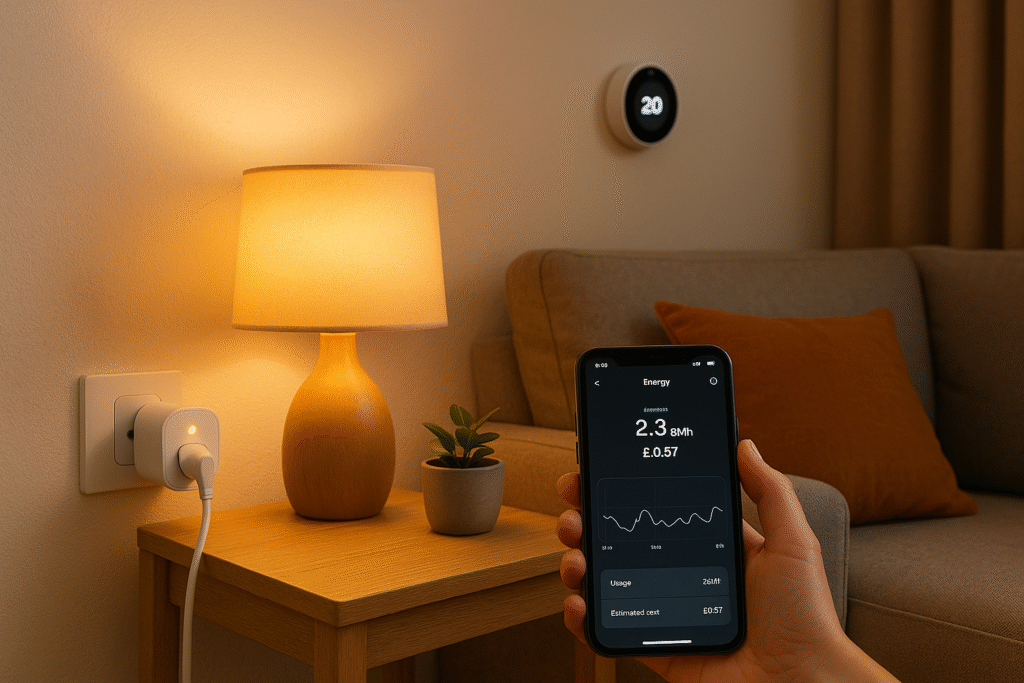
These let you track how much power individual devices use and automate when they turn on or off. They’re especially useful for identifying “phantom load”—the energy used by devices in standby mode.
For example, a TV left on standby overnight might use 5–10W continuously. Multiply that across multiple devices and nights, and you’re looking at £30–£50 annually in wasted electricity.
Smart plugs help you spot these patterns and schedule devices to shut off automatically. One example is the EIGHTREE Smart Plug, which offers real-time tracking and app-based control.
💡 Smart LED Bulbs
LEDs already use up to 80% less energy than traditional bulbs. Smart versions add scheduling and dimming, which helps reduce unnecessary usage—especially in hallways, bathrooms, or bedrooms where lights are often left on.
If you replace a 60W incandescent bulb with a 10W LED and use it for 3 hours a day, you save roughly 55kWh per year, or about £15–£20 depending on your tariff. Multiply that across your home, and the savings grow.
Smart bulbs also help build habits—like dimming lights in the evening or syncing lighting with your schedule.
What’s Mostly Hype: Gadgets That Rarely Deliver
❌ “Power Saver” Plug Boxes
These often claim to stabilize voltage or reduce reactive power, but most are ineffective. Some don’t even contain real circuitry. They’re marketed with pseudoscientific language and rarely offer measurable savings.
❌ Smart Speakers and Displays
Useful for convenience, but they don’t reduce energy use directly. They may help you control other devices, but on their own, they’re not energy-saving tools.
❌ Video Doorbells and Cameras
Security-focused gadgets offer peace of mind but don’t impact your energy bills. In fact, they may increase electricity use slightly due to constant connectivity.
How to Evaluate Smart Gadgets for ROI
When considering a smart gadget, ask:
- Does it reduce energy use directly?
- Can I measure the savings?
- Is it compatible with my home setup?
- Is it certified for UK use (CE/UKCA)?
- Will I actually use its features regularly?
Also consider payback time. If a smart plug costs £15 and saves £35/year, it pays for itself in 6 months. A £200 thermostat saving £100/year takes 2 years to break even.
How to Calculate Energy Savings and Compare Gadget Costs
Smart gadgets promise savings—but how do you know if they’re worth it? The key is understanding two things:
- How much energy a device uses
- How much your gadget helps reduce that usage
Let’s break it down with a simple framework.
🔢 Step 1: Know Your Tariff
Most UK households pay around 28p per kWh of electricity (as of late 2025). This is your baseline for calculating savings.
So if a device saves 100 kWh per year, that’s:
100 kWh×£0.28=£28 saved annually100 \text{ kWh} \times £0.28 = £28 \text{ saved annually}
🔌 Step 2: Estimate Device Usage
Let’s say you have a plug-in heater rated at 1,500W (1.5kW) and you use it for 2 hours a day in winter.
1.5 kW×2 hours/day×90 days=270 kWh1.5 \text{ kW} \times 2 \text{ hours/day} \times 90 \text{ days} = 270 \text{ kWh}
That’s:
270 kWh×£0.28=£75.60 per season270 \text{ kWh} \times £0.28 = £75.60 \text{ per season}
If a smart plug helps you reduce usage by 25% through scheduling or automation, you’d save:
£75.60×0.25=£18.90£75.60 \times 0.25 = £18.90
💡 Step 3: Compare Gadget Cost vs Savings
If the smart plug costs £15 and saves £18.90 per season, it pays for itself in less than one winter. That’s a good ROI.
Now compare that to a £40 gadget that saves £10/year—it would take 4 years to break even. That’s fine if it offers other benefits (like comfort or automation), but not ideal if savings are your priority.
📊 Step 4: Use Monitoring to Refine
Smart plugs with energy monitoring let you track real usage in real time. This helps you:
- Spot high-consumption devices
- Adjust schedules based on actual data
- Avoid guesswork and improve accuracy
Over time, you’ll build a clearer picture of your home’s energy profile—and make smarter decisions about which gadgets are worth it.
🧠 Final Tip: Think in kWh, Not Just Pounds
Energy savings vary with tariffs, seasons, and habits. By thinking in kilowatt-hours (kWh), you can compare across devices, homes, and years—even if prices change.
Smart gadgets are tools. The more you understand your usage, the more value you’ll get from them.
Smart Gadgets vs Smart Habits
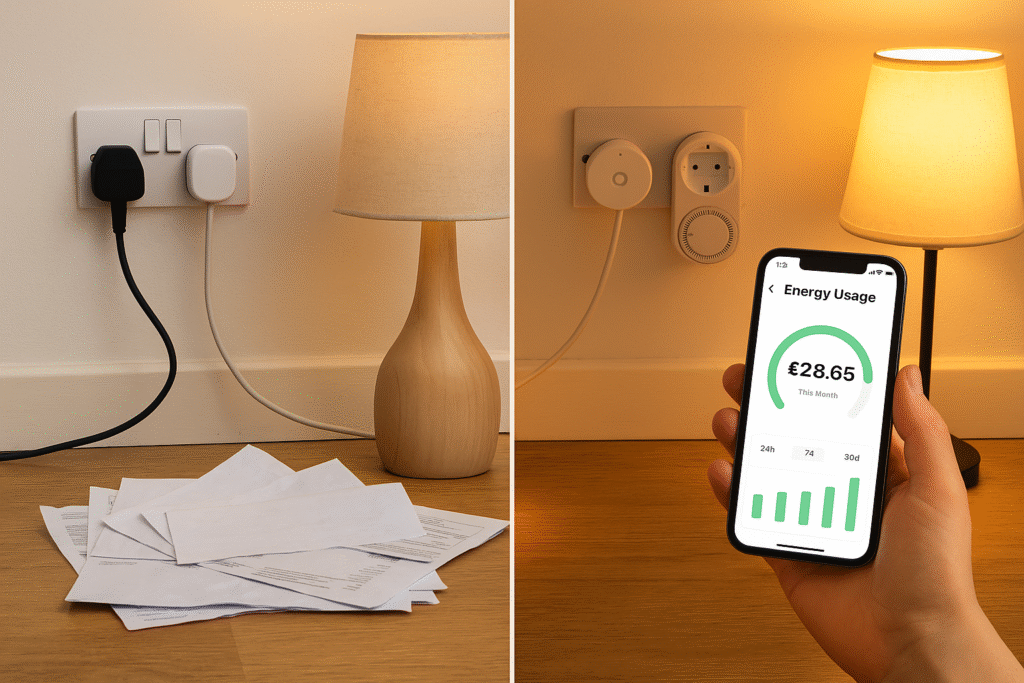
Tech can help—but habits matter more. A smart plug won’t save you money if you leave it running 24/7. A smart bulb won’t reduce costs if you never dim it or set schedules.
The best results come from combining smart gadgets with smart behaviour:
- Use energy monitoring to identify waste
- Automate devices based on your routine
- Schedule heating and lighting around occupancy
- Review usage data monthly to spot trends
🧠 Think You’ve Got Smart Tech Figured Out? Here’s What Most People Miss…
If you’re ready to take the next step, we’ve got two deep dives worth your time. 🧳 For those in rented homes or flats, check out Top Tech Gadgets for Renters Who Want to Save Energy Without DIY or Drilling it’s packed with plug-in solutions that cut costs without risking your deposit. And if you want to sharpen your scam radar, don’t miss How to Spot Fake Smart Gadgets That Promise Energy Savings (But Waste Your Money) because not every “energy saver” is what it claims to be. 🔍💸
Final Thoughts: What Smart Tech Can—and Can’t—Do
Smart gadgets aren’t magic. They don’t automatically slash your bills or fix inefficient habits. But when chosen wisely and used intentionally, they can help you:
- Reduce standby power
- Automate lighting and heating
- Track usage and adjust behaviour
- Build a more efficient, responsive home
If you’re starting small, a smart plug with energy monitoring is one of the most practical tools. It gives you visibility, control, and automation—all without rewiring or landlord approval. Just make sure it’s certified, compatible, and something you’ll actually use.
Smart tech works best when it’s part of a bigger strategy—not a shortcut. Focus on what’s measurable, what fits your lifestyle, and what helps you build better habits over time. That’s where the real savings come from.
Explore more energy-efficient devices and budget-friendly upgrades in our Everyday Tech Savings Hub UK from smart gadgets to larger home tech that cuts costs without compromise.