
Steam cleaners are often marketed as powerful, chemical-free cleaning machines — but one question usually pops up before buying:
Do steam cleaners use a lot of electricity?
They heat water.
They produce steam.
They sound powerful.
So surely they must be expensive to run?
In reality, the answer is more nuanced — and often far cheaper than people expect.
This guide breaks down:
- how much electricity a steam cleaner uses per minute
- what that costs on UK tariffs
- how usage compares to other cleaning appliances
- and whether they’re worth running regularly
No hype — just real UK numbers.
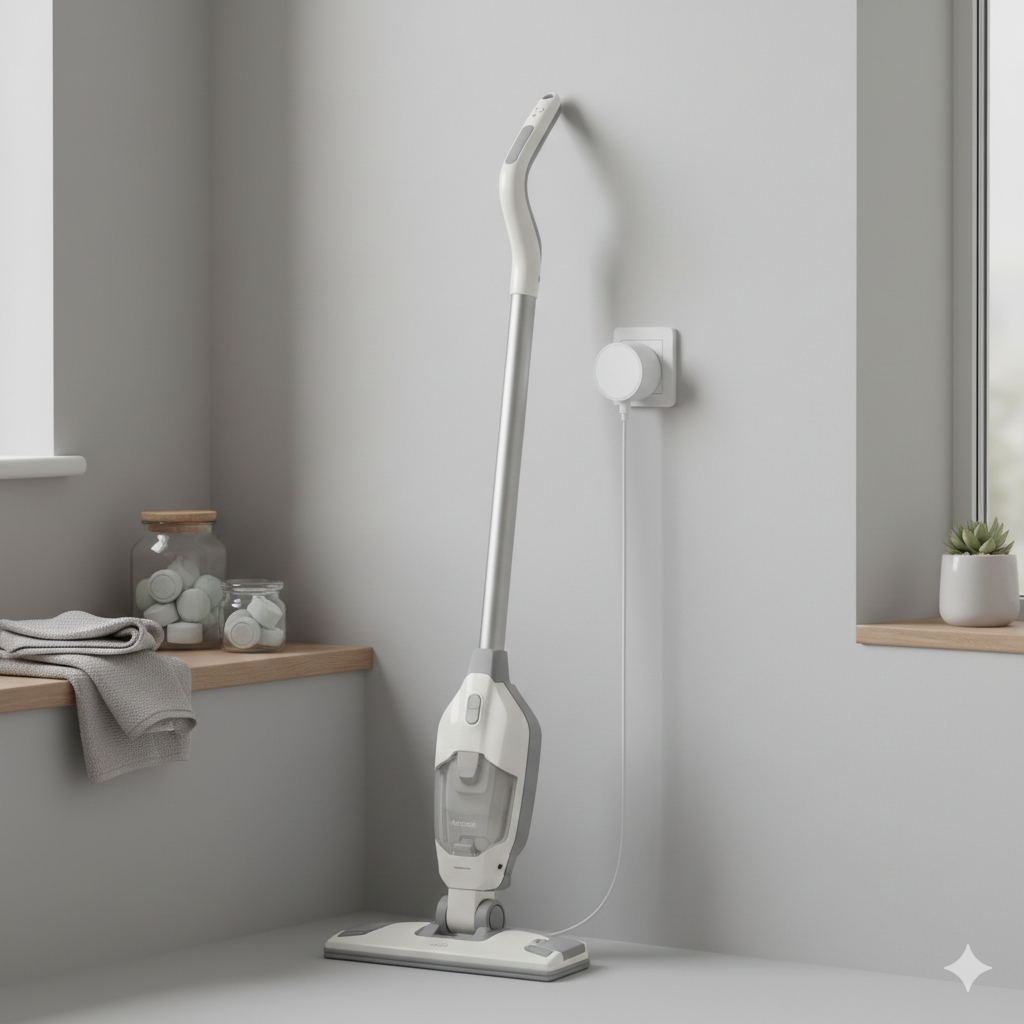
The Short Answer
Most domestic steam cleaners in the UK use:
- 1,200W to 1,600W
- Around 0.02–0.03 kWh per minute
At an average UK electricity rate of ~28p per kWh, that works out to roughly:
- 0.6p–0.9p per minute
Because steam cleaners are usually used for short bursts (10–20 minutes), a full clean often costs:
- 10–25p per session
So no — they do not use “a lot” of electricity compared to major appliances.
Why Steam Cleaners Seem Power-Hungry
The wattage number can look high.
1,500W sounds similar to:
- kettles
- hairdryers
- small heaters
But wattage alone doesn’t tell the full story.
The key factor is:
How long they run for.
A kettle may use 3,000W — but only for 2–3 minutes.
A steam cleaner may use 1,500W — but only during active cleaning.
It’s total energy (kWh), not peak wattage, that determines cost.
Electricity Cost Per Use (Real UK Examples)
Let’s look at realistic scenarios.
Quick Kitchen Floor Clean (10 minutes)
- 1,500W steam cleaner
- Electricity used: ~0.25 kWh
- Cost: ~7p
Bathroom Deep Clean (20 minutes)
- Electricity used: ~0.5 kWh
- Cost: ~14p
Whole House Light Clean (30 minutes)
- Electricity used: ~0.75 kWh
- Cost: ~21p
Even longer sessions stay under 30p in most cases.
How Steam Cleaners Compare to Other Appliances
Let’s put this into perspective.
| Appliance | Typical Use | Cost |
|---|---|---|
| Steam Cleaner (20 mins) | ~0.5 kWh | ~14p |
| Vacuum Cleaner (20 mins) | ~0.3 kWh | ~8p |
| Tumble Dryer (1 hour) | ~2–3 kWh | ~60–90p |
| Electric Oven (1 hour) | ~2–2.5 kWh | ~56–70p |
Steam cleaners are closer in cost to vacuuming than tumble drying.
According to the Energy Saving Trust, understanding how much electricity everyday appliances use is one of the simplest ways to identify where real savings can be made in UK homes.
Why Steam Cleaning Can Reduce Other Costs
Electricity is only one part of the equation.
Steam cleaning:
- Reduces chemical cleaner purchases
- Minimises antibacterial sprays
- Cuts down disposable wipes
- Can revive carpets or upholstery without paid services
That doesn’t show up on your electricity bill — but it matters long term.
Do Steam Cleaners Use Electricity Constantly?
Not exactly.
Most models:
- Heat up (high power for a few minutes)
- Cycle on/off to maintain temperature
- Pause when idle
They are not pulling maximum wattage continuously the entire time.
This keeps average consumption lower than many assume.
Does Size Matter?
Yes.
Small handheld steam cleaners:
- ~1,000–1,200W
- Lower overall energy use
- Good for targeted jobs
Large cylinder or multi-surface units:
- ~1,500–1,600W
- Faster heat-up
- Better for larger spaces
Higher wattage often means:
- Shorter cleaning time
- Similar overall cost
Again, time matters more than the wattage number alone.
Standby & Idle Electricity
Most steam cleaners:
- Use zero power when switched off
- Use negligible power when plugged in but not heating
Unlike fridges or routers, they are not 24/7 appliances.
Electricity use only occurs during cleaning.
Are Steam Cleaners Expensive to Run Weekly?
If you deep-clean once per week:
- 20 minutes use
- ~14p per session
- ~£7 per year
That’s lower than many people expect.
Even using it twice weekly would still likely stay under £15–£20 annually in electricity.
What About Heating Costs?
Steam cleaners heat water internally — they do not rely on your home’s heating system.
So they don’t increase:
- Gas boiler use
- Radiator use
- Central heating load
Their energy use is entirely electrical and isolated.
Choosing an Efficient Steam Cleaner (UK Example)
If you’re buying new, efficiency usually comes down to:
- Sensible wattage (1,200–1,500W is common and balanced)
- Quick heat-up time
- Good insulation to reduce constant reheating
A popular UK option often available on Amazon UK is the Kärcher SC 3 EasyFix.
It’s widely used because:
- It heats quickly
- Maintains stable steam pressure
- Doesn’t overcycle heating unnecessarily
You don’t need an ultra-high-watt model to get good results — and oversizing rarely reduces running costs.
When Steam Cleaners Can Increase Costs
They become less efficient if:
- Used for extremely long sessions unnecessarily
- Reheated repeatedly instead of cleaning in one go
- Used daily for tasks better suited to wiping
Like most appliances, moderation matters.
Are Steam Cleaners More Efficient Than Mops?
Electricity-wise:
- Yes, they use more than a manual mop
- But less than many powered cleaning devices
However, they may:
- Clean deeper
- Reduce repeat cleaning
- Remove bacteria without chemicals
The value isn’t just in electricity cost — it’s in effectiveness per session.
Common Myths
❌ “Steam cleaners are like mini boilers.”
They heat small water tanks — not radiators.
❌ “They cost loads to run.”
Even heavy use rarely exceeds £20–£30 per year.
❌ “High wattage means high bills.”
Not if used briefly and efficiently.
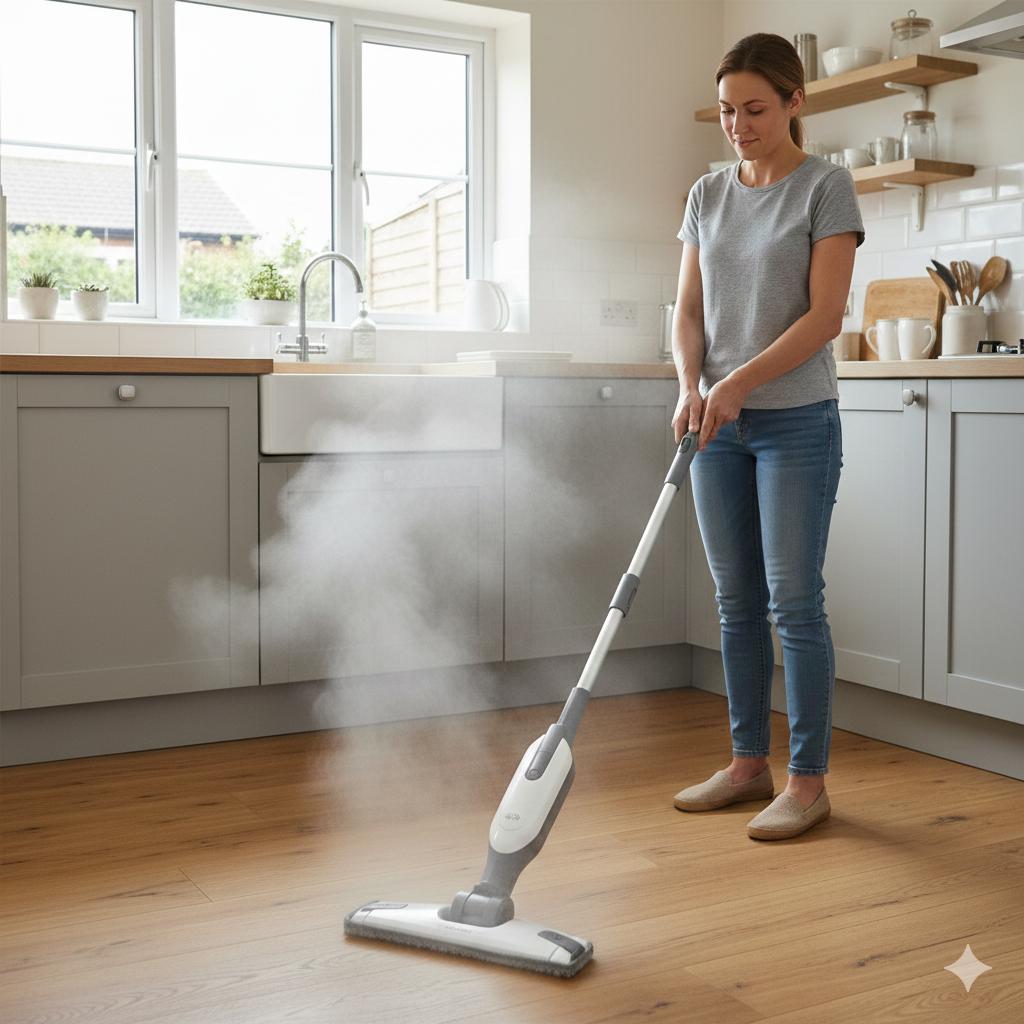
How to Keep Steam Cleaning Costs Low
- Clean in one focused session
- Avoid reheating multiple times
- Fill the tank properly (don’t keep topping up small amounts)
- Choose a model sized for your home
Efficiency comes from usage habits more than brand differences.
🔗 What About the Rest of Your Cleaning Costs? 🧼⚡
Electricity is only one part of the cleaning equation. If you’re trying to cut household costs properly, it’s worth looking at the products and methods you’re using alongside powered appliances.
These guides help you compare the bigger picture:
- Powder vs Liquid Laundry Detergent: Which Is Cheaper in the Long Run? — breaks down the real cost per wash so you’re not overspending every laundry day.
- Vinegar vs Commercial Descaler: Which Works Best on Showers? — a practical comparison for tackling limescale without wasting money on ineffective solutions.
- Steam Mop vs Traditional Mop: Which Is Worth It? — explains whether powered mopping actually saves time and money compared to manual methods.
Together, they help you clean smarter — not just harder — while keeping running costs under control.
✍️ Author Insight (Why I Wrote This)
I wrote this guide because steam cleaners often get labelled as “power-hungry” without anyone actually breaking down the real numbers. In reality, most people hear 1,500 watts and assume it must be expensive — when the cost per session is usually just a few pence. Understanding the difference between wattage and total electricity used helps take the guesswork (and the fear) out of choosing practical cleaning tools for UK homes.
The Bottom Line
Do steam cleaners use a lot of electricity?
No — not in real UK terms.
At roughly:
- 6–9p per 10 minutes
- 10–25p per deep clean
- Under £20 per year for weekly use
They sit comfortably in the “low-cost appliance” category.
Compared to tumble dryers, ovens, or electric heaters, they are minor contributors to household electricity use.
Used sensibly, a steam cleaner is a powerful cleaning tool that won’t quietly inflate your energy bill.
For more guides, product breakdowns and energy-saving cleaning tips, explore the full Home Cleaning Hub, where I’m collecting every smart, affordable way to keep your home cleaner with less effort.
Written by Andy M. — helping UK families find eco-friendly cleaning products that actually work — and last.