
Drying laundry indoors is a normal part of life in the UK — especially during long, damp winters when outdoor drying simply isn’t practical. But many people worry that it might cause mould, damp, or even breathing problems. The reality is more balanced: indoor drying itself isn’t dangerous, but the moisture released into your home can create unhealthy conditions if it builds up over time.
If you’re trying to keep energy bills down while maintaining a comfortable home, this guide explains exactly what happens when clothes dry indoors, the real health risks to watch for, and the simple steps that keep your air safe and your property free from damp. You can also explore our full Laundry & Drying Efficiency Hub for broader advice on keeping clothes dry cheaply without damaging your home.
Table of Contents
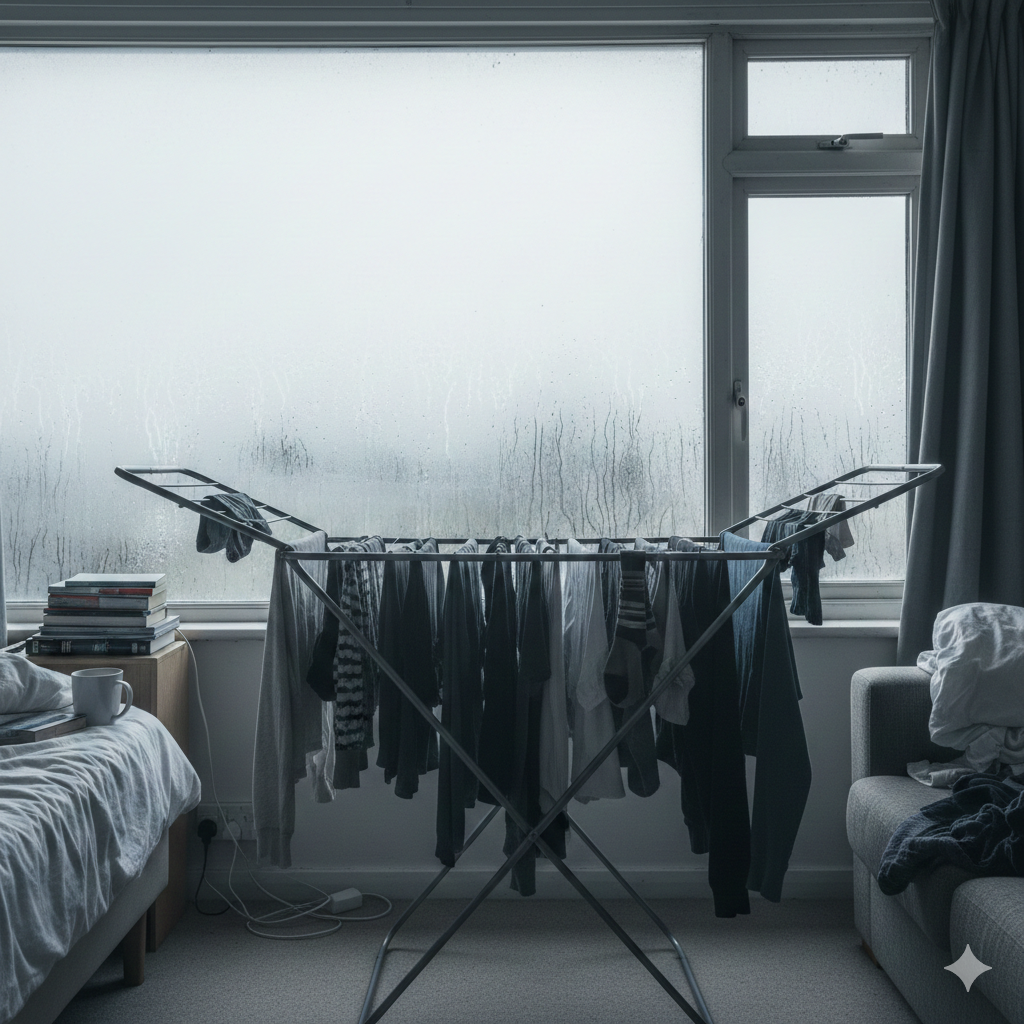
Is Drying Clothes Indoors Actually Bad for Your Health?
In most UK homes, drying clothes indoors is not harmful to your health — as long as moisture is controlled and the room is ventilated.
Problems arise when humidity builds up day after day. Excess moisture can encourage mould growth, dust mites, and poor air quality, all of which may worsen respiratory conditions such as asthma or allergies.
If windows regularly stream with condensation, surfaces feel damp, or mould appears, indoor drying may be contributing to an unhealthy environment. But with simple precautions — airflow, warmth, and moisture control — most households can dry laundry inside safely.
What Actually Happens When Clothes Dry Indoors?
Wet clothes don’t just “air dry” — they release water vapour into the surrounding air. That moisture increases indoor humidity, sometimes dramatically within a few hours.
A single load of washing can release several litres of water into your home as it dries. Warm air temporarily holds this moisture, but once it touches cold surfaces — windows, walls, ceilings — it condenses into liquid water.
👉 For a detailed breakdown of the amount involved, see How Much Moisture Do Clothes Release When Drying Indoors? This explains why even one load can be enough to cause condensation in a typical UK room.
In everyday terms, this is why you may notice:
- Steamed-up windows
- Damp patches on cold walls
- A “clammy” feeling in the air
- Slower drying times in winter
- Musty smells
Why UK Homes Are Especially Vulnerable
Indoor drying can cause more problems in the UK than in warmer climates.
Many homes share characteristics that trap moisture:
- Older construction with limited insulation
- Solid external walls that stay cold
- Small rooms with restricted airflow
- Windows kept shut during cold weather
- Existing condensation issues
- Lack of dedicated utility rooms
If your home already struggles with damp, adding wet laundry can push humidity into the range where mould grows easily.
Health Risks Linked to Indoor Drying (When Done Poorly)
It’s important to be realistic rather than alarmist. The issue isn’t laundry itself — it’s persistent excess moisture.
Damp and Mould Growth
Mould spores are everywhere, but they only grow when conditions are right. High humidity combined with cold surfaces creates the perfect environment.
Common problem areas include:
- Window frames and seals
- Corners of external walls
- Behind wardrobes or sofas
- Ceilings in poorly ventilated rooms
Exposure to mould can aggravate:
- Asthma
- Allergies
- Sinus irritation
- Skin conditions
If patches appear, a strong mould remover spray can treat the surface, but removing the moisture source is essential to stop it returning.
Can Indoor Drying Affect Breathing or Lung Health?
For healthy adults, occasional indoor drying rarely causes problems. However, persistently damp air can irritate the airways and worsen existing respiratory conditions.
High humidity can:
- Increase mould spores in the air
- Allow dust mites to multiply
- Make rooms feel stuffy or harder to breathe in
- Trigger coughing or wheezing in sensitive individuals
This is why public health guidance often focuses on keeping indoor humidity under control rather than avoiding indoor drying entirely.
People most likely to notice symptoms include:
- Asthma sufferers
- People with allergies
- Babies and young children
- Older adults
- Anyone with compromised lung health
If symptoms improve when the room is ventilated or moisture is removed, indoor humidity may be a contributing factor.
Dust Mites and Allergens
Dust mites thrive in humid environments, particularly when indoor humidity stays above about 60%.
This can worsen:
- Eczema
- Hay fever-like symptoms
- Night-time coughing
- Asthma flare-ups
Bedrooms are especially vulnerable if laundry is dried there overnight.
Air Quality and Musty Odours
Moist air holds smells and pollutants more effectively, leading to that classic “damp house” odour.
Poor ventilation can trap:
- Cooking fumes
- Cleaning chemicals
- Pet odours
- Everyday household pollutants
Some households use moisture absorbers or air purifiers to improve air quality, but airflow remains the most important factor.
Who Is Most Sensitive?
Indoor drying issues tend to affect certain groups more:
- Babies and young children
- Older adults
- People with asthma or COPD
- Anyone working from home for long periods
However, in a well-ventilated space, drying clothes indoors is unlikely to cause harm.
Signs Your Indoor Drying Is Causing Problems
Watch for these warning signs:
- Persistent condensation on windows
- Damp patches or peeling paint
- Mould spots forming
- Laundry taking unusually long to dry
- Musty smells in rooms or cupboards
- Cold, humid air
- High humidity readings
A small digital hygrometer can help you monitor indoor conditions — ideally humidity should stay between about 40% and 60%.
When Drying Clothes Indoors Is Generally Safe
For most households, indoor drying is fine if moisture is controlled.
Safer conditions include:
- A room with a window slightly open
- Active ventilation (extractor fan)
- Moderate heating
- Air circulation between rooms
- Use of moisture-control devices
Occasional indoor drying rarely causes issues. Constant daily drying in an enclosed space is far more likely to lead to damp problems.
The Biggest Mistakes That Cause Damp Problems
Many problems come down to simple habits.
Common mistakes include:
- Drying clothes directly on radiators
- Packing items tightly together
- Keeping doors and windows closed
- Drying overnight in bedrooms
- Using cold, unheated rooms
- Blocking airflow with furniture
Radiator drying is particularly problematic because it traps moisture while reducing heating efficiency. Using dedicated radiator drying racks is slightly better, but ventilation is still essential.
How to Prevent Damp When Drying Indoors
If indoor drying is unavoidable, simple precautions can make a huge difference.
For a deeper step-by-step guide, see How to Stop Condensation When Drying Clothes Indoors, which explains practical methods that don’t waste heat.
Improve Ventilation Without Freezing the House
You don’t need windows wide open all day.
Effective strategies include:
- Short bursts of fresh air (“shock ventilation”)
- Using trickle vents
- Opening internal doors to encourage airflow
- Running kitchen or bathroom extractor fans
- Creating gentle cross-ventilation
Control Moisture Directly
Dehumidifiers — The Most Effective Solution
A dehumidifier removes water from the air, preventing condensation while often speeding up drying dramatically.
If you’re considering one, see Best Dehumidifiers for Laundry Drying, which compares suitable models for UK homes.
Common options include:
- Compressor models for warmer rooms
- Desiccant models for colder spaces
Many households find a dedicated dehumidifier transforms indoor drying from a damp problem into a quick, controlled process.
Moisture Absorbers — A Budget Option
Passive products can help in small spaces but struggle with full washing loads.
A simple moisture absorber tub may be useful in cupboards or wardrobes rather than main drying areas.
Optimise the Drying Setup
Small adjustments can significantly reduce moisture problems:
- Spread clothes out fully
- Avoid overcrowding racks
- Rotate items occasionally
- Position near gentle heat
- Ensure air can circulate around all sides
Multi-tier racks and heated clothes airers are popular because they combine airflow with low running costs.
Choose the Best Room
Some rooms handle moisture far better than others.
Safer locations:
- Bathroom with extractor fan
- Kitchen with ventilation
- Utility room
- Conservatory with airflow
Higher-risk locations:
- Bedrooms
- Living rooms with sealed windows
- Cold spare rooms
Avoid drying laundry where people sleep if possible.
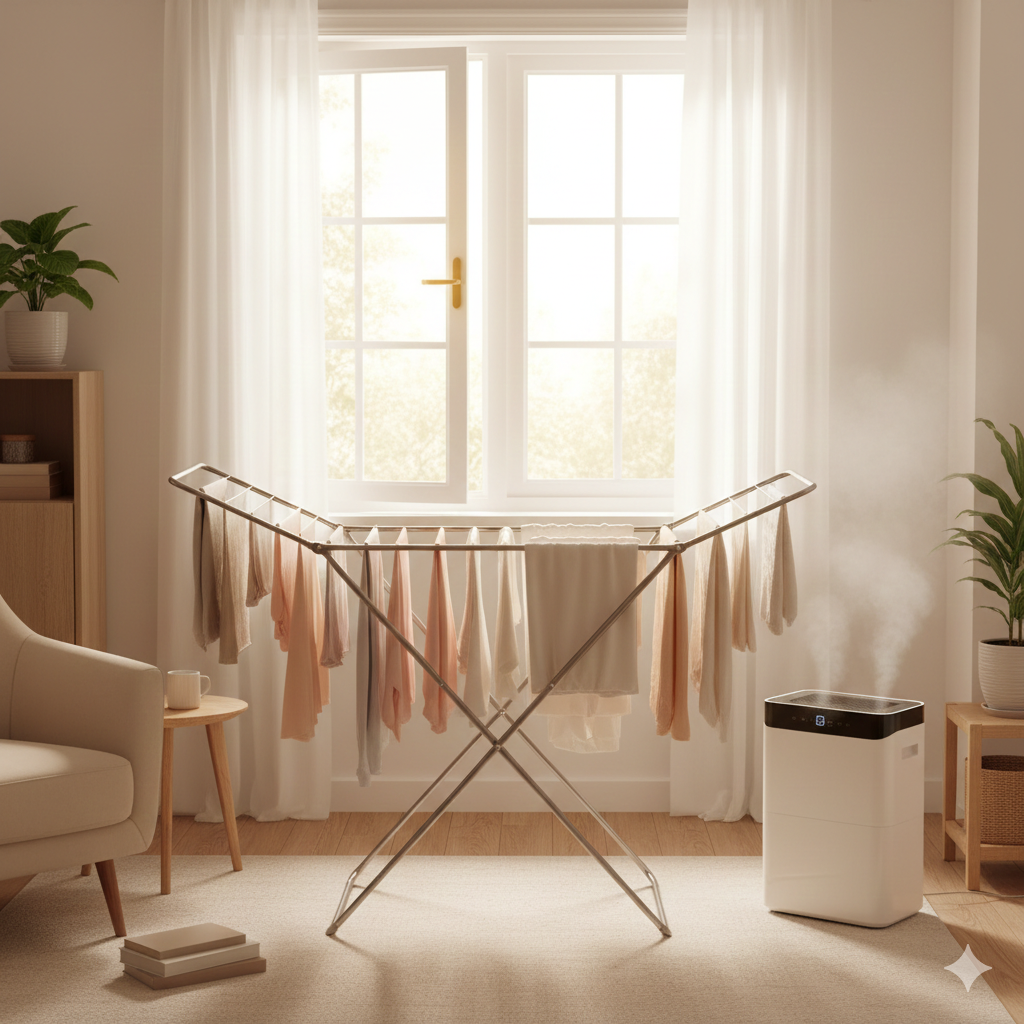
Heated Airers vs Radiators vs Tumble Dryers — Health Impact
Heated Airers
Provide gentle warmth that speeds drying while keeping moisture more controlled — especially with ventilation or a dehumidifier.
Radiator Drying
Traps moisture and reduces heating efficiency, increasing condensation risk.
Tumble Dryers
- Vented dryers remove moisture outdoors
- Condenser dryers release some moisture into the room
- Heat pump tumble dryers are energy-efficient and produce less excess humidity
How Long Should Indoor Drying Take?
Slow drying increases the likelihood of mould growth.
Typical healthy drying times:
- Around 6–12 hours with good airflow
- Longer in cold conditions
- Much faster with moisture control
If clothes remain damp after a full day, humidity levels are probably too high.
Quick Healthy Indoor Drying Checklist
✔ Ventilate the room
✔ Maintain some warmth
✔ Use a dehumidifier if possible
✔ Avoid drying in bedrooms overnight
✔ Don’t overcrowd racks
✔ Monitor humidity
✔ Address condensation quickly
What Do UK Health and Housing Experts Recommend?
UK housing and public health organisations generally agree on one key point: moisture control matters more than the drying method itself.
Typical recommendations include:
- Ventilating rooms where laundry is drying
- Using extractor fans where available
- Keeping some background heating on in winter
- Avoiding prolonged drying in bedrooms
- Addressing condensation quickly
In other words, indoor drying isn’t discouraged outright — unmanaged humidity is.
Final Verdict — Is Drying Clothes Indoors Bad for Your Health?
Drying clothes indoors is not inherently harmful. Millions of UK households rely on it every winter without problems.
The real risk comes from excess moisture that isn’t allowed to escape.
In simple terms:
👉 Indoor drying itself isn’t dangerous
👉 Persistent damp conditions are the issue
👉 Ventilation and moisture control make it safe
With sensible precautions — airflow, spacing, warmth, and humidity management — you can dry clothes indoors without damaging your home or your health.
Quick Answer: Is Indoor Laundry Drying Safe?
✔ Safe if the room is ventilated
✔ Safe with moisture control
✔ Safe for most households
⚠ Risky if humidity stays high
⚠ Risky in already damp homes
⚠ Risky for people with respiratory conditions
📚 Related Guides
🔥 The Cheapest Way to Dry Clothes in the UK (Ranked by Cost)
Compare real running costs of common drying methods.
🌬️ Laundry Ventilation Without Heat Loss
Keep fresh air moving without wasting expensive heat.
🧺 How to Dry Clothes Faster in Winter Without Turning On the Heating
Practical ways to speed up drying during cold weather.

About The Author – Andrew Marshall
Andrew Marshall is a Scottish homeowner and the creator of Save Wise Living. He shares practical ways to reduce energy bills, improve home efficiency, and make everyday household routines cheaper and simpler.