
If you’ve ever stood in your kitchen waiting for the oven to preheat while thinking “this can’t be cheap”, you’re not alone. Ovens are one of those appliances we use without really questioning what they cost — until the energy bill lands.
This guide breaks it all down clearly and honestly, without scare tactics or guesswork. You’ll learn exactly how much an electric oven costs to run per hour in the UK, why some ovens cost more than others, and how small habits can make a noticeable difference over time.
No jargon. No sales fluff. Just real numbers and practical advice.
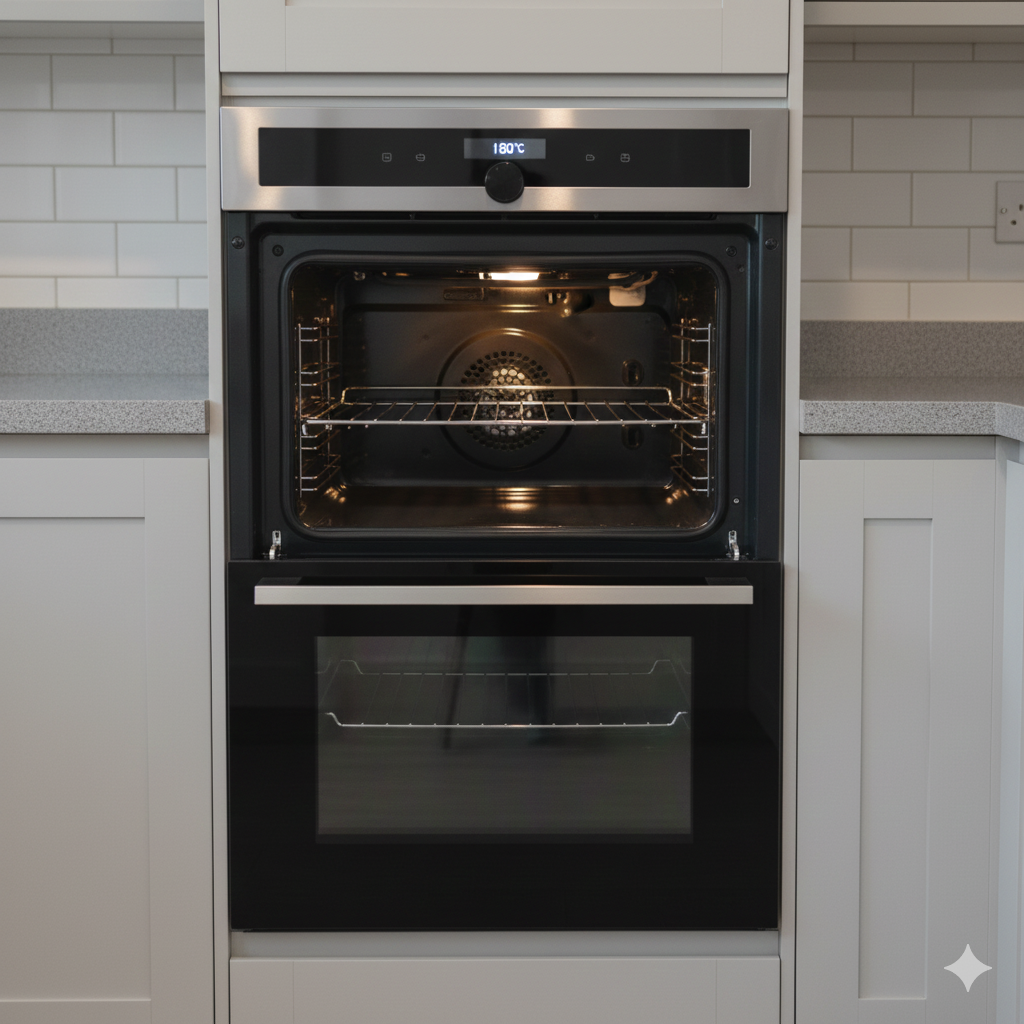
The short answer (for impatient readers)
At current UK electricity prices, most electric ovens cost between 60p and £1.20 per hour to run, depending on:
- The oven’s power rating (kW)
- The temperature you cook at
- Whether you’re using fan, conventional, or grill mode
- Your electricity tariff
That’s the headline — but the real story is why those numbers vary so much.
Why electric ovens use more power than you think
An electric oven isn’t like a kettle that blasts power for 30 seconds and switches off. It works in cycles:
- High power draw during preheating
- Lower, pulsed power to maintain temperature
- Occasional boosts when heat is lost (door opening, cold food)
Most ovens pull their maximum wattage during preheat, which is where a big chunk of energy use happens — especially if you cook little and often.
Understanding oven power ratings (kW explained simply)
Electric ovens are rated in kilowatts (kW). Common UK ranges:
- Compact / single ovens: 2.0–2.5 kW
- Standard built-in ovens: 2.5–3.0 kW
- Large or multifunction ovens: up to 3.5 kW
The formula is simple:
Cost per hour = oven kW × electricity unit rate
Example using a typical UK rate:
- 2.8 kW oven
- 28p per kWh electricity
2.8 × £0.28 = 78p per hour
That’s where the common “70–90p per hour” estimate comes from.
Energy Saving Trust explains how cooking methods, appliance efficiency, and user habits affect household electricity consumption, offering practical guidance for reducing kitchen energy use.
✍️ Author Insight
I like this article because it strips away the panic that often surrounds cooking costs. Ovens feel expensive because they use high power — but when you break it down properly, they’re usually not the main culprit behind high bills. Writing this made it clear that small habits, like using the right oven for the job and avoiding wasted heat, matter far more than avoiding home-cooked meals. It’s the kind of knowledge that lets you cook confidently without feeling guilty every time you turn the dial
Fan oven vs conventional oven: does it change the cost?
Yes — and this is one of the most misunderstood areas.
Fan ovens
- Cook at lower temperatures
- Heat food more evenly
- Usually run 10–20% cheaper for the same meal
Conventional ovens
- Heat from top and bottom
- Need higher temperatures
- Longer cook times
A fan oven at 160–170°C often replaces a conventional oven at 180–190°C, shaving both time and energy.
Preheating: the hidden cost most people ignore
Preheating can account for up to 20% of total oven energy use, especially for short cooking tasks.
When preheating matters:
- Baking cakes
- Bread
- Pastry
When it often doesn’t:
- Roasts
- Casseroles
- Frozen oven foods
Skipping unnecessary preheating won’t ruin your food — but it will reduce wasted energy.
Real-world hourly costs (UK examples)
Here’s what typical electric oven usage looks like in practice:
- Low temp fan cooking (160°C): ~55–65p/hour
- Standard fan cooking (180°C): ~70–85p/hour
- High temp roasting (200–220°C): ~90p–£1.10/hour
- Grill function: Often £1+ per hour
Grills are particularly inefficient if used for long periods — they’re best kept for short bursts.
Does oven size affect running cost?
Yes — but not as dramatically as people think.
A larger oven:
- Takes slightly longer to heat
- Has more air volume to keep hot
But how you use it matters more than its size.
Cooking a single tray of food in a large oven wastes more energy than filling the space efficiently.
Built-in ovens vs compact ovens
Compact ovens can be cheaper to run per hour — but only if you actually use the space efficiently.
If you regularly cook family-sized meals, a compact oven may:
- Require longer cooking
- Need multiple batches
- End up costing more overall
Recommended ovens (efficient, modern, sensible choices)
These aren’t “cheapest ovens” — they’re good long-term picks for households who cook regularly and care about running costs.
AEG SurroundCook BSX23101XM Built-In Electric Oven
Why it fits this article:
- Efficient fan-based SurroundCook system
- Consistent heat reduces cooking time
- Multi-level cooking without temperature loss
- Well-sealed cavity reduces heat escape
This type of oven rewards good habits: fan cooking, batch meals, and reduced preheating.
AEG BEX335011M Built-In Electric Oven
Why it’s worth mentioning:
- Straightforward, no-nonsense design
- Reliable fan cooking
- Good insulation and temperature stability
- Ideal replacement for older, inefficient ovens
If you’re upgrading from a 10–15-year-old oven, models like this can quietly reduce running costs without you changing how you cook.
What about countertop electric ovens?
Compact countertop ovens (like mini ovens) can be cheaper per hour, but:
- Limited capacity
- Often less insulated
- Longer cooking for full meals
They’re great for:
- Singles
- Small flats
- Occasional cooking
But not ideal as a main family oven.
How often does oven use really add up?
Let’s be realistic.
If you use your oven:
- 1 hour per day
- At ~80p per hour
That’s:
- ~£24 per month
- ~£290 per year
That’s not insignificant — but it’s also not catastrophic. The biggest waste comes from inefficient habits, not normal cooking.
Smart ways to cut oven running costs (that actually work)
- Use fan mode whenever possible
- Avoid unnecessary preheating
- Cook multiple items at once
- Turn the oven off 5 minutes early (residual heat finishes the job)
- Keep door openings to a minimum
- Clean the oven — grime reduces efficiency
None of these ruin meals. All of them save energy.
Is an electric oven still worth it?
For most UK homes: yes.
Electric ovens:
- Are predictable
- Pair well with modern tariffs
- Are easier to control than gas
- Work efficiently with fan cooking
They’re not the cheapest appliance in your kitchen — but they’re far from the worst.
🔗 Keep Exploring Kitchen Energy Costs 🍳
If you’re working through where most of your kitchen energy costs really come from, these guides fit perfectly alongside this one:
- How Much Does an Electric Hob Really Cost to Run Per Hour in the UK?
A clear breakdown of per-ring costs, cooking methods, and why short bursts on a hob can sometimes be cheaper than using the oven. - Gas Hob vs Electric Hob: Which Is Cheaper to Run in the UK?
Looks beyond simple unit prices to explain efficiency, control, and which type of hob makes more sense for different cooking styles.
Together, these guides help you decide which appliance to use, when to use it, and why — without guesswork.
Final thoughts: what really matters
When you look at electric oven costs per hour in isolation, it’s easy to panic at the headline numbers. Seeing figures like 30p–60p per hour can feel alarming — especially when energy bills are already stretched. But the real story is more nuanced, and far less scary once you understand how ovens are actually used in UK homes.
First, ovens don’t draw full power constantly. After preheating, most modern electric ovens cycle on and off to maintain temperature. That means a “2.5–3.5kW oven” isn’t pulling that level of electricity for the entire cooking time. In practice, a typical one-hour cooking session often costs closer to 35p–50p, depending on temperature, insulation, and energy tariff.
Second, preheating is the most expensive phase. A long preheat followed by a short cook is far less efficient than a slightly longer cook with minimal preheating. This is why using fan-assisted modes, avoiding unnecessary preheat for simple meals, and cooking multiple items at once can make a noticeable difference over time.
Third, habit matters more than hardware. An older oven used efficiently can cost less to run than a brand-new one used poorly. Opening the door repeatedly, cooking single small items, or running the oven for convenience rather than necessity quickly adds up. By contrast, batch cooking, using residual heat, and turning the oven off a few minutes early all reduce wasted energy.
Upgrading to a modern, well-insulated oven can lower running costs — but it won’t magically slash bills overnight. The real savings come from combining:
- sensible temperatures
- fewer, longer cooking sessions
- better use of fan cooking
- and avoiding unnecessary preheating
In short, an electric oven isn’t an energy villain — it’s a predictable, manageable cost. Once you understand how and when it uses electricity, you can keep it firmly under control without changing what you cook or how you eat.
Cook smarter and cut everyday kitchen costs with our Smart Kitchen & Appliances Hub your guide to energy-efficient gadgets, smarter cooking habits, and affordable ways to upgrade your home. Explore simple tips, low-energy tools, and practical UK advice that actually saves money.
If you want straightforward, non-commercial advice on cutting bills and understanding UK energy costs, Citizens Advice has excellent resources. https://www.citizensadvice.org.uk/energy/
Written by Andy M. — a Scottish home-efficiency writer simplifying smart gadgets, energy tips, and everyday fixes.