
If you’re planning a kitchen upgrade or simply want to cut down on electricity bills, choosing the right oven matters more than most households realise. In the UK, ovens are one of the most frequently used and high-energy kitchen appliances — so understanding how fan ovens and conventional ovens differ in energy usage can help you make better purchasing decisions and lower running costs long-term.
Let’s break this down in a clear, practical way — covering how each type works, real energy-use differences, and when a conventional oven might still make sense.
What Is a Conventional Oven?
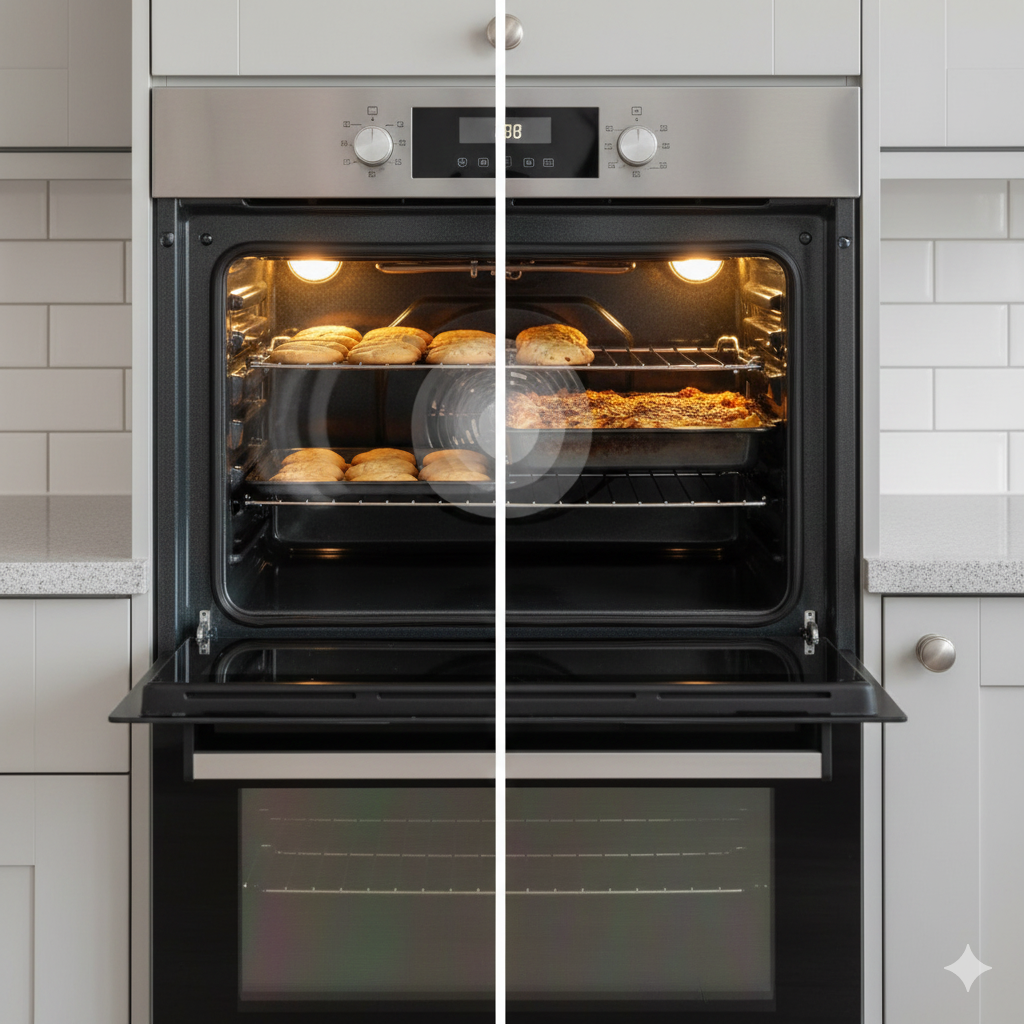
A conventional oven cooks food by heating the air inside the oven cavity using heating elements at the top and bottom of the oven. This method:
- Produces heat that rises naturally
- Creates “hot spots” at the top and cooler areas toward the bottom
- Results in uneven temperature distribution inside the oven
Because heat isn’t actively circulated, food closer to the top element can cook faster than food lower down — and that can lead to longer or inconsistent cooking times. Recipes often recommend rotating trays halfway through to compensate.
Conventional ovens still have their uses — particularly for delicate baking — but from an energy perspective, uneven heat means longer cooking times and higher electricity use when you’re trying to compensate for temperature variation. Which?
What Is a Fan Oven?
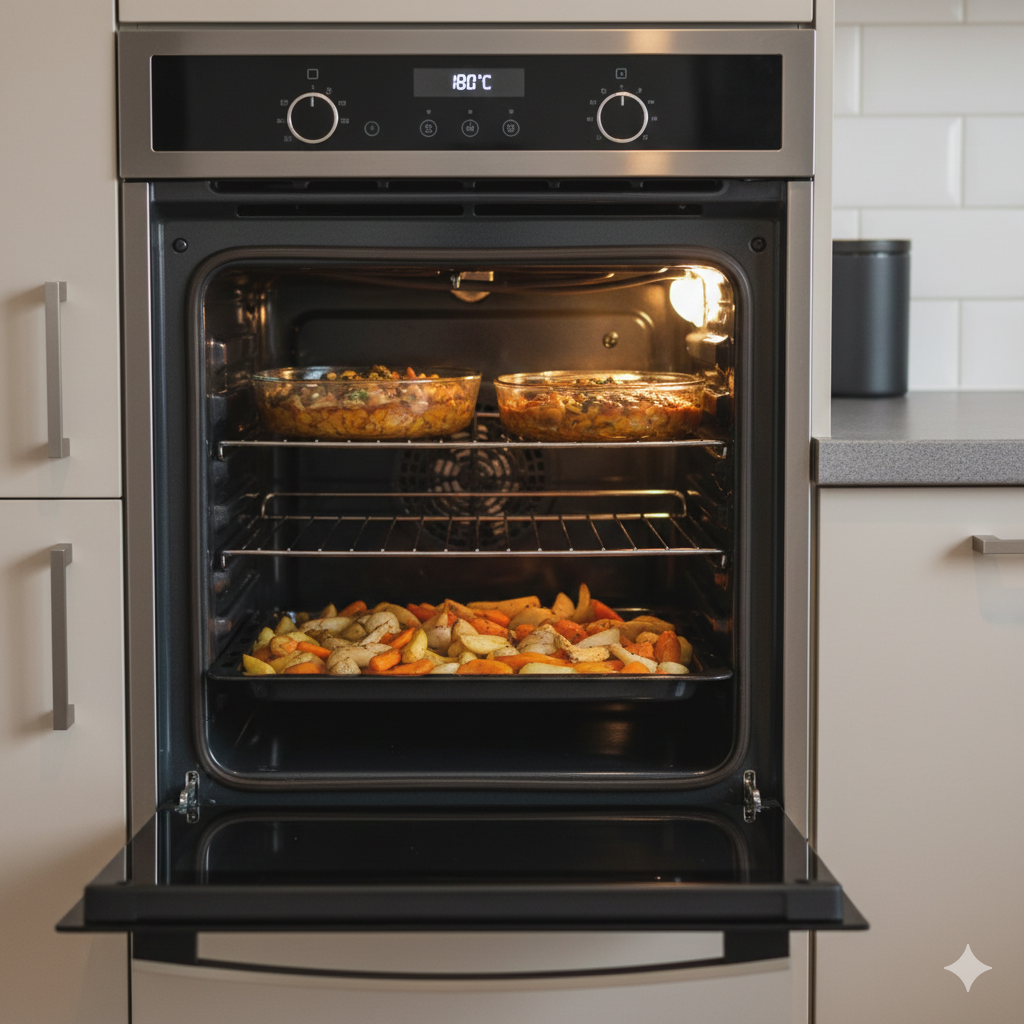
Fan ovens — also called convection ovens — add a fan and often an additional heating element at the back of the oven cavity. This fan:
- Circulates hot air evenly around the oven
- Eliminates most hot spots
- Distributes heat more efficiently
This even heat transfer lets you cook at lower temperatures than you would in a conventional oven. UK recipes typically adjust like this:
200°C in a conventional oven ≈ 180°C in a fan oven. MyAppliances
That 20°C drop doesn’t just save time — it directly reduces electricity used to maintain higher temperature settings.
Why Fan Ovens Typically Use Less Electricity
Here’s the practical logic behind the energy savings:
1. Shorter Cooking Times
Fan-assisted heating gets food up to temperature quicker and cooks more evenly, meaning you often reduce total cooking time.
2. Lower Temperatures
Because heat is spread efficiently, you don’t need as high a setting — directly reducing power draw during cooking cycles.
3. More Even Results
Even cooking means less guesswork, fewer reheats or “just a bit longer” extensions, and less wasted energy. MyAppliances
Fan ovens aren’t energy miracles — they still draw substantial power — but they usually make more efficient use of every kilowatt-hour compared with traditional static heating.
When Conventional Ovens Still Make Sense
Despite the efficiency edge, conventional ovens have their strong points in certain scenarios:
Better for Certain Baking
Conventional ovens can produce gentler, slower rising conditions ideal for delicate cakes, soufflés, and custards. Because there’s no fan pushing air, the structure of baked goods can be more delicate and less prone to drying out.
Simpler Controls
Some traditional ovens are easier to use with simple top-bottom heat, especially if you’re familiar with older recipes designed for these conditions.
Preference and Tradition
Many classic baking recipes were developed with conventional ovens in mind — so if you prefer classic results in pastries and breads, the familiarity can be an advantage. Which?
In essence, most everyday roasted and reheated foods benefit from fan baking, but specialist baking sometimes still favours static heat.
How Much Electricity Does an Oven Actually Use?
Ovens can vary widely in their power draw, but most UK electric built-in ovens are rated around 2000–3000W (2–3kW) when heating. The actual electricity consumed depends on:
- Temperature you’re cooking at
- How long the oven is on
- How often the heating element cycles on/off
- Heat lost through repeated door openings or poor seals
The key takeaway: higher temperatures and longer cook times = more electricity used.
By reducing either of these through better heat circulation (as you get in a fan oven), you reduce energy consumption for the same outcome.
Cooking Habits That Waste Energy (Regardless of Oven Type)
Even the most efficient oven can be inefficient in practice if your habits aren’t optimised. Here are the most common examples:
Preheating When It’s Not Necessary
Not every dish needs full preheating — especially stews, long roasts, and tray bakes. Cutting back preheat time can shave off significant wasted energy.
Opening the Oven Door Frequently
Every time you open the door, heat escapes and the oven has to reheat to the set temperature — increasing total kWh used.
Heating a Large Oven for Small Meals
Large ovens are brilliant for big roasts or multiple tray meals, but not efficient if you’re just reheating a slice of pizza.
Solution? If you regularly cook small portions, consider using smaller countertop appliances (like air fryers or small electric ovens) — but that’s another topic altogether.
Fan Oven vs Conventional Oven: Side-by-Side Reality Check
| Feature | Fan Oven | Conventional Oven |
|---|---|---|
| Even heat distribution | ✓ | ✗ |
| Usually lower cooking temps | ✓ | ✗ |
| Shorter cook times | ✓ | ✗ |
| Ideal for delicate baking | ✗ | ✓ |
| Best for roasting & everyday cooking | ✓ | ✗ |
| Generally more energy-efficient overall | ✓ | ✗ |
Which Oven Type Saves You More Money?
For the typical UK household:
If your goal is everyday cooking — roasting, baking, reheating — a fan oven usually uses less electricity than a conventional oven.
However, if your cooking style leans heavily on delicate patisserie, soufflés, and specialist bakes, keeping a conventional mode available (many multifunction ovens offer both) can be sensible.
Most modern buyers will want the best of both worlds — reliable fan performance with the option for static heat when required.
Oven Buying Tips for Energy Conscious UK Shoppers
Here are practical pointers before investing in a new oven:
Look for Built-In Fan Ovens with Good Insulation
Better seals and insulation mean the oven loses less heat while cooking and consumes less energy (some recent Amazon models include A+ energy ratings). Amazon
Check for Accurate Temperature Control
Ovens that maintain stable heat avoid over-cooking and energy waste.
Consider Size vs Usage
Match oven size to your regular cooking load. A massive oven used once a week is slower to heat and less economical than one sized for your typical meals.
Don’t Ignore Cleaning and Seal Quality
Grease build-up and poor door seals increase heat loss and cooking time.
Recommended Picks
Here are four ovens worth featuring in your affiliate content — including two fan ovens and two conventional ovens — that appeal to UK buyers looking to upgrade.
🔥 Fan Oven Choices (Energy-Efficient Everyday Cooking)
- COMFEE’ 60cm Built‑in Electric Fan Oven CBO60M80M1‑BK — Great everyday fan oven with multifunction cooking and efficient heat distribution.
- Cookology COF600BK 60cm Black Built‑in Single Electric Fan Oven — Well-reviewed fan model with strong user ratings and balanced performance.
🔥 Conventional Oven Picks (Classic Cooking & Baking)
- Indesit Turn&Go IO 253 X UK Built In Electric Single Oven — Reliable conventional heat oven perfect for traditional baking and roasting.
- Hisense BI62020ABGUK Built In Electric Single Oven — Classic static oven with good temperature control and solid Amazon reviews.
🔗 You Might Also Find This Helpful 👇
If you’re comparing kitchen appliances to keep energy bills under control, these guides continue the picture nicely:
- Gas Hob vs Electric Hob: Which Is Cheaper to Run in the UK?
A clear breakdown of cooking costs, efficiency, and what really saves money day to day. - How Much Does an Electric Oven Cost to Run Per Hour in the UK?
A practical look at real-world oven running costs, with examples you can apply at home.
Together, these articles help you understand where cooking energy costs really come from — and where small changes make the biggest difference.
Final Thoughts
When it comes to electricity usage in UK homes, the fan oven usually comes out on top — not because it’s dramatically more powerful, but because it uses heat more intelligently. By circulating hot air evenly, fan ovens can cook food at lower temperatures and often in less time, which quietly reduces energy use across the week.
That said, conventional ovens still earn their place. For traditional baking, delicate cakes, and recipes developed around static heat, they can deliver better results — even if they’re not the most energy-efficient option. The real takeaway isn’t that one oven type is “good” and the other “bad”, but that using the right cooking mode for the right job makes the biggest difference to your bills.
If you’re upgrading from an older oven, a modern fan oven can offer noticeable efficiency improvements thanks to better insulation, tighter door seals, and more accurate temperature control. But even with your current oven, smarter habits — fewer door openings, avoiding unnecessary preheating, and cooking multiple dishes at once — can shave meaningful pounds off your annual electricity costs.
In short: fan ovens are usually cheaper to run for everyday cooking, but understanding how your oven works — and using it intentionally — is what really keeps energy waste in check.
For independent guidance on energy-efficient appliances and home energy use, you can reference advice from the Energy Saving Trust, which provides UK-specific recommendations on reducing household electricity consumption.
🧾 Product Recap: Ovens Worth Considering
🔥 Fan Oven Choices (Energy-Efficient Everyday Cooking)
- COMFEE’ 60cm Built-In Electric Fan Oven (CBO60M80M1-BK)
A solid everyday fan oven with multifunction cooking and efficient heat circulation, helping reduce cooking time and unnecessary electricity use. - Cookology COF600BK 60cm Built-In Single Electric Fan Oven
A well-reviewed fan oven offering balanced performance, even heat distribution, and good value for households upgrading from older models.
🔥 Conventional Oven Picks (Classic Cooking & Baking)
- Indesit Turn&Go IO 253 X Built-In Electric Single Oven
A dependable conventional oven designed for traditional baking and roasting, ideal for recipes that benefit from static top-and-bottom heat. - Hisense BI62020ABGUK Built-In Electric Single Oven
A straightforward static oven with reliable temperature control, well suited to classic cooking styles and no-frills kitchen setups.
Cook smarter and cut everyday kitchen costs with our Smart Kitchen & Appliances Hub your guide to energy-efficient gadgets, smarter cooking habits, and affordable ways to upgrade your home. Explore simple tips, low-energy tools, and practical UK advice that actually saves money.
Written by Andy M. — a Scottish home-efficiency writer simplifying smart gadgets, energy tips, and everyday fixes.