

Written by Andrew Marshall
Scottish homeowner sharing practical ways to reduce energy bills and improve everyday home efficiency.
Last Updated: 7th March 2026
Replacing a hob is one of those decisions that sounds simple until you start looking into it. Gas or electric? Induction or ceramic? And then — what does it actually cost to run each day?
I went through this when I was sorting out the kitchen in my house. Old gas hob, rising bills, and genuinely no idea whether switching to induction made financial sense or whether I was just being sold an upgrade I didn’t need. This article is what I found out — the real running costs of gas, ceramic, and induction hobs in UK homes, and which one actually makes sense depending on how you cook.
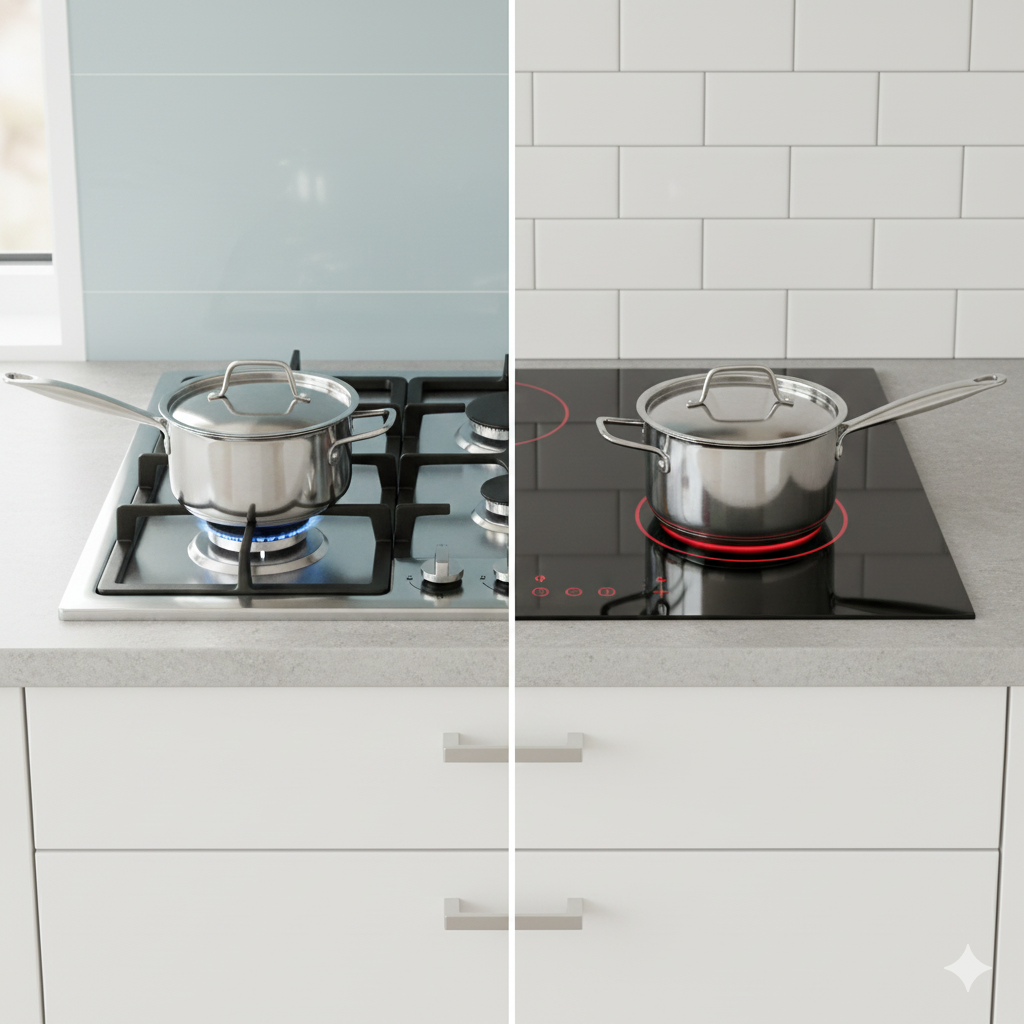
So Which Is Actually Cheaper?
In most UK homes, gas hobs are usually cheaper per hour to run than both ceramic electric and induction hobs because gas still costs less per kWh than electricity.
However, that does not automatically make gas the cheapest option in real use.
Induction hobs:
- heat pans faster
- waste less energy
- respond more quickly
- often reduce total cooking time
So while gas often wins on raw fuel price, induction can be closer than many people expect once speed and efficiency are taken into account. When I worked this out for my own cooking habits — roughly 45 minutes on the hob per day — the annual difference between gas and ceramic electric came to over £100. That’s worth knowing before assuming electric is fine.
As a general rule:
Standard ceramic electric is usually the most expensive and least efficient option
Gas is usually cheapest per hour
Induction is often the most efficient overall
At-a-glance comparison
| Hob type | Usually cheapest per hour? | Fastest cooking? | Easiest to clean? | Best fit for |
|---|---|---|---|---|
| Gas | Yes | No | No | Homes already on gas and frequent cooks |
| Ceramic electric | No | No | Moderate | Lower upfront-cost electric replacement |
| Induction | Sometimes close in real use | Yes | Yes | Modern kitchens focused on efficiency |
How much energy does a hob actually use?
A hob rarely runs at full power continuously, so exact running costs vary depending on how you cook. But using typical power ranges gives a realistic comparison for everyday UK use.
Typical hob power ranges
Gas hob
- usually around 1.5 to 3.0 kW depending on burner size
- loses a fair amount of heat around the sides of the pan
Ceramic electric hob
- usually around 1.2 to 2.4 kW per ring
- slower to heat and slower to cool
- more heat is lost into the surrounding surface
Induction hob
- usually around 1.4 to 2.0 kW per zone
- heats the pan directly rather than the air around it
- usually reaches cooking temperature more quickly
That difference in heat transfer is why two hobs with similar power ratings can have very different real-world running costs.
Ofgem provides detailed guidance on how gas and electricity prices are set in the UK and how household energy efficiency affects running costs, which helps explain why cooking costs vary between different appliances.
Running cost comparison (UK averages)
Let’s use typical UK unit prices as a working example:
- Gas: ~7p per kWh
- Electricity: ~28p per kWh
(Exact rates vary, but the relationship is what matters.)
Approximate cost per hour
Gas hob (average burner):
- ~2 kWh × 7p = 14p per hour
Standard electric ceramic hob:
- ~2 kWh × 28p = 56p per hour
Induction hob (more efficient):
- ~1.3–1.6 kWh × 28p = 36–45p per hour
Those differences become clearer when you look at how much an electric hob actually costs to run per hour in the UK, where power levels and cooking time both affect the final cost.
Why efficiency matters more than the headline cost
Looking at pence per hour only tells part of the story.
Gas hobs lose a noticeable amount of heat around the pan, especially on larger burners. Ceramic electric hobs also lose heat because the surface itself has to warm up before the pan gets hot.
Induction is different because it transfers energy more directly into the pan. In practice, that usually means:
- water boils faster
- pans respond more quickly when you turn the heat up or down
- less energy is wasted during cooking
That does not always make induction cheaper than gas, but it does mean the gap is often smaller than the unit prices suggest.
In a busy household that cooks often, those shorter cooking times can make a real difference over the course of a year. Learning how to use induction hobs efficiently can make an even bigger difference to running costs, especially when cooking regularly.
Cooking habits matter more than fuel type
This is where articles often fall down — they compare hobs, not people.
Gas suits you if:
- You cook frequently
- You like visual flame control
- You do a lot of pan-based cooking (stir-fry, sauté, simmering)
- You already have a gas supply
Electric or induction suits you if:
- You value speed and cleanliness
- You batch cook or boil a lot
- You want easier cleaning
- You don’t want gas safety checks or ventilation worries
The “cheapest hob” for a household that cooks twice a day is not the same as for someone who cooks twice a week. For what it’s worth — we cook properly most evenings. That’s the situation where the gas versus induction debate actually matters. If you’re reheating things twice a week the difference is minimal.
Which hob makes most sense for your home?
For many UK households, the better choice comes down to how your kitchen is set up and how you cook day to day.
Gas usually makes more sense if:
- your home already has a gas supply
- you cook frequently and want visible flame control
- you use a range of pan sizes and like quick manual adjustments
- you want the lowest running cost per hour
Induction usually makes more sense if:
- you want faster boiling and quicker response
- you prefer a cleaner, easier-to-wipe surface
- you are thinking long term about efficiency and indoor air quality
- you want to reduce wasted heat in the kitchen
Ceramic electric usually makes sense if:
- you want a lower upfront cost than induction
- you do not have gas
- you cook fairly lightly and are not too concerned about speed
For a lot of households, the real comparison is not gas versus electric in general — it is gas versus induction, because standard ceramic electric hobs are usually the weakest option on both speed and efficiency.
Installation and hidden costs (often ignored)
Gas hob considerations
- Requires a gas supply
- Needs proper ventilation
- Annual gas safety checks (especially in rentals)
- Carbon monoxide risk if poorly installed
Electric / induction considerations
- May need upgraded wiring
- Some induction hobs require higher-rated circuits
- No combustion, no fumes
Gas may be cheaper to run, but electric can be cheaper to live with. For some households, those practical differences matter more than a small saving on fuel.
Cookware can affect the real cost too
One practical point many buyers forget is that induction hobs only work with compatible pans.
If you already own good induction-ready cookware, that is not a problem. But if you need to replace several pans at the same time, the true cost of switching can be higher than it first appears.
Gas and ceramic electric hobs are generally more flexible with existing cookware, which can make them easier and cheaper to live with in the short term.
For households trying to keep upfront spending down, that can matter just as much as the running cost itself.
Which Hobs Are Worth Looking At?
These are the specific models worth considering in each category — chosen for reliability, value, and real-world performance in UK kitchens.
Gas Hobs
AEG HGX64200SB Slim-Line Gas Hob
A well-built modern gas hob that suits UK kitchens where space and aesthetics matter. The slim design fits neatly into standard worktop cutouts, the burner layout is practical for everyday cooking, and the controls are straightforward without feeling cheap.
What makes it worth considering: it doesn’t try to do too much. Good flame control, easy to clean around the edges, and built to last. For a household already on mains gas that cooks regularly, this is the kind of hob that just works without causing problems.
Best for homes already on gas, frequent cooks, and anyone who wants reliable performance without paying premium prices.
The more budget-conscious gas option. Not as refined as the AEG, but it does the job solidly — four burners, sensible layout, nothing unnecessary.
If you’re renting, fitting out a secondary kitchen, or simply don’t want to spend much on a gas hob replacement, this covers the basics without compromise on the things that actually matter: waterproof ignition, stable grates, and consistent flame output.
Best for rentals, budget replacements, and homes where gas is already installed and you just need a functional hob quickly.
Induction Hobs
Bosch Serie 4 PUG61RAA5B Induction Hob
This is the induction hob most UK households should look at first. Bosch’s Serie 4 is the sweet spot between price and performance — genuinely fast boiling, precise heat control, and a flat surface that wipes clean in seconds.
The efficiency difference versus ceramic electric is noticeable in day-to-day use. Water boils faster, the hob responds immediately when you turn it down, and there’s no residual heat burning things while you’re trying to finish cooking. For a family cooking most evenings, those small things add up.
Best for busy households, anyone switching from gas or ceramic electric, and kitchens where easy cleaning matters.
The step-up option for households that cook seriously or want more flexibility across zones. The AEG IKX64441CB offers better zone flexibility than entry-level induction hobs — useful if you regularly use larger pans or cook multiple things at different temperatures simultaneously.
Energy efficiency credentials are strong, and the precision control makes it particularly good for anything that needs careful heat management — sauces, slow reductions, anything that would normally need a simmer ring on gas.
Best for longer-term homeowners, frequent cooks who want precise control, and anyone future-proofing their kitchen against the ongoing shift away from gas.
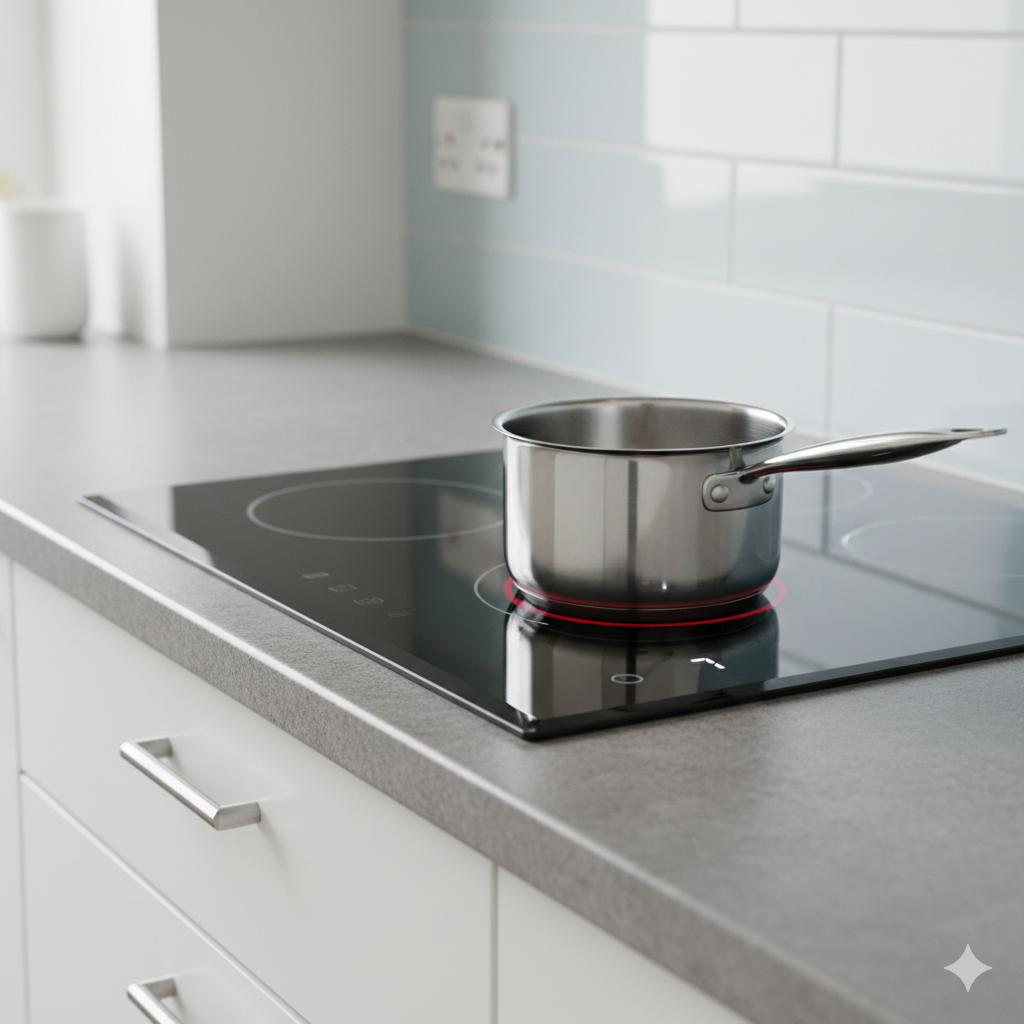
The environmental angle (brief but important)
Gas hobs burn fossil fuel directly in your kitchen.
Electric hobs:
- Can run partially or fully on renewable energy
- Pair well with solar panels
- Improve indoor air quality
Even if gas is cheaper today, many households choose electric or induction for health and future cost stability, not just today’s bill.
Gas or Electric — Which Makes Sense for Your Home?
If you already have gas and cook regularly, gas is still the cheaper option per hour and there’s no compelling financial reason to switch unless you’re replacing the hob anyway.
If you’re replacing a hob — especially in an older house where the existing one is worn out — induction is worth the extra upfront cost for most households. Faster, cleaner, and more efficient per meal than ceramic electric, and closer to gas on running costs than most people expect.
Ceramic electric is rarely the best choice unless upfront cost is the main constraint.
The honest version: I’d go induction if I was replacing mine today. The cleaning alone is worth it.
Cook smarter and cut everyday kitchen costs with our Smart Kitchen & Appliances Hub your guide to energy-efficient gadgets, smarter cooking habits, and affordable ways to upgrade your home. Explore simple tips, low-energy tools, and practical UK advice that actually saves money.
If you want straightforward, non-commercial advice on cutting bills and understanding UK energy costs, Citizens Advice has excellent resources.
Related Smart Kitchen Energy Guides
If you’re comparing hob running costs, it helps to understand how the rest of your kitchen appliances affect your electricity and gas bills. These guides look at the real energy costs of common cooking appliances and how small changes can reduce everyday kitchen energy use in UK homes.
About The Author – Andrew Marshall
Andrew Marshall is a Scottish homeowner and the creator of Save Wise Living. He shares practical ways to reduce energy bills, improve home efficiency, and make everyday household routines cheaper and simpler.