
Black mould on walls is one of the most common household issues in the UK — especially from late autumn through to early spring. You might notice dark patches creeping into bedroom corners, forming around window frames, appearing behind wardrobes, or spreading across bathroom ceilings.
If you’re working through multiple cleaning problems at once, you can find more practical guides inside our Home Cleaning hub, where we cover everyday UK household issues clearly and realistically.
It’s frustrating, it looks unpleasant, and it often feels like it comes back no matter how much you clean it.
In most cases, though, black mould in UK homes is linked to everyday condensation rather than anything dramatic or structural. That means it can usually be removed safely — and prevented long-term — with the right approach.
In this guide, you’ll learn:
- What black mould actually is
- Why it’s so common in UK homes
- A clear, safe step-by-step removal method
- What works and what doesn’t
- How to stop it returning
- When it may be a landlord issue
Let’s break it down calmly and practically.
What Is Black Mould?
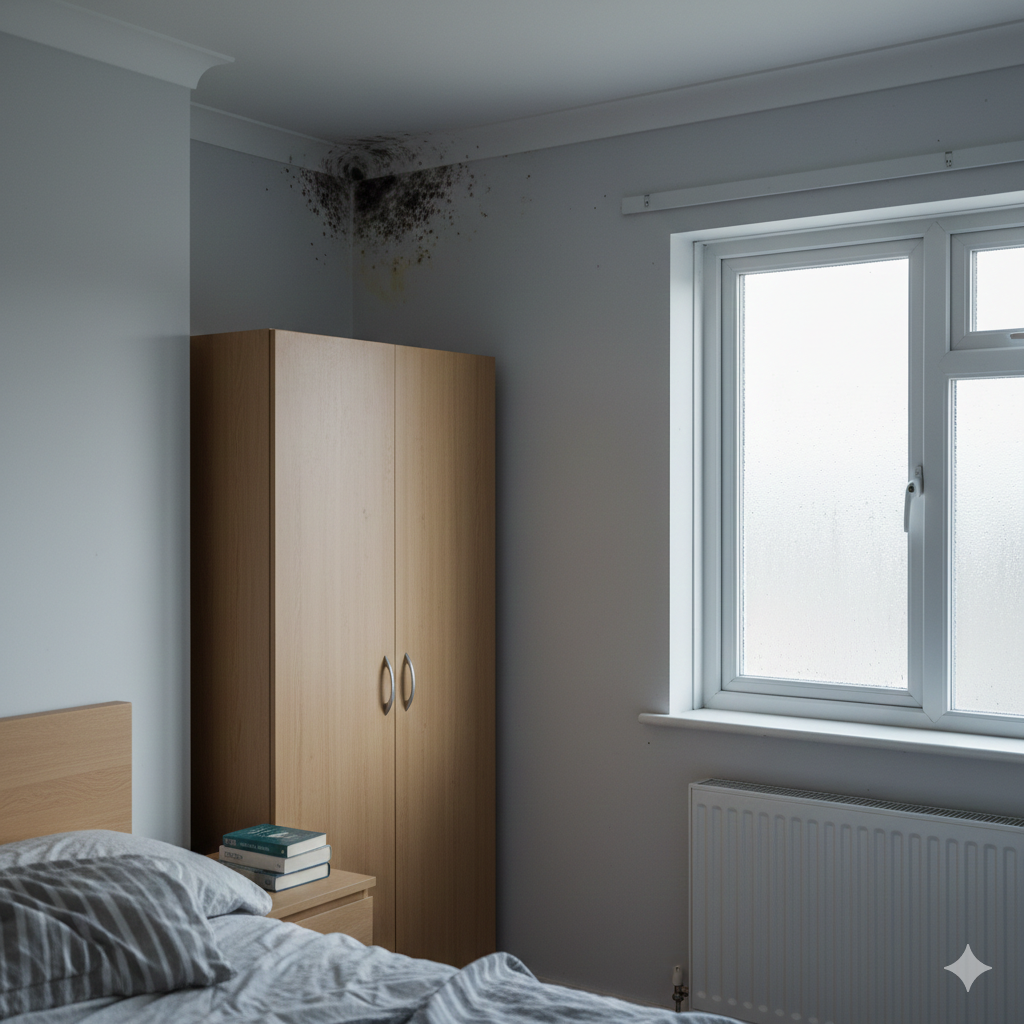
The black mould most commonly seen in UK homes is a surface mould that grows in damp, poorly ventilated areas. It appears as dark green or black speckled patches and often starts in corners or along ceiling edges.
Mould spreads through tiny airborne spores. These spores are always present in indoor air — they only grow when they land on a damp surface and have the right conditions.
The key ingredients mould needs are:
- Moisture
- A cool surface
- Limited airflow
Remove one of those, and mould struggles to grow.
What Causes Black Mould in UK Homes?
In the UK climate, mould is usually linked to moisture from normal daily activities combined with cold surfaces.
Here are the most common causes.
1. Condensation
Everyday activities release moisture into the air:
- Cooking
- Showering
- Boiling kettles
- Drying clothes
- Even breathing while sleeping
When warm, moist air hits a cold wall or window, condensation forms. Over time, this repeated dampness allows mould to grow.
2. Poor Ventilation
Modern homes are often well sealed to keep heat in — but that can also trap moisture.
Common ventilation problems include:
- Extractor fans not used long enough
- Windows rarely opened
- Air vents blocked
- Furniture pushed tight against cold external walls
Without airflow, moisture has nowhere to escape.
3. Cold External Walls
Solid brick walls, poorly insulated cavity walls, and corners of rooms can remain colder than the rest of the space. These “cold spots” attract condensation repeatedly.
Bedrooms are particularly vulnerable because:
- Heating may be turned off overnight
- Windows remain closed
- People breathe moisture into the air while sleeping
4. Drying Clothes Indoors
Drying laundry on radiators or airers can release several litres of moisture into the room. If windows remain shut, that moisture settles on walls and ceilings.
This is one of the biggest causes of winter mould in UK homes.
5. Inconsistent Heating
Turning heating fully off during the day and then blasting it at night creates large temperature swings. Walls cool down significantly, increasing condensation when warm air returns.
A steady background temperature is usually more effective than extremes.
6. High Indoor Humidity
Indoor humidity should ideally sit between 40–60%.
In many UK homes during winter, it can rise above 65–70%. At that level, mould growth becomes much more likely.
If recurring mould is an issue, our guide on Must Have Bathroom Mould Removal Gadgets You’ll Wish You Bought Sooner explains tools that help manage airflow and monitor humidity more effectively.
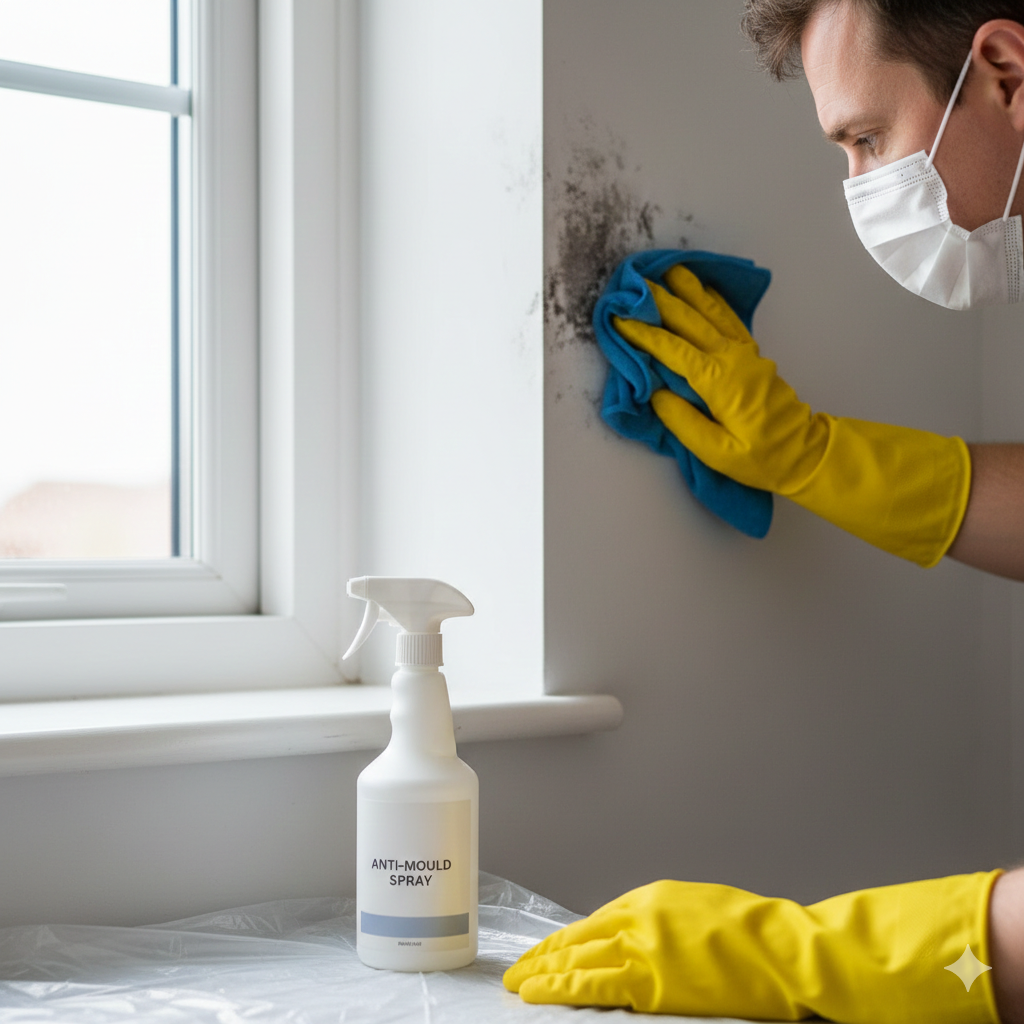
Step-by-Step: How to Remove Black Mould Safely
If the mould is surface-level and covers a small area (for example, less than a square metre), it can usually be treated at home.
Take your time and follow these steps carefully.
Step 1: Protect Yourself Properly
Before cleaning:
- Wear protective rubber gloves
- Use a face mask for cleaning
- Open windows to improve airflow
- Keep children and pets out of the room
Avoid dry brushing mould — this can release spores into the air unnecessarily.
Step 2: Choose the Correct Cleaning Solution
For surface mould, suitable options include:
- An anti-mould spray
- A mould removal gel
- A diluted bleach solution (used carefully and never mixed with other chemicals)
Sprays and gels are often easier to apply evenly and are designed to cling to vertical walls.
Avoid homemade chemical mixtures or combining products — this can be unsafe and ineffective.
Step 3: Apply the Solution
Spray or apply the product directly to the mouldy area. Ensure the surface is lightly dampened rather than dripping.
Leave it for the recommended time (often 10–20 minutes). This allows the solution to break down mould staining properly.
Rushing this step often leads to poor results.
Step 4: Wipe Gently
Using microfibre cleaning cloths or a soft sponge, gently wipe the area.
If staining remains, apply again rather than scrubbing aggressively.
Do not sand the wall. This can spread spores and damage paintwork.
Step 5: Rinse and Dry Thoroughly
Wipe the area with clean water to remove residue.
Then dry the wall completely. This is one of the most important steps. Lingering moisture creates ideal conditions for mould to return.
Use:
- Open windows
- Gentle heating
- Airflow
If humidity remains high, consider using a dehumidifier to speed up drying.
Step 6: Dispose of Materials Carefully
Place used disposable cloths in a sealed bag before binning.
Wash reusable cloths at a high temperature.
Clean any buckets or tools used during the process.
What NOT to Do
Avoid these common mistakes:
Don’t Paint Over Mould
Painting over untreated mould will not solve the issue. The mould will usually return through the paint.
Don’t Mix Bleach With Other Cleaners
This can create harmful fumes and should never be done.
Don’t Dry-Scrub
Scrubbing mould before applying cleaning solution spreads spores and makes the problem worse.
Don’t Ignore Recurring Patches
If mould returns quickly, the underlying moisture problem hasn’t been addressed.
If you’re thinking of using steam as part of your cleaning routine, you may find our breakdown of Do Steam Cleaners Use a Lot of Electricity? UK Cost Breakdown helpful before deciding.
How to Stop Black Mould Coming Back
Prevention is more important than removal.
Here’s what makes a genuine difference in UK homes.
Improve Daily Ventilation
- Open windows for 10–15 minutes each morning
- Keep trickle vents open
- Leave internal doors slightly ajar where possible
Even short bursts of airflow can significantly reduce humidity.
Use Extractor Fans Properly
Run bathroom and kitchen extractor fans for at least 15–20 minutes after use.
If your extractor fan is weak or noisy, it may not be removing moisture effectively.
Maintain Consistent Heating
Rather than allowing rooms to become very cold, keep a steady background temperature during winter.
This reduces the difference between air temperature and wall temperature — lowering condensation risk.
Be Mindful of Indoor Drying
If drying clothes indoors:
- Close the door
- Open a window slightly
- Use airflow
- Monitor humidity
Keeping humidity below 60% makes a significant difference.
Monitor Humidity Levels
A simple humidity monitor can show you when levels are creeping up.
If your home regularly sits above 65%, long-term solutions such as improved ventilation or moisture control may be necessary.
Our guide on 8 Eco-Friendly Cleaning Products That Save Money Long-Term also covers small household changes that reduce damp and improve overall air quality.
When It’s a Landlord Issue (UK)
Understanding responsibility is important.
Usually Tenant Responsibility:
- Condensation caused by lifestyle factors
- Lack of ventilation
- Drying clothes indoors
- Inconsistent heating
Tenants are generally expected to use heating and ventilation reasonably.
Potential Landlord Responsibility:
- Rising damp
- Penetrating damp from damaged brickwork
- Roof leaks
- Plumbing leaks
- Faulty extractor fans
- Structural insulation problems
If mould is accompanied by peeling plaster, bubbling paint, persistent damp patches, or water ingress, it may indicate structural damp rather than condensation.
In those cases, report the issue in writing and keep a record.
When to Seek Professional Help
You should consider professional advice if:
- Mould covers a large area
- It keeps returning despite ventilation improvements
- There are signs of structural damp
- The wall feels persistently wet
Most everyday black mould in UK homes is condensation-related — but persistent or widespread problems should not be ignored.
Final Thoughts
Black mould on walls is extremely common in UK homes, especially during winter.
In most cases, it’s caused by:
- Condensation
- Cold walls
- Limited ventilation
- High humidity
It can usually be removed safely with the right approach — but cleaning alone won’t fix it long-term.
Focus on moisture control, airflow, and steady heating.
If mould keeps returning, the issue isn’t the cleaning product — it’s the environment.
Handled properly, black mould can be managed calmly and prevented effectively.
Want more practical advice on affordable cleaning gadgets, smarter routines and ways to cut waste around the home? Visit the full Home Cleaning Hub to explore every current and upcoming guide in this series.
Practical Guides to Help You Prevent Damp & Cleaning Issues
Black mould rarely exists in isolation. It’s usually connected to moisture, airflow, and everyday cleaning habits. If you’re tackling mould, these related guides will help you improve ventilation, manage humidity, and prevent future problems across your home.