
Older UK homes are beautiful — high ceilings, solid brick or stone walls, original fireplaces, period details.
They’re also notoriously hard to heat.
If you live in a Victorian terrace, Edwardian house, or 1930s semi, you may feel like the warmth disappears minutes after the heating turns off — leaving rooms chilly no matter how high the thermostat goes.
The problem usually isn’t your boiler. It’s heat loss.
Major upgrades like cavity wall insulation, new windows, or underfloor heating can help — but they’re expensive, disruptive, and often not possible in rented homes, listed buildings, or solid-wall properties.
The good news: you can make an old house significantly warmer without structural work.
This guide explains practical, UK-tested ways to insulate an older home without renovation — affordable fixes that work in real houses, not just theory. If you’re looking for a complete approach to staying warm while keeping bills under control, explore our full Smart Heating & Home Warmth hub, which brings together the most effective insulation, heating, and comfort strategies for UK homes.
In This Guide
Quick Answer: Cheapest Ways to Insulate an Old UK House (No Renovation)
If you want the biggest warmth improvement for the lowest cost, start here:
Top 5 high-impact fixes:
- Top up loft insulation to 270mm
- Seal draughts around windows, doors, and floors
- Use thick thermal curtains or blinds
- Add rugs to exposed floorboards
- Use radiator reflector panels on external walls
Most homes can feel noticeably warmer for £150–£400 total using these methods.
👉 Combine several fixes for the best results — insulation improvements multiply rather than add.
Where Older Homes Lose Heat (and What You Can Do About It)
Before we dive into solutions, it helps to know where the heat is escaping. In most period properties, the culprits are:
- Lofts and roof voids — especially if insulation is thin or patchy
- Solid walls — no cavity means no easy fix, but internal layering helps
- Suspended timber floors — cold air rises from below
- Single-glazed or draughty windows
- Gaps around skirting boards, floorboards, and sockets
The strategy? Layer insulation from the top down, starting with the loft and working your way to the floors. Each layer slows heat loss and adds comfort — and together, they make a huge difference.
Where Heat Escapes in Older UK Homes (Typical Estimates)
According to UK energy efficiency data, heat loss in older properties often breaks down like this:
- Roof / Loft: 25%
- Walls: 35% (higher in solid-wall homes)
- Floors: 10–15%
- Windows & Doors: 10–20%
- Draughts & gaps: Variable but significant
That’s why layering matters — no single fix solves the problem, but multiple smaller fixes compound to make a noticeable difference.
What Does It Cost to Insulate an Old House Without Renovation?
One of the biggest advantages of DIY insulation layering is cost. Compared to full internal wall insulation or floor lifting, these methods are dramatically cheaper.
Here’s a rough idea of typical UK costs:
- Loft insulation top-up (DIY rolls): £100–£250 depending on loft size
- Thermal curtains: £40–£120 per window
- Draught-proofing strips & seals: £10–£30 per room
- Radiator reflector foil: £10–£25
- Window insulation film: £8–£20 per kit
In many older homes, a full “layered insulation” approach can be done for under £400–£600 total — far less than structural renovation.
And because you’re reducing heat loss immediately, savings begin from the first heating cycle.
Who This Guide Is For
These solutions are especially useful if you:
- Live in a Victorian, Edwardian, or pre-1930s home
- Have solid walls (no cavity)
- Rent or can’t make permanent changes
- Own a listed property
- Want lower heating bills without builders
- Need reversible, DIY-friendly improvements
If you can’t rip floors up or insulate externally, this guide focuses on what you can do.
Before You Start: What to Check First
Before adding insulation layers, do a quick assessment:
- Is your loft insulation already 270mm thick? If yes, focus elsewhere.
- Do you have signs of damp or mould on walls? Fix moisture ingress first.
- Are air bricks or ventilation paths blocked? Never seal these completely.
- Is your property listed or leasehold? Check restrictions before applying adhesive materials.
If you’re seeing dripping windows or black spotting in corners, winter window condensation is usually the first thing to tackle before adding more insulation layers.
Old UK homes need balance — warmth without trapping moisture. Address ventilation and airflow before adding heavy insulation layers.
Common Mistakes That Make Old Houses Colder
Before adding insulation, avoid these frequent problems:
❌ Blocking air bricks — this can cause damp and timber rot
❌ Sealing fireplaces completely without ventilation
❌ Using non-breathable materials on damp walls
❌ Covering trickle vents
❌ Ignoring condensation issues
Old homes need controlled airflow.
The goal is reduce heat loss without trapping moisture.
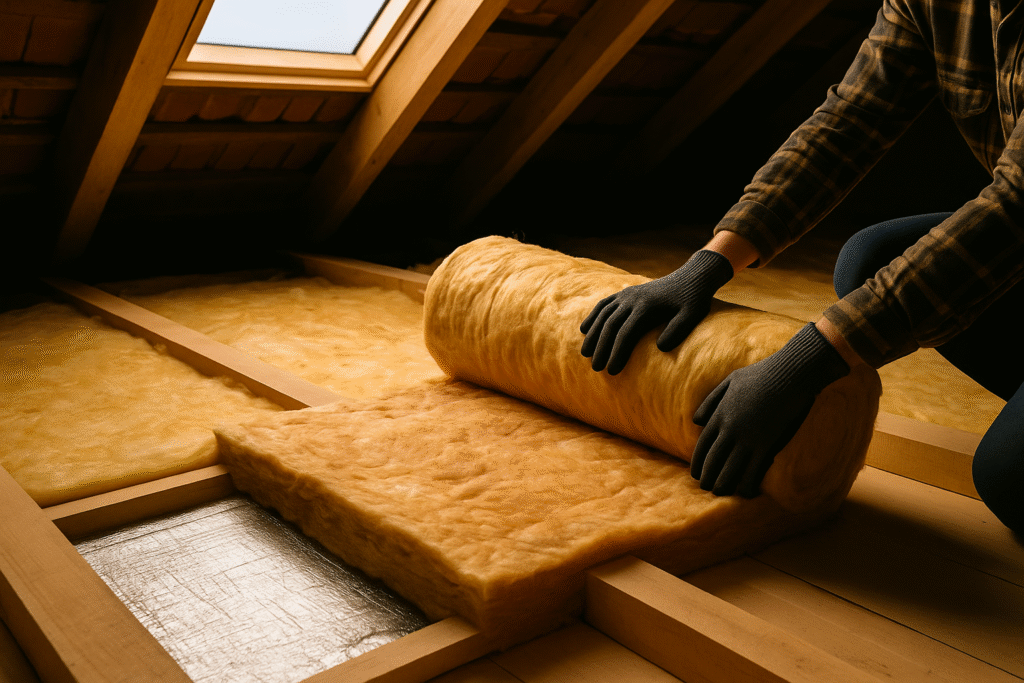
Step 1: Stop Heat Escaping Through the Roof (Biggest Win First)
Heat rises — which makes the loft the single most important place to insulate.
In older homes, roof heat loss can account for around a quarter of total warmth disappearing.
Even if insulation exists, many properties have far less than the recommended 270mm thickness, especially if it hasn’t been updated for decades.What to do
- Top up insulation rolls between joists to reach ~270mm depth
- Add a second layer at right angles to cover gaps
- Insulate the loft hatch with a seal or insulated cover
- Lag exposed pipes and tanks
- Maintain ventilation gaps at the eaves
If your loft is boarded for storage, consider adding insulation above or below boards rather than compressing existing material.
Why this works: Warm air naturally rises and escapes into cold roof spaces. Increasing loft insulation dramatically slows this process, keeping heat inside living areas.
In many homes, this single upgrade produces the biggest comfort improvement per pound spent.
Step 2: Reduce Heat Loss Through Solid External Walls
Most pre-1930s homes have solid brick or stone walls with no cavity. These walls absorb heat and release it outdoors, leaving rooms feeling cold even when the heating is on.
Full internal or external wall insulation is expensive — but surface-level measures can still make a noticeable difference.
What to do
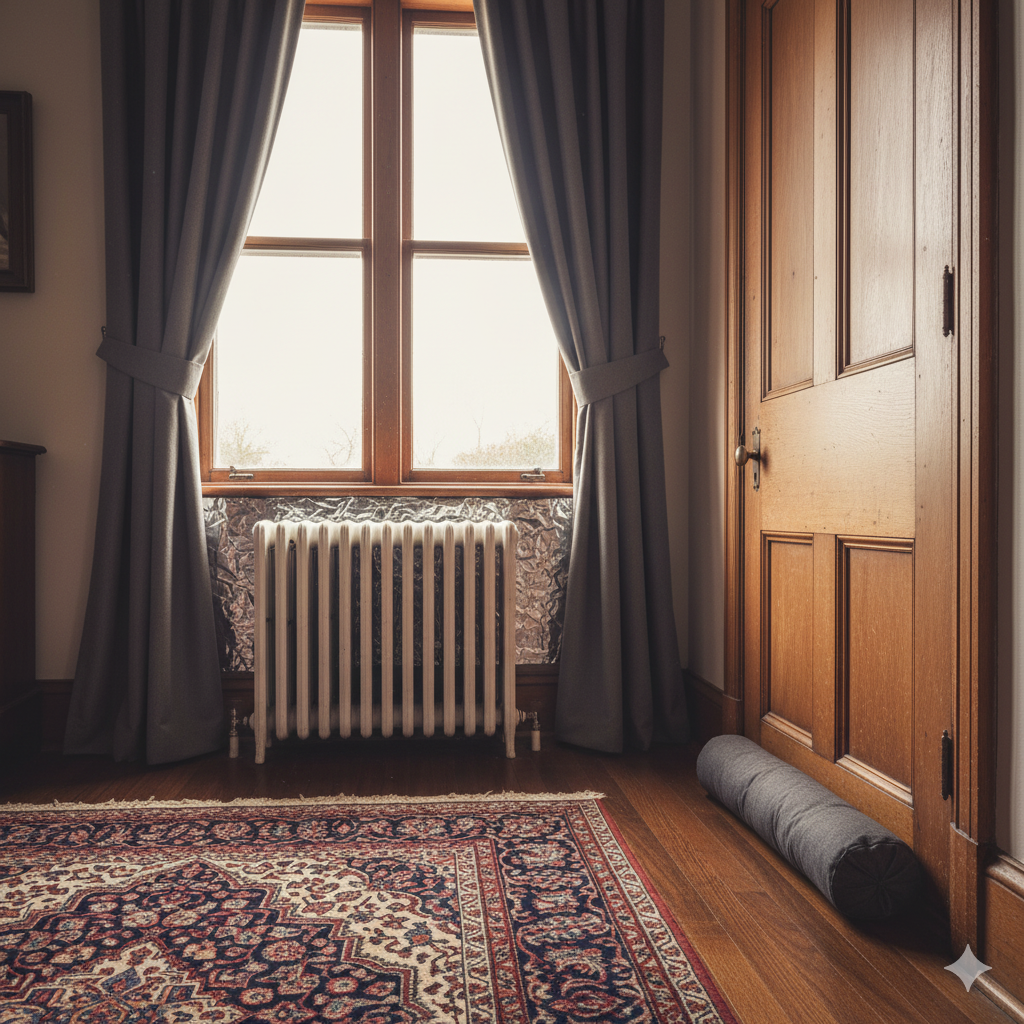
- Use thermal lining paper on external walls
- Hang thick curtains or fabric wall coverings on cold surfaces
- Install radiator reflector panels behind radiators on outside walls
- Position furniture slightly away from cold walls to allow airflow
Why this works: These layers reduce radiant heat loss and prevent warm air from contacting cold masonry surfaces.
👉 Rooms with exposed external walls often feel warmer almost immediately after adding soft insulation layers.
If one room still feels chilly while the rest of the house is fine, it’s often down to airflow, heat distribution, or a single weak point — especially in rooms that never warm up.
Step 3: Warm Up Cold Timber Floors
Many older UK homes have suspended wooden floors with an air void underneath. Cold air circulating below can chill rooms from the ground up.
Lifting floorboards for insulation is disruptive — but surface solutions can still help significantly.
What to do
- Cover exposed floorboards with thick rugs or carpet
- Add quality underlay beneath rugs where possible
- Seal gaps between boards and around skirting with flexible filler
- Use draught excluders at thresholds between rooms
Why this works: Floor coverings trap warm air near the surface and reduce cold air infiltration from below.
Hallways, living rooms, and ground-floor bedrooms often benefit the most.
Step 4: Improve Windows and Doors Without Replacing Them
Single glazing, ageing frames, and poor seals are major heat-loss points in period homes. Fortunately, you don’t need to install new windows to improve performance.
What to do
- Apply clear thermal film to single-glazed panes
- Install draught strips around frames
- Use thick thermal curtains or blinds
- Add door seals or brush strips
- Hang a curtain across particularly cold doors
For older frames and single glazing, window insulation film kits can noticeably cut that cold “radiating” feeling from the glass.
Why this works: Windows lose heat through both conduction and air leakage. Layering physical barriers slows both processes.
Closing curtains at dusk can significantly reduce overnight heat loss, especially in rooms with large windows.
Step 5: Control Draughts Without Blocking Ventilation
Old houses are rarely airtight — and that’s partly intentional. Airflow prevents damp and structural problems. The goal is to stop uncontrolled draughts while maintaining healthy ventilation.
What to do
- Seal gaps around skirting boards and floor edges
- Use removable draught excluders at doors
- Fit chimney balloons or guards in unused fireplaces
- Keep air bricks clear but not exposed to direct wind
Why this works: Eliminating cold air infiltration makes heating far more effective and improves comfort immediately.
👉 Even small gaps can create surprisingly strong cold airflow during windy weather.
Step 6: Manage Moisture to Prevent Cold, Damp Air
Insulation without moisture control can backfire. Damp air feels colder, increases mould risk, and reduces the effectiveness of heating.
Older homes rely on airflow to stay dry, so balance is essential.
What to do
- Ventilate rooms briefly each morning
- Use extractor fans in kitchens and bathrooms
- Run a dehumidifier in persistent damp areas — dryer air heats faster and rooms feel warmer at the same thermostat setting.
- Avoid drying clothes indoors without ventilation
- Monitor humidity (ideally 40–60%)
Why this works: Dry air heats faster and feels warmer at the same temperature.
👉 Many households notice improved comfort without raising the thermostat once humidity is controlled.
Suggested FAQ Block
Q: How can I insulate an old house in the UK without renovation? A: Use thermal curtains, loft rolls, foil-backed lining, and draught-proofing to layer insulation.
Q: Is DIY insulation effective in older UK homes? A: Yes — layering insulation in key areas can significantly reduce heat loss and improve comfort.
Q: What’s the cheapest way to insulate a period property? A: Start with loft insulation, thermal curtains, and draught-proofing strips — all budget-friendly and renter-safe.
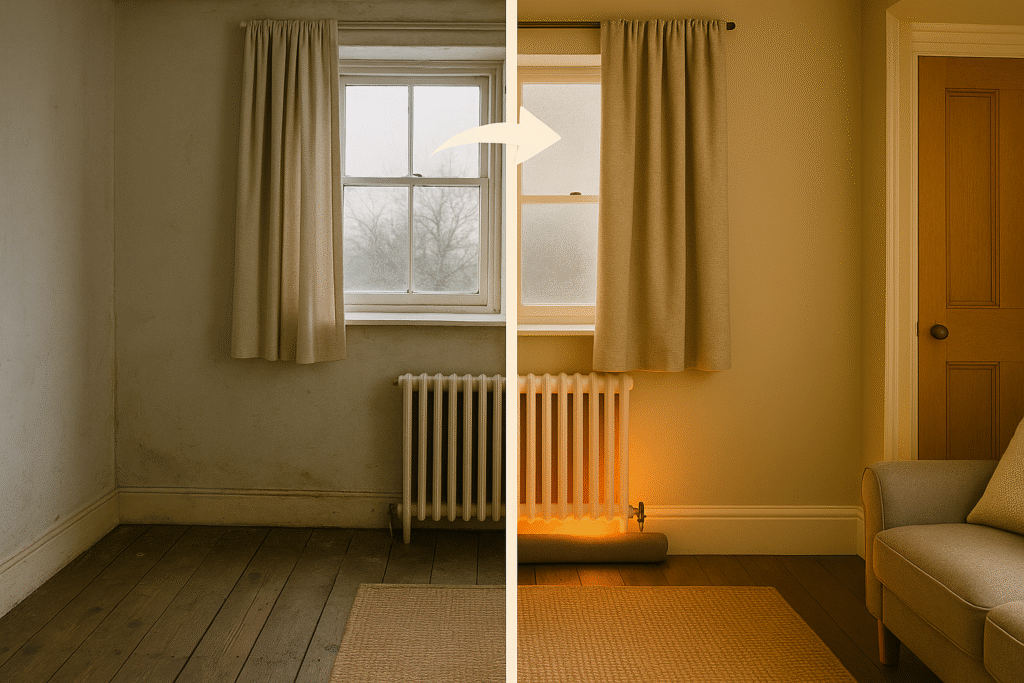
Layering = Comfort Without Compromise
You don’t need to knock down walls or spend thousands to make an old house feel warm. By layering insulation from top to bottom, you can dramatically improve comfort, reduce energy bills, and preserve the character of your home.
Here’s a quick recap:
- Loft: Add or top up insulation rolls
- Walls: Use thermal lining, foil, and curtains
- Floors: Layer rugs and seal gaps
- Windows & Doors: Apply film, strips, and thermal drapes
- Moisture: Ventilate daily and monitor humidity
These fixes are DIY-friendly, renter-safe, and budget-conscious — perfect for UK homes that need warmth without the upheaval.
The Bottom Line: Warmth Without Renovation Is Possible
Old homes will never behave like modern airtight builds — but they don’t have to be freezing or expensive to heat.
By targeting the biggest heat-loss areas first and layering improvements throughout the home, you can transform comfort without structural work.
Start with the loft.
Seal the draughts.
Add window and floor insulation.
Manage moisture.
Small changes combine into a big result.
For maximum savings, combine insulation with smart heating control — zoning, thermostats, and room-by-room heating strategies.
Once insulation is in place, see The Cheapest Way to Heat Your Home in the UK (Room-by-Room Cost Breakdown) to maximise savings.
Ready to Improve Insulation Further?
If you’re layering warmth step by step, these practical guides take you deeper:

About The Author – Andrew Marshall
Andrew Marshall is a Scottish homeowner and the creator of Save Wise Living. He shares practical ways to reduce energy bills, improve home efficiency, and make everyday household routines cheaper and simpler.