
Heating controls confuse a lot of people.
You turn the dial up when you’re cold. You turn it down when you’re too warm. Beyond that, most of us were never really shown how thermostats actually work.
With UK energy costs still far higher than they were a few years ago, small inefficiencies now matter more than ever. And the truth is: many households are using their thermostats in ways that quietly waste money.
This guide explains — calmly and clearly — how thermostats work, what temperature to set in a typical UK home, and how to avoid the common habits that push heating bills up unnecessarily.
This guide is part of our Smart Heating & Home Warmth hub, where we focus on practical, realistic ways to make UK homes warmer and more efficient.
In This Guide
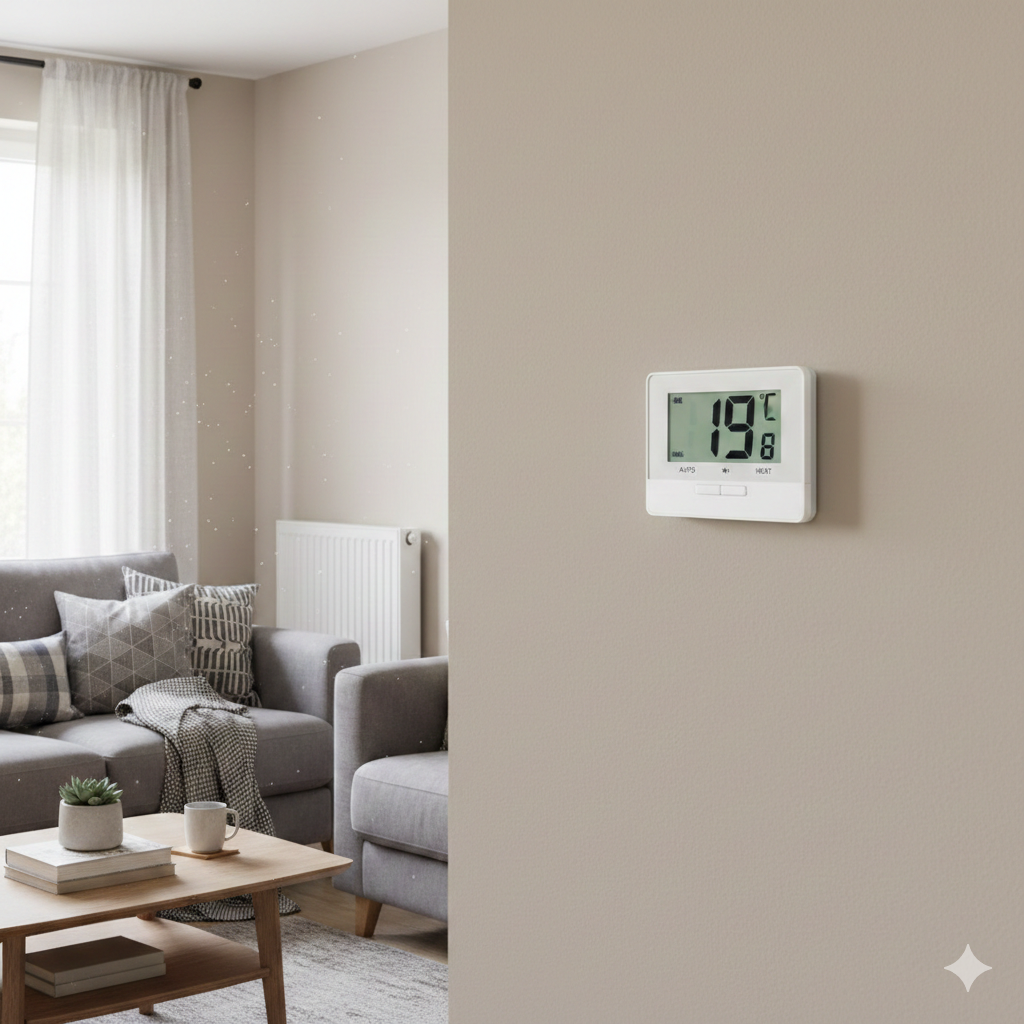
What Temperature Should You Set Your Thermostat To in the UK?
For most UK homes, the typical comfortable range is:
18°C–21°C
The NHS recommends that living rooms should be at least 18°C, particularly for older people or those with health conditions.
Why 18–21°C Is the Normal Range
- 18°C–19°C – Efficient and comfortable for many people when wearing normal indoor clothing.
- 20°C–21°C – Feels warmer and may suit less active households.
- 22°C+ – Often unnecessary and significantly more expensive.
Why Every Degree Matters
Every 1°C increase in thermostat setting can increase heating costs by around 8–10%.
That means:
- Setting your thermostat at 23°C instead of 19°C can noticeably increase your bill.
- The boiler will keep firing until the house reaches that higher temperature, regardless of how long it takes.
Higher isn’t “faster.” It just tells the boiler to keep running longer.
A simple rule:
Set it to the lowest temperature you feel genuinely comfortable at — not the highest you can tolerate.
If you’re unsure what your home is actually reaching, a basic temperature and humidity monitor can help you understand real room conditions rather than guessing.
Should You Turn Heating Off at Night or Leave It On?
This is one of the biggest debates in UK heating.
The answer isn’t one-size-fits-all.
Understanding “Setback Temperature”
A setback temperature is a lower setting used when you’re asleep or out of the house — typically around 15–17°C.
Instead of turning heating fully off, you allow the home to cool slightly but not completely.
When Leaving Heating on Low Makes Sense
- Your home is well insulated.
- It takes a long time to reheat from cold.
- You experience damp or condensation issues.
- You’re out for short periods (a few hours).
In these cases, letting the house drop too far can mean the boiler works hard later to recover.
When Turning It Off Makes Sense
- You’ll be out all day.
- Your property loses heat quickly anyway.
- You don’t mind reheating from a cooler baseline.
- The house is empty overnight and well insulated.
In a modern insulated home, turning heating off overnight and reheating in the morning is usually efficient.
In older, poorly insulated properties, a mild setback can prevent extreme temperature drops.
If you live in an older property, our guide on How to Insulate an Old House in the UK (Without Major Renovation) explains practical ways to reduce heat loss without major work.
Continuous Low vs On/Off — What Actually Saves Money?
This myth has been around for decades.
“It’s cheaper to leave heating on low all the time.”
This is not universally true.
The Key Factor: Heat Loss
Heat constantly escapes from your home. The warmer your house is compared to outside, the faster heat escapes.
If you keep heating on continuously:
- Heat is constantly replaced.
- The boiler cycles more often.
- Energy is used throughout the day.
If you turn heating off:
- The home cools.
- Heat loss slows.
- Energy isn’t used while it’s off.
- The boiler works harder later to reheat.
The Important Bit
Reheating a house does not use more energy than maintaining high temperatures all day — unless your home loses heat extremely slowly.
In most UK homes, heating only when needed is more efficient than maintaining continuous warmth.
A programmable heating timer or digital room thermostat makes this much easier by automating schedules rather than relying on manual adjustments.
If you want a deeper breakdown of room-by-room costs, see The Cheapest Way to Heat Your Home in the UK (Room-by-Room Cost Breakdown).
Common Thermostat Mistakes That Waste Money
These habits are surprisingly common.
1. Turning the Thermostat Up to “Heat Faster”
Thermostats don’t control speed. They control target temperature.
Setting it to 25°C won’t heat the room faster than 20°C. It will simply run the boiler for longer.
2. Poor Thermostat Placement
If your thermostat is:
- Near a radiator
- In direct sunlight
- Next to a fireplace
- In a draughty hallway
…it may misread the true room temperature and cause unnecessary boiler cycles.
Modern wireless thermostat systems help solve this by allowing better placement.
3. Blocking Radiators
Large sofas, thick curtains, or radiator covers reduce heat circulation, forcing the boiler to run longer.
4. Not Bleeding Radiators
Air trapped in radiators reduces efficiency and leaves cold spots.
If some radiators stay lukewarm, our guide on Why Some Radiators Never Get Properly Warm (And How to Fix It Cheaply) explains the likely causes.
5. Overheating Unused Rooms
Heating every room to the same temperature isn’t always necessary.
Guest rooms and spare rooms often don’t need to match living room comfort levels.
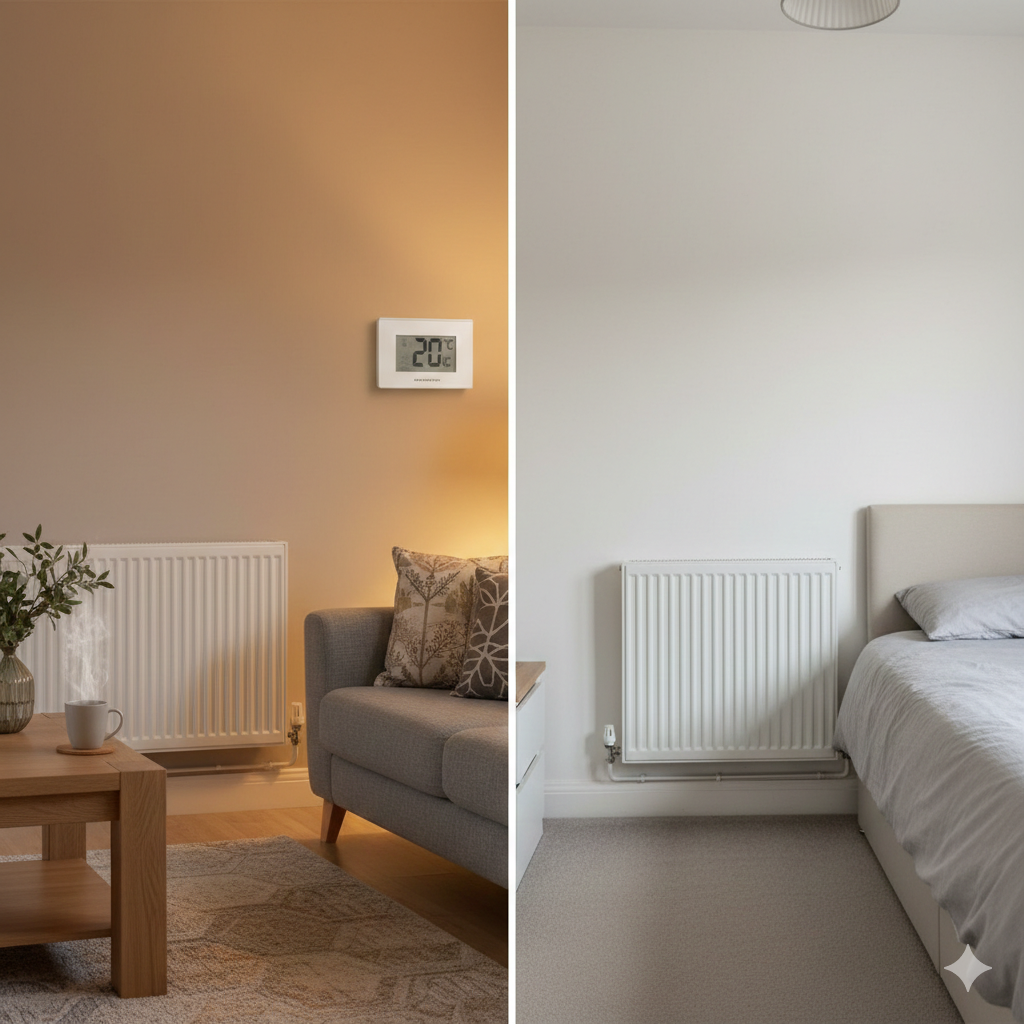
This is where zoning becomes useful.
Zoned Heating & Smart Controls Explained Simply
Zoning means controlling temperatures in different parts of the house independently.
Basic Zoning
- Separate upstairs/downstairs controls.
- Thermostatic radiator valves (TRVs) on individual radiators.
- Lower settings in rarely used rooms.
Smart Zoning
Using smart radiator valves or connected systems allows:
- Room-by-room temperature control.
- App-based scheduling.
- Heating only occupied spaces.
If you’re comparing options, our guide to Smart Radiator Valves vs Standard Thermostats explains the pros and limitations clearly.
More advanced systems are covered in Smart Home Heating Systems Explained (Beginner’s Guide UK), which breaks down what’s genuinely useful versus unnecessary complexity.
When Are Upgrades Worth It?
Upgrading makes sense if:
- You regularly overheat unused rooms.
- Your heating schedule is inconsistent.
- You’re home at varying times each day.
- You want better control without constant manual adjustment.
If your current system works and is used properly, upgrades aren’t essential — good habits alone can reduce waste.
Simple Takeaways
- 18–21°C is the normal UK comfort range.
- Every extra degree increases cost.
- Heating “faster” isn’t controlled by turning the dial higher.
- Continuous low heating isn’t always cheaper.
- Use setback temperatures intelligently.
- Heat the rooms you use — not the ones you don’t.
Small behavioural changes often deliver more savings than expensive upgrades.
Using your thermostat properly isn’t about chasing extreme temperatures or complicated systems.
It’s about understanding how your home behaves — and adjusting it in a way that keeps you comfortable without quietly overspending.
Related Heating Guides
If you’re trying to reduce heating costs without sacrificing comfort, these practical guides go deeper into specific areas of UK home heating. They’ll help you understand your system better, fix common efficiency issues, and make smarter control decisions.

About The Author – Andrew Marshall
Andrew Marshall is a Scottish homeowner and the creator of Save Wise Living. He shares practical ways to reduce energy bills, improve home efficiency, and make everyday household routines cheaper and simpler.