
Drying clothes indoors is one of the hidden challenges of UK life. We don’t get many sunny days, outdoor drying isn’t always practical, and tumble dryers are expensive to run — especially if you’re watching the energy bill climb month after month.
But drying clothes indoors leads to another problem: damp, condensation and that unmistakable musty smell. The quick “fix” is often to open the windows… but then you’re instantly freezing the room you’ve just paid to heat.
So how do you ventilate properly without losing all your warmth?
The truth is, you can dry laundry indoors efficiently, and you can ventilate your home without feeling like you’re standing inside an icebox. You just need the right approach — and a few tools that make a massive difference without costing a fortune.
Let’s break it all down in a way that’s simple, realistic, and completely UK-proof.
This article is part of our Laundry & Drying Efficiency hub, focused on practical UK advice for drying clothes indoors faster, avoiding damp, and keeping energy use low.
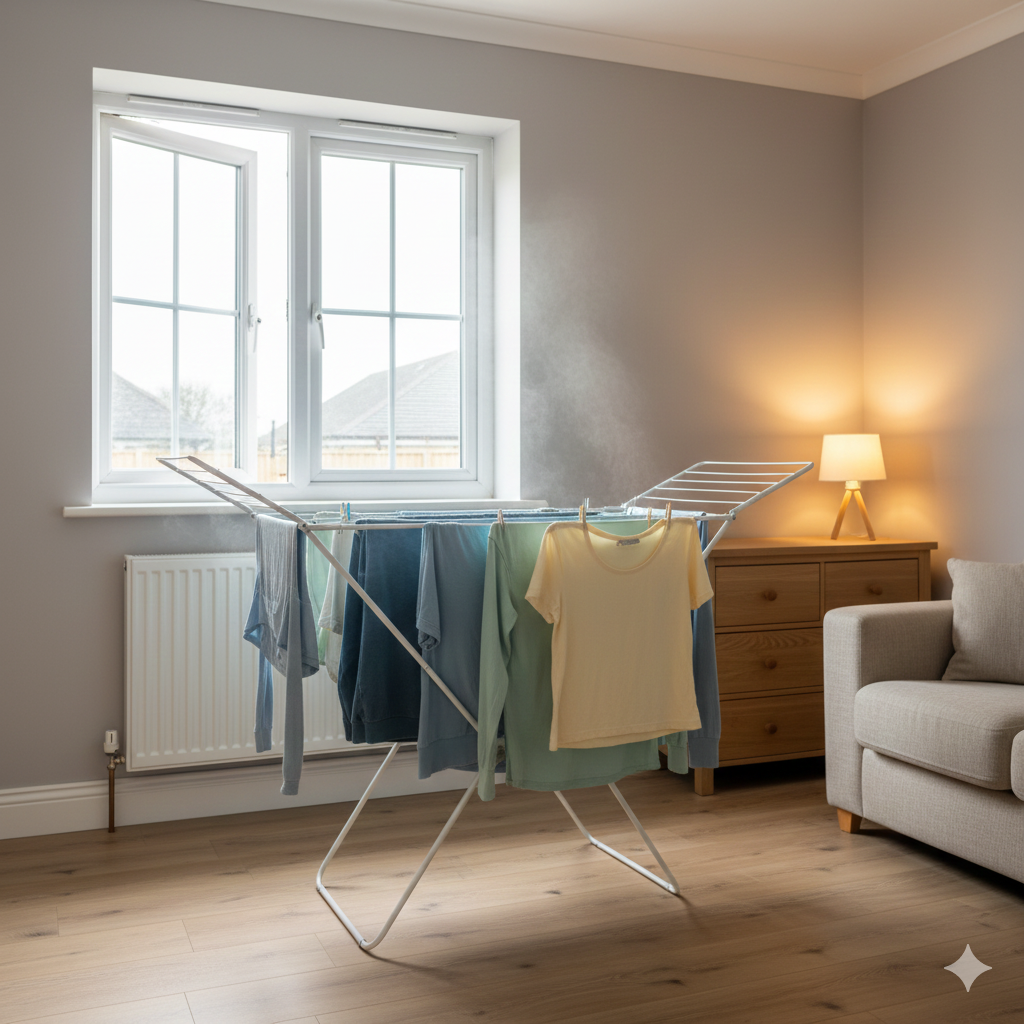
Why Indoor Laundry Causes Damp So Quickly
A full load of washing releases up to two litres of moisture into the air as it dries. And in modern homes, especially flats, the airtight design that helps keep heat inside also traps this moisture.
The result?
- Steamed-up windows
- Damp patches
- That cold, clammy feeling
- Clothes that look dry but smell musty
- Extra strain on your heating system
Moist air feels colder, so we turn the heating up… which then makes the air hold more moisture… which makes condensation worse. It’s a loop every UK household knows far too well.
But the real enemy isn’t drying laundry — it’s poor ventilation and slow drying.
Why Leaving Windows Shut Makes Things Worse
A lot of people seal their homes in winter to “keep the heat in.” No cracked windows, no trickle vents, nothing.
The problem?
With nowhere to go, moisture:
- Collects on walls
- Sits inside fabric
- Encourages mould growth
- Makes drying take much longer
- Causes damp smells even in clean laundry
On the flip side, leaving windows wide open blasts all your warm air out of the house.
So what’s the solution?
Controlled, targeted ventilation — short bursts, not constant airing.
The Smart Ventilation Method (Used in Energy-Efficient Homes)
The most effective approach is what experts call pulse ventilation:
- Open a window fully for 10–15 minutes
- Allow humid air to escape quickly
- Close it again and let the room warm back up
This works because dry outside air (even cold winter air) has less moisture than your heated indoor air. When it comes inside and warms up, it can hold more water vapour — giving you a fresh, dry environment that’s perfect for drying clothes faster.
Unlike leaving a window cracked all day, pulse ventilation removes moisture without draining your warmth.
Dry Laundry in One Room Only (Not the Whole House)
If possible, dedicate a single room for drying clothes. Close the door to trap moisture in that area, not spread it around the home.
Best choices:
- Spare bedroom
- Utility room
- Kitchen
- Bathroom (if you have a good extractor fan)
Drying clothes in one warm, well-ventilated space is far easier to control than trying to manage humidity across the entire house.
The Tools That Make the Biggest Difference (Without Huge Costs)
You can absolutely dry laundry with ventilation alone — but in UK winters, the process is slow. A few small tools can transform the whole problem while still being affordable to run.
Here are affiliate-friendly products dropped naturally into the section.
⭐ 1. A Good Dehumidifier (The Biggest Game-Changer)
If you dry laundry indoors regularly, a dehumidifier is the single most effective tool you can buy. It removes moisture before it spreads through your home — and it speeds up drying dramatically.
Two brilliant UK-favourite options:
✔ MeacoDry Arete One 12L or 20L — the premium, ultra-quiet choice
Ideal for flats, bedrooms or open-plan spaces. Uses very little energy and has a specific Laundry Mode that pushes drying times down to 3–5 hours.
✔ Pro Breeze 12L — a cheaper, reliable alternative
Great for smaller spaces or tight budgets, and still pulls litres of water out of the air daily.
Both cost roughly 5p–15p per hour to run depending on your tariff — far less than running a tumble dryer.
⭐ 2. A Heated Airer (Low Wattage, High Efficiency)
Heated airers use around 250–300 watts, compared to a tumble dryer’s 2,000–3,000 watts. They warm the clothes gently, helping evaporation without blasting energy.
Top UK choices:
✔ Dry:Soon Heated Airer (Lakeland’s best-seller)
A sturdy, reliable heated rack with excellent surface area. Paired with ventilation or a dehumidifier, it can dry a full load in under 8 hours.
✔ Addis or Duologi Heated Airers — budget options
Lighter, cheaper, and ideal for small rooms.
A heated airer + short ventilation bursts is one of the cheapest and fastest drying combinations you can run.
⭐ 3. A Small Fan (Optional but Helpful)
A very low-watt desk fan pointing past your laundry (not directly at it) helps move the moist air away from the fabric. This alone can cut drying times by a third.
Why Clothes Smell Damp Even When They Look Dry
Musty smells come from bacteria feeding on moisture left inside the fibres. Clothes that dry slowly — even if they feel dry on the surface — trap moisture deep inside.
Slow drying happens when:
- Air is humid
- There’s no ventilation
- Clothes overlap
- Rooms are cold
- Fabrics hang too close together
The quicker you remove moisture from the air, the fresher your clothes will stay.
The Perfect Drying Setup (For Most UK Homes)
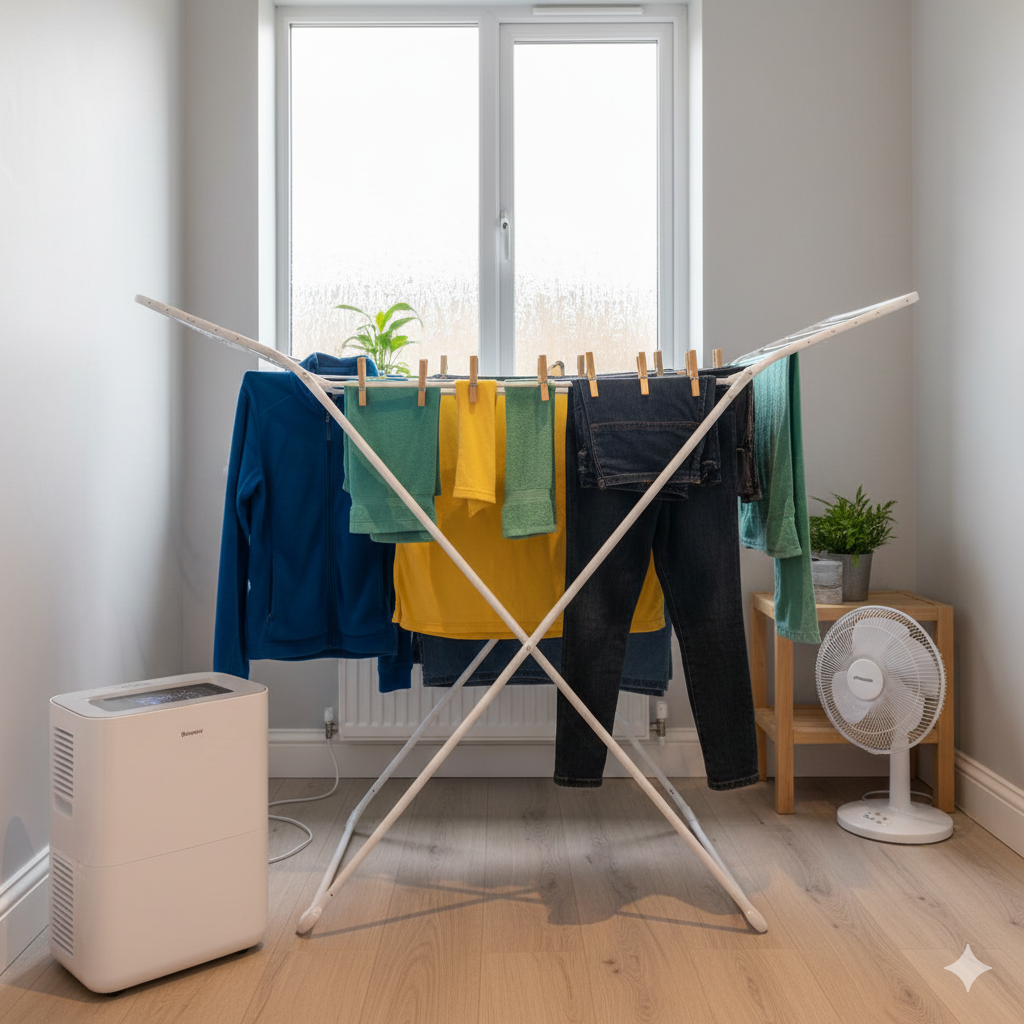
You don’t need expensive kit or huge lifestyle changes. Here’s a simple, realistic setup that works brilliantly:
The Ideal Combination:
- Heated airer (Dry:Soon or similar)
- Dehumidifier (Meaco Arete or budget Pro Breeze)
- Door shut to trap moisture
- Window opened fully for 10 minutes twice a day
- Trickle vents left open
- Small fan for gentle airflow
The result?
- Faster drying
- No mould risk
- No freezing rooms
- No damp smell
- Lower heating bills
When everything works together, your home stays warm and dry.
What About Trickle Vents?
Always keep them open.
They provide a small, continuous stream of fresh air — barely noticeable — but extremely helpful. They won’t replace proper ventilation bursts, but they stop moisture accumulating between those bursts.
Why Heating Matters More Than You Think
Most people assume turning the heating off helps laundry dry faster. It doesn’t.
Warm air can hold more moisture than cold air. When the room is too cold, the air becomes saturated quickly, and drying stalls.
You don’t need the heating on full — just a comfortable temperature.
Then use ventilation to remove the water-laden air.
If You Want a No-Window Option…
Some people prefer not to open windows in winter at all — especially in flats or high-traffic streets.
In that case:
- A dehumidifier becomes essential
- Ideally run in Laundry Mode
- Keep the door shut while it works
A good dehumidifier can replace window ventilation entirely.
A Simple Daily Routine That Actually Works
Here’s an easy system you can follow without overthinking it:
Morning
- Hang clothes spaced out
- Open the window wide for 10 minutes
- Turn heating to a normal level
Afternoon
- Run dehumidifier for 2–4 hours
- Do a second 10-minute ventilation burst
Evening
- Close the window
- Leave trickle vents open overnight
- Clothes should be almost dry by now
This routine keeps your home warm, dry, and mould-free.
✍️ Author Insight
One thing I’ve noticed in real homes is that most damp problems aren’t caused by too much washing — they’re caused by drying everything slowly in air that never really changes. The moment you introduce even short, controlled ventilation, everything shifts: windows clear, rooms feel lighter, and clothes stop picking up that stale smell. You don’t need to freeze your house — you just need to give the moisture somewhere to go.
How Long Should Laundry Take to Dry Indoors?
Rough guide:
- Heated airer only: 6–12 hours
- Heated airer + dehumidifier: 3–8 hours
- Unheated airer with poor ventilation: 24–48 hours
- Unheated airer with good airflow: 12–24 hours
If clothes are taking days, the air is simply too humid.
The Hidden Health Benefits of Good Ventilation
Reducing damp makes a huge difference to:
- Asthma
- Allergies
- Chest tightness
- Seasonal coughs
- Sinus problems
Fresh, dry air is healthier to breathe — especially in winter when homes are sealed up.
🧺 Dry Faster & Stop That Damp Smell for Good
If your clothes are taking forever to dry indoors — or still smell musty even when they feel dry — these two guides go much deeper into the fabric and bacteria side of the problem:
- Fast-Drying Fabrics Revealed: Which Clothes Dry Quickest Indoors in a UK Winter?
Discover which materials dry quickest indoors and which ones silently trap moisture for days — perfect if you want faster drying with less energy. - Why Your Clothes Smell Damp After Drying — And the Exact Fix That Actually Works
If your laundry smells musty even after “drying,” this guide breaks down the real cause — and the step-by-step fix that actually stops it.
Final Thoughts: Warm Home, Dry Clothes, No Damp
Ventilating your home in winter doesn’t mean shivering or wasting money. With the right approach, you can:
- Dry clothes faster
- Reduce condensation
- Eliminate damp smells
- Protect your health
- Save money long-term
- Keep your home warm
A heated airer and a good dehumidifier make the process even easier — and they’re two of the most cost-effective laundry tools you can own in the UK right now.
✅ Quick Recap: The Best Tools for Faster, Fresher Indoor Laundry
If you want to dry clothes faster indoors without freezing your home or racking up energy bills, these are the most effective, UK-friendly tools worth considering:
✔ MeacoDry Arete One 12L / 20L Dehumidifier (Premium Choice)
Ultra-quiet, energy-efficient, and highly effective for laundry drying. Its dedicated Laundry Mode pulls moisture from the air quickly, helping clothes dry in as little as 3–5 hours in smaller rooms.
✔ Pro Breeze 12L Dehumidifier (Best Budget Option)
A more affordable alternative that still removes litres of moisture per day. Ideal for flats, spare rooms and smaller drying areas on a budget.
✔ Dry:Soon Heated Airer (Best All-Rounder)
Lakeland’s best-seller for a reason. Low running costs, generous drying space, and works brilliantly when paired with short ventilation bursts or a dehumidifier.
✔ Addis or Duologi Heated Airers (Budget-Friendly Picks)
Cheaper, lightweight heated racks that still dramatically speed up drying compared to a standard airer.
✔ Small Low-Watt Desk Fan (Optional Booster)
A simple airflow upgrade that can reduce drying time by up to a third by pushing moist air away from your clothes.
💨 Want to dry clothes faster, cheaper, and smarter—especially in small UK homes? Explore our Laundry & Drying Efficiency Hub, a curated resource packed with expert tips, energy-saving gadgets, and clever solutions for indoor drying. From heated airers and compact dehumidifiers to smart laundry routines that actually work, this hub helps you cut costs, save space, and stay ahead of the damp.
For government-backed guidance on home energy efficiency, heating, and insulation, the GOV.UK energy section shares reliable, up-to-date information.

About The Author – Andrew Marshall
Andrew Marshall is a Scottish homeowner and the creator of Save Wise Living. He shares practical ways to reduce energy bills, improve home efficiency, and make everyday household routines cheaper and simpler.