
Damp, condensation, and musty smells are common issues in UK homes — especially in bedrooms and small rooms where ventilation is limited. These problems can lead to mould, mildew, and poor air quality, affecting both your home and your health. If you’re looking for a low-cost, energy-free way to reduce humidity, moisture absorbers and damp collectors are a smart solution.
In this guide, we’ll explain how moisture absorbers work, where to use them, and which products are best for UK bedrooms, wardrobes, and small rooms. Whether you’re dealing with winter condensation or year-round damp, these options can help you maintain a dry, fresh indoor environment.
This article is part of our Laundry & Drying Efficiency hub, focused on practical UK advice for drying clothes indoors faster, avoiding damp, and keeping energy use low.
Why Use Moisture Absorbers in Bedrooms and Small Rooms?
Moisture absorbers are passive devices that draw excess humidity from the air using hydrophilic crystals, typically calcium chloride. They’re silent, require no electricity, and are ideal for:
- Bedrooms: Reduce overnight condensation and improve air quality.
- Wardrobes: Prevent musty smells and protect clothes from mould.
- Box rooms and small offices: Control humidity in tight, poorly ventilated spaces.
- Windowsills and corners: Tackle condensation and damp patches.
They’re also a great complement to electric dehumidifiers, helping maintain low humidity in areas where plug-in devices aren’t practical.
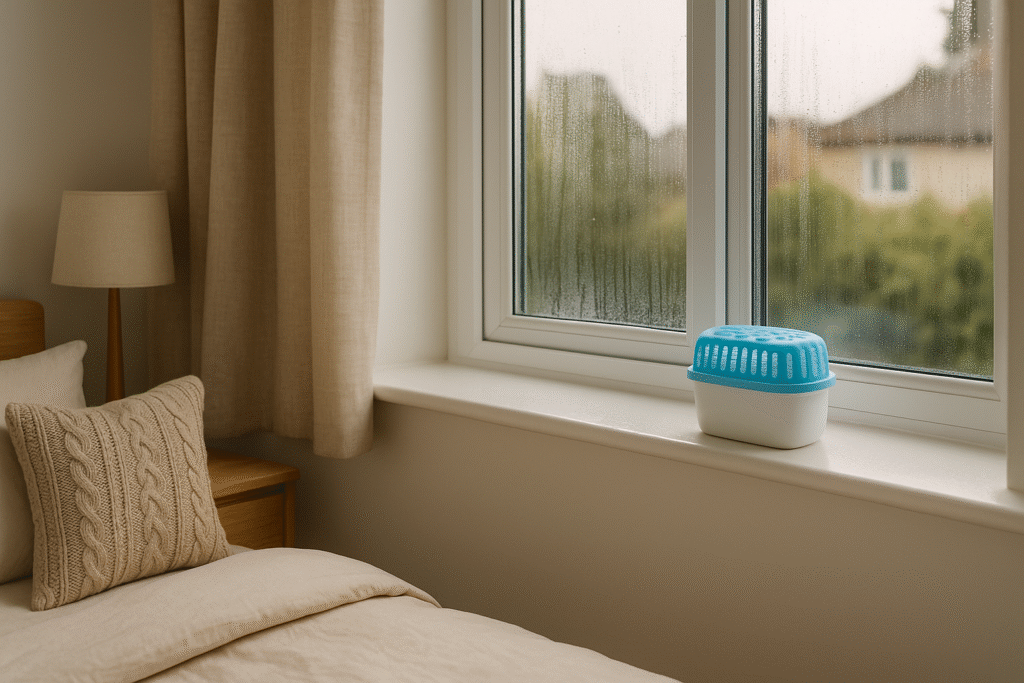
How Moisture Absorbers Work
Most moisture absorbers use crystals that attract water vapour from the air. As they absorb moisture, the crystals dissolve into a liquid that collects in a reservoir or pouch. These devices are:
- Maintenance-light: Just replace or refill every few weeks.
- Versatile: Suitable for use in any small, enclosed space.
- Affordable: Great for budget-conscious households.
Let’s explore the best types of moisture absorbers for UK homes.
Top Moisture Absorbers & Damp Collectors for UK Bedrooms
1. UniBond AERO 360º Moisture Absorber
- Type: Refillable tray-based absorber
- Coverage: Up to 20m²
- Refills: Replaceable tabs (last ~3 months)
- Best for: Bedrooms, living rooms, small offices
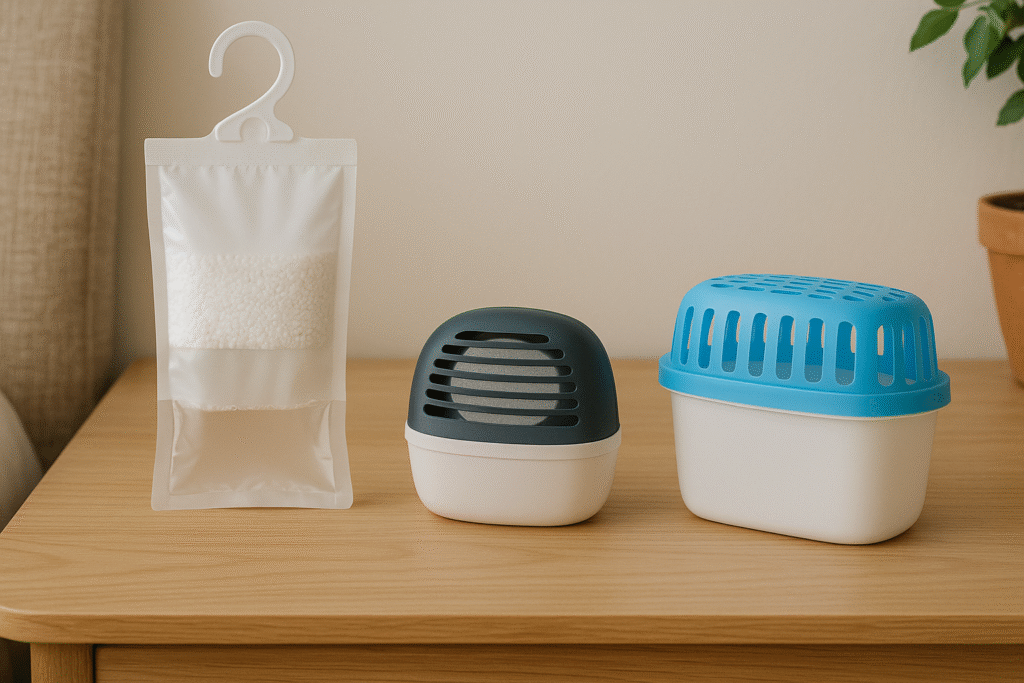
The UniBond AERO 360º is a top-rated moisture absorber in the UK. Its aerodynamic design improves airflow, while the large refill tab absorbs moisture and neutralises odours. It’s silent, mess-free, and ideal for year-round use in bedrooms and small rooms.
2. ANSIO Hanging Dehumidifier Bags – Pack of 12
- Type: Hanging disposable bags
- Capacity: Up to 230ml per bag
- Duration: Lasts 4–6 weeks
- Best for: Wardrobes, cupboards, behind furniture
These hanging moisture absorbers are perfect for enclosed spaces. Hang them in wardrobes or cupboards to quietly collect moisture and prevent musty smells. The clear pouch shows when it’s time to replace, making them easy to manage.
3. ANSIO Interior Dehumidifier Pots – Pack of 10
View on Amazon UK
- Type: Disposable moisture absorber pots
- Capacity: 500ml each
- Duration: 4–8 weeks depending on humidity
- Best for: Windowsills, bedside tables, caravans
These compact pots are ideal for spot treatment. Place them on windowsills, under beds, or in small rooms to absorb moisture silently. They’re especially useful during winter when condensation is a daily issue.
4. Kontrol Krystals Moisture Trap Crystals – 2.5kg
View on Amazon UK
- Type: Bulk refill crystals
- Use: For topping up trays or DIY containers
- Scent: Unscented
- Best for: Multi-room use, refilling existing traps
If you already use moisture traps, these refill crystals are a cost-effective way to keep them going. The 2.5kg tub lasts for months and works with most refillable trays. Ideal for households managing multiple damp-prone areas.
Where to Place Moisture Absorbers for Best Results
To maximise effectiveness, place moisture absorbers in areas where damp tends to build up:
- Windowsills: Especially in winter, to catch condensation.
- Wardrobes: Hang bags to protect clothes and shoes.
- Under beds: Trap moisture in low-airflow zones.
- Behind furniture: Tackle hidden damp on external walls.
- Cupboards and drawers: Keep linens and stored items dry.
- Small rooms or en-suites: Control humidity in tight spaces.
Always place absorbers on a tray or coaster to avoid damage from leaks.
How Long Do Moisture Absorbers Last?
Lifespan varies by product and room conditions:
- Hanging bags: 4–6 weeks
- Disposable pots: 4–8 weeks
- Refillable trays: Up to 3 months per tab
- Bulk crystals: Several months across multiple rooms
Check regularly and replace or refill as needed. If the air feels damp or smells musty, it’s time to refresh your setup.
Are Moisture Absorbers Safe for Bedrooms?
Yes — moisture absorbers are safe for use in bedrooms, including children’s rooms. Just keep them out of reach of pets and small children, and avoid placing them directly on fabric or wooden surfaces. Most products are sealed and non-toxic, but it’s best to handle them with care.
Moisture Absorbers vs Dehumidifiers: What’s the Difference?
Moisture absorbers are ideal for:
- Small rooms or wardrobes
- Occasional or seasonal damp
- Silent, energy-free operation
- Budget-friendly moisture control
Dehumidifiers are better for:
- Larger or persistently damp rooms
- Fast moisture removal
- Drying laundry indoors
- Homes with high humidity levels
For many UK homes, the best approach is to use both — a dehumidifier for active drying and moisture absorbers for passive, ongoing control.
🔧 Keep It Working: Maintenance & Drying Tips
Now that you’ve found the best moisture absorbers for your space, you might also want to explore how to keep your drying setup running at peak efficiency. These next guides will help you get even more from your indoor moisture control routine:
- How to Clean and Maintain Your Dehumidifier & Heated Airer for Maximum Efficiency – Extend the life of your devices and keep them working like new with these simple maintenance tips.
- How to Combine a Heated Airer and Dehumidifier for Maximum Drying Efficiency – Learn how to pair these two tools for faster, cheaper laundry drying and better humidity control.
These articles are perfect next steps if you’re building a complete, energy-efficient indoor drying system for your home.
Final Recommendation: Best Moisture Absorber for UK Bedrooms
For a reliable, low-maintenance solution to reduce condensation and damp in bedrooms or small rooms, the UniBond AERO 360º Moisture Absorber is the top pick:
- UniBond AERO 360º Moisture Absorber Refillable, silent, and effective for rooms up to 20m² — perfect for year-round moisture control.
Pair it with ANSIO Hanging Bags for wardrobes and compact dehumidifier pots for windowsills or tight spaces. This combination offers a complete, energy-free moisture control system that keeps your home fresh, dry, and mould-free — without the cost of running an electric dehumidifier.
💨 Want to dry clothes faster, cheaper, and smarter—especially in small UK homes?
Explore our Laundry & Drying Efficiency Hub, a curated resource packed with expert tips, energy-saving gadgets, and clever solutions for indoor drying. From heated airers and compact dehumidifiers to smart laundry routines that actually work, this hub helps you cut costs, save space, and stay ahead of the damp.

About The Author – Andrew Marshall
Andrew Marshall is a Scottish homeowner and the creator of Save Wise Living. He shares practical ways to reduce energy bills, improve home efficiency, and make everyday household routines cheaper and simpler.