
Bathroom mould is one of the most stubborn problems UK households face. It thrives in damp, humid environments, appearing on tiles, grout, silicone seals, and even ceilings. Left untreated, mould not only looks unsightly but can damage surfaces and pose health risks. Tackling it effectively requires more than elbow grease—it calls for the right gadgets and cleaning solutions.
This guide explores why mould builds up, what features to look for in removal tools, and the best bathroom mould removal gadgets available today. Each section explains how to use these products step by step, so you can achieve lasting results.
Why Bathroom Mould Removal Matters
Mould isn’t just a cosmetic issue. Here’s why it’s important to deal with it quickly and effectively:
- Health concerns: Mould spores can trigger allergies, asthma, and respiratory problems.
- Damage to surfaces: Persistent mould stains grout, eats into silicone seals, and weakens paint or plaster.
- Odour control: Mould produces a musty smell that makes bathrooms feel unclean.
- Hygiene: A mould‑free bathroom is easier to maintain and feels more inviting.
What Causes Bathroom Mould?
Understanding the causes helps you prevent mould from returning after cleaning:
- Humidity: Steam from showers and baths raises moisture levels.
- Poor ventilation: Bathrooms without extractor fans or open windows trap damp air.
- Cold surfaces: Condensation forms on tiles, mirrors, and windows.
- Porous materials: Grout and silicone seals absorb moisture, creating breeding grounds for mould.
✍️ Author Insight
I’ll be honest—my wake‑up call came when I noticed black mould creeping along the silicone in my flat’s bathroom after a particularly damp Scottish winter. At first, I thought a quick scrub would do, but the stains kept coming back. After reading reviews and trying different sprays, I realised that prevention and the right gadgets matter more than brute force. That experience shaped this article: it’s not just about removing mould, it’s about making sure it doesn’t return in UK homes where condensation is a daily battle.
Features to Look For in Mould Removal Gadgets
Not all mould removal products are equal. Here’s what makes a gadget effective:
- Clinging action: Foam or gel sprays that stick to vertical surfaces for longer contact.
- Mechanical scrubbing: Electric brushes or scrubbers that reduce effort and reach tight corners.
- Sealant tools: Kits that strip mouldy silicone and help reapply fresh sealant.
- Ease of use: Ergonomic handles, rechargeable batteries, and simple spray mechanisms.
- Safety: Products that are tough on mould but safe for tiles, grout, and seals.
Must-Have Bathroom Mould Removal Gadgets (Amazon UK Picks)
1. HG Mould Remover Foam Spray, 500ml
Pros:
- Foam clings to vertical surfaces for longer contact.
- Effective on grout, tiles, and silicone seals.
- Fast‑acting formula removes black mould stains.
Cons:
- Strong smell during use.
- Requires ventilation while applying.
How to Use It Best:
- Preparation: Open windows or switch on the extractor fan for ventilation. Wear gloves.
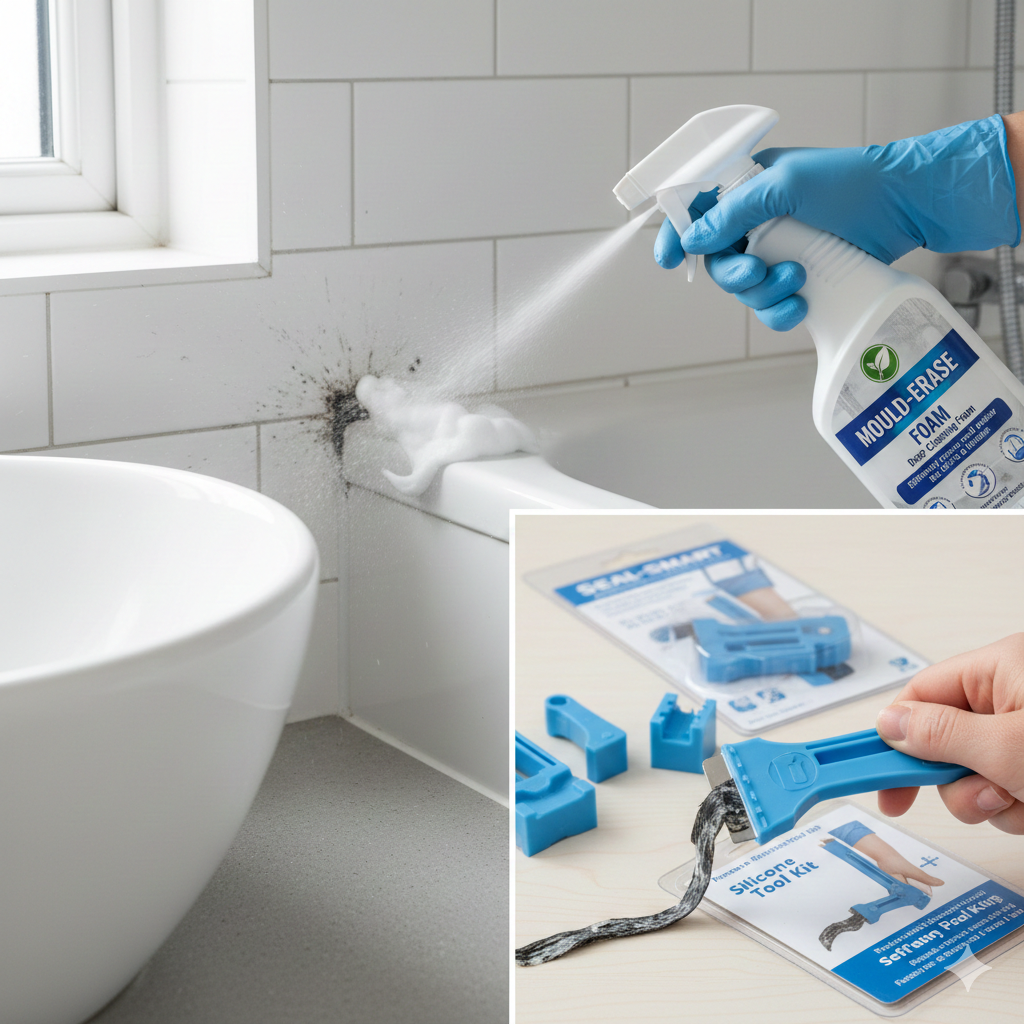
- Application: Spray directly onto mould patches, focusing on grout lines and silicone seals.
- Contact time: Leave the foam to cling for 30 minutes. Its thick texture ensures longer contact than liquid sprays.
- Rinse: Wipe away with a damp cloth or rinse with clean water.
- Repeat if needed: For heavy mould, a second application may be required.
This product is particularly effective for stubborn black mould around silicone joints and grout lines.
2. Cillit Bang Black Mould Remover Spray, 750ml
Pros:
- Trusted household brand.
- Large 750ml bottle for multiple uses.
- Works quickly on visible mould patches.
Cons:
- Spray can run down vertical surfaces.
- May need repeat applications for heavy mould.
How to Use It Best:
- Preparation: Ventilate the bathroom and wear gloves.
- Application: Spray directly onto visible mould patches on tiles, grout, and walls.
- Contact time: Leave for 10–15 minutes.
- Scrub lightly: Use a sponge or brush to loosen mould.
- Rinse thoroughly: Wash away residue with clean water.
Cillit Bang is best for quick fixes when mould appears suddenly and you need fast results.
3. Electric Cleaning Brush with Replaceable Heads
Pros:
- Rechargeable and cordless for convenience.
- Multiple brush heads for different surfaces.
- Reduces effort compared to manual scrubbing.
Cons:
- Needs charging between uses.
- Not ideal for very tight corners.
How to Use It Best:
- Preparation: Charge the brush fully before use. Select the appropriate head (small for grout, larger for tiles).
- Application: Spray mould remover (HG or Cillit Bang) onto the affected area.
- Scrubbing: Switch on the brush and let the rotating head do the work. Move slowly along grout lines and corners.
- Rinse: Wipe away loosened mould with a damp cloth.
- Maintenance: Wash brush heads after use to prevent bacteria build‑up.
This gadget is a game‑changer for grout and textured tiles, combining chemical cleaning with mechanical scrubbing.
4. 5‑in‑1 Silicone Remover and Caulking Tools Kit
Pros:
- Removes mouldy silicone cleanly.
- Helps reapply fresh sealant neatly.
- Affordable and reusable.
Cons:
- Manual effort required.
- Best used alongside sealant replacement.
How to Use It Best:
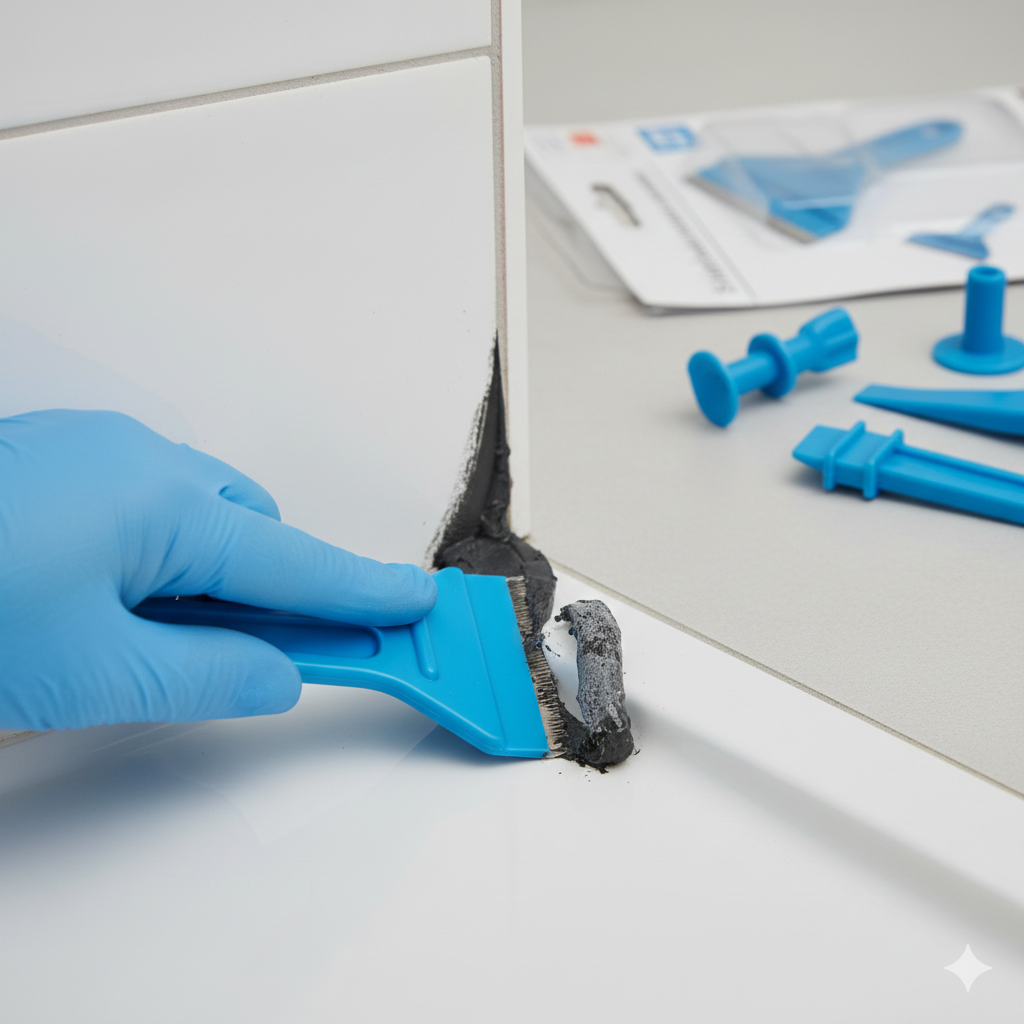
- Preparation: Cut away old silicone using the remover tool.
- Cleaning: Spray mould remover onto the exposed area to kill remaining spores.
- Resealing: Apply new silicone sealant using the smoother tool for a neat finish.
- Drying: Allow sealant to cure fully before exposing to water.
This kit is essential when mould has penetrated silicone seals, as sprays alone won’t fix the problem.
5. Alternative Silicone Remover Kit
Pros:
- Includes multiple tools for different angles.
- Helps achieve professional‑looking results.
- Durable materials for repeated use.
Cons:
- Requires resealing after removal.
- Not a quick fix—more of a long‑term solution.
How to Use It Best:
- Preparation: Use the angled tools to strip silicone from corners and edges.
- Cleaning: Treat the area with mould remover spray to disinfect.
- Resealing: Apply fresh silicone and smooth with the finishing tool.
- Drying: Leave for 24 hours before using the shower or bath.
This alternative kit provides extra flexibility for bathrooms with extensive silicone joints.
Matching Gadgets to Problems
- Surface mould on tiles: HG Foam Spray or Cillit Bang Spray.
- Deep grout cleaning: Electric cleaning brush.
- Silicone sealant mould: 5‑in‑1 remover kit or alternative silicone tool set.
- Persistent black mould: HG Foam Spray for clinging action.
Prevention Tips: How to Stop Bathroom Mould Coming Back
Removing mould is only half the battle—the real challenge is keeping it from returning. Bathrooms in UK homes are naturally prone to condensation and damp, so prevention needs to become part of your routine. Here’s how to make mould control long‑lasting:
🌬 Ventilation
Good airflow is the single most effective way to reduce mould. If you have an extractor fan, make sure it’s powerful enough and run it for at least 15–20 minutes after showers or baths. Clean the fan filters regularly so they don’t clog. If you don’t have a fan, open a window slightly—even in winter—to let steam escape. For bathrooms without windows, consider installing a humidity‑sensing fan that switches on automatically when moisture levels rise.
💧 Dehumidifiers
In bathrooms that trap moisture, a compact dehumidifier can make a huge difference. Place it in the corner or near the shower to capture excess humidity. Modern models are quiet, energy‑efficient, and can collect litres of water in a single day. Empty the tank regularly and wipe it down to prevent bacteria build‑up. This is especially useful in flats or older UK homes where ventilation is limited.
🧽 Daily Wipe‑Downs
A simple habit can prevent mould from ever taking hold: wipe surfaces after use. Keep a squeegee or microfibre cloth in the bathroom and run it over tiles, mirrors, and glass screens after showers. This removes standing water that mould feeds on. For silicone seals, a quick wipe with a dry cloth helps stop moisture from seeping into joints. It only takes a minute but saves hours of scrubbing later.
🔧 Sealant Maintenance
Silicone joints around baths, sinks, and showers are mould’s favourite hiding place. Even the best sprays can’t fix sealant that’s already stained deep inside. Inspect seals every few months—if they look discoloured or cracked, strip them out with a remover tool and apply fresh silicone. Resealing every few years keeps your bathroom watertight and mould‑free. Choose a mould‑resistant silicone for extra protection.
🧴 Quick Spot Cleaning
Mould spreads fast, so don’t wait for it to become a big job. Keep a mould remover spray handy and treat small patches as soon as they appear. Foam sprays are especially good for corners and vertical surfaces. A quick spritz and wipe can stop mould colonies before they grow. Think of it as “bathroom first aid”—fast action prevents bigger problems.
Decision Checklist
Before buying, ask yourself:
- Do you need fast spray action or long‑lasting foam contact?
- Is mould mainly on tiles and grout or silicone seals?
- Do you want manual tools or powered brushes?
- Are you tackling surface mould or deep‑set stains?
🧹 Related Cleaning Guides
If you’re serious about keeping your home spotless, mould removal is only part of the story. Everyday dust and crumbs are best tackled with cordless vacuums, while deep floor cleaning benefits from mop and bucket systems. Check out these guides for the full picture:
- 7 Best Cordless Vacuums for Busy Homes
- Top 5 Mop & Bucket Systems That Actually Make Cleaning Easier
🔄 Product Recap: Must-Have Bathroom Mould Removal Gadgets
- HG Mould Remover Foam Spray, 500ml – Clinging foam for stubborn mould on grout and silicone.
- Cillit Bang Black Mould Remover Spray, 750ml – Fast‑acting spray for visible mould patches.
- Electric Cleaning Brush with Replaceable Heads – Rechargeable scrubber for grout, corners, and textured tiles.
- 5‑in‑1 Silicone Remover and Caulking Tools Kit – Strip mouldy silicone and reseal neatly.
- Alternative Silicone Remover Kit – Extra tools for resealing jobs in larger bathrooms.
The Best Bathroom Mould Removal Gadget
All five gadgets offer strong performance, but the HG Mould Remover Foam Spray stands out as the most versatile and effective choice for UK households. Its clinging foam ensures longer contact time, making it ideal for stubborn mould on grout and silicone seals.
For households dealing with heavy mould or recurring issues, pairing HG Foam Spray with an electric cleaning brush provides the ultimate combination of chemical and mechanical cleaning power. Together, they make mould removal faster, easier, and more thorough.
If you want one product to start with, choose HG Mould Remover Foam Spray
Want more practical advice on affordable cleaning gadgets, smarter routines and ways to cut waste around the home? Visit the full Home Cleaning Hub to explore every current and upcoming guide in this series.
For more background on why mould matters and its impact on health, see the
Official UK Government guidance on damp and mould.
Written by Andy M. — simplifying energy savings and smart home tips for real UK households.