
Last Updated: 23rd March 2026
Tuesday night. Kids back from school, everyone hungry, nobody agreeing on what they want, and I’d completely forgotten to take anything out of the freezer. Again. It was somewhere around that point I started actually paying attention to how the kitchen was working — or wasn’t.
These aren’t hacks I read about and thought looked clever. They’re things I use regularly — a mix of gadgets and zero-cost habits that between them have made weeknight cooking significantly less painful. A few of them I wish someone had told me years ago. If you’re looking for more ways to make your kitchen work harder, the smart kitchen and appliances section of the site covers everything from energy-saving gadgets to appliance running costs in one place.
1. Put a rotating tray in your fridge — seriously, just do it
This sounds too simple to bother mentioning, but it’s the single easiest change you can make to how a kitchen functions day to day. Before I did this, the middle shelf of our fridge was essentially a graveyard — jars of miso, half-used tubes of tomato purée, a chutney from Christmas that never saw daylight again.
A cheap Lazy Susan turntable on the middle shelf means everything rotates into reach in one movement. Nothing gets pushed to the back. Nothing expires unnoticed. You can actually see what you’ve got, which turns out to make a surprising difference to what you bother cooking.
Same principle works in a deep pantry cupboard. If you’ve got a particularly chaotic spice situation, a rotating spice rack solves that separately and costs very little. Costs a few pounds and takes two minutes. If you do nothing else from this list, do this one first.
2. Freeze herbs in olive oil before they go yellow
Fresh herbs are one of the most reliably wasted things in any kitchen. You buy a bunch of parsley for one recipe, use a handful, and watch the rest slowly turn to mulch in the fridge over the following week.
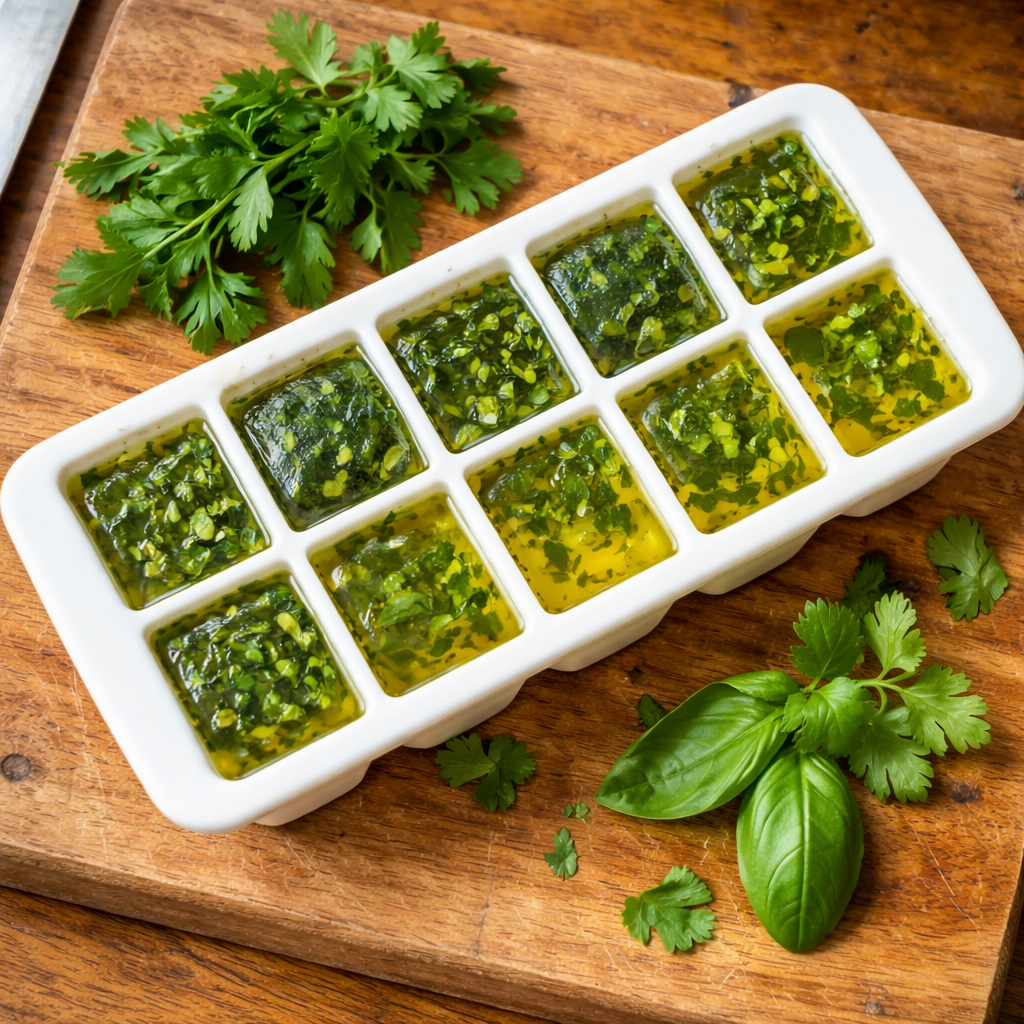
The fix takes five minutes: chop whatever’s left, pack into an ice cube tray, cover with olive oil, and freeze. Each cube becomes a ready-made flavour base — drop one straight into the pan when you’re starting a sauce or frying garlic. Works brilliantly with basil, parsley, coriander, and rosemary. Better than dried, zero waste, and genuinely effortless once it’s a habit.
I started doing this after throwing away the third bunch of coriander in a month. Hasn’t happened since. It’s one of those things that feels slightly annoying to set up the first time and then completely automatic after that. A set of silicone ice cube trays makes the cubes easier to pop out than standard plastic ones — worth the small upgrade.
3. Use your air fryer as the default, not the novelty
Most people buy an air fryer, use it enthusiastically for a fortnight, then nudge it to the back of the worktop. The ones who keep using it — and I’m two years in now — tend to realise it works best when you stop treating it as a gadget and start treating it as your main oven.
Chicken thighs, reheated leftovers, roasted veg, frozen chips that actually come out crispy — the air fryer handles all of it faster than a conventional oven and at a fraction of the running cost. At around 24p per kWh, the gap between running a 1,200W air fryer and a 2,500W oven adds up quickly — I’ve broken down the exact running costs per session if you want the full numbers.
The thing nobody mentions: it doesn’t heat the whole kitchen. In a Scottish winter that’s fine. In July it matters more than you’d think.
If yours is sitting unused, cooking entire meals in one is a good place to start — it changed how I use mine completely. A set of air fryer silicone liners is worth picking up at the same time — they make cleanup significantly faster and protect the basket.
4. Control your kettle before you’ve left the bedroom
I’ll be honest — when I first saw a smart kettle I thought it was a solution to a problem nobody had. Then a friend showed me his setup and I changed my mind fairly quickly.
The temperature control is the part that actually earns its keep. Green tea at 80°C brews completely differently to tea made with a full boil — less bitter, noticeably better. French press coffee, baby formula at the right temperature without standing there waiting for it to cool — these are small things that add up across a morning when you’re already running late and have three people asking you questions simultaneously.
The scheduling is the other bit. Set it to boil at 7am and it’s ready when you get downstairs. No waiting, no reboiling, no standing in the kitchen half asleep willing it to hurry up. If boiling water costs are something you’ve wondered about, the cheapest way to boil water might surprise you — kettles come out well but the margin isn’t always what people expect.
A smart kettle with app control connected through Alexa or Google Home takes about ten minutes to set up and then works quietly in the background. Worth checking compatibility with your existing smart home setup before buying — most work with both Alexa and Google, but it’s worth confirming before you commit.
5. A wireless meat thermometer stops you ruining Sunday roasts
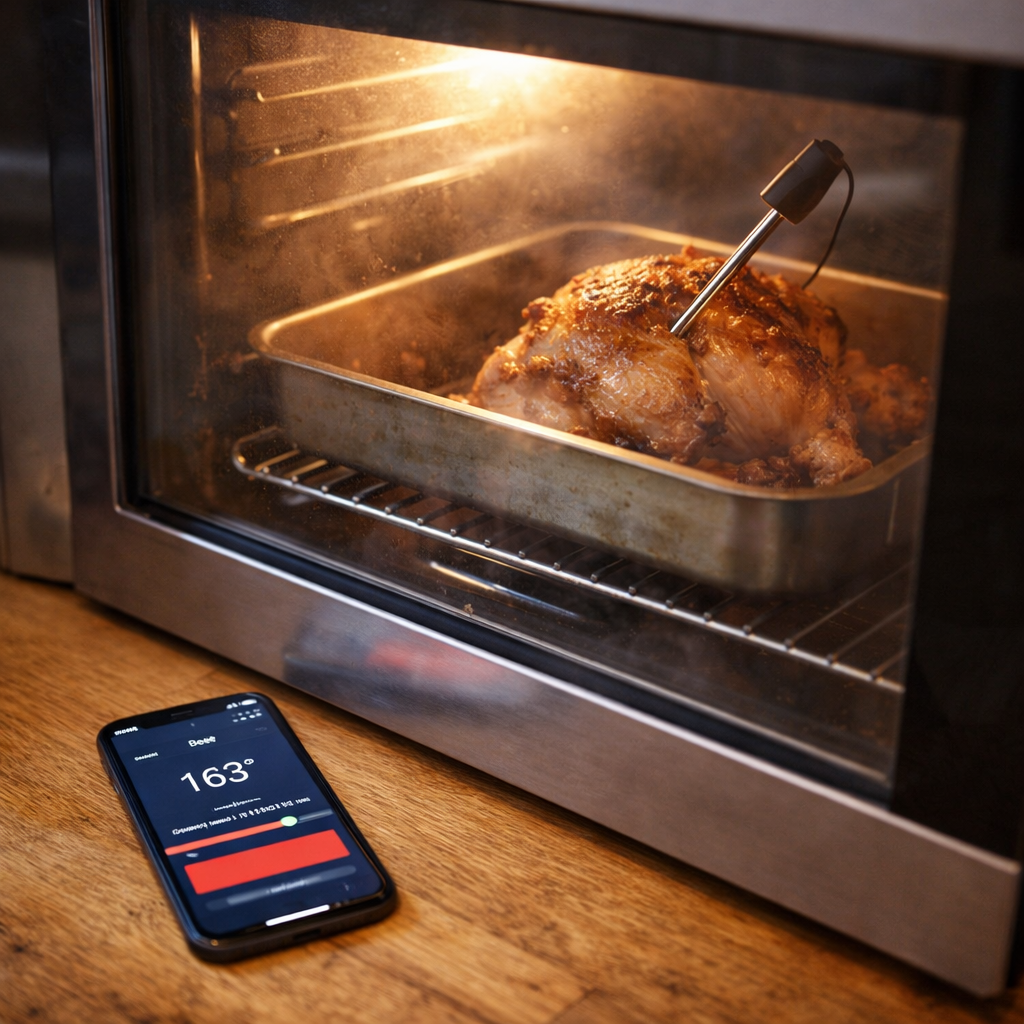
For years I cooked meat the same way most people do — check the packaging, guess, cut into it to see if it looked right, usually overcook it out of anxiety. A wireless meat thermometer removes every part of that process.
You set the target internal temperature, push the probe in, and get an alert on your phone when it’s ready. No hovering. No opening the oven every ten minutes losing heat. No serving chicken that’s dry because you left it in an extra fifteen minutes just to be safe.
The CHEF iQ thermometer handles two probes at once, which is genuinely useful when you’re doing a roast with a separate joint or monitoring two things at different stages. It’s the kind of gadget that pays for itself the first time it saves you from serving an overcooked piece of meat to people you’ve invited round for dinner.
One thing that surprised me: it’s even more useful on the barbecue than in the oven. Charcoal temperatures are unpredictable, and monitoring internal temperature without lifting the lid constantly makes a real difference to the result. A digital oven thermometer is a cheap companion worth having too — most built-in oven dials are less accurate than people realise.
6. Weigh your food and stop guessing what a portion actually is
Most people — and I was absolutely one of them — have no real idea how much pasta or rice they’re cooking until they’ve made the same recipe about thirty times. Eyeballing portions leads to either too much food or that slightly depressing moment when it’s not quite enough and you’re raiding the bread bin at 9pm.
Smart kitchen scales that sync with a nutrition app quietly fix this. Weigh the ingredient, tap it in the app, and the macros log automatically. No spreadsheet, no estimating, no faff. The Arboleaf kitchen scales work well and connect to most health apps without any complicated setup.
The useful side effect — and this took a few weeks to notice — is that after weighing things consistently for a month, you develop a genuinely accurate instinctive feel for portions. You end up needing the scales less over time, which is a strange but satisfying outcome for a piece of kitchen kit.
If food waste is a bigger issue in your kitchen than portion sizes, vacuum sealing ingredients is worth looking at — it’s made a noticeable difference to how long things last in our fridge.
7. Own one sharp knife and actually look after it
Most people have a knife block full of blades they never use and one they reach for everything, which is gradually getting blunter and making every bit of prep slower and more effortful than it needs to be.
The counterintuitive hack here isn’t to buy more knives. It’s to own fewer, better ones and keep them sharp. A decent pull-through knife sharpener takes two minutes and the difference in how quickly you move through an onion, a butternut squash, or a pile of herbs is significant — almost embarrassingly so the first time you do it.
Stop putting knives in the dishwasher. The heat and detergent blunt the edge faster than almost anything else. Hand wash, dry immediately, sharpen regularly. A knife storage block or magnetic knife strip keeps edges protected between uses too — loose knives rattling around in a drawer is one of the fastest ways to blunt them without realising. It sounds obvious and yet almost nobody does it consistently. Your prep speed will improve within a week.
What I’d actually do first
If you want to change how your kitchen works rather than just read about changing it, here’s the honest version: put the Lazy Susan in the fridge today, start freezing your herbs this week, and commit to using the air fryer as your main appliance for the next fortnight. Those three things cost almost nothing combined and the difference in how the kitchen feels — more organised, less wasteful, quicker in the evenings — is noticeable within days.
Once those habits are in place, the wireless thermometer is the upgrade I’d add next. It solves a real and recurring problem every time you roast or grill anything, and once you’ve used one you’ll find it hard to understand why you didn’t do it sooner. The smart kettle and scales are worth having but they’re refinements on a kitchen that already works — get the foundations right first.
The knife sharpener costs a few pounds and you should just order one today. There’s no good reason to have blunt knives.
FAQ
Do I need smart home devices for any of these? Only for the smart kettle, and even that has a physical button as a fallback. The Lazy Susan, herb freezing, knife maintenance, and the air fryer tips require nothing beyond what you’ve likely already got at home. The thermometer and scales are both standalone — no hub, no smart home setup needed.
Are these worth trying in a small UK kitchen? Most of them work better in smaller kitchens. Fridge organisation, reducing the number of tools you’re actually using, and compact gadgets all help when counter space is tight. You don’t need a large kitchen for any of this — if anything, a smaller kitchen benefits more from getting organised.
Is the air fryer genuinely cheaper to run than an oven? Yes, significantly. A typical air fryer uses 1,000–1,500W and cooks faster due to concentrated circulating heat. A full-size oven uses 2,000–2,500W and takes longer to reach temperature. At 24p per kWh, you’re paying roughly half as much per cook — and because an air fryer preheats in under three minutes, there’s no warm-up waste either. Over a week of daily evening cooking the saving is real.
Will smart kitchen scales actually change my eating habits? They’re most useful for building an accurate baseline. Most people are genuinely surprised by what a real portion looks like on a scale. Stick with it for a few weeks and you develop a reliable instinctive feel for quantities — which means you end up needing the scales less, not more.
What’s the single best hack to try first? The Lazy Susan in the fridge. Under a fiver, two minutes to put in place, and you’ll notice the difference the same evening. It won’t change your life but it will change how your fridge works, which is a reasonable start.
Does knife sharpening really make that much difference? More than most people expect. A properly sharp knife is faster, safer, and makes prep feel completely different. If you’ve been using the same knives for a year or more without sharpening, the improvement after one proper sharpen is stark — the kind of difference that makes you annoyed you didn’t do it sooner.
Is a wireless thermometer just for serious cooks? Not at all. It’s actually more useful for people who find meat cookery stressful or unpredictable — which covers most home cooks. If you’ve ever served chicken you weren’t quite sure about, or overcooked a roast out of caution, a thermometer removes that entirely. You don’t need to know anything about cooking temperatures — the app tells you everything.
Related Guides

About The Author – Andrew Marshall
Andrew Marshall is a Scottish homeowner and the creator of Save Wise Living. He shares practical ways to reduce energy bills, improve home efficiency, and make everyday household routines cheaper and simpler.