
Keeping aquariums and reptile tanks running smoothly can feel like a full-time job. Lights, heaters, foggers, pumps — everything needs to switch on and off at the right time, stay at the right temperature, and run safely for hours every day.
That’s why so many pet owners are turning to smart plugs.
And honestly? When used properly, they make life so much easier.
But there’s also a lot of confusion online…
Can you use a smart plug with a heat mat?
What about a ceramic heater?
Are they safe with aquarium pumps?
Can they run 24/7 without overheating?
This guide clears all that up in a simple, UK-focused way — no scaremongering, no overcomplication. Just real advice that keeps your pets safe and your setup easy to manage.
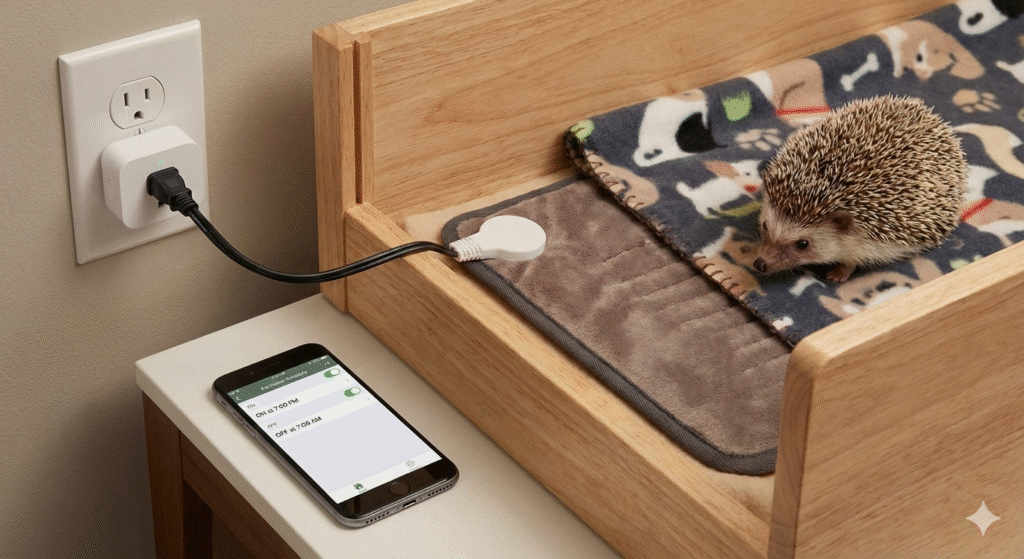
🐠 Why Smart Plugs Are Actually Useful for Pet Tanks
Smart plugs aren’t just “lazy gadgets.” When used right, they solve real problems:
- You don’t need to remember lighting schedules
- Heaters can follow consistent night-time routines
- Foggers and misters can run automatically
- Pumps can turn off temporarily during feeding
- You can check everything from your phone when you’re away
A moment of honesty
If you’ve ever rushed home because you suddenly couldn’t remember if you left the basking bulb on… you’re not alone. Smart plugs genuinely remove that stress.
⚠️ Let’s Tackle the Big Safety Question First
This is where most people worry, so let’s be clear:
Smart plugs are safe for constant-use devices — as long as you choose the right plug and use it sensibly.
Here’s what they should NOT control:
- High-watt basking bulbs (150W+)
- High-power aquarium heaters (300W+)
- Metal-halide or large halogen lamps
- Anything that constantly cycles on/off rapidly
These devices create heat surges that can damage smart plugs over time.
But plenty of pet-keeping equipment is perfectly suitable, such as:
- LED aquarium lights
- UVB tubes
- Heat mats
- Foggers & misters
- Air pumps
- Protein skimmers
- Ceramic heaters up to ~100W (with thermostat)
If in doubt: low wattage = safer.
🧑🔧 What Smart Plugs Do (and Don’t Do)
Smart plugs are brilliant timers, schedulers and remote switches.
But they are not thermostats.
They don’t regulate temperature — they only control time.
So if you’re using any heating element, your setup should include:
✔ A thermostat (Inkbird, Microclimate, Habistat etc.)
✔ A reliable thermometer
✔ A hygrometer for reptiles
Think of the smart plug as the manager that sets the routine — and the thermostat as the safety officer that makes sure nothing goes wrong.
Author Insight
I don’t keep reptiles or aquariums myself, so before writing this I spoke in-depth with my uncle, who runs a small family pet shop and handles everything from tropical fish to beardies, geckos and exotic amphibians every single day.
His take was simple: smart plugs aren’t a replacement for thermostats, but they massively reduce the number of mistakes people make — forgotten lights, heaters left on too long, foggers running all night.
That consistency is what keeps animals safe. Seeing how he uses automation in his shop genuinely shaped how I wrote this guide.
🔥 How to Use Smart Plugs Safely (Simple UK Guidelines)
1️⃣ Check the wattage of your device
Most UK smart plugs support up to 2300W, but you should still avoid pushing them anywhere near the limit — especially with heaters.
2️⃣ Keep plugs ventilated
Never wedge them behind tanks, under heat mats or against foam backgrounds.
3️⃣ Don’t use “micro-on/off schedules”
Heaters that switch on/off every few minutes will shorten the life of the plug and the heater.
4️⃣ Test your setup for a few days
Run your schedule and watch how temperatures behave before you rely on it fully.
⭐ Best Smart Plugs for Aquariums & Reptile Tanks (UK Picks)
These models have been widely tested with continuous-use devices and offer the safest combination of build quality, app stability and overload protection.
1. TP-Link Tapo P110 (Energy Monitoring)
👉 The most trusted smart plug for pet owners — accurate, stable, and perfect for long-running aquarium and reptile setups.
Why it stands out:
- Very reliable for 24/7 use
- Tracks how much electricity your lights/heaters use
- Excellent app & scheduling
- Good overload protection
- Works with Alexa/Google
Why it’s ideal for aquariums & reptile enclosures:
The Tapo P110 is a favourite among reptile keepers, fishkeepers and anyone running equipment 24/7. Its energy monitoring is accurate enough to show exactly how hard your heater or pump is working — which is incredibly useful when you’re managing temperature or humidity-sensitive animals.
Because it maintains such a stable connection, it’s ideal for devices that must switch on and off at precise times, such as UVB lighting, foggers, heat mats (with a thermostat) and aquarium LEDs. It’s the closest thing to a “default choice” for safe, predictable automation.
2. Woox Smart Plug with Energy Monitoring (Heavy-Duty, Great Value 4-Pack)
👉 A brilliant multi-pack option for pet owners who run several devices at once — reliable, powerful and packed with features.
Strengths:
- 13A / 3120W rating — strong enough for continuous-use devices
- Built-in energy monitoring for tracking heaters, lights and pumps
- Very stable WiFi connection with fast app control
- Works perfectly with Alexa & Google Assistant
- Ideal for setups with multiple tanks or enclosures
- Excellent price-per-plug for a 4-pack
Why it works so well for aquariums & reptile tanks:
This is one of the few affordable smart plugs that still offers proper energy monitoring and a full 13A rating, which makes a big difference when you’re running equipment for hours every day.
Because it comes in a 4-pack, you can automate lighting, a fogger, a heat mat and a pump without buying separate plugs one at a time. It’s a smart choice if you’re building a safe, fully automated pet setup while keeping costs down.
3. Meross MSS210 (Budget but Reliable)
👉 Affordable and works extremely well for simple setups
Why people love it:
- Cheap but sturdy
- Scheduling is solid
- Great for lights, pumps and foggers
- No energy tracking but fine for most pet keepers
Why it works well for basic pet setups:
The Meross MSS210 doesn’t try to be fancy — and that’s exactly why so many pet owners like it. You get a plug that simply works every day, turns your devices on and off when you tell it to, and doesn’t randomly disconnect or glitch.
While it doesn’t offer energy monitoring, it’s an excellent choice for lighting cycles, air pumps, humidifiers and foggers where you want reliability without spending extra. A great “set it and forget it” option for anyone building a safe, automated reptile or aquarium routine on a budget.
🐢 Best Uses in Reptile Enclosures
✔ Lighting cycles
Automatically run UVB and plant-supporting LEDs.
✔ Heat mats (with thermostat)
Create daytime/night-time temperature differences safely.
✔ Foggers and misters
Avoid over-humidifying by running short scheduled bursts.
✔ Small ceramic heaters
Use a thermostat + smart plug for dependable winter routines.
🐟 Best Uses in Aquariums
✔ LED aquarium lighting
Simulate natural sunrise/sunset without ever touching a switch.
✔ Air pumps & skimmers
Turn off briefly during feeding to stop food being blasted around.
✔ Cooling fans
Automatically trigger during hot weather.
✔ Temporary filter shutdowns
Useful for maintenance without unplugging multiple cables.
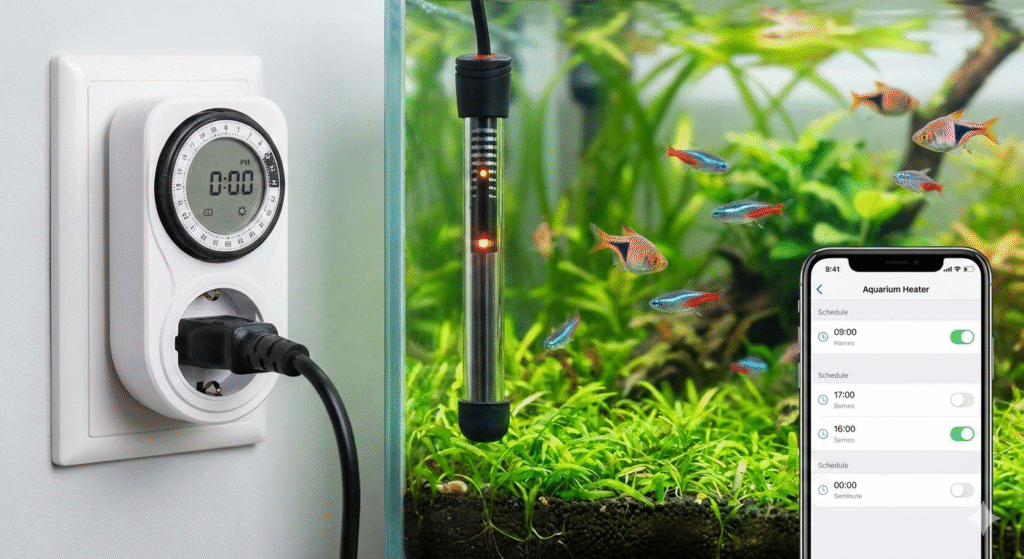
💷 Energy-Saving Automations That Actually Reduce Bills
Smart plugs don’t just add convenience — they stop devices running longer than needed.
Try these simple, safe savings:
🌙 Night-time temperature drops
Lower reptile heat mats by a couple of degrees (with a thermostat).
Small change, noticeable savings.
🌤 Seasonal lighting adjustments
Most reptiles don’t need long summer-style lighting in winter.
⚡ Track heater usage
You’ll quickly see which devices are costing the most, helping you optimise them.
🔌 Smarter Setups, Safer Pets — Here’s What to Read Next
If you want to go deeper into device safety and energy-saving routines after setting up your smart plugs, these guides are the perfect next step:
- Smart Plug Troubleshooting (Connection, Load Errors, Offline Issues — Fixed Fast)
- UK Energy Myths Debunked — Hidden Truths Everyone Needs to Know
Both expand on the parts of this guide that matter most: staying safe, avoiding overload, and understanding how your home devices really behave behind the scenes.
🔍 Better Safe Than Sorry
For official electrical safety guidance on watt limits and heater use, see the UK organisation Electrical Safety First, which outlines safe socket loads and proper usage of plug-in heating devices.
📝 Final Thoughts
Smart plugs won’t magically transform your setup overnight, but they will give you something most pet owners don’t realise they’re missing — control.
Control over when lights come on, how long heaters run, how often foggers mist, and what happens when something unexpectedly cuts out.
In UK homes where temperatures swing wildly, winter bills rise fast, and people are out the house most of the day, having that extra layer of automation genuinely matters. Smart plugs help you build a predictable, stable environment for your pets without adding more stress to your day.
Used properly — with thermostats, sensible wattage and simple schedules — they make reptile and aquarium care less reactive, less worrying, and a whole lot more organised.
And once you’ve lived with that consistency, it’s very hard to go back to flicking things on and off manually.
🧾 Product Recap
- Tapo P110 – Best for most pet owners, brilliant energy tracking
- Woox Smart Plug – Best for continuous loads & multi-device setups
- Meross MSS210 – Great value for lights/pumps/foggers
Learn how to monitor and control electricity use in every room with the Smart Energy Monitors & Plugs Hub from smart plugs to power meters and automation tips that lower your bills.

About The Author – Andrew Marshall
Andrew Marshall is a Scottish homeowner and the creator of Save Wise Living. He shares practical ways to reduce energy bills, improve home efficiency, and make everyday household routines cheaper and simpler.