
Smart home technology has transformed how UK households manage energy—but not every gadget delivers on its promise. As demand for energy-saving devices grows, so does the number of misleading products flooding the market. From fake smart plugs to bogus “power saver” boxes, many of these gadgets claim to slash your electricity bills but end up doing nothing at all.
This guide helps you identify fake energy-saving gadgets, understand the red flags, and choose smart tech that actually works. Whether you’re a homeowner or renter, knowing how to spot scams can protect your wallet and improve your home’s energy efficiency.
Why Fake Energy-Saving Gadgets Are Everywhere
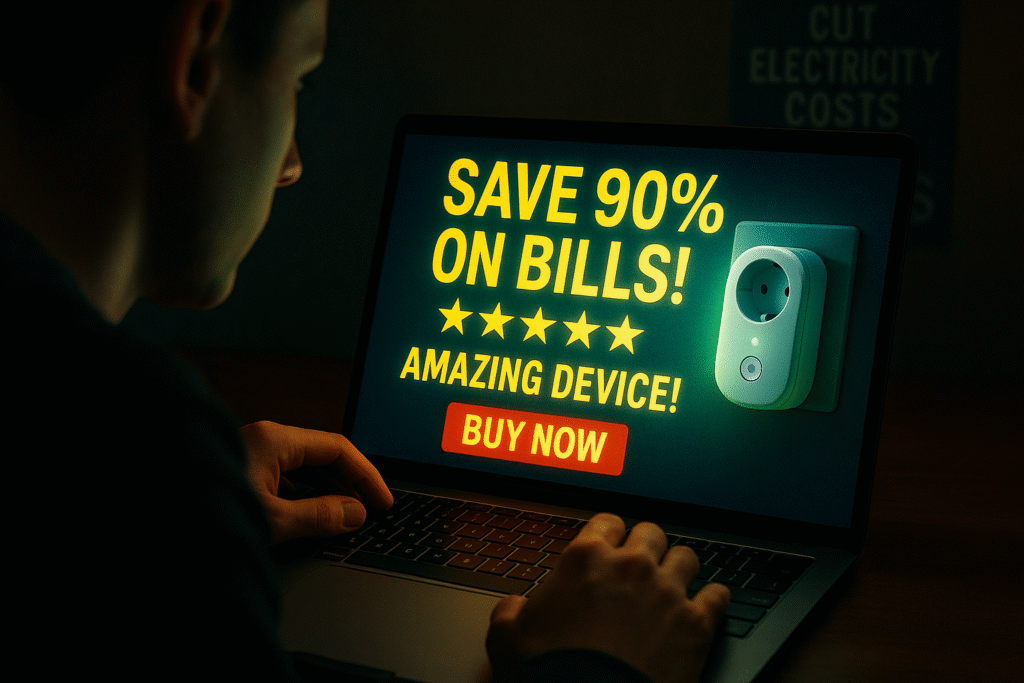
With rising energy costs and growing interest in sustainability, consumers are actively searching for smart energy-saving solutions. Unfortunately, this demand has created a market for deceptive products that use vague language, fake reviews, and unrealistic claims to lure buyers.
These gadgets often appear on popular marketplaces and social media ads. They’re usually cheap, poorly reviewed, and backed by pseudoscientific jargon. The result? Wasted money and missed opportunities to invest in genuine energy-saving technology.
Focus Keyword: Fake Energy Saving Gadgets
Evergreen Keywords Used: smart home scams, energy saving tech myths, smart plug UK, power saver plug scam, smart gadget reviews, CE certified devices, UK smart home compatibility
Red Flags: How to Spot a Fake Smart Gadget
🚩 1. Overpromised Savings
Be wary of products that claim to “cut your electricity bill by 50% instantly” or “save hundreds per year with no effort.” Real energy savings come from measurable changes in usage—not miracle claims.
🚩 2. Pseudoscientific Language
Terms like “quantum energy stabilizer,” “ionic flow reducer,” or “electromagnetic harmonizer” sound technical but often have no scientific basis. If the product description feels like marketing fluff, it probably is.
🚩 3. No CE or UKCA Certification
Legitimate electrical products sold in the UK must carry CE or UKCA certification. If the listing doesn’t mention this—or shows a fake label—it’s a major red flag.
🚩 4. Generic Product Pages
Poor grammar, low-quality images, and vague descriptions are signs of a low-effort listing. If the product page doesn’t clearly explain what the device does and how it works, steer clear.
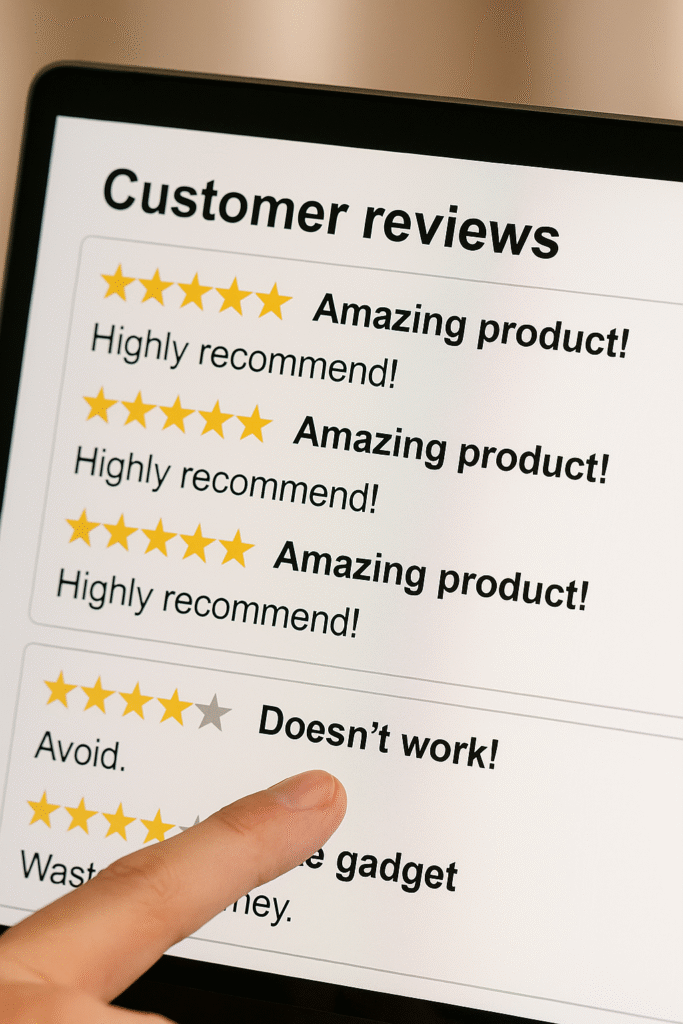
🚩 5. Fake or Inflated Reviews
Some sellers use fake reviews to boost credibility. Look for patterns like identical wording, overly generic praise, or a sudden spike in 5-star ratings.
🚩 6. No Mention of UK Compatibility
If a product doesn’t specify whether it works with UK sockets, voltage, or smart home platforms like Alexa or Google Assistant, it may not be suitable—or safe—for your home.
Common Gadget Types That Get Faked
❌ “Power Saver” Plug-Ins
These are often small boxes that plug into the wall and claim to reduce your electricity bill by stabilizing voltage or reducing “reactive power.” In reality, most of them do nothing. Some don’t even contain functional circuitry.
❌ Fake Smart Plugs
Some low-cost smart plugs claim to offer energy monitoring or scheduling but don’t actually connect to apps or provide any real data. Others may be incompatible with UK standards.
❌ LED Bulbs with No Smart Features
A bulb that claims to be “smart” should offer dimming, scheduling, or app control. If it’s just a basic LED with no connectivity, it’s not a smart bulb.
❌ “Smart Thermostats” That Aren’t Smart
Some products are marketed as smart thermostats but don’t connect to your heating system or offer any automation. They’re just digital displays with no real control.
How to Verify a Gadget’s Claims
Before buying any energy-saving gadget, take a few minutes to verify its legitimacy:
✅ Check for Certification
Look for CE or UKCA markings and confirm they’re mentioned in the product listing. These certifications ensure the product meets safety standards for UK use.
✅ Read Real Reviews
Look for reviews with photos, detailed feedback, and verified purchases. Avoid listings where all reviews are vague or overly positive.
✅ Confirm Compatibility
Make sure the product is designed for UK sockets (BS1363 3-pin), supports 220–240V, and works with your smart home platform if applicable.
✅ Look for Brand Transparency
Reputable brands provide clear documentation, support pages, and contact information. If you can’t find a website or support channel, that’s a warning sign.
✅ Compare with Trusted Alternatives
If a product seems too good to be true, compare it with a similar item from a known brand. Often, the difference in quality and features is obvious.
Trusted Smart Gadgets That Actually Save Energy
Here are two smart gadgets that offer real energy-saving benefits, backed by verified reviews and UK compatibility.
🔌 ANTELA Smart Plug with Energy Monitoring – 13A UK Plug
Best for real-time energy tracking and automation
- 13A UK plug with energy monitoring and scheduling
- Works with Alexa and Google Assistant
- App control for timers, routines, and usage insights
- Compact and renter-friendly—no hub required
- CE certified and compatible with UK sockets
This smart plug helps you track energy use in real time and automate devices to reduce waste. It’s ideal for cutting standby power from heaters, lamps, and kitchen appliances. Unlike fake “power saver” plugs, this one gives you real data and control.
💡 Philips Hue Smart Bulb – White Ambience
Best for lighting control and energy reduction
- Dimmable LED bulb with app and voice control
- Set schedules to reduce energy use
- No hub required for basic functions
- Works with Alexa and Google Assistant
- Fits standard UK light fittings
Philips Hue is a trusted name in smart lighting. This bulb helps you avoid leaving lights on unnecessarily and lets you adjust brightness to suit your needs—all without rewiring or replacing fixtures.
Smarter Alternatives That Actually Save Energy
Once you know how to spot fake energy-saving gadgets, the next step is finding smart tech that truly works—especially if you’re renting and can’t install permanent fixtures. If you’re curious about plug-in solutions that reduce bills without DIY, check out our guide to Top Tech Gadgets for Renters Who Want to Save Energy Without DIY or Drilling. And if you’re ready to automate your insulation without touching the thermostat, explore Smart Curtain Openers That Help Insulate Your Home Automatically—a renter-friendly way to trap warmth and cut heating costs with zero hassle.
Smart Gadget FAQs
❓ Are fake energy-saving gadgets dangerous?
Some may be unsafe if they lack proper certification. Always check for CE or UKCA markings.
❓ Can I report misleading products?
Yes. Most marketplaces allow you to report suspicious listings. You can also leave honest reviews to warn others.
❓ Do smart plugs really save energy?
Yes—when used correctly. Smart plugs help reduce standby power and automate usage, especially for high-consumption devices.
❓ What’s the safest way to buy smart gadgets?
Stick to known brands, verify certifications, and read detailed reviews. Avoid impulse buys from ads or unknown sellers.
Final Thoughts – Don’t Fall for Fake Energy-Saving Gadgets
The promise of lower energy bills is tempting—but not every gadget that claims to save energy actually does. Fake energy-saving gadgets are everywhere, often disguised with slick marketing, inflated reviews, and pseudoscientific jargon. They don’t just waste your money—they distract you from real solutions that could make a measurable difference.
The key is to stay informed. Look for CE or UKCA certification, verify compatibility with UK sockets and smart platforms, and choose products with transparent features and real user feedback. Smart tech can absolutely help reduce your energy use—but only if it’s built to do the job.
If you want a reliable starting point, the ANTELA Smart Plug with Energy Monitoring is a smart, renter-friendly choice. It offers real-time usage data, automation features, and full UK compatibility—everything a fake “power saver” plug pretends to be, but isn’t. Start with what works, and build your smart home the right way.
Explore more energy-efficient devices and budget-friendly upgrades in our Everyday Tech Savings Hub UK from smart gadgets to larger home tech that cuts costs without compromise.