
Discover how phantom energy costs UK households hundreds each year — and the simple fixes that stop it.
Why Standby Power Matters More Than Ever
UK households are facing stubbornly high energy bills. Even with the Ofgem price cap adjustments, the average home is still paying over £1,700 per year for electricity and gas. What many don’t realise is that a chunk of this bill comes from devices that aren’t even being used. Standby power — also known as phantom load or vampire energy — is the hidden drain that quietly eats away at your wallet.
Research shows standby power can account for 8–10% of your electricity bill, which means £140–£175 annually for a typical household. That’s money spent on nothing more than keeping lights glowing, clocks ticking, and devices idling.

What Is Standby Power?
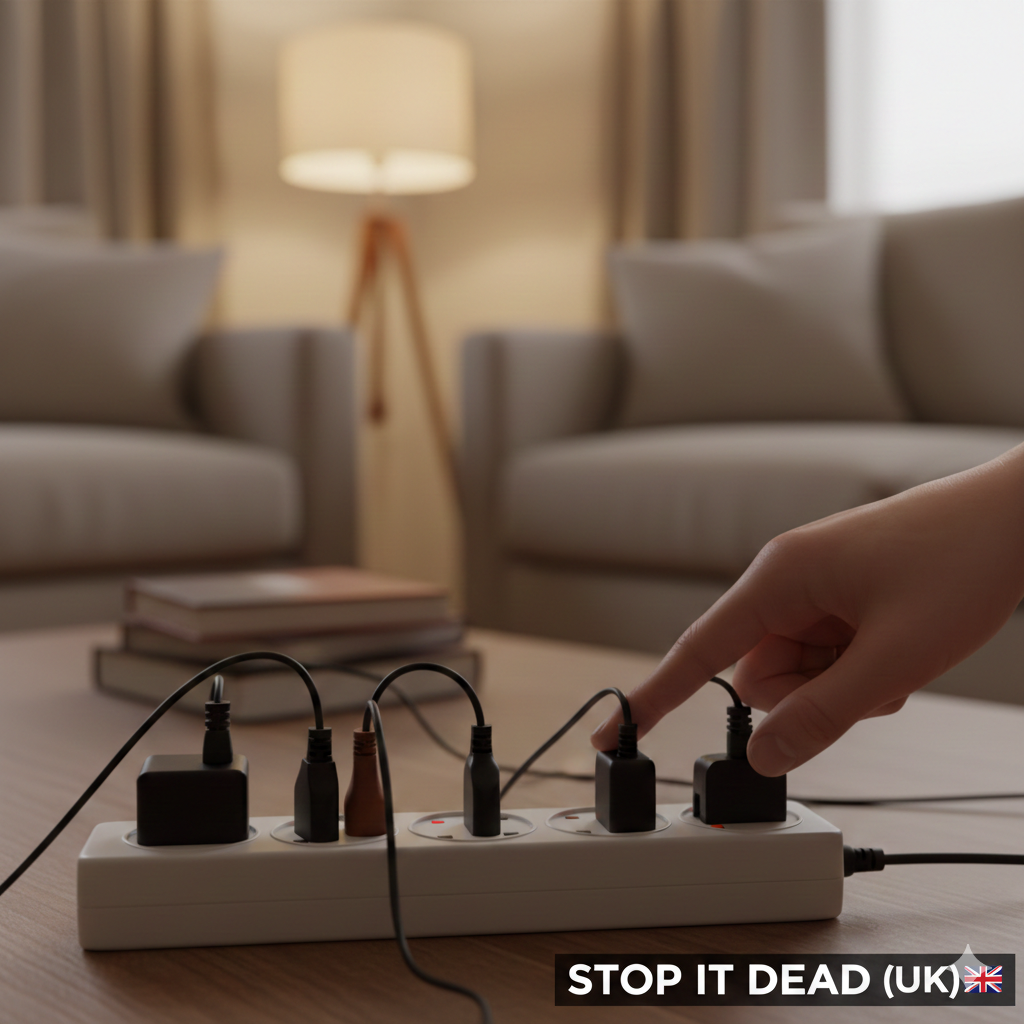
Standby power is the electricity consumed by appliances when they’re plugged in but not actively operating. It’s the red light on your TV, the hum of your Wi-Fi router, or the charger left in the socket. These devices are “off” in appearance but still drawing current.
Common standby culprits in UK homes:
- Televisions and set-top boxes
- Broadband routers and mesh systems
- Heated airers and towel rails
- Microwaves and ovens with digital clocks
- Smart speakers and voice assistants
- Chargers for phones, laptops, and toothbrushes
- Printers, monitors, and gaming consoles
Some devices sip just 0.5W, but others can pull 5–10W or more. Multiply that across dozens of gadgets and hundreds of hours, and the cost becomes significant.
The UK Context: Why It Hurts More Now
Electricity prices in the UK have risen faster than gas, making every wasted watt more expensive. Add in daily standing charges that keep climbing, and households are paying more than ever just to stay connected. Cutting standby power is one of the few immediate, practical ways to reduce bills without lifestyle changes.
How Much Are You Losing?
Here’s a breakdown of typical standby costs:
| Device | Standby Power (W) | Annual Cost (approx.) |
|---|---|---|
| TV + set-top box | 10W | £25–£30 |
| Broadband router | 8W | £20–£25 |
| Heated airer (idle) | 5W | £12–£15 |
| Microwave clock | 3W | £7–£10 |
| Smart speaker | 3W | £7–£10 |
| Phone charger (plugged in) | 1W | £2–£3 |
Total: £75–£100 per year — and that’s just the obvious devices. Add gaming consoles, monitors, and kitchen gadgets, and you could easily hit £150+.
How to Stop Standby Power Dead
1. Smart Plugs with Energy Monitoring
Smart plugs let you cut power remotely, schedule shut-offs, and track usage. Perfect for TVs, routers, heated airers, and lamps.
2. Switch Off at the Wall
UK sockets have switches — use them. For multi-device setups, extension leads with individual switches make it easy.
3. Unplug Chargers
Chargers left in the wall still draw power. Unplug them when not in use, especially high-wattage laptop bricks.
4. Timer-Controlled Extension Leads
These automatically cut power after a set time. Ideal for heated airers, printers, or gaming consoles.
5. Energy Monitors
Smart energy monitors show real-time usage, helping you spot phantom loads. Some models even identify individual devices.
Bonus: Spotting Hidden Drains
- Look for lights or displays — if it glows, it’s drawing power.
- Feel for warmth — warm plugs or devices may be consuming energy.
- Listen for hums or clicks — routers, speakers, and AV gear often stay active.
- Use a plug-in power meter — affordable devices (£10–£20) reveal exact usage.
Heated Airers: A Special Case
Heated airers are a lifesaver in damp UK winters, but many models continue to draw power even when “off.” Some cycle on and off via thermostats, adding hidden costs. Always unplug when not in use, or pair with a smart plug to ensure complete shut-off.
The Payoff: Real Savings, Real Control
Cutting standby power won’t halve your bill, but it can save £100–£150 per year with minimal effort. That’s equivalent to:
- A month’s broadband
- A week’s groceries
- Several smart plugs for every room
Unlike insulation or solar panels, this fix is instant, affordable, and reversible.
Recommended Product: TP-Link Tapo P110 Smart Plug with Energy Monitoring
For a plug-and-play solution, the TP-Link Tapo P110 is one of the best options available in the UK:
- App-controlled with scheduling and remote access
- Energy monitoring shows real-time usage
- Compact design fits UK sockets neatly
- Works with Alexa and Google Assistant
- Typically priced around £12–£15
Use it for heated airers, routers, TVs, or anything you forget to switch off. It’s one of the easiest ways to take back control and see exactly what’s costing you.
⚡ Smarter Energy Tools
If you’re serious about cutting phantom energy costs, it helps to go beyond just switching things off. Pairing smart plugs with energy dashboards and apps gives you a clear picture of where your electricity is going, while budget power meters under £20 let you test devices individually and spot hidden drains.
Check out these guides next:
- The Best Smart Home Energy Dashboards & Apps (UK Round-Up)
- Best Budget Power Meters Under £20 (UK Review & Accuracy Test)
Together, these tools make it easier to track, measure, and eliminate standby power — giving you confidence that your savings are real.
🏁 Take Control, Save More
Standby power is one of those invisible costs that feels small in the moment but snowballs over time. The good news is that it’s entirely within your control. By recognising which devices are quietly draining electricity, and by using simple solutions like smart plugs, timer-controlled leads, and energy monitors, you can reclaim £100–£150 per year without changing your lifestyle.
Think of it this way: every watt you stop wasting is money back in your pocket. That’s not just about bills — it’s about peace of mind, knowing you’re running a smarter, leaner household. And with energy prices in the UK still stubbornly high, these savings matter more than ever.
The easiest first step is to invest in a reliable smart plug with energy monitoring. The TP-Link Tapo P110 Smart Plug is a standout choice: affordable, compact, and packed with features like scheduling and real-time usage tracking. It’s the kind of tool that pays for itself within months, and once you see the numbers, you’ll wonder why you didn’t start sooner.
Cutting standby power isn’t just about saving money — it’s about taking back control. With the right mix of awareness and smart tech, you can stop phantom energy dead, reduce waste, and make your home more efficient. Start small, act today, and watch the savings add up.
Learn how to monitor and control electricity use in every room with the Smart Energy Monitors & Plugs Hub from smart plugs to power meters and automation tips that lower your bills.

About The Author – Andrew Marshall
Andrew Marshall is a Scottish homeowner and the creator of Save Wise Living. He shares practical ways to reduce energy bills, improve home efficiency, and make everyday household routines cheaper and simpler.