
Drying clothes indoors is a reality for many UK households — especially during autumn and winter when rain, frost, and short daylight hours make outdoor drying difficult.
But indoor drying often causes a frustrating problem: condensation on windows, walls, and ceilings.
That misty build-up on your windows and walls isn’t just annoying—it’s a sign that excess moisture is trapped in your home, which can lead to mould, damp smells, and even damage to your property.
In this guide, we’ll explain why condensation happens when drying laundry indoors, and walk you through practical, proven ways to stop it—from quick fixes to smart product pairings that make a real difference.
This article is part of our Laundry & Drying Efficiency hub, focused on practical UK advice for drying clothes indoors faster, avoiding damp, and keeping energy use low.
In This Guide
⚡ Quick Fix: Stop Condensation When Drying Clothes Indoors
If you want the fastest way to prevent condensation while drying laundry indoors, focus on these three steps:
1️⃣ Run a dehumidifier while clothes are drying
This removes moisture from the air before it settles on windows and walls.
2️⃣ Keep the drying in one room and close the door
Containing the moisture makes it easier to manage humidity levels.
3️⃣ Use a high spin speed before drying
Clothes that leave the washing machine with less water release far less moisture into the air.
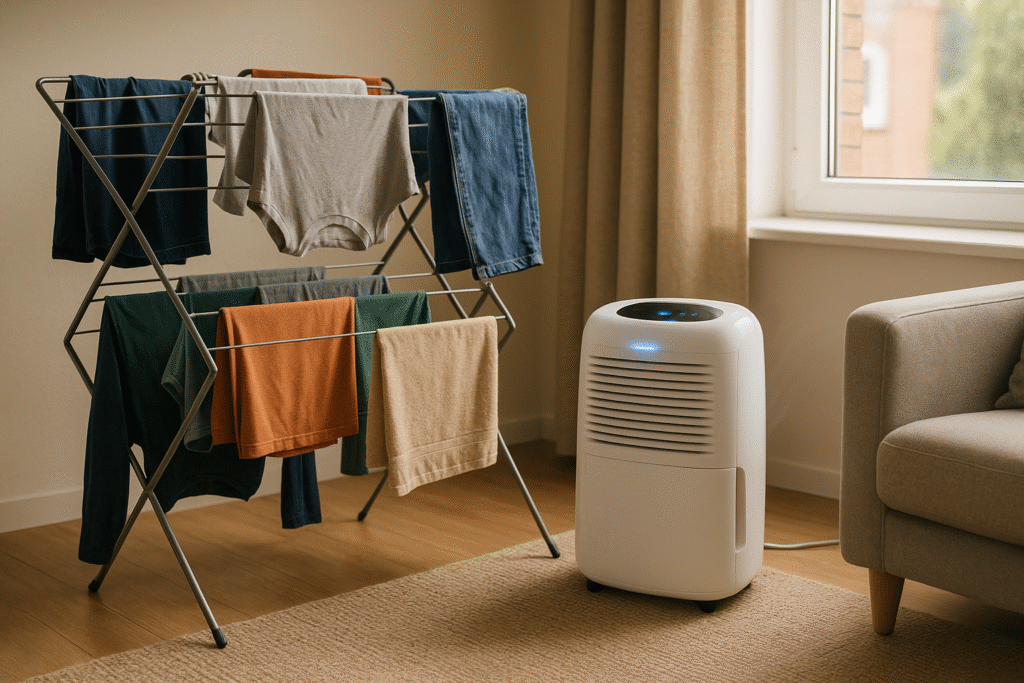
For most UK homes, the best setup is a heated airer paired with a dehumidifier in the same room, which speeds up drying while preventing condensation and mould.
🧠 Why Does Condensation Happen When Drying Clothes Indoors?
When you hang wet clothes inside, the water in the fabric evaporates into the air. That moisture doesn’t just disappear—it lingers in the room. If the air becomes too humid and there’s nowhere for the moisture to escape, it settles on the coldest surfaces nearby: windows, walls, ceilings, and even furniture.
Condensation from indoor drying is most common in poorly ventilated UK homes during colder months, when windows stay closed and heating warms the air inside. Warm, humid air then hits cold surfaces like windows or external walls, where the moisture condenses into water droplets.
Over time, this trapped moisture can lead to:
- Black mould on walls, ceilings, and window frames
- Peeling paint or wallpaper
- Musty smells in fabrics, carpets, and furniture
- Respiratory issues, especially for children or those with asthma
The good news? You don’t need to stop drying clothes indoors—you just need to manage the moisture better.
💧 How Much Moisture Does a Laundry Load Release Indoors?
A typical washing machine load can release between 1.5 and 2.5 litres of water into the air while drying indoors.
This depends on:
- the spin speed used in the washing machine
- the type of clothing (towels hold far more water)
- how full the washing machine was
For example:
| Laundry Item | Approx Water Released |
|---|---|
| Small clothing load | 1–1.5 litres |
| Mixed laundry load | 1.5–2 litres |
| Towels or bedding | 2–3 litres |
If this moisture has nowhere to go, humidity quickly rises above 70–80%, which is when condensation begins forming on windows and walls.
Many people are surprised by just how much moisture clothes release when drying indoors, especially when drying larger items like towels, bedding, or multiple loads in the same room.
This is why homes that regularly dry laundry indoors often struggle with damp patches, mould growth, and musty smells.
✅ How to Stop Condensation When Drying Clothes Indoors
Here are the most effective ways to reduce or eliminate condensation—ranked by ease, cost, and long-term impact.
1. 🌬️ Open a Window for Ventilation
Why it works: Opening a window—even slightly—creates a path for humid air to escape. This reduces the moisture load in the room and prevents it from settling on cold surfaces like windows and walls. Cross-ventilation works best, especially if you can open windows on opposite sides. Even short bursts of airflow after drying can make a noticeable difference. It’s a free, effective way to manage indoor humidity without any equipment.
How to do it effectively:
- Open windows on opposite sides of the room to create cross-ventilation
- Ventilate for 15–30 minutes during and after drying
- If it’s cold, open the window just after drying finishes to release trapped moisture
- Use trickle vents if your windows have them—they allow airflow without fully opening the window
Good airflow helps remove moisture without letting humidity build up around windows and walls, which is why understanding laundry ventilation without heat loss can make a noticeable difference during colder months.
Best for: Mild days, low-humidity loads, or homes without a dehumidifier
2. 💨 Use a Dehumidifier While Drying
Why it works: A dehumidifier actively removes moisture from the air, preventing it from turning into condensation. It’s especially useful in winter when windows stay shut and natural ventilation is limited. By lowering humidity levels, it speeds up drying and protects your home from mould and damp. Modern models are quiet, energy-efficient, and ideal for laundry rooms or bedrooms. It’s the most reliable long-term solution for frequent indoor drying.
Benefits:
- Speeds up drying time
- Prevents condensation and mould
- Reduces musty smells and dampness
- Helps maintain a healthier indoor environment
How to use it:
- Place it in the same room as your drying rack
- Close the door to contain the moisture
- Run it during and for 30–60 minutes after drying
Many households experiment with different timings to improve results, particularly when figuring out how long to run a dehumidifier when drying clothes indoors so moisture is removed efficiently without wasting electricity.
Recommended Product:
Best for: Winter drying, frequent laundry loads, homes with persistent damp or mould
🌡️ Ideal Humidity Levels When Drying Clothes Indoors
Indoor humidity levels have a big impact on whether condensation forms.
For most UK homes:
- 40–60% humidity → ideal indoor range
- 60–70% humidity → condensation risk begins
- 70%+ humidity → high risk of damp and mould
When drying clothes indoors, humidity often rises quickly — especially in winter when windows stay closed.
A dehumidifier helps keep humidity closer to the 50–60% range, preventing condensation while still allowing clothes to dry efficiently.
Many modern dehumidifiers display the current humidity level, making it easier to monitor moisture in the room.
3. 🔥 Dry Clothes in a Warmer Room
Why it works: Warm air holds more moisture than cold air, which means it can absorb water from clothes without immediately turning into condensation. Drying laundry in a heated room gives moisture time to disperse or be captured by a dehumidifier. Avoid cold, unheated spaces where moisture settles quickly. A warm room with good airflow creates a safer drying environment and reduces the risk of mould on walls and ceilings.
Tips:
- Avoid drying in cold bedrooms or unheated conservatories
- Use rooms with radiators, underfloor heating, or good insulation
- If possible, heat the room slightly during drying, then ventilate afterward
Best for: Homes with zoned heating or flexible room use
4. ⚡ Use a Heated Airer with a Cover
Why it works: Heated airers gently warm clothes, reducing drying time and limiting how long moisture lingers in the air. When paired with a fitted cover, they trap heat and humidity, preventing steam from spreading into the room. This setup works brilliantly with a dehumidifier, creating a controlled drying zone. It’s a low-energy, family-friendly alternative to tumble dryers. Faster drying means less condensation and fewer damp-related issues.
Benefits:
- Faster drying = less moisture in the air
- Covers help contain humidity
- Low running cost (typically 8–12p/hour)
- Safer for delicates than tumble dryers
Pro tip: Place a dehumidifier nearby to capture the moisture released inside the cover.
Best for: Winter drying, small homes, energy-conscious households
5. 🧂 Try Moisture Absorbers or Desiccants
Why it works: Moisture absorbers are passive tools that soak up humidity from the air, helping reduce condensation in small or poorly ventilated spaces. They’re ideal for wardrobes, corners, and behind furniture where airflow is limited. While not as powerful as a dehumidifier, they’re a useful supplement—especially in rental homes or student flats. Reusable options like silica gel bags offer a low-maintenance, budget-friendly way to manage moisture.
Types:
- Disposable moisture traps (calcium chloride-based)
- Reusable silica gel bags
- Charcoal-based dehumidifier bags
- Hanging wardrobe dehumidifiers
Best for: Renters, student flats, or supplementing other methods
6. 🚫 Don’t Overload the Room
Why it matters: Drying too many clothes at once releases a large volume of moisture into the air, overwhelming your room’s ability to ventilate or absorb it. Splitting loads into smaller batches gives the air time to recover and reduces the risk of condensation buildup. Overloading also slows down drying and increases the chance of musty smells. A lighter drying load means better airflow, faster results, and a healthier indoor environment.
Tips:
- Split large loads into two smaller batches
- Dry every other day if possible
- Avoid drying towels and bedding together—they hold the most water
Best for: Busy households, shared spaces, or homes with limited airflow
7. 🌀 Use a Clothes Airer with Good Airflow
Why it works: The design of your drying rack affects how quickly clothes dry and how much moisture is released. Airers with wide spacing and multiple tiers allow better circulation, helping clothes dry evenly and reducing humidity spikes. Poor airflow traps moisture between garments, increasing condensation risk. A well-ventilated airer placed near a window or dehumidifier creates an efficient drying setup that’s easy to manage.
Look for:
- Multi-tier or winged designs
- Wide spacing between rails
- Foldable frames for easy positioning near windows or dehumidifiers
Best for: Everyday drying, small spaces, renters
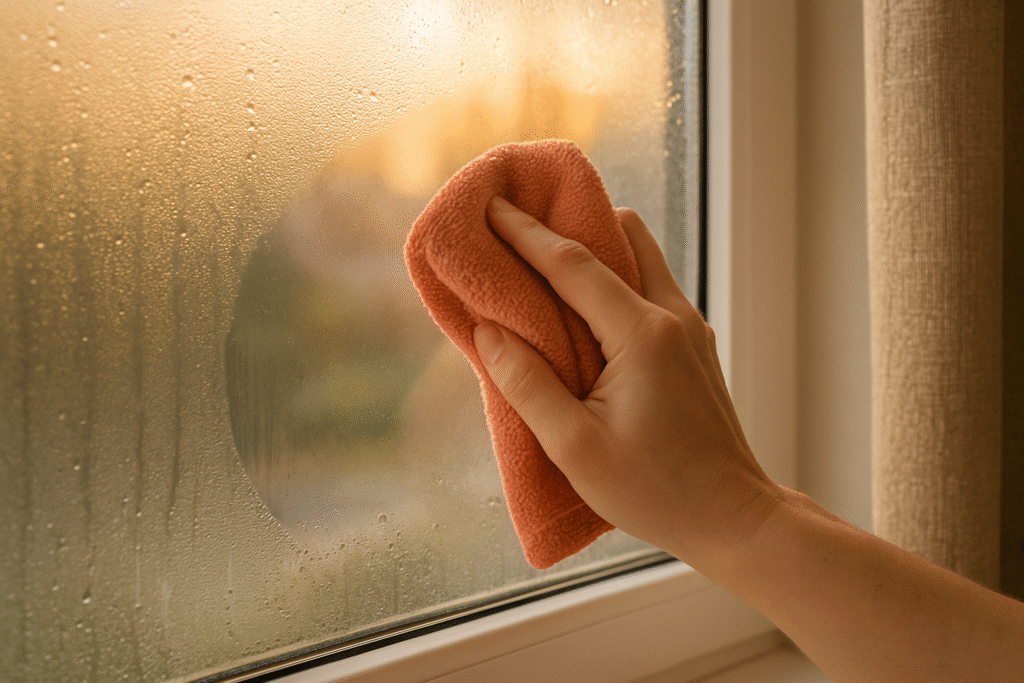
8. 🧽 Wipe Down Windows and Sills Daily
Why it helps: Even with good ventilation, some condensation may still form—especially on cold mornings. Wiping it away prevents mould from taking hold and keeps your windowsills dry and clean. It’s a simple habit that helps you monitor moisture levels and spot problem areas early. Use a microfibre cloth or window vac for quick clean-up. Regular wiping also protects paintwork and prevents long-term damage to frames and sills.
Tools:
- Microfibre cloths
- Window vacs
- Anti-mould sprays (for problem areas)
Best for: Monitoring moisture levels and preventing long-term damage
9. 🚪 Close the Door While Drying
Why it works: Containing moisture in one room makes it easier to manage and prevents damp air from spreading throughout the house. This is especially important if you’re drying clothes in a bedroom or living room. Closing the door helps your dehumidifier work more efficiently and keeps humidity levels stable. It also protects other rooms from condensation buildup, reducing the risk of mould in unexpected places.
Best for: Homes with a dedicated drying room or utility space
10. 🛁 Use an Extractor Fan (If Available)
Why it helps: Extractor fans are designed to remove moist air from kitchens and bathrooms, but they can also help when drying clothes nearby. Running the fan during and after drying encourages airflow and reduces humidity. It’s not as powerful as a dehumidifier, but it’s a useful backup—especially in flats or small homes. If your drying area is near a fan, use it to support your overall moisture control strategy.
Best for: Flats, small homes, or drying near wet rooms
🧼 Bonus Tip: Use a High Spin Speed
Why it matters: The less water in your clothes, the less moisture they’ll release into the air. Using a high spin speed in your washing machine is one of the easiest ways to reduce drying time and condensation.
Target spin speeds:
- 1200–1600 rpm for towels, jeans, bedding
- 1000–1200 rpm for everyday clothing
- Use lower speeds for delicates
Wet outdoor items can release even more moisture indoors than normal laundry. Waterproof jackets, tents, and sleeping bags often hold a large amount of water after a rainy trip, so taking care when drying wet camping gear indoors helps prevent excess humidity building up in your home.
📊 Summary: Best Ways to Prevent Condensation
| Solution | Cost | Effectiveness | Best For |
|---|---|---|---|
| Open a window | Free | Moderate | Mild days, low humidity loads |
| Use a dehumidifier | £150–£250 | High | Winter, daily drying |
| Heated airer + cover | £50–£150 | High | Faster drying, low energy use |
| Moisture absorbers | £5–£20 | Low–Moderate | Small spaces, wardrobes |
| Warm room + closed door | Free | Moderate | Bedrooms, living rooms |
| Extractor fan | Installed | Moderate | Bathrooms, kitchens |
❓ FAQs: Condensation When Drying Clothes Indoors
Is it bad to dry clothes indoors in the UK?
Drying clothes indoors is very common in the UK due to weather and limited outdoor drying time. It only becomes a problem when moisture builds up and causes condensation, damp, or mould. Using ventilation or a dehumidifier prevents most issues.
Should I open a window when drying clothes indoors?
Opening a window can help release moisture, but in cold weather it may slow drying and waste heat. A better solution is often using a dehumidifier or extractor fan while keeping the room contained.
Do heated airers cause condensation?
Heated airers themselves don’t cause condensation — the moisture released from the clothes does. Using a cover or running a dehumidifier nearby helps control that moisture effectively.
Is a dehumidifier worth it for drying clothes?
Yes. In many UK homes a dehumidifier both speeds up drying and prevents condensation, making it one of the most effective tools for indoor laundry drying.
✅ Final Recommendation: Best Fix for Indoor Drying Condensation
For a reliable, long-term solution, invest in a quality dehumidifier. The Duronic DH20 Dehumidifier (20L) is a top pick for UK homes—quiet, efficient, and powerful enough to handle laundry loads without driving up your energy bill.
Pair it with a heated airer and fitted cover for faster drying and better moisture control. Combine these tools with smart habits like ventilation, high spin speeds, and wiping down windows, and you’ll enjoy a condensation-free laundry routine all year round.
💨 Want to dry clothes faster, cheaper, and smarter—especially in small UK homes?
Explore our Laundry & Drying Efficiency Hub, a curated resource packed with expert tips, energy-saving gadgets, and clever solutions for indoor drying. From heated airers and compact dehumidifiers to smart laundry routines that actually work, this hub helps you cut costs, save space, and stay ahead of the damp.
🧭 Related Laundry & Indoor Drying Guides
Condensation when drying clothes indoors is usually part of a bigger picture involving humidity levels, airflow, and how efficiently laundry dries inside UK homes. These guides explore practical ways to control moisture, improve drying speed, and reduce the risk of damp or mould while keeping energy use as low as possible.

About The Author – Andrew Marshall
Andrew Marshall is a Scottish homeowner and the creator of Save Wise Living. He shares practical ways to reduce energy bills, improve home efficiency, and make everyday household routines cheaper and simpler.