
Living in a small flat often means laundry has to dry and be stored indoors — sometimes in the same tight space. Cupboards double as drying zones, airers sit permanently in bedrooms, and freshly washed clothes get folded away before they’re fully dry because there’s simply nowhere else to put them.
Over time, this leads to a familiar set of problems: musty smells that won’t wash out, damp-feeling fabrics, condensation on walls, and eventually mould creeping into wardrobes and drawers.
The good news? You don’t need more space — you need better airflow, smarter storage habits, and a few simple moisture controls. This guide walks you through exactly how to store laundry in small flats without trapping moisture, even if you don’t have a spare room or outdoor drying area.
This article is part of our Laundry & Drying Efficiency hub, focused on practical UK advice for drying clothes indoors faster, avoiding damp, and keeping energy use low.
Author insight
I wrote this article because laundry storage is one of those everyday problems that quietly causes bigger issues in small flats — musty clothes, recurring damp, and even mould that feels impossible to get rid of once it starts. Most people aren’t doing anything “wrong”; they’re just trying to make limited space work.
My aim here was to explain what actually causes trapped moisture and smells, without overcomplicating it or pushing unrealistic solutions. If you’re dealing with a specific setup or storage problem I haven’t covered, feel free to let me know — real-life situations often make the best guides, and I’m always happy to explore them properly.
Why laundry storage causes moisture problems in small flats
In compact homes, moisture builds up faster because:
- Clothes release a surprising amount of water as they dry
- Storage spaces (wardrobes, drawers, under-bed boxes) are enclosed
- Airflow is limited, especially in winter
- People put clothes away “almost dry” to reclaim space
When damp air gets trapped, it doesn’t just affect clothes — it feeds mould spores, dust mites, and lingering odours that cling to fabric fibres.
The aim isn’t to make your flat perfectly dry. It’s to stop moisture getting stuck.
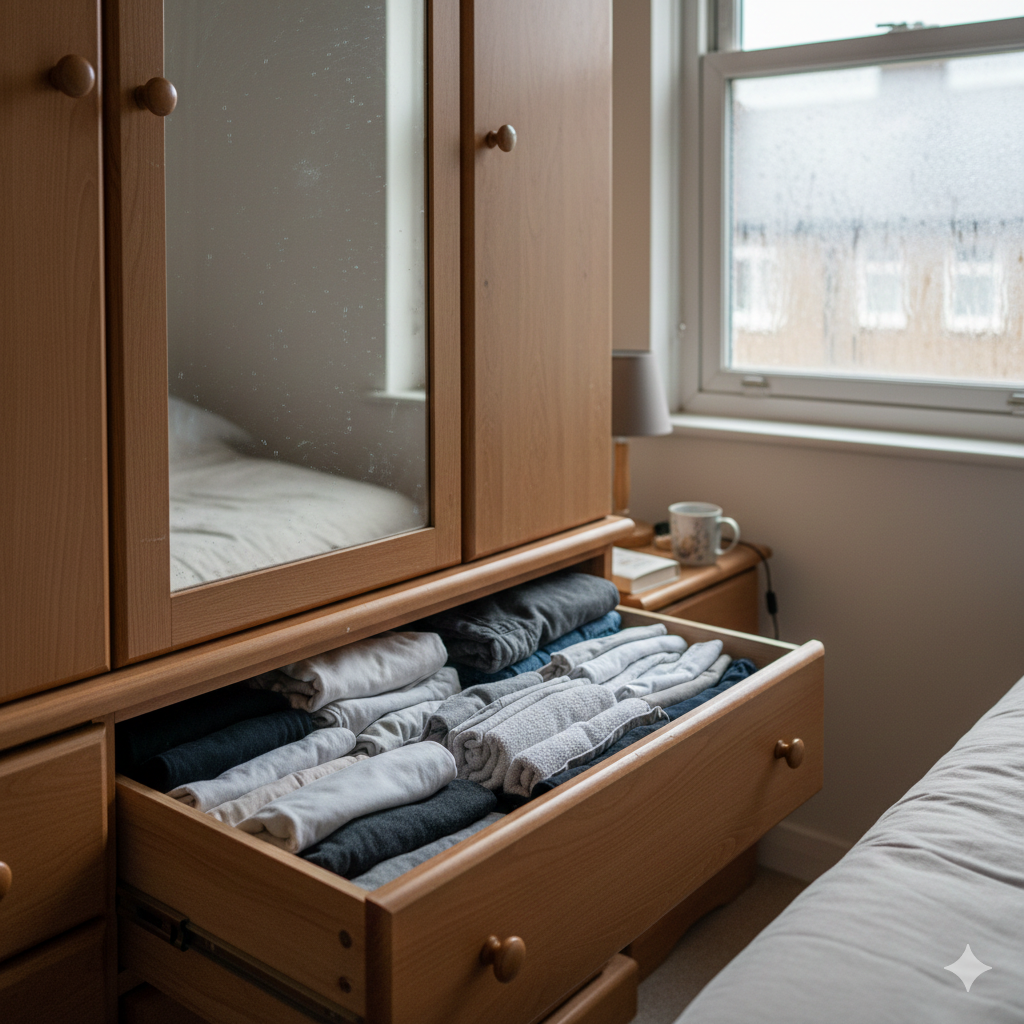
Rule one: never store laundry that’s even slightly damp
This sounds obvious, but it’s the number one mistake.
If clothes feel:
- Cool to the touch
- Heavy for their size
- Slightly clammy around seams, waistbands, or cuffs
They are not dry enough to store.
In small flats, people often rush this step because airers are in the way. Unfortunately, sealing even mild dampness into a drawer or wardrobe almost guarantees smells later.
Practical check:
Before storing, bunch the fabric lightly in your hand for 10 seconds. If it feels cool when you release it, give it more drying time.
Where to store laundry safely in a small flat
Wardrobes (done properly)
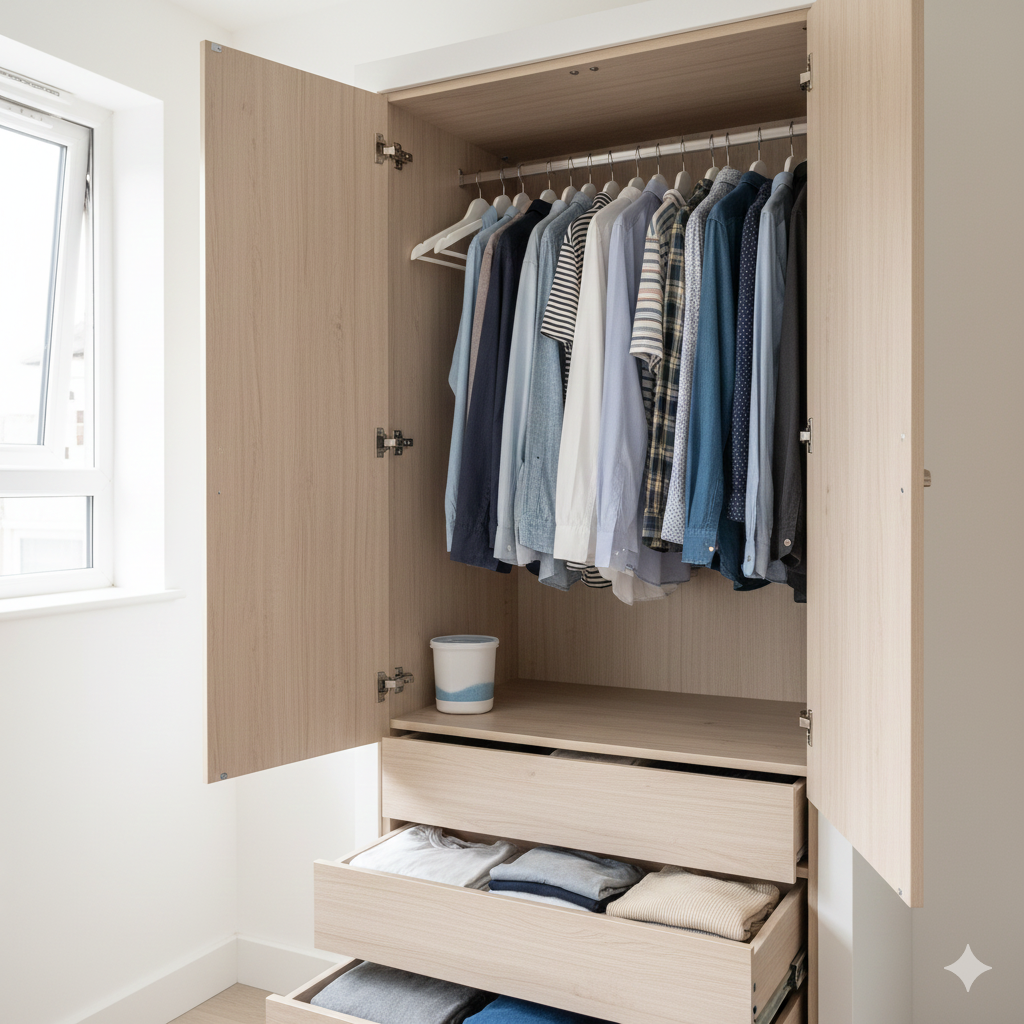
Wardrobes are fine if you manage airflow.
Do this:
- Leave space between hanging items
- Avoid pushing clothes tight against the back wall
- Open doors daily for 10–15 minutes
- Use breathable fabric garment bags (not plastic)
Avoid:
- Vacuum bags for everyday clothing
- Solid plastic storage boxes inside wardrobes
If mould has appeared before, add a moisture absorber (more on that below).
Drawers (low risk if clothes are fully dry)
Drawers are less risky than wardrobes because they’re usually opened daily.
Tips:
- Don’t overfill — packed drawers trap air
- Rotate clothes occasionally
- Avoid storing freshly dried laundry straight from a warm airer
If drawers smell musty, moisture is already present — airing the drawer itself matters as much as the clothes.
Under-bed storage (high risk unless managed)
Under-bed boxes are one of the worst places for damp smells in small flats.
If you must use them:
- Choose breathable fabric zip bags, not rigid plastic
- Never store “just dried” laundry
- Add moisture absorbers
- Lift the mattress regularly to allow airflow
If the area under your bed feels cold or smells musty, it’s not suitable for clothing storage without moisture control.
The role of airflow (this matters more than heat)
People often focus on heat to “dry faster”, but airflow is what actually prevents trapped moisture.
Simple airflow habits that make a big difference:
- Crack wardrobe doors open daily
- Open drawers briefly when you change clothes
- Don’t dry and store laundry in the same sealed room
- Avoid blocking vents or trickle vents with furniture
Even small, regular air movement prevents moisture settling into fabric.
Excess indoor moisture is a recognised cause of mould growth and lingering odours in homes, with guidance from UK Health Security Agency highlighting the importance of ventilation and moisture control to prevent damp-related problems indoors.
Moisture control tools that actually help (UK-friendly)
You don’t need gadgets everywhere — just the right ones in the worst spots.
1) Moisture absorbers (wardrobes, drawers, under-bed)
These are passive, electricity-free solutions that quietly reduce humidity in enclosed spaces.
Look for:
- Calcium chloride moisture traps
- Slim designs for wardrobes
- Refillable or long-lasting units
Amazon UK example:
View on Amazon
👉 UniBond Aero 360 Moisture Absorber (Wardrobe Size)
Best for:
- Wardrobes
- Cupboards
- Under-bed storage
They won’t dry clothes, but they stop stored moisture becoming a smell or mould issue.
2) Small dehumidifier (shared living/drying space)
If laundry regularly dries in your bedroom or living room, a compact dehumidifier can make a huge difference.
Benefits:
- Reduces overall humidity
- Speeds up drying without heat
- Protects clothes and the room
Amazon UK example:
View on Amazon
👉 MeacoDry ABC Dehumidifier (Quiet, Small-Flat Friendly)
Use it:
- While laundry is drying
- For an hour or two after storing clothes
This is especially useful in winter when windows stay shut.
3) Breathable laundry storage bags
These are ideal for seasonal clothes or spare bedding.
Choose:
- Fabric or cotton zip bags
- Vent panels or breathable sides
Avoid:
- Vacuum bags for everyday use
- Airtight plastic boxes for clothes
Amazon UK example:
View on Amazon
👉 Lifewit Fabric Clothes Storage Bags (Breathable)
How to prevent smells returning after washing
If clothes smell musty even after washing, the issue is often storage history, not washing quality.
Fix it by:
- Fully re-drying affected clothes
- Washing at the warmest safe temperature for the fabric
- Adding white vinegar to the rinse (for cottons)
- Air-drying with good airflow before storage
Once the smell is gone, change the storage habit — otherwise it will come back.
Small flat laundry routines that work long-term
Here’s a simple routine many small-flat households find sustainable:
Drying
- Airer placed away from walls
- Dehumidifier on or window cracked
- No heaters involved
Before storage
- Extra 30–60 minutes beyond “looks dry”
- Quick hand-feel test
Storage
- Wardrobes not packed tight
- Doors opened daily
- Moisture absorber in enclosed spaces
Weekly
- One short “airing session” for wardrobes/drawers
It sounds basic — but consistency is what prevents damp and smells.
🔗 Related Laundry Guides You’ll Find Helpful 🧺
If you’re dealing with limited space, laundry problems rarely stop at storage alone. These guides tackle two of the biggest causes behind damp smells and hidden moisture.
🌙 Quiet Laundry Drying for Flats: Low-Noise Solutions for Night-Time Drying
If your laundry dries in bedrooms or living spaces, this guide shows how to dry clothes quietly overnight without relying on noisy machines or risky heat sources that increase moisture build-up.
🔥 Fire Safety When Drying Clothes Indoors: The Overlooked UK Risks That Cause House Fires
Moisture isn’t the only concern. This guide explains why certain indoor drying habits — especially using heaters — increase fire risk, and how to dry and store clothes safely without dangerous shortcuts.
Together, these articles help you manage space, moisture, noise, and safety — the four biggest laundry challenges in small flats.
Common mistakes to avoid
- Storing laundry straight from a warm airer
- Using plastic boxes for everyday clothes
- Blocking airflow with furniture
- Drying and storing in the same sealed space
- Assuming smells mean clothes are “old” (it’s usually moisture)
Final thoughts
Storing laundry in a small flat doesn’t require more space — it requires respecting moisture.
Once you accept that damp air needs somewhere to go, the solutions become simple: airflow, patience, and breathable storage. With a few small habit changes and the right tools in problem areas, you can keep clothes fresh, dry, and mould-free — even in the tightest living spaces.
If you’ve found a storage trick that works particularly well in a small flat, or you’re struggling with a specific setup, let me know. If it’s a real problem people face, I’ll happily turn it into a practical guide that helps others too.
💨 Want to dry clothes faster, cheaper, and smarter—especially in small UK homes?
Explore our Laundry & Drying Efficiency Hub, a curated resource packed with expert tips, energy-saving gadgets, and clever solutions for indoor drying. From heated airers and compact dehumidifiers to smart laundry routines that actually work, this hub helps you cut costs, save space, and stay ahead of the damp.
For official, trusted UK advice on reducing energy use, the Energy Saving Trust has clear, practical guidance on saving electricity at home. https://energysavingtrust.org.uk

About The Author – Andrew Marshall
Andrew Marshall is a Scottish homeowner and the creator of Save Wise Living. He shares practical ways to reduce energy bills, improve home efficiency, and make everyday household routines cheaper and simpler.