
Hard water stains and limescale are the silent enemies of UK bathrooms. You don’t notice them at first — a faint cloudy patch on the shower glass, a dull sheen on chrome taps — but over time, mineral deposits build up and make your bathroom look tired. The question is: should you reach for a bottle of white vinegar or invest in a commercial descaler?
This guide breaks down the debate in detail, looking at cost, effectiveness, eco impact, convenience, and long‑term results. By the end, you’ll know which option saves you money, time, and effort — and whether a hybrid approach might be the smartest choice.
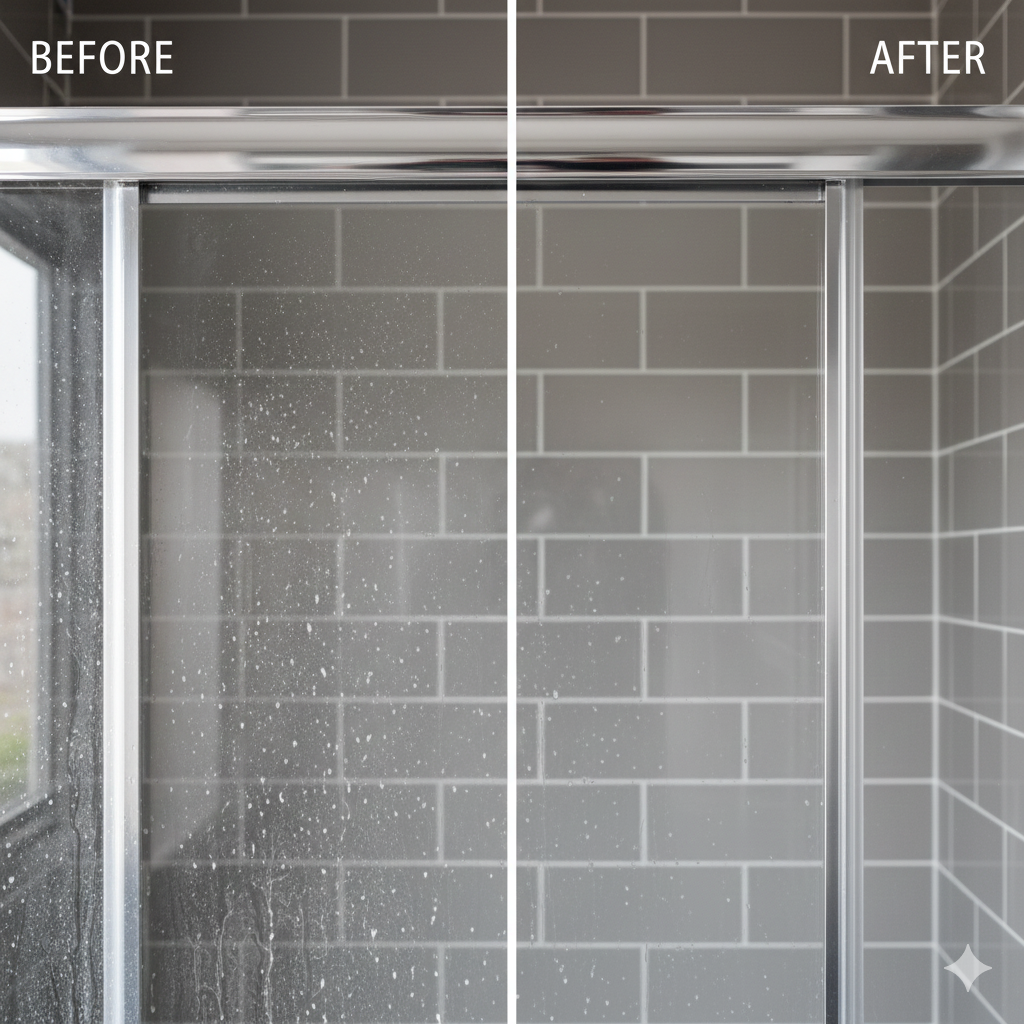
💰 Cost Comparison: Pennies vs Pounds
One of the biggest differences between vinegar and descaler is price.
- White Vinegar (Customchem Industrial Strength Cleaning Solution, 5L) – Amazon UK
- Around £10–£15 for 5 litres.
- Works out at pennies per use when diluted into a spray bottle.
- Multipurpose: can also be used for laundry, kitchen cleaning, and even kettle descaling.
- Commercial Descalers
👉 Over a year, vinegar is far cheaper if you’re cleaning weekly. But descalers may save money if they reduce the number of deep cleans needed.
🧼 Effectiveness: Light vs Heavy Limescale
Cost is only half the story. Performance matters too.
- Vinegar
- Dissolves mineral deposits gradually.
- Works well for light limescale and soap scum.
- Needs soaking time — spray, leave for 15–30 minutes, then scrub.
- May struggle with thick, long‑neglected limescale.
- Commercial Descalers
- Formulated with stronger acids (like citric or sulfamic acid).
- Cut through heavy buildup quickly.
- Often show visible results within minutes.
- Can restore cloudy glass and dull chrome to a shine.
👉 If your shower is cleaned regularly, vinegar is enough. If you’ve let limescale build up, a descaler is the faster fix.
🌍 Environmental Impact: Eco vs Chemical
- Vinegar
- Biodegradable and safe for drains.
- Comes in bulk containers (less plastic waste).
- Strong smell can be off‑putting, but no harmful residues.
- Commercial Descalers
- Packaged in plastic bottles.
- Stronger chemicals may be harsher on the environment.
- Some brands (like HG and Viakal) are designed to be safe for bathroom surfaces, but disposal still adds chemical load to wastewater.
👉 Eco‑conscious households lean toward vinegar. But if performance is critical, descalers may be worth the trade‑off.
🏠 Convenience & Ease of Use
- Vinegar
- Requires mixing (often 1:1 with water in a spray bottle).
- Needs longer soak times.
- Strong vinegar odour can linger.
- Commercial Descalers
- Ready‑to‑use sprays or gels.
- Work faster, less scrubbing required.
- Often fragranced or neutral smelling.
👉 Convenience often tips the scales toward descalers, especially for busy households.
📊 Comparison Table
| Factor | Vinegar | Commercial Descaler |
|---|---|---|
| Cost | Very low (pennies per use) | Moderate–high (£3–£9 per bottle) |
| Effectiveness | Good for light limescale | Excellent for heavy buildup |
| Eco impact | High (biodegradable) | Lower (chemicals, plastic bottles) |
| Convenience | DIY prep, longer soak | Ready‑to‑use, faster |
| Smell | Strong vinegar odour | Neutral or fragranced |
🛒 Amazon UK Picks
- Customchem White Vinegar 5L
- HG Professional Limescale Remover
- Viakal Limescale Remover Spray
- Kilrock Power Spray
📈 Long‑Term Savings Scenario
Let’s imagine a household cleaning the shower weekly:
- Vinegar
- 250ml per week = ~13 litres per year.
- Cost: ~£25 annually.
- Commercial Descaler
- 250ml per week = ~13 litres per year.
- Cost: £80–£100 annually depending on brand.
👉 Vinegar saves £50–£70 per year. Over five years, that’s £250–£350 — enough to cover a utility bill or a family day out.
But here’s the catch: vinegar may require more scrubbing, while descalers cut cleaning time. If you value convenience, the extra spend may be worth it.
🗣 Author Insight
In my own shower, vinegar spray works fine for weekly upkeep. It keeps the glass clear and the taps shiny. But one time I left it too long, and the cloudy limescale wouldn’t budge no matter how much I scrubbed. A bottle of HG descaler cleared it in minutes. Now I keep vinegar for routine sprays and a bottle of Viakal for emergencies. It’s not glamorous, but that balance saves money and keeps the bathroom looking fresh.
🧩 Hybrid Strategy: Best of Both Worlds
Many households actually keep both.
- Use vinegar for weekly maintenance sprays.
- Use descaler for quarterly deep cleans or emergencies.
This hybrid approach balances cost savings with practicality. Over five years, it saves money compared to descaler‑only, while keeping your bathroom sparkling.
More Household Showdowns Worth Reading
If you found this vinegar vs descaler comparison useful, you’ll love our other deep‑dives:
- Microfibre Cloths vs Cotton Cloths: Which Lasts Longer? — Discover which fabric stands up better to repeated washes and heavy use, and how durability impacts long‑term savings.
- Powder vs Liquid Laundry Detergent: Which Is Cheaper in the Long Run? — See how detergent choice affects your household budget, with a five‑year cost projection chart.
Together, these articles build a complete picture of everyday cleaning choices, helping UK families save money while keeping their homes fresh and eco‑friendly.
✅ Final Verdict
When it comes to tackling limescale, there isn’t a one‑size‑fits‑all answer. Vinegar clearly wins on cost and eco impact — it’s cheap, biodegradable, and safe for drains. For households committed to sustainability or those looking to keep cleaning budgets lean, vinegar is the obvious choice. It works well for light, routine maintenance and can be used across multiple cleaning tasks, from kettles to laundry.
However, commercial descalers win on speed and heavy buildup. If your shower glass has gone cloudy or your chrome fixtures are dull from months of neglect, vinegar alone may not cut it. Products like HG Professional Limescale Remover or Viakal Spray can restore surfaces in minutes, saving you hours of scrubbing. For busy households, the convenience factor is hard to ignore.
The most practical solution for UK families is a hybrid strategy. Use vinegar as your weekly maintenance spray — it keeps limescale from building up and costs pennies per use. Then, keep a bottle of descaler on hand for quarterly deep cleans or emergencies when stubborn deposits appear. Over five years, this approach balances savings with performance, cutting costs compared to descaler‑only routines while ensuring your bathroom stays sparkling.
In short:
- Budget‑driven households → Vinegar is enough.
- Time‑poor households → Descaler is worth the spend.
- Balanced households → Hybrid wins, combining savings with convenience.
For further reading on limescale and hard water deposits, see the
Water Quality Association’s guide to hard water
It explains why mineral buildup occurs and how different treatments work.
For more guides, product breakdowns and energy-saving cleaning tips, explore the full Home Cleaning Hub, where I’m collecting every smart, affordable way to keep your home cleaner with less effort.
Written by Andy M. — sharing practical, low-waste cleaning swaps that save money and simplify UK homes.