
Drying clothes indoors is a must for many UK households—especially in winter. But if your heated airer or dehumidifier isn’t working as well as expected, the problem might be where you’ve placed it. Smart positioning can dramatically improve drying speed, reduce condensation, and lower energy use.
This guide explains exactly where to put a heated airer or dehumidifier for best results. Whether you’re using one or both, these room layout tips will help you dry clothes faster, avoid damp, and make the most of your setup.
This article is part of our Laundry & Drying Efficiency hub, focused on practical UK advice for drying clothes indoors faster, avoiding damp, and keeping energy use low.
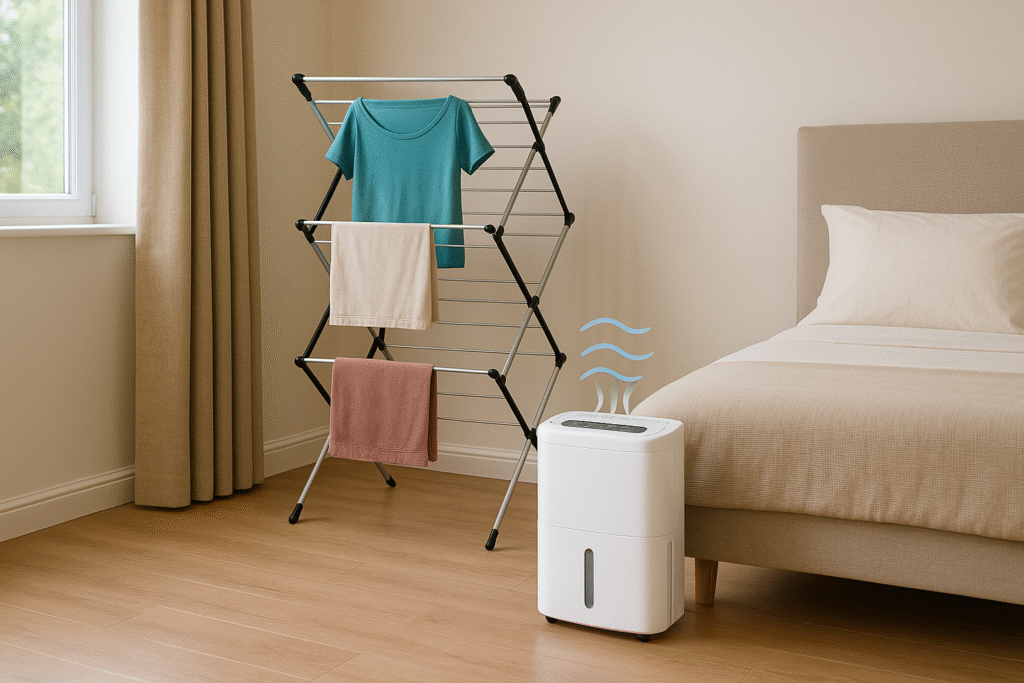
🔥 Why Heated Airer Placement Matters
Heated airers work by gently warming clothes from the frame outward. They don’t blast hot air like tumble dryers, so they rely on room conditions—especially warmth and airflow—to work efficiently.
Poor placement can lead to:
- Slow drying times
- Condensation on windows and walls
- Musty smells or damp build-up
- Higher energy use
To get the best results, your heated airer needs space, warmth, and airflow.
✅ Best Places to Put a Heated Airer
🛋️ Living Room or Lounge
Why it helps: Living rooms are usually warm and well-ventilated, making them ideal for drying. Central heating helps maintain a stable temperature, and there’s often enough space for larger airers.
Tips:
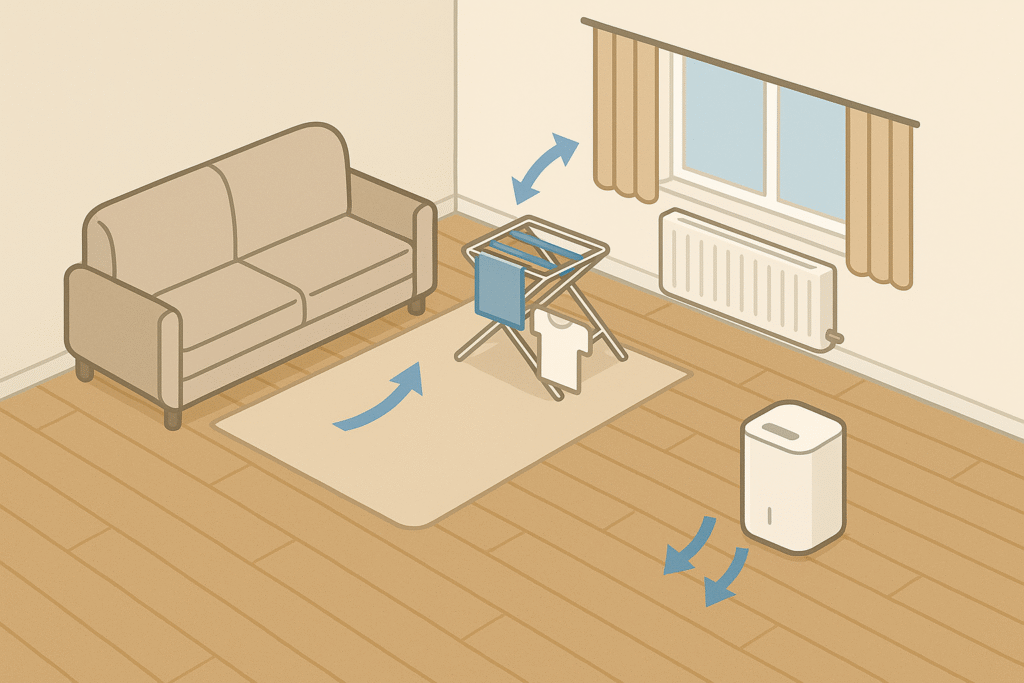
- Place near a radiator or sunny window (not touching)
- Keep at least 30cm from walls and furniture
- Open a window slightly during drying to release moisture
- Avoid blocking walkways or doorways
🧺 Utility Room or Kitchen
Why it helps: Utility rooms and kitchens often have extractor fans and tiled floors, which help manage moisture. These rooms are designed for laundry tasks and can be closed off easily.
Tips:
- Use extractor fans during and after drying
- Keep the door closed to contain moisture
- Avoid placing near sinks or cookers
- Position away from cold external walls
🛏️ Bedroom or Spare Room
Why it helps: Bedrooms and spare rooms offer quiet, undisturbed spaces for overnight drying. They’re easy to close off and can be ventilated with a window or dehumidifier.
Tips:
- Ventilate well or use a dehumidifier
- Avoid placing near beds, curtains, or wardrobes
- Use a fitted cover to trap moisture
- Keep at least 30cm from walls
🚫 Where Not to Put a Heated Airer
Avoid placing your heated airer in:
- Hallways – trip hazard, poor airflow
- Bathrooms – already humid, risk of mould
- Cold conservatories – slow drying, high condensation
- Against walls or furniture – traps moisture, encourages damp
💨 Why Dehumidifier Placement Is Crucial
Dehumidifiers remove moisture from the air and collect it in a tank or drain. They’re essential for managing humidity when drying clothes indoors—especially in winter.
Poor placement can lead to:
- Inefficient moisture removal
- Condensation in other rooms
- Longer drying times
- Wasted energy
To work effectively, a dehumidifier needs airflow, proximity to moisture, and a contained space.
✅ Best Places to Put a Dehumidifier
🎯 Near the Drying Area
Why it helps: Placing the dehumidifier 1–2 metres from your heated airer allows it to capture moisture as it’s released. This speeds up drying and prevents condensation on windows and walls.
Tips:
- Don’t place directly under wet clothes
- Keep vents clear—no furniture or laundry blocking airflow
- Close the door to contain moisture
- Run for 30–60 minutes after drying finishes
🚪 In a Closed Room
Why it helps: Containing moisture in one room makes it easier for the dehumidifier to remove it. This improves efficiency and prevents damp air from spreading through the house.
Tips:
- Close windows and doors during use
- Monitor humidity with a built-in hygrometer
- Empty the tank regularly or use a drain hose
- Leave space around the unit for airflow
🔁 Central Location for Whole-Home Use
Why it helps: If you dry clothes in different rooms, placing the dehumidifier centrally (e.g. hallway or landing) can help manage background humidity across the home.
Tips:
- Keep doors open to allow airflow
- Choose a higher-capacity model for larger homes
- Use alongside extractor fans or trickle vents
🔄 Where to Put Heated Airer and Dehumidifier: Best Combo Layout
Using both devices together is one of the most effective ways to dry clothes indoors without condensation.
Best layout tips:
- Place the heated airer in a warm, ventilated room
- Position the dehumidifier 1–2 metres away, facing the airer
- Use a fitted cover to trap moisture and direct it downward
- Close the door to contain humidity
- Run the dehumidifier during and after drying
Benefits:
- Faster drying without high energy use
- Minimal condensation on windows
- Reduced mould risk and fresher-smelling laundry
- Lower heating bills by avoiding radiator drying
❌ Common Mistakes to Avoid
Avoid these placement errors to keep your setup efficient and safe:
- Putting airers in cold corners – slows drying, increases condensation
- Running dehumidifiers with windows open – reduces efficiency
- Blocking airflow around either device – limits performance
- Using both in open-plan spaces without containment – moisture spreads too widely
- Placing dehumidifiers behind furniture – restricts air intake and output
- Drying clothes directly over the dehumidifier – interferes with sensors and airflow
🧠 Room-by-Room Placement Summary
| Room Type | Heated Airer Placement | Dehumidifier Placement |
|---|---|---|
| Living Room | Near radiator, away from furniture | 1–2m from airer, facing it |
| Utility Room | Away from sinks, use extractor fan | In same room, door closed |
| Bedroom | Near window, avoid soft furnishings | Opposite airer, monitor humidity |
| Kitchen | Use extractor, avoid cooking zones | Near airer, away from heat sources |
| Spare Room | Quiet, contained space with airflow | Ideal for overnight drying setups |
🧭 Next Steps for Smarter Indoor Drying
Now that you’ve nailed the best placement for your heated airer or dehumidifier, take your setup even further with these practical guides:
- ❄️ How to Dry Clothes Faster in Winter Without Turning On the Heating (UK) – clever drying strategies that work even in cold, damp conditions.
- 🔄 Best Heat-Pump & Condenser Tumble Dryers UK (Energy-Efficient Picks) – explore top-rated ventless dryers that balance drying power with long-term savings.
- 💧 How to Stop Condensation When Drying Clothes Indoors (Quick Fixes That Work) – proven ways to reduce moisture and protect your home while drying laundry inside.
Each guide builds on your drying strategy, helping you create a faster, drier, and healthier home—without cranking up the thermostat.
✅ Final Recommendation: Best Setup for Indoor Drying
For the best results, place your heated airer in a warm, ventilated room—ideally near a radiator or sunny window. Use a fitted cover to trap heat and moisture. Position your dehumidifier 1–2 metres away, facing the airer, and keep the room sealed during use.
This setup speeds up drying, prevents condensation, and keeps your home fresh and mould-free. Whether you’re drying daily loads or just need a winter backup, smart placement makes all the difference.
💨 Want to dry clothes faster, cheaper, and smarter—especially in small UK homes?
Explore our Laundry & Drying Efficiency Hub, a curated resource packed with expert tips, energy-saving gadgets, and clever solutions for indoor drying. From heated airers and compact dehumidifiers to smart laundry routines that actually work, this hub helps you cut costs, save space, and stay ahead of the damp.
About The Author – Andrew Marshall
Andrew Marshall is a Scottish homeowner and the creator of Save Wise Living. He shares practical ways to reduce energy bills, improve home efficiency, and make everyday household routines cheaper and simpler.