
If your heating is on, the boiler sounds like it’s doing its job, but one or two radiators never seem to get properly warm, it can be incredibly frustrating — especially on a cold UK winter evening.
This is a very common problem in British homes, particularly older houses and flats. It doesn’t usually mean your boiler is failing, and it very rarely means you need to replace anything expensive.
In most cases, the issue comes down to how heat is moving around your system, not how much heat your boiler is producing.
This guide explains why radiators stay cold, what you can realistically fix yourself, and how sorting these issues can make your home warmer without wasting money.
Why radiators can feel cold even when the heating is “on”
Central heating systems don’t automatically distribute heat evenly. Hot water flows through pipes in the path of least resistance, and over time this leads to imbalance.
That’s why you’ll often find:
- Radiators near the boiler heat up quickly
- Upstairs or end-of-run radiators stay lukewarm
- Some rooms feel cosy while others never quite get there
In older UK homes, this is made worse by:
- Ageing pipework
- Years of small alterations
- Systems that have never been properly adjusted
The heating is working — it’s just not working efficiently.
If you’re trying to make your heating feel more effective without simply turning it up, our Smart Heating & Home Warmth Hub brings together practical, UK-specific ways to stay warmer for less — from improving radiator performance to simple heat-retention fixes that work well in older homes.
Radiator issues often sit at the heart of cold rooms, something addressed fully in our how to heat your home room by room guide.
The most common reasons radiators don’t get properly warm
Trapped air inside the radiator
This is the most frequent cause, especially at the start of winter.
Radiators are designed to be completely full of hot water. When air gets trapped inside, it rises to the top and blocks the water from circulating properly. The result is a radiator that’s warm at the bottom but noticeably cooler at the top — or barely warm at all.
Air builds up gradually due to:
- Normal use over time
- Small pressure changes
- Bleeding other radiators
- The system being topped up
This isn’t a fault — it’s just part of how heating systems behave. Because air rises, upstairs radiators and bedroom radiators are often affected first.
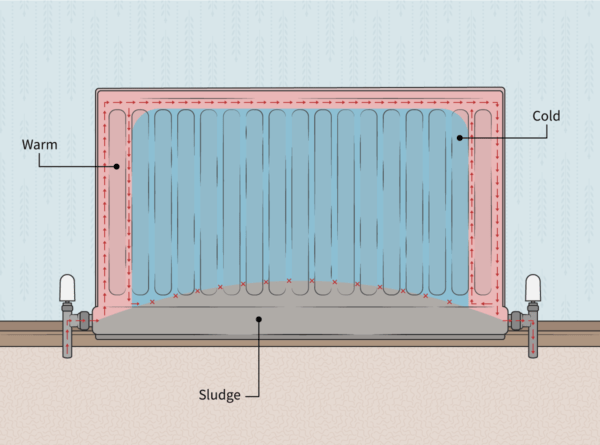
Sludge build-up at the bottom of the radiator
If the bottom of the radiator stays cold while the top warms up, sludge is a common cause.
Sludge is a thick mix of rust, metal particles and limescale that forms inside older heating systems. Over time, it settles at the bottom of radiators and in pipe bends, reducing how much heat can transfer into the room.
This is particularly common in:
- Older steel radiators
- Homes with hard water
- Systems that haven’t been flushed for years
The radiator may still feel warm to the touch in places, but much of its heat output is effectively trapped.
Poor radiator balancing
Hot water always takes the easiest route through a system.
Radiators closest to the boiler tend to:
- Heat up fastest
- Receive more hot water
- Leave less heat for distant rooms
Radiators further away — often upstairs or at the far end of the house — are left struggling.
When a system isn’t balanced:
- Some rooms overheat
- Others never feel properly warm
- The boiler runs longer than necessary
Balancing doesn’t change boiler temperature. It simply shares heat more evenly by slightly restricting fast-heating radiators and allowing slower ones to catch up. Many UK homes are never properly balanced, especially if radiators have been changed over the years.
Incorrect or stuck TRV settings
Thermostatic Radiator Valves (TRVs) control the temperature of individual rooms, not the boiler itself.
Common problems include:
- TRVs set too low without realising
- Valves knocked or adjusted accidentally
- Internal pins sticking after summer
- Furniture blocking the temperature sensor
If a TRV believes the room is already warm, it will restrict water flow — even if the rest of the house is cold. In older TRVs, the internal pin can stick in the closed position, making the radiator stay cold no matter how high the dial is turned.
If you’re unsure whether your radiator valves are actually helping or holding heat back, this breakdown of smart radiator valves vs standard thermostats explains when upgrades make sense — and when simple adjustments are enough.
Furniture, curtains, or radiator covers blocking heat
Radiators rely on airflow to heat a room.
Cold air enters at the bottom, warms up, rises into the room, and pulls more cool air in behind it. If that airflow is blocked, heat gets trapped.
Common blockers include:
- Sofas pushed directly in front of radiators
- Thick curtains hanging over them
- Decorative radiator covers
- Clothes drying directly on top
The radiator may feel warm, but the room stays cold — causing people to turn the thermostat up unnecessarily.
In rooms where heat seems to disappear quickly, reflective backing can help push warmth back into the space — we cover when it’s worth using in our guide to reflective radiator foil kits.
Low system pressure
Most modern UK boilers, especially combi boilers, rely on correct water pressure to circulate heat properly.
If pressure drops too low:
- Hot water struggles to reach distant radiators
- Flow becomes uneven
- Some radiators barely warm at all
Pressure can drop gradually through normal use, bleeding radiators, or minor leaks. The boiler may still fire up and sound normal, which is why this issue often goes unnoticed.
Quick checks you can do in five minutes
Before assuming anything serious, check the following:
- Is the top of the radiator cold?
- Is the bottom cold but the top warm?
- Is the TRV turned fully up?
- Is anything blocking the radiator?
- Is boiler pressure between 1.0–1.5 bar when cold?
These checks alone often reveal the cause.
Simple, cheap fixes you can try yourself
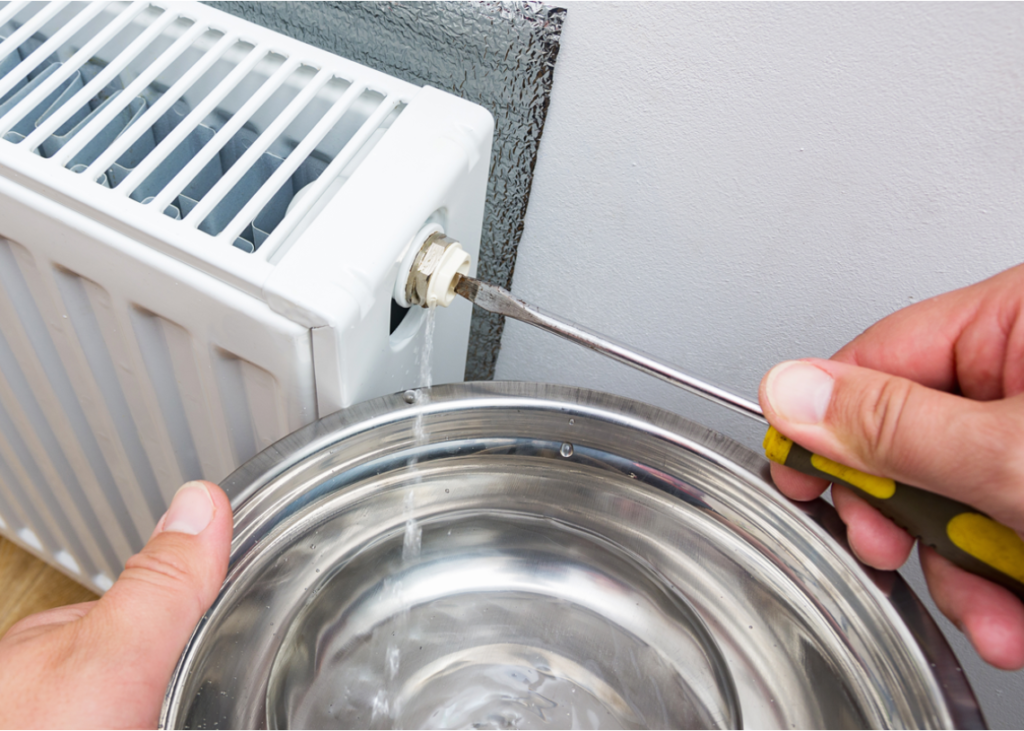
Bleed the radiator
If air is trapped, bleeding releases it so hot water can fill the space.
Turn the heating off, open the bleed valve slowly, let air hiss out, and close it once water appears. This often restores full heat immediately.
Check boiler pressure
Look at the pressure gauge when the system is cold. If it’s low, topping it up using the filling loop can instantly improve circulation — no tools required.
Free a stuck TRV pin
If a radiator stays cold even when turned up:
- Unscrew the TRV head
- Gently press the small metal pin underneath
- Make sure it springs back freely
This simple step fixes many “dead” radiators.
Improve airflow around the radiator
Pull furniture back slightly, tuck curtains behind the radiator, and avoid drying clothes directly on it. Letting heat circulate properly can make a noticeable difference.
Balance the system
Balancing involves slightly closing the valves on radiators that heat fastest, allowing slower ones to receive more hot water. It takes patience rather than money — but it often transforms how evenly your home heats.
When it’s worth calling a professional
You may want professional help if:
- Several radiators stay cold
- Pressure keeps dropping
- Sludge is widespread
- The boiler regularly cuts out
You usually don’t need an engineer if:
- One radiator isn’t heating
- A TRV is stuck
- Air is trapped
- Heat is being blocked
Most single-radiator issues are very fixable at home.
How fixing radiator problems can reduce heating bills
When rooms don’t heat properly, people naturally:
- Turn the thermostat higher
- Run heating for longer
- Use portable heaters
That all increases gas use.
When radiators heat evenly:
- Rooms reach temperature faster
- The thermostat switches the boiler off sooner
- Less energy is wasted
If you want to see exactly how much energy your heating is using once things are working properly, our Smart Energy Monitors & Plugs Hub explains how small monitoring tools can help spot waste without changing your routine.
Don’t ignore draughts and heat loss
Even a perfectly working radiator struggles in a draughty room. Heat escaping through gaps, doors and windows can make radiators feel ineffective.
Addressing draughts and insulation works alongside your heating, not against it. Small fixes can make rooms feel warmer without increasing thermostat settings.
🔗 Keep Heat Working Smarter, Not Harder
If you’re already fixing radiator issues, it’s worth looking at ways to make the warmth last longer and work harder for you.
- Best Solar PV + Heating Combos You Can Actually Buy on Amazon (UK Guide)
A realistic look at how solar setups can support home heating and hot water — without overpromising savings or pushing full system replacements. - Best Dehumidifiers for Cold & Damp UK Homes (Energy-Saving Picks)
Damp air makes rooms feel colder. This guide explains how reducing moisture can improve comfort and help your heating feel more effective, especially in older UK homes.
Author insight
In our own home, one bedroom radiator never seemed to do much, no matter how long the heating was on. We assumed it was just a cold room.
It turned out to be trapped air and poor balancing. After bleeding the radiator and adjusting a few valves, the room finally warmed properly — and we stopped turning the heating up every evening.
A Final bit of Reassurance
When a radiator won’t heat properly, it’s easy to assume the worst — expensive repairs, a failing boiler, or a system that’s “just old and rubbish”. In reality, most radiator problems in UK homes are mechanical and fixable, not signs of serious failure.
Heating systems drift out of balance over time. Air sneaks in. Sludge settles. Valves stick. Furniture gets moved. None of that means your heating is beyond saving.
Very often, a small fix restores warmth, improves comfort, and stops you cranking the thermostat higher than necessary. The goal isn’t more heat — it’s getting the heat you’re already paying for to actually reach the room.
For clear, UK-specific guidance on how heating systems should operate efficiently, the Energy Saving Trust provides practical, independent advice on radiator efficiency, system balancing, and reducing wasted heat in British homes.
Stay warm for less this winter with the full Smart Heating & Home Warmth Hub explore smart thermostats, radiator valves, and insulation tricks that help cut UK energy bills fast.
About The Author – Andrew Marshall
Andrew Marshall is a Scottish homeowner and the creator of Save Wise Living. He shares practical ways to reduce energy bills, improve home efficiency, and make everyday household routines cheaper and simpler.