
Quick answer (UK):
If you want the cheapest running costs, a heat-pump tumble dryer usually wins. Condenser dryers cost more per load, and vented dryers are often the priciest to run (especially in winter).
Tumble dryers differ in three things that actually affect your bills: kWh per cycle, drying time, and whether they waste heat (vented) or recycle it (heat-pump). This guide compares vented vs condenser vs heat-pump dryers with typical UK running costs, and helps you pick the right type for your home, budget, and space.
This article is part of our Laundry & Drying Efficiency hub, focused on practical UK advice for drying clothes indoors faster, avoiding damp, and keeping energy use low.
🔄 Tumble Dryer Types Explained
| Type | How It Works | Key Benefit | Best For |
|---|---|---|---|
| Vented | Expels hot, moist air through a hose | Fast drying, low upfront cost | Homes with external vent access |
| Condenser | Collects moisture in a tank or drains it | No vent needed, flexible placement | Flats or homes without external vents |
| Heat-Pump | Recycles warm air using a heat pump | Ultra energy-efficient | Long-term savings, eco-conscious homes |
Cost assumptions used in this guide (UK)
To keep comparisons fair, the costs below assume:
- Electricity price: 28p/kWh (adjust to your tariff)
- One “load” = a normal mixed laundry load (not a half load)
- Sensor-drying is used where available (over-drying increases costs)
- Real costs vary by model, load size, spin speed, and room temperature
Quick tip: you can calculate your own cost per load by doing:
kWh per cycle × your unit rate (p/kWh) = cost per cycle
🌬️ Vented Tumble Dryers — Fast & Affordable
How They Work
Vented tumble dryers operate by drawing in room-temperature air, heating it, and blowing it through the drum to evaporate moisture from your clothes. The now humid air is then expelled through a vent hose, which must be directed outside—either through a wall vent or an open window. This continuous airflow allows for fast drying, but it requires a fixed setup with proper ventilation. Because the hot air is released rather than recycled, vented dryers tend to use more energy per cycle. They’re simple, effective, and ideal for homes with dedicated laundry spaces and external access.
Energy Use
- Typically rated C or D
- Uses 2.5–3.5 kWh per cycle
- Costs around 70p–£1 per load
If running costs matter most, this breakdown of the cheapest way to dry clothes in the UK shows how tumble dryers compare against heated airers, dehumidifiers, and air drying.
Pros
- ✅ Fast drying times
- ✅ Lower purchase price
- ✅ Simple design, fewer parts to maintain
Cons
- ❌ Needs external venting
- ❌ Not suitable for flats or enclosed spaces
- ❌ Less energy-efficient
Best For
Homes with a utility room or external wall access. Ideal for families needing quick drying and a budget-friendly appliance.
Recommended Model
HOMFME 6Kg Vented Tumble Dryer Compact, wall-mountable, with reverse tumble action and multiple heat settings.
💧 Condenser Tumble Dryers — Flexible & Mid-Range
How They Work
Condenser dryers also heat air and pass it through the drum, but instead of venting the moist air outside, they collect the moisture in a built-in reservoir or drain it via a hose. Inside the machine, the humid air is cooled, causing the water vapour to condense and separate from the airflow. This makes condenser dryers far more flexible in terms of placement—no external venting is needed, just a nearby plug socket. However, the drying process can warm up the room, and the water tank must be emptied regularly unless plumbed in. They’re a great middle-ground option for UK flats and rentals.
Energy Use
- Usually rated B
- Uses 2.0–2.8 kWh per cycle
- Costs around 60p–85p per load
Pros
- ✅ No venting required
- ✅ Easy to install anywhere
- ✅ Sensor drying available
- ✅ Suitable for rentals and flats
Cons
- ❌ Water tank needs emptying
- ❌ Can warm up the room
- ❌ Slightly slower than vented models
Best For
Flats, rented homes, or any household without external vent access. A good balance of convenience and performance.
Recommended Model
Montpellier MTDC8SDS 8Kg Condenser Sensor Dry Tumble Dryer 15 drying programmes, delay start, drum light, and filter indicator. Sensor drying prevents over-drying and saves energy.
♻️ Heat-Pump Tumble Dryers — Energy-Saving & Gentle
How They Work
Heat-pump tumble dryers use advanced technology to dry clothes at lower temperatures while recycling warm air in a closed-loop system. Instead of releasing hot air or condensing moisture in a tank, these dryers extract moisture and reuse the same heated air—making them incredibly energy-efficient. The process is slower but much gentler on fabrics, reducing wear and tear over time. Because they operate at lower temperatures, heat-pump dryers consume significantly less electricity per cycle and are ideal for frequent use. They don’t require external venting and are perfect for households focused on long-term savings and sustainability.
Energy Use
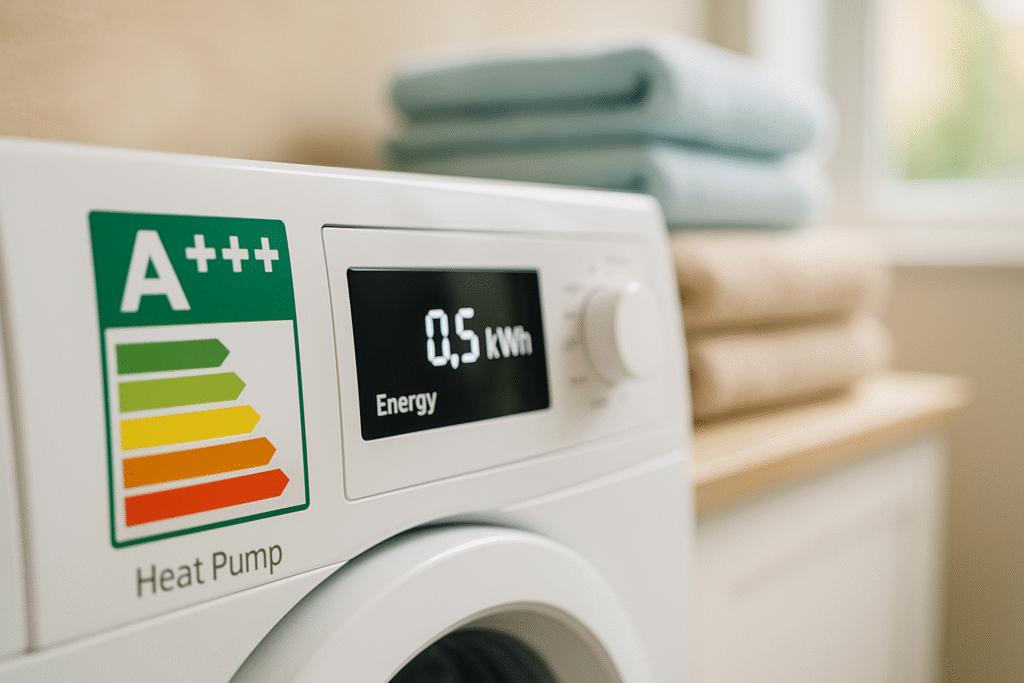
- Rated A++ or A+++
- Uses 1.2–1.8 kWh per cycle
- Costs around 35p–55p per load
Pros
- ✅ Ultra energy-efficient
- ✅ Gentle on fabrics
- ✅ No external venting needed
- ✅ Quiet operation
Cons
- ❌ Higher upfront cost
- ❌ Slower drying times
- ❌ Needs good airflow around the unit
Best For
Eco-conscious households and frequent laundry users. Ideal for long-term savings and protecting delicate fabrics.
Recommended Model
Beko DTIKP81131W 8Kg Integrated Heat Pump Tumble Dryer A++ rated, with sensor drying, 15 programmes, and sleek integrated design.
⚖️ Side-by-Side Comparison
| Feature | Vented | Condenser | Heat-Pump |
|---|---|---|---|
| Installation | Requires vent hose | Plug in anywhere | Plug in anywhere |
| Energy Rating | C–D | B | A++ to A+++ |
| Drying Speed | Fast | Medium | Slower |
| Upfront Cost | Low | Medium | High |
| Running Cost | High | Medium | Low |
| Maintenance | Clean filter, vent hose | Empty tank or drain | Clean filter, condenser |
| Best For | Homes with vents | Flats, rentals | Long-term savings |
Cost takeaway:
If you dry clothes regularly, a heat-pump tumble dryer usually pays for itself over time through lower electricity use. Condenser dryers sit in the middle, while vented dryers tend to cost the most per year to run.
The 2-minute chooser (pick the best type for your home)
Choose a heat-pump tumble dryer if:
- You dry laundry most days (families, kids, sports gear)
- You care most about running costs and fabric care
- You’re happy with slightly slower cycles to save money long-term
Choose a condenser tumble dryer if:
- You can’t vent outside and want a mid-price option
- You dry 1–3 times per week and want flexible placement
- You don’t mind emptying a water tank (or plumbing a drain hose)
Choose a vented tumble dryer if:
- You already have easy vent access and want the cheapest upfront price
- Drying speed matters more than running costs
- You’ll mostly use it occasionally (not daily)
If you want the full ranked cost breakdown across all drying methods (not just tumble dryers), see: The cheapest way to dry clothes in the UK.
🧠 Which Tumble Dryer Should You Choose?
💸 On a Budget
Choose a vented tumble dryer if you have external access. It’s affordable and fast, though less efficient.
🏠 Living in a Flat
Go for a condenser dryer. It’s flexible, easy to install, and doesn’t need venting.
🌍 Want Long-Term Savings
Pick a heat-pump dryer. It’s more expensive upfront but saves money over time and protects your clothes.
🧺 More Space-Saving Laundry Solutions
If you’re building a low-energy laundry setup, these guides help you cut drying time and avoid damp:
- Best Folding Heated Airers UK (For Small Homes & Flats)
- Compact Washing Machines (Best for small kitchens and flats)
- How to Stop Condensation When Drying Clothes Indoors (Quick Fixes That Work)
How to cut tumble dryer costs
(without buying a new dryer)
- Spin faster before drying
A higher spin speed removes more water, so the dryer runs less. If your machine allows it, use a higher spin for towels/jeans (and a gentler spin for delicates). - Don’t overload the drum
Overloading increases drying time and can leave clothes damp. Aim for a drum that can tumble freely. - Use sensor drying (not timed drying)
Timed cycles often over-dry. Sensor drying stops when clothes are dry, which reduces electricity use and fabric wear. - Clean the filter every cycle
A clogged lint filter reduces airflow and increases run time. - Improve airflow around the machine
Especially for heat-pump dryers. If it’s boxed in tightly, it can run less efficiently. - Dry similar fabrics together
Heavy items (towels/hoodies) slow down light items, so the dryer runs longer overall.
✅ Final Recommendation
If you want the lowest running costs, a heat-pump tumble dryer is usually the best long-term choice — especially if you dry laundry frequently. Condenser dryers are a solid middle-ground when you can’t vent outside, and vented dryers make sense mainly when you have vent access and want the lowest upfront price.
If you want to compare tumble dryers against heated airers and dehumidifiers, use our full cost-ranking guide: The cheapest way to dry clothes in the UK.
FAQs (UK)
Q. Are heat-pump tumble dryers always cheaper to run?
A. Usually yes, because they use less electricity per cycle — but if you only dry occasionally, the higher purchase price may take longer to “pay back”.
Q. Do condenser dryers cause condensation in the room?
A. They can warm the room and add some humidity, especially if ventilation is poor. Emptying the tank and keeping airflow around the machine helps.
Q. Do vented dryers waste heat?
A. Yes — they blow warm, moist air outside. That’s why they often cost more to run in winter compared to heat-pump models.
Q. What’s the best way to lower dryer running costs without replacing it?
A. Higher spin speed, sensor drying, and cleaning filters are the biggest wins.
Want a full low-energy setup for small homes and flats? Explore the Laundry & Drying Efficiency hub for the complete set of indoor drying guides.
Related Guides in Laundry & Drying Efficiency
Drying clothes efficiently is about more than just speed. These related guides explore running costs, moisture control, indoor drying methods, and low-energy laundry routines designed for UK homes and flats.

About The Author – Andrew Marshall
Andrew Marshall is a Scottish homeowner and the creator of Save Wise Living. He shares practical ways to reduce energy bills, improve home efficiency, and make everyday household routines cheaper and simpler.