
Last Updated: April 2026
Hanging wet clothes over a radiator is one of those habits that feels harmless until you notice the condensation forming on the windows, the damp smell that clings to the room, and the heating bill that seems higher than it should be for a house that doesn’t feel particularly warm. Radiators are designed to heat rooms. Using them as a drying rack makes them do both jobs badly.
A folding heated airer is the practical alternative — low wattage, compact when folded, and designed specifically for drying clothes indoors without the condensation problem or the energy cost of a tumble dryer. Most models cost between 4p and 10p per hour to run at current UK energy rates. A tumble dryer typically costs 30p to 50p per hour. Across a winter of regular indoor drying, that difference adds up to a meaningful saving on monthly bills.
If you’re still weighing up whether a heated airer is the right switch for your home, the running cost comparison between heated airers and tumble dryers puts the numbers side by side in real UK conditions.
More practical advice on cutting laundry costs and drying clothes efficiently on the Laundry & Drying Efficiency hub — worth a look if you’re rethinking the full indoor drying setup.
What to Look for Before Buying
The most useful thing to understand before comparing specific models is that heated airers work by gently warming bars rather than blasting hot air — which means drying time is longer than a tumble dryer but fabric damage is significantly lower. The efficiency comes from running cost and the absence of condensation rather than raw drying speed.
Drying capacity is measured in metres of bar length rather than kilogram load ratings, which creates some confusion when comparing models. A 15-metre airer has 15 metres of total heated bar length across all rails — enough for a typical household’s daily wash for a couple or small family. Twenty metres or more handles a family of four’s regular laundry without overloading.
Wattage determines running cost. A 230W airer costs around 5.5p per hour at 24p per kWh. A 300W model costs around 7.2p. Over a three-hour drying cycle the difference is around 5p — meaningful across a full winter but not significant enough to be the deciding factor if a higher-wattage model has genuinely useful features the lower-wattage model lacks.
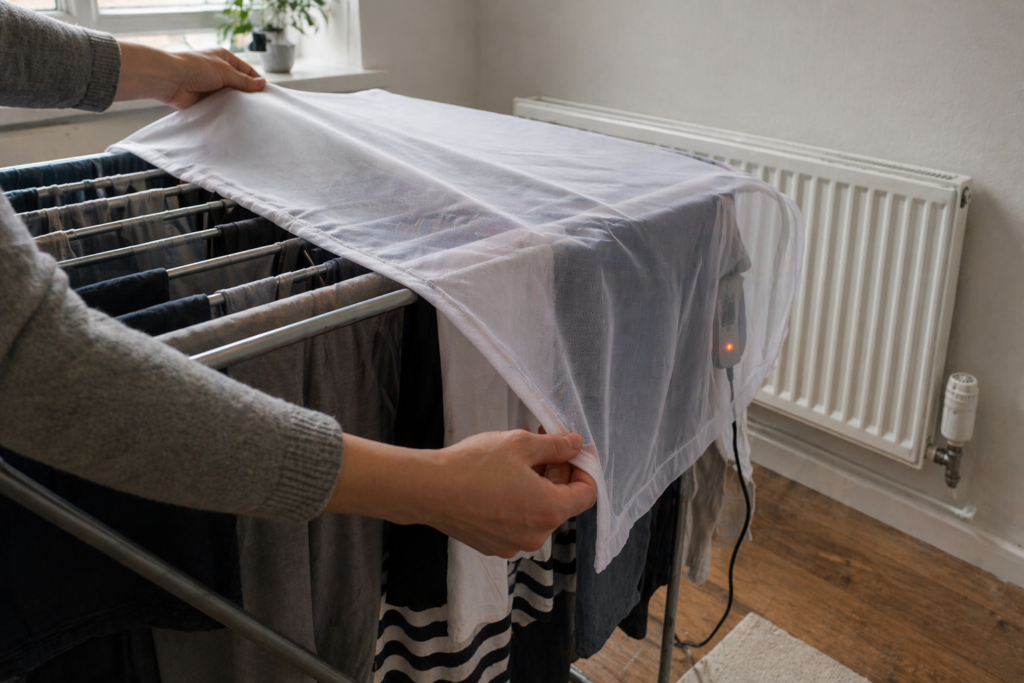
The feature that earns its cost most consistently is a heated airer with cover — either included or available separately. Draping a cover over the airer traps the warm air around the clothes and cuts drying time significantly compared to running the same airer uncovered in an open room. If a model comes with a cover included, that’s a more useful addition than a timer or a thermostat for most households.
Foldability matters more than it sounds on the product page. A model that folds flat to 8cm stands beside a wardrobe or slides under a bed between uses. A model that folds to 20cm needs a cupboard or a dedicated corner. In a flat or small house, that difference in packed size is genuinely relevant to whether the airer gets used regularly or ends up stored somewhere inconvenient and avoided.
The 5 Worth Buying
1. Dry:Soon Mini Heated Airer — Best for Singles and Small Loads
The Dry:Soon Mini is the right answer for single-person households, baby clothes, or anyone who needs a compact airer that lives in a flat without dominating the room. It handles around 3kg per load — a single person’s daily laundry or a small family’s delicate items — collapses genuinely flat for storage, and runs at low wattage that keeps the hourly cost at the bottom end of the heated airer range.
The optional cover is worth buying alongside it. Without the cover it’s a competent compact airer. With the cover it’s a noticeably faster and more efficient drying setup that earns its place even in a very small flat. The Dry:Soon heated airer is gentle on fabrics including delicates and babywear — the lower operating temperature means less risk of heat damage on items that need careful treatment.
The honest note: the 3kg capacity is genuinely compact. For a couple or small family doing a full household wash, this model requires multiple loads rather than handling everything in one cycle. The models below cover that capacity range more efficiently.
2. Minky SureDri Heated Clothes Airer — Best for Couples and Small Families
Minky is a UK household brand with a long-standing reputation in laundry products and the SureDri earns it. Fifteen metres of drying space across a winged design handles a couple’s full wash or a small family’s regular laundry in one cycle rather than two. The winged design is the feature that makes the 15m capacity practically useful — the extended arms accommodate longer items like trousers and towels hung across the full length without folding, which dries them more evenly than bunching them on shorter rails.
Running at approximately 250W the SureDri costs around 6p per hour. A three-hour drying cycle for a full household load works out at around 18p. Anti-slip feet keep it stable on hard floors when loaded with wet laundry, which matters more than it sounds when a fully loaded airer is significantly heavier than an empty one.
The honest note: the wings add to the footprint when extended. In a very small room the extended configuration needs planning — it works best positioned where the wings can open fully rather than being partially folded, which defeats the capacity advantage.
3. Homefront Electric Heated Clothes Airer — Best Mid-Range All-Rounder
The Homefront covers general household use without the premium price of the AMOS or the compact limitations of the Dry:Soon Mini. At 230W it heats up quickly, the multi-bar frame handles a standard household wash, and the flat-fold design stores cleanly against a wall or in a cupboard without requiring a dedicated space.
The plug-and-go simplicity is genuinely useful for a household that wants an airer that works without configuration. No thermostat to adjust, no timer to set — plug it in, load it, come back when the clothes are dry. For households that don’t want to manage settings or remember to turn things off, a plug-in electric clothes airer at this level of simplicity is the more practical choice than a premium model with features that go unused.
The honest note: no cover included and no thermostat, which means drying time is longer than the AMOS in the same room conditions. If drying time is the main concern regardless of which airer you choose, there are several room and habit changes that speed up indoor drying without touching the heating.
4. Oypla Electric Extendable Folding Clothes Airer — Best Budget Option
The Oypla is the budget recommendation for households that want a functional foldable electric clothes airer without spending mid-range prices — particularly useful for renters, student households, or anyone who wants to test whether a heated airer suits their routine before committing to a premium model.
Twenty heated bars across an extendable design provides more drying capacity than the price suggests. It heats up quickly, stores fully collapsed when not in use, and handles a shared flat’s laundry for two to three people without requiring multiple cycles. Setup is straightforward — no tools, no complicated assembly, operational within a couple of minutes of unboxing.
The honest note: the build quality is functional rather than premium. The frame is lighter than the Minky or Homefront and feels it when loaded with heavy items like jeans or towels. For regular light-to-medium laundry loads it performs the job. For a household doing heavy weekly washes consistently, the Minky or Homefront is the more durable long-term choice.
5. AMOS Electric Heated Clothes Airer — Best for Larger Households
The AMOS is the option for households that dry large volumes regularly and want the fastest, most controlled drying setup available in the folding airer category. The three-tier design maximises vertical space — useful in a room where floor space is limited but ceiling height is available — and the built-in thermostat regulates heat to protect delicate fabrics while maintaining consistent drying temperature for heavier items on other tiers.
The cover is included rather than sold separately. With the cover fitted, the AMOS creates a warm enclosed drying environment that cuts cycle time significantly compared to an uncovered airer in the same room — the difference is particularly noticeable in cooler rooms or when drying thicker items like hoodies or bedding. The timer allows the airer to switch off automatically, which matters for a 300W model running for several hours.
At approximately 300W the running cost is around 7.2p per hour — higher than the budget options but still a fraction of tumble dryer costs. For a family doing multiple washes per week, the combination of large capacity, faster drying with the cover, and the thermostat’s fabric protection makes the cost reasonable across a full winter of regular use.
Getting the Most from a Heated Airer
A few habits that consistently improve drying performance regardless of which model you use.
Use the cover if you have one. The difference between a covered and uncovered airer in the same room is significant — the cover traps warm air around the clothes and creates a mini drying environment rather than slowly warming an entire room. If a model doesn’t come with a cover, a heated airer cover bought separately is one of the most cost-effective accessories available for improving drying performance without upgrading the airer itself.
Dry in the warmest room available. A heated airer in a cold bathroom takes longer to dry the same load than the same airer in a warm living room. The bars warm the clothes — the ambient room temperature determines how quickly moisture evaporates from the fabric into the surrounding air.
Don’t overload. Clothes need air circulation around them to dry properly. A rail packed so tightly that items overlap traps moisture rather than releasing it. Using slightly less than full capacity produces faster, more even drying than loading every available bar.
Rotate thicker items. Heavy items — jeans, hoodies, thick towels — dry unevenly when left in one position. Turning them halfway through the cycle exposes the damp side to the heated bar and reduces overall drying time.
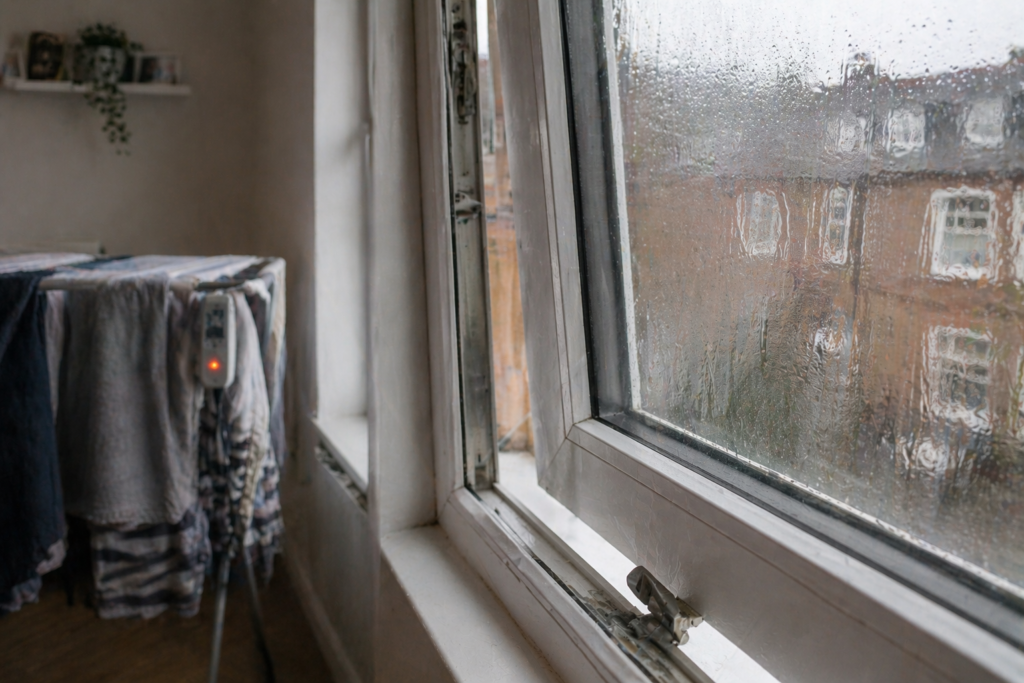
Keep the door closed during drying. The warm, moisture-laden air needs somewhere to go — but if the room is ventilated to a cold hallway or an unheated space, the drying environment cools faster than the airer can maintain it. A closed door with a window cracked slightly is the better balance between drying efficiency and condensation management. Managing the moisture that drying clothes releases indoors is the part most people overlook — stopping condensation when drying clothes indoors covers the specific fixes that prevent damp building up over a winter of regular indoor drying.
For the most efficient indoor drying setup overall, combining a heated airer with a dehumidifier is the approach that cuts drying time the most — particularly useful in smaller rooms where moisture builds up quickly even with the door closed and a window cracked.
Which Airer for Your Home
For single-person households or small loads of delicates: Dry:Soon Mini. Compact, gentle, and genuinely flat-folding.
For couples or small families doing regular household washes: Minky SureDri. The 15m capacity and winged design handle a full load properly in one cycle.
For general household use at a mid-range price: Homefront. Straightforward, functional, and reliable without premium complexity.
For budget buyers or renters testing the heated airer category: Oypla. More capacity than the price suggests, functional for regular light-to-medium loads.
For larger households drying heavy volumes frequently: AMOS. The thermostat, included cover, and three-tier capacity justify the higher cost across a full winter of regular use.
Related Guides
About The Author – Andrew Marshall
Andrew Marshall is a Scottish homeowner and the creator of Save Wise Living. He shares practical ways to reduce energy bills, improve home efficiency, and make everyday household routines cheaper and simpler.