
Last Updated: 13th April 2026
The tumble dryer is one of those appliances that runs quietly in the background of the household budget doing real damage. At 24p per kWh, a standard 2.5kW tumble dryer costs around 26p every time you run a full cycle — and in a Scottish home from October through to April, that machine runs a lot. The question most people ask at some point is whether there’s a cheap, simple way to bring that cost down without replacing the dryer or changing the whole routine.
Dryer balls kept coming up when I started looking into this properly. Small, usually made of wool, costs around £12 for a pack that lasts years. The claim is that they reduce drying time by improving airflow through the load, which means shorter cycles and less electricity. Sceptical is the right starting position. But having used them for a couple of years now, the honest answer is they work — with some caveats worth understanding before spending anything.
If you’re also questioning whether your tumble dryer is worth running at all, the cost difference between a heated airer and a tumble dryer is worth knowing before the season starts.
This article is part of the Laundry and Drying Efficiency hub — practical UK advice for drying clothes faster, reducing damp, and keeping energy costs down.
Why They Work — The Actual Mechanism
When you put clothes in a tumble dryer without anything separating them, wet fabrics clump together and the hot air circulates around the outside of the clump rather than through it. The clothes in the middle stay wet for longer. The machine runs for longer. You use more electricity than you need to.
Dryer balls physically separate fabrics as they tumble, creating airflow channels through the load. More airflow means faster evaporation. Faster drying means shorter cycles. The chain of logic is simple and it holds up in practice — independent testing consistently shows drying time reductions of 25 to 30 percent on heavier loads.
The benefit is most pronounced on heavy laundry — towels, jeans, bedding, thick cotton. These are the items that clump most and take longest to dry. On a lighter load of t-shirts and socks, fabrics separate naturally anyway and the balls make less difference. Use them consistently on the heavy loads and that’s where you’ll feel the benefit most.
It’s also worth knowing that fabric type affects how much they help. Natural fibres like cotton and linen respond well — they’re the ones that clump and trap moisture most. Synthetics dry faster anyway and the benefit is smaller. Wool and cashmere should be dried on a low heat regardless of what else is in the drum.
What the Saving Actually Looks Like at UK Rates
At 24p per kWh, a 2.5kW tumble dryer running for 65 minutes costs around 26p per cycle. Cutting that to 45 minutes with dryer balls brings it to around 18p — a saving of roughly 8p per load. For a household doing five loads a week through a six-month UK winter, that’s around £10 to £12 in the season. Add lighter use through spring and autumn and the annual saving sits around £15 to £20.
That’s not going to change anyone’s financial situation. But a six-pack of quality wool dryer balls costs £12 to £15 and lasts over a thousand cycles — the payback period is around four to six weeks and everything after that is pure saving, year after year, from something sitting in the drum doing its job.
There’s also a secondary saving most people don’t account for. Dryer balls soften fabrics through the mechanical action of tumbling, which means you can stop using liquid fabric softener entirely. A bottle of fabric softener costs £3 to £5 and goes quickly in a household doing regular laundry. That saving adds up faster than the electricity saving does.
For a full breakdown of how much each drying method costs per hour, comparing heated airers, dehumidifiers and tumble dryers side by side puts those numbers in proper context.
Wool vs Plastic — Which Type to Buy
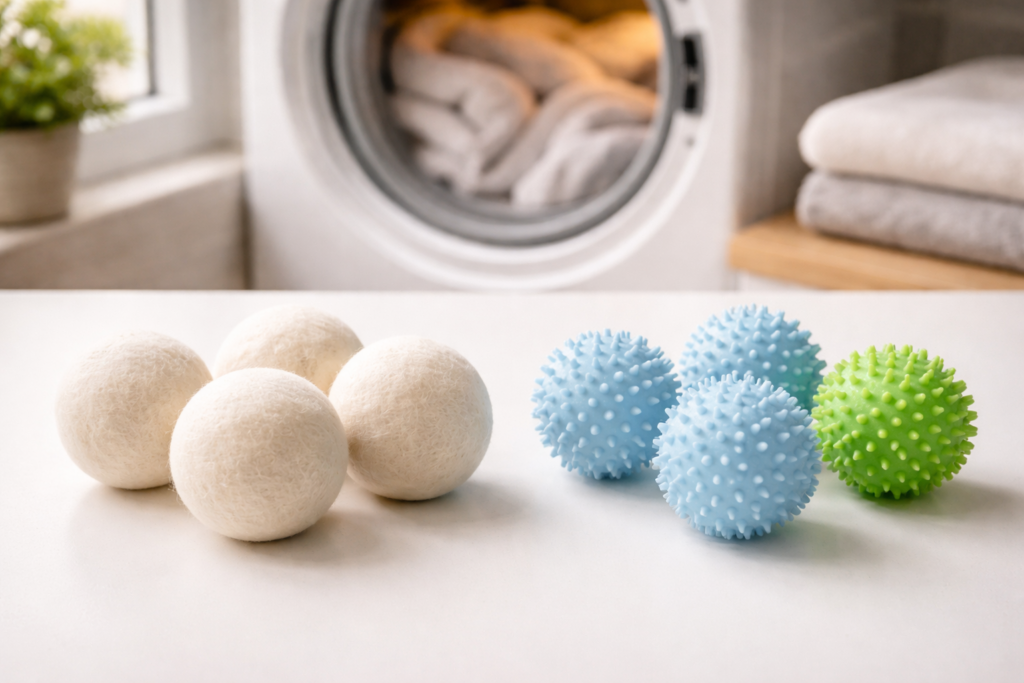
Wool dryer balls are the better choice for most households. They’re quiet — you barely hear them in a running dryer — they’re gentle on fabrics, naturally hypoallergenic, and they last for years with no maintenance. The natural lanolin in the wool is what produces the softening effect on fabrics. I’ve been using the same set for two winters and they show no signs of needing replacement.
Plastic dryer balls with spikes work on the same airflow principle but the trade-off is noise. Plastic balls thud noticeably in the drum — in a quiet flat or overnight it becomes irritating quickly. They also don’t produce the softening effect that wool does. They’re cheaper upfront but wool earns its slightly higher price across the long run.
If you want to add fragrance without dryer sheets or liquid softener, wool balls accept a few drops of essential oil applied before the cycle. The heat releases it gently through the drying process. It works well and is worth knowing about for households with skin sensitivities to fragranced products.
The Products Worth Buying
For most households, a six-pack is the right starting point. Three balls is the minimum for a medium load — below that you lose the airflow separation benefit.
The Ecozone wool dryer balls are the ones I’d point most households toward first. 100% natural wool, hypoallergenic, rated for over a thousand cycles, and consistently well-reviewed by UK buyers. They’re the straightforward choice that works without overthinking it.
For larger households or particularly heavy loads, the Smart Sheep wool dryer balls six-pack is worth considering. Handmade, slightly denser than the Ecozone balls, and they come with an eco storage bag. The main reason to choose them over the Ecozone is load size — if you’re regularly doing large family washes with heavy fabrics, the denser construction performs slightly better.
If you want to try the concept before spending on wool, plastic dryer balls with spikes are available for a few pounds. They do the basic job of improving airflow and give you a sense of whether the drying time reduction is noticeable in your specific machine before committing to a full wool set.
Heat Pump Dryers vs Conventional — Does It Matter?
Yes, and it’s worth knowing before assuming the benefit is the same across all machines.
A conventional vented or condenser dryer operates at higher temperatures and the faster heat transfer means the airflow improvement from dryer balls shows up clearly in reduced cycle times.
A heat pump dryer operates at lower temperatures — that’s what makes it more energy-efficient — but lower temperature drying is more sensitive to good airflow because the evaporation process is gentler. In a heat pump dryer, the separation and airflow improvement from dryer balls is arguably more valuable per cycle, not less. If you’re running a heat pump dryer, dryer balls are worth using consistently rather than occasionally.
One note on heat pump dryers: the lint filter and heat exchanger both need regular cleaning for the machine to maintain its efficiency. A clogged filter in a heat pump dryer causes more performance degradation than in a conventional dryer. Dryer balls won’t compensate for a filter that hasn’t been cleaned.
The Habits That Make Them Work Better
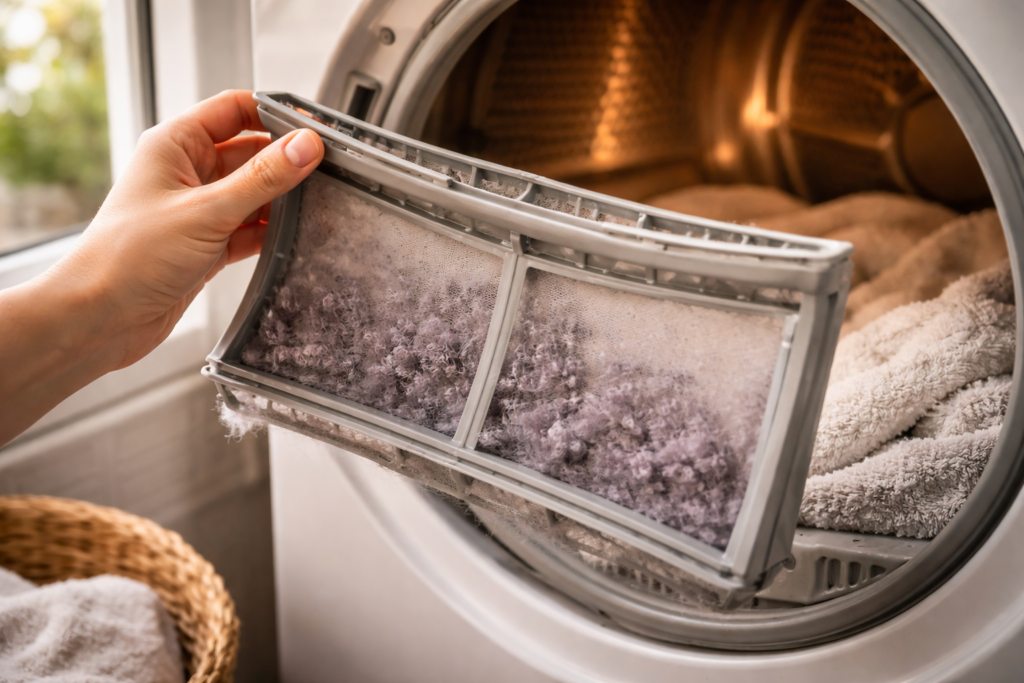
Clean the lint filter after every load. This is the single most impactful maintenance habit for any tumble dryer and it’s consistently overlooked. A clogged lint filter restricts airflow through the machine regardless of what’s in the drum — dryer balls can’t compensate for that. I started doing this after every load last winter and the drying time improvement was more noticeable than the dryer balls themselves. Ten seconds per cycle, genuinely significant effect.
Don’t overfill the drum. Dryer balls need space to move and bounce through the load — a drum that’s packed too full prevents them doing their job. A load that fills the drum to around two-thirds capacity gives them enough room to work and also dries more evenly regardless of the balls.
Warm the dryer briefly before a large load. Running the machine empty for two or three minutes before adding laundry brings the drum up to temperature faster and reduces the overall cycle time slightly on heavy loads. Combined with dryer balls and a clean filter, the cumulative effect is more noticeable than any single habit alone.
If you dry anything indoors away from the tumble dryer, pairing a dehumidifier with your indoor drying routine makes a noticeable difference to both drying speed and the ambient damp that builds up in the room.
Are They Worth It
Yes — for a UK household using a tumble dryer regularly through autumn and winter, straightforwardly yes.
The electricity saving per load is modest. The fabric softener saving is more immediate. The payback period on a quality six-pack is around four to six weeks for most households doing regular laundry. The wool balls last for years. There’s no downside to discover after purchase, no maintenance involved, and no change to your routine beyond tossing them in the drum.
The honest framing is this: dryer balls are one of several small changes that each save a modest amount, and the households that end up with meaningfully lower energy bills are the ones who make several of those changes rather than looking for one big fix. Dryer balls, clean filters, not overloading the drum, spinning clothes at a higher spin speed before they go in — each one is small and together they add up to something real.
If you want to see where dryer balls fit in the full picture, the cheapest ways to dry clothes ranked by running cost puts every drying option side by side so you can work out the combination that makes most sense for your home.
For more on reducing laundry and drying costs year-round, the Laundry and Drying Efficiency section of Save Wise Living covers heated airers, dehumidifiers, and the practical habits that keep electricity use down through a UK winter.
Related Guides

About The Author – Andrew Marshall
Andrew Marshall is a Scottish homeowner and the creator of Save Wise Living. He shares practical ways to reduce energy bills, improve home efficiency, and make everyday household routines cheaper and simpler.