
In this guide to induction hob tips for UK kitchens, we’ll show you how to cook smarter, avoid common mistakes, and get the most from your induction setup.
Why Induction Hobs Are Worth Mastering
Induction hobs are fast, sleek, and energy-efficient — but only if you use them correctly. As more UK homes upgrade to induction cooking, it’s easy to assume these modern hobs are foolproof. But while they’re safer and more responsive than gas or ceramic, they also come with quirks that can trip you up.
Used well, an induction hob can cut your energy use, speed up meal prep, and keep your kitchen cooler. But used poorly, it can lead to wasted electricity, warped pans, and uneven cooking.
This guide breaks down how to use your induction hob efficiently — and the 5 most common mistakes to avoid — with practical tips and verified Amazon UK product links to help you get the most from your setup.
⚡ How Induction Hobs Work – Quick Refresher for UK Homes
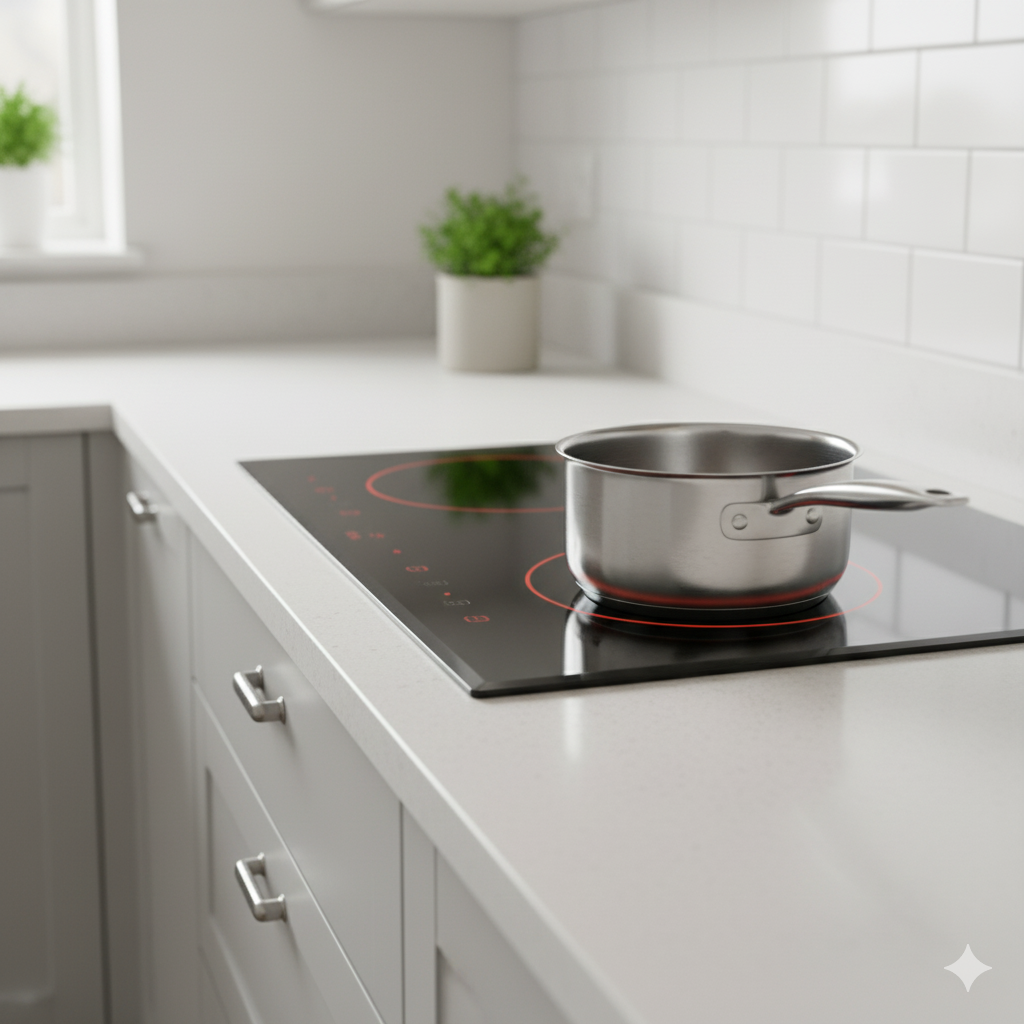
Induction hobs use electromagnetic coils beneath the glass surface to create a magnetic field. When you place a compatible pan on the hob, the field activates and heats the pan directly — not the hob itself.
This means:
- Faster heating (boil water in under 2 minutes)
- Precise temperature control
- Cooler surfaces and safer cooking
- Lower energy waste — up to 70% more efficient than gas
But to unlock these benefits, you need the right tools and habits.
❌ Mistake 1: Using the Wrong Cookware
This is the #1 issue new users run into. Induction hobs only work with magnetic-bottom pans — typically stainless steel or cast iron. If your pan isn’t compatible, the hob won’t even turn on.
Avoid:
- Aluminium, copper, glass, or ceramic pans without a magnetic base
- Lightweight pans that don’t sit flat
Do:
- Look for the induction symbol (a coil) on the base or packaging
- Test with a fridge magnet — if it sticks firmly, it’s good to go
🔗 Browse Induction Cookware Sets on Amazon UK This link takes you straight to Amazon’s full range of compatible cookware — from budget-friendly starter sets to premium stainless steel options.
❌ Mistake 2: Cranking the Heat Too High
Induction hobs heat up incredibly fast — often faster than gas. That’s great for boiling water, but it can lead to burnt food, scorched oil, or warped pans if you’re not careful.
Avoid:
- Starting on max heat for delicate dishes
- Leaving pans unattended during preheat
Do:
- Use medium heat for most cooking
- Take advantage of the hob’s precise temperature control
- Use the boost function sparingly — it’s for quick boils, not cooking
Tip: If your hob has a timer or pause function, use it. It’s perfect for multitasking without overcooking.
❌ Mistake 3: Ignoring Pan Size and Placement
Induction hobs are picky about pan size. Each zone has a minimum and maximum diameter it can detect. If your pan is too small or off-centre, it won’t heat properly — or at all.
Avoid:
- Using tiny pans on large zones
- Placing pans off-centre or at an angle
Do:
- Match pan size to zone size
- Use flat-bottomed pans that sit flush
- Centre your pan every time
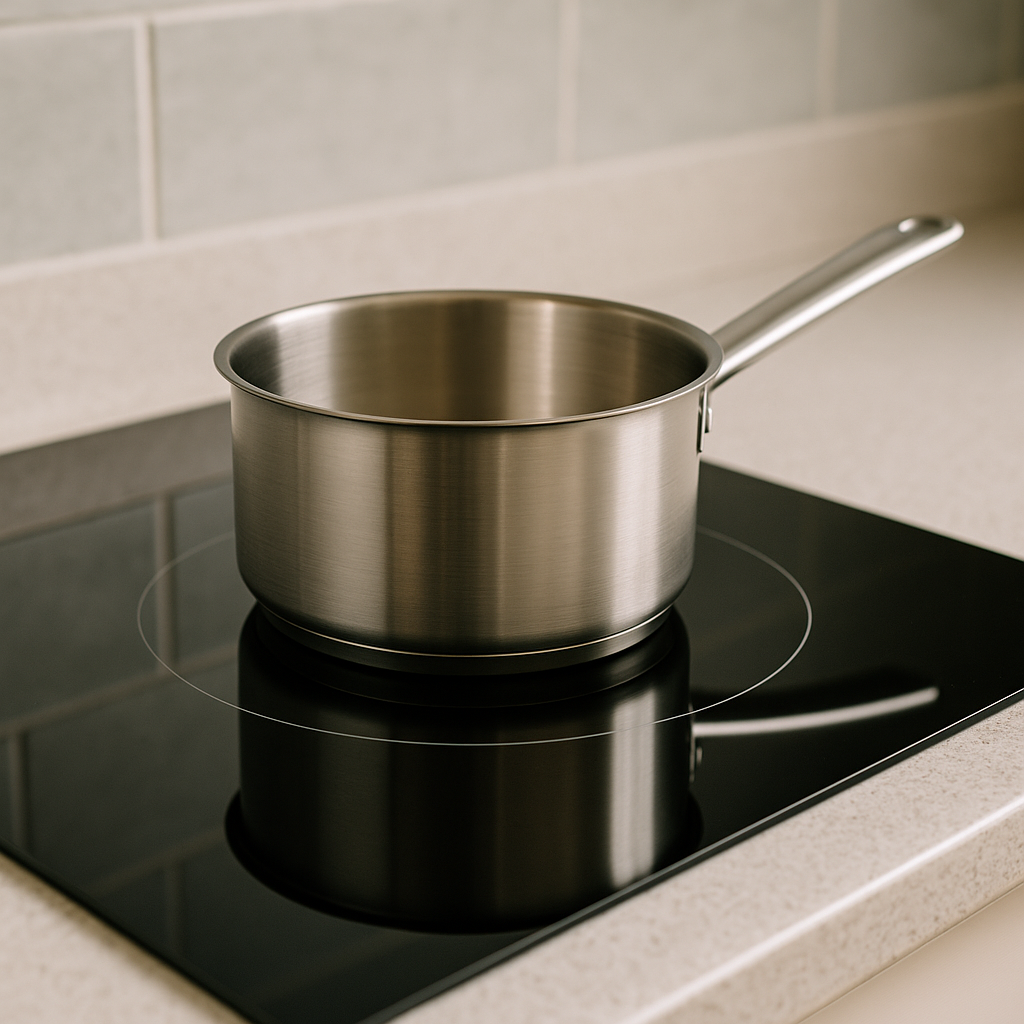
Smart Fix: If you have a favourite pan that isn’t induction-compatible, or you want to use smaller cookware, try a Stainless Steel Induction Adapter Plate. It acts as a magnetic bridge between your hob and any pan — ideal for moka pots, milk pans, or older cookware.
❌ Mistake 4: Not Cleaning the Hob Properly
Induction hobs are easy to clean — but only if you do it regularly. Spills can bake onto the surface if left too long, and scratches from abrasive cloths can dull the glass.
Avoid:
- Using harsh chemicals or scouring pads
- Letting sugary spills harden (they can damage the surface)
Do:
- Wipe down after every use with a soft cloth
- Use a gentle hob cleaner weekly
- Lift pans instead of sliding them to avoid scratches
Recommended Cleaner: The HG Hob Cleaner for Induction & Ceramic Glass is a top-rated option that removes grease and grime without damaging the glass. A little goes a long way.
❌ Mistake 5: Overloading the Hob or Misusing Multiple Zones
Induction hobs are powerful — but they have limits. Using too many zones at once or placing oversized pans across zones can cause uneven heating or automatic shut-off.
Avoid:
- Cooking with oversized pans that span multiple zones
- Running all zones at max power simultaneously
Do:
- Use one or two zones at a time for best efficiency
- Stagger cooking tasks when possible
- Learn your hob’s power-sharing limits (some models reduce power when multiple zones are active)
Great for Small Kitchens: If you need extra cooking space or want a backup for busy meal prep, the CUSIMAX 2500W Double Induction Hob is a portable, dual-zone cooktop with independent controls — perfect for flats, caravans, or holiday lets.
🔗 More Smart Cooking Solutions Worth Exploring
If you’re looking to build a more energy-efficient kitchen setup, don’t miss our guide to the Best Toaster Ovens & Multi-Cookers UK 2025 perfect for compact spaces and versatile meal prep. And if you’re curious about cooking full dinners with zero oven use, our deep-dive on How to Cook Entire Meals Using Just an Air Fryer (Energy-Smart Tips) is packed with practical strategies and real recipes.
🧠 Bonus Tips for Efficient Induction Cooking
- Use lids to trap heat and reduce cooking time
- Preheat pans briefly, then reduce heat for even cooking
- Batch cook to make the most of residual heat
- Keep the hob dry — moisture can interfere with sensors
- Use the timer to avoid overcooking and save energy
❓ FAQ: Induction Hob Tips for UK Kitchens
Q: What pans work best on induction hobs? A: Stainless steel and cast iron pans with a magnetic base work best. Look for the induction symbol or test with a magnet.
Q: Can I use all zones on my induction hob at once? A: You can, but many models reduce power when multiple zones are active. For best results, stagger cooking tasks.
Q: How do I clean an induction hob safely? A: Use a soft cloth and a gentle cleaner like HG Hob Cleaner. Avoid scouring pads or harsh chemicals.
🏁 Final Thoughts: Make Your Induction Hob Work for You
Induction hobs are one of the smartest kitchen upgrades you can make — but only if you use them correctly. By avoiding these five common mistakes and following a few simple tips, you’ll enjoy faster cooking, lower bills, and a cleaner kitchen.
Whether you’re a seasoned home chef or just getting started, mastering your induction hob is about more than pressing buttons — it’s about understanding how the technology works and adapting your habits to match.
And if you’re still building your induction setup, start with compatible cookware, a gentle cleaner, and a few smart accessories — all available on Amazon UK and verified for 2025.
Want to upgrade your whole kitchen setup? Don’t miss our Smart Kitchen Savings Guide UK 2025 — packed with energy-efficient gadgets, low-watt appliances, and clever tools for modern UK homes.